Saunders ST-27A

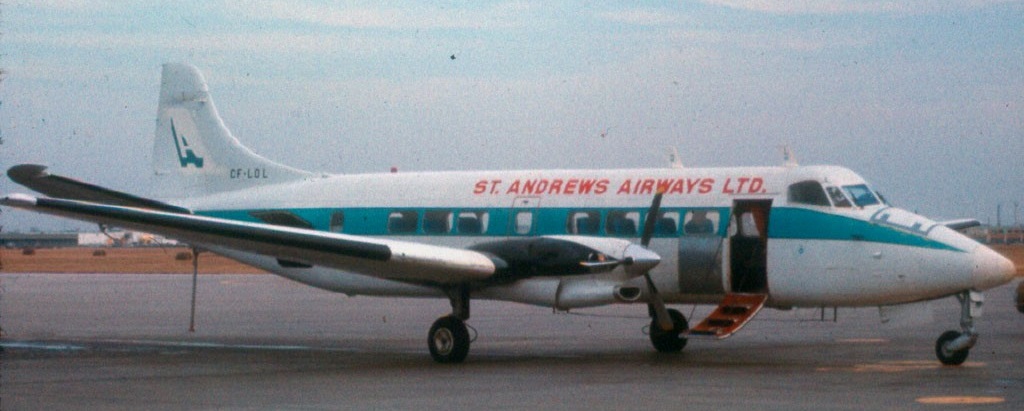
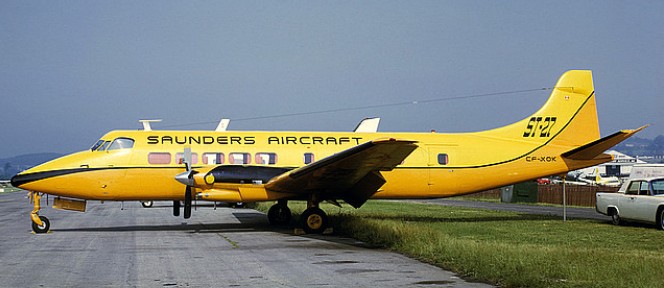
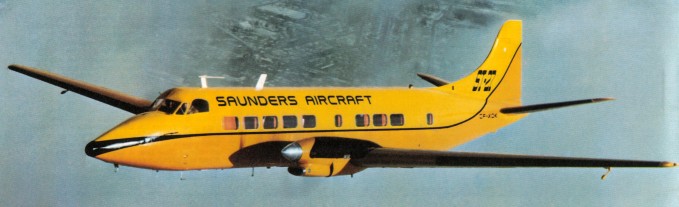
Saunders Aircraft Corporation in Canada flew the ST-27A prototype (CF-FYBM-X) for the proposed ST28 on 18 July 1974. The ST-27A was a lengthened fuselage conversion of the de Havilland D.H.114 Heron with turboprop powerplant, but production ST-28s were intended to be newly-built; because of financial problems no series aircraft were manufactured. Saunders Aircraft Corporation produced 13 completed ST 27s.

The Heron has been stretched by 8 ft 6 in (2.59 m) to carry 24 passengers, and re engined with two PT6A 27 turboprops instead of four Gipsy Queen piston engines.

Sands Fokker DR-1

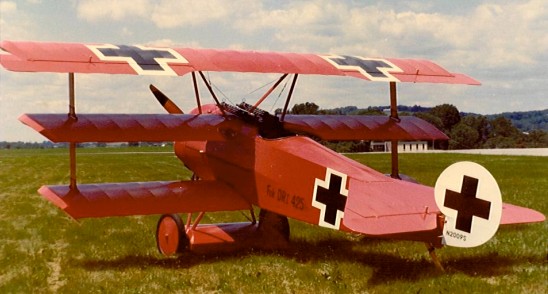
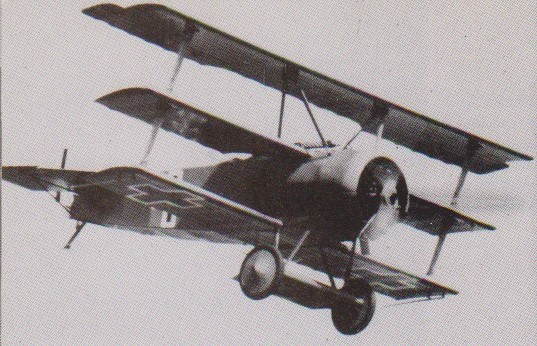
Ron Sand built a Fokker Dr.1 replica in 1970, then making plans available for home builders. A metal, wood, tube and fabric full-size replica with all the original detailing. Engine options include Warner 145-185hp and Lycoming 150-180 hp.

The replica drawings are high quality Construction prints, not to be confused with the average homebuilt drawing which usually lack detail on method and parts. The drawings are printed from ink on mylar tracings which result in excellent quality blueprints and show every part as close to full size as possible – with part numbers, specifications and descriptions.

Complete set contains 31 sheets (24″ x 36″) highly detailed prints include a 14 page (8-1/2″ x 11″) materials list. The plans show the complete installations of LeRhone (rotary), Warner (radial) and Lycoming (opposed) engine. This allows that any engine can be removed and changed with a different type at any time by just removing the engine mount bolts and bolt in the other engine.
The drawings are complete with instructions on building the jigs required for construction of the wing spars and ribs, with step-by-step assembly instructions.
All of the original full size Fokker DR-1 details are shown. Many of these details never presented before or lost by previous artists. For example:
Complete LeRhone engine installation
Warner engine installation with all plumbing and controls
Lycoming opposed engine installation
Original Carl Bamberg compass
Spandau machine guns
Original control stick with throttle and gun-trip levers
Hydraulic brakes are shown for safety but the brake system has been designed not to interfere with the original appearance and is actually an add-on feature to the rudder-bar and can be removed at any time. Both the original tailskid and steer-able tail-wheel are shown for your choosing and safety.
The only changes made are in the interest of safety of the pilot and reliability of the aircraft. In addition to the brake system, some of the primary fittings and hardware have been increased in size without a weight penalty. Since we are not carrying 150 lbs. of guns and ammunition, it is wise to use some of the weight allowance in making the aircraft stronger and more reliable.
The replica Fokker DR-1 is not a difficult aircraft to build nor does it have to be an expensive project providing you don’t rush construction and use common sense in purchasing materials.

Wing Span: 23.50 ft
Length: 19.0 ft
Max. Gross Wt: 1,600 lb
Empty Wt: 1,150 lb
Fuel Capacity: 22.5 Usgal
Range: 250 sm
Takeoff Dist: 300 ft
Landing Dist: 200 ft
Vmax: 120 mph
Vcr: 110 mph
Vs1 (stall clean): 42 mph
Climb Rate @ msl: 1,800 fpm
Serv. Ceiling: 15,000 ft
Seats: 1
Cabin width: 28.0 in

Engine: LeRhone, 110 hp
HP range: 125-200
Height: 9.4 ft
Length: 19.02 ft
Wing span: 23.6 ft
Wing area: 201.8 sq.ft
Fuel cap: 22.5 USG
Weight empty: 949 lb
Gross: 1406 lb
Speed max: 120 mph
Cruise: 110 mph
Range: 250 sm
Stall: 42 mph
ROC: 1800 fpm
Take-off dist: 300 ft
Landing dist: 200 ft
Service ceiling: 15,000 ft
Seats: 1
Landing gear: tail wheel or skid

Samsung Heavy Industries

South Korea
Founded 1938, and Samsung Aerospace Industries Co Ltd. division established 1977, originally to undertake aero-engine work. Prime contractor among South Korean companies involved in producing F-16 fighters for the Republic of Korea Air Force under the Korean Fighter Program (120 to be delivered by 1999), is heading development of the KTX-2 lead-in fighter trainer/light combat aircraft (with Lockheed Martin of the U.S.A. as a partner since 1997; expected to fly in 2001), is developing the Kari eight-seat business aircraft, heads a South Korean consortium developing airliners, assembles and markets the Russian Mil Mi-26 helicopter, collaborates on the Bell 427 helicopter, and produces components for Bell Canada helicopters, Boeing airliners and the Canadian Dash 8 airliner.

Salmson D.6 Cri-Cri

The Salmson Cricri (“Cricket”) was a French light aircraft designed by Paul Deville. Salmson launched work on this new aircraft in 1935, intended primarily for the military for intermediate and advanced training missions.

It was a conventional, parasol-wing monoplane with fixed tailskid undercarriage and seating in tandem open cockpits for the pilot and passenger. The negative dihedral wing had the distinction of having a very small forward sweep. A very large tail had been installed. Built mainly in canvas wood but also with metal inserts, it was powered by a Salmson 9Adr engine of 60hp driving a three-blade metal and wood propeller. A relatively high, relatively wide gauge fixed landing gear had been installed on the aircraft. The pilot and his passenger took place in two tandem open cockpits, separated from each other.

Officially designated D.6 by the manufacturer, it received the name of Cricri. Its first flight took place on April 14, 1936. Immediately thirty planes were acquired by the Air Force.

Shortly after receipt of the first of these aircraft, the Navy ordered two fairly similar aircraft for the intermediate training of combat aircraft pilots. These two aircraft received the official designation of D.6-3.

In September 1936, the Air Ministry placed an order for a hundred aircraft under the so-called Popular Aviation program which aimed to promote tourist aviation for the greatest number. These planes were therefore sent to schools and flying clubs across the country.

When World War II broke out in September 1939, production of the Cricri was still underway and several copies were urgently ordered for Air Force schools. But several dozen of them were camouflaged and received tactical codes from combat aircraft. Although generally disarmed, some machines carried in the rear position a mobile Darne 7.5mm machine gun for its own defense. They were widely used for the observation of the battlefield, border surveillance in particular along the Maginot line, or even the direction of ground artillery fire. At least half of the French military D.6s were used for missions other than training.

The majority of Cricri were used during all the French part of the war, and when in 1940 the Franco-German armistice was signed several planes joined the ranks of the German aviation for various secondary missions like the towing of gliders or transport and light postal flights.

345 were built.

Following the war, CFA attempted to revive the design as the Cricri Major. This differed from its predecessor mainly in having a more powerful engine and an enclosed cabin.

Variants:

D6 Cricri
Engine: 1 × Salmson 9 ADr, 45 kW (60 hp)
Wingspan: 9.66 m (31 ft 8 in)
Wing area: 16.0 m2 (172 ft2)
Length: 6.89 m (22 ft 7 in)
Height: 2.18 m (7 ft 2 in)
Empty weight: 287 kg (633 lb)
Gross weight: 575 kg (1,268 lb)
Maximum speed: 150 km/h (94 mph)
Range: 500 km (310 miles)
Service ceiling: 2,450 m (8,040 ft)
Crew: One pilot
Capacity: 1 passenger
329 built

D63 Cricri
dedicated flight trainer version
2 built
Salmson 18

After their successful water-cooled radial engines, developed from 1908 to 1918, Salmson changed their focus to air-cooling to reduce weight and increase specific power (power per unit weight). The majority of the engines produced by Salmson were of radial type with a few other arrangements such as the Salmson T6.E. In common with other engines produced by this manufacturer, the air-cooled radial engines featured the unorthodox Canton-Unné internal arrangement that dispensed with a master rod in favour of a cage of epicyclic gears driving the crankpin. Built from 1920, production ended in 1951 with the liquidation of the manufacturing company.

In common with several other French aero-engine manufacturers Salmson named their engines with the number of cylinders then a series letter in capitals followed by variant letters in lower-case.

18 AB
Type: 18-cyl 2-row radial
Bore: 125 mm (4.921 in)
Stroke: 180 mm (7.087 in)
Capacity: 39.76 l (2,426.30 cu in)
Power: 410.1 kW (550 hp) at 1,700rpm

18 ABs
Type: 18-cyl 2-row radial
Bore: 125 mm (4.921 in)
Stroke: 180 mm (7.087 in)
Capacity: 39.76 l (2,426.30 cu in)
Power: 484.7 kW (650 hp) at 1,700rpm

18 Cm
18 Z

Salmson 5 cyl / 5 Ac / 5 Ap-01 / 5Aq-01

After their successful water-cooled radial engines, developed from 1908 to 1918, Salmson changed their focus to air-cooling to reduce weight and increase specific power (power per unit weight). The majority of the engines produced by Salmson were of radial type with a few other arrangements such as the Salmson T6.E. In common with other engines produced by this manufacturer, the air-cooled radial engines featured the unorthodox Canton-Unné internal arrangement that dispensed with a master rod in favour of a cage of epicyclic gears driving the crankpin. Built from 1920, production ended in 1951 with the liquidation of the manufacturing company.

In common with several other French aero-engine manufacturers Salmson named their engines with the number of cylinders then a series letter in capitals followed by variant letters in lower-case.

5 Ac

5 Ap-01

5Aq-01