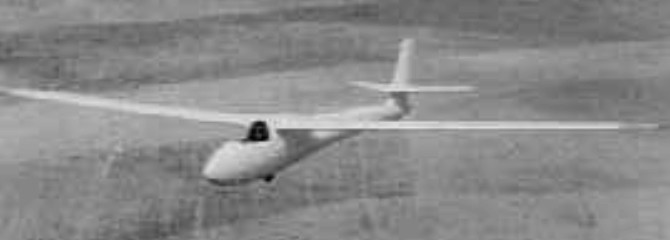
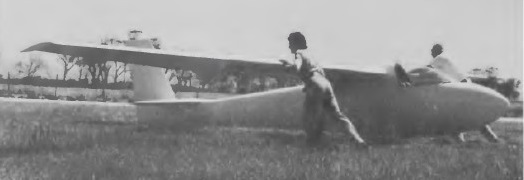
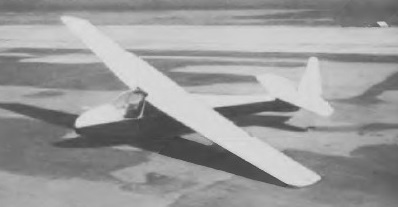
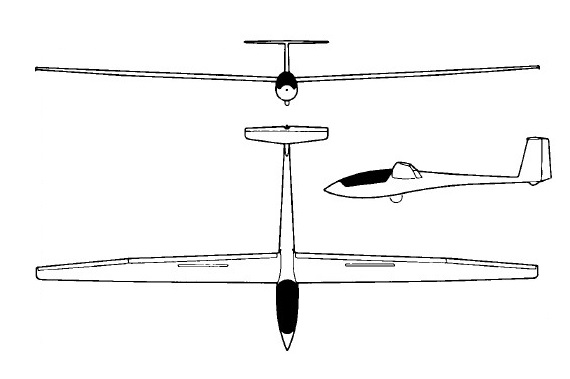
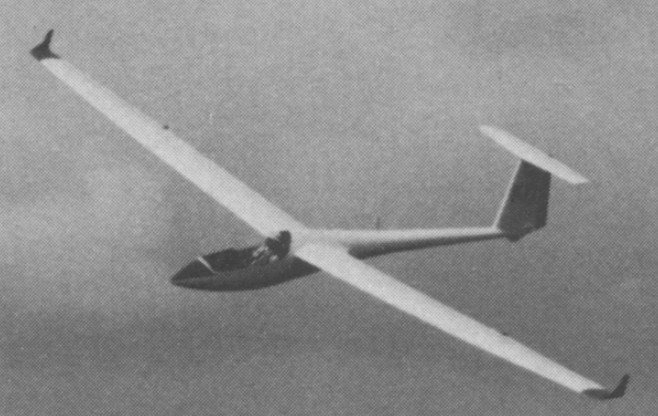
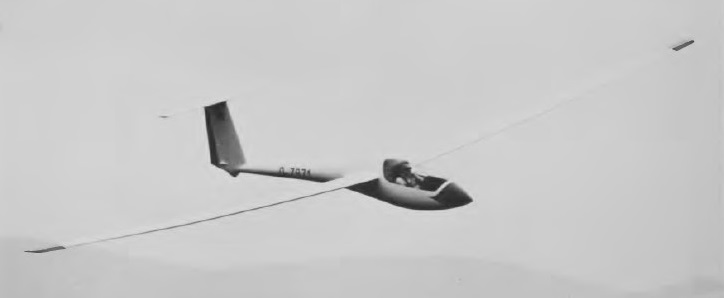
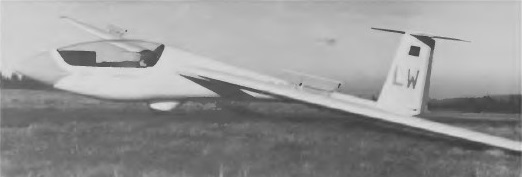
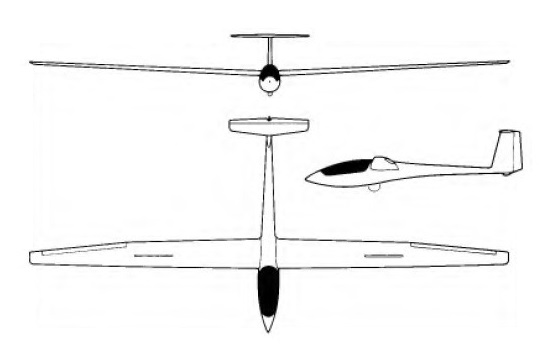
The ES 60B Super Arrow was developed from the Standard Class single-seater, the ES 60 Series 2 Boomerang, and the ES 59 Arrow; the Boomerang was designed in 1964 for competition flying, and the first of two prototypes made its first flight on 28 November 1964, followed by the second on 24 December that year. These were followed by six ES 60 Series 1s built in 1966, and 28 ES 60 Series 2s completed in 1967 and 1968, plus a few more built since then, this differing from the Series 1 in having the height of the plywood-covered fin reduced by 3in, and a lengthened sideways-opening Perspex cockpit canopy; later production Series 2s had the nose lengthened by 2.5 in, a larger monowheel and an adjustable seat back for the pilot. The Boomerang soon made its mark in contest flying, and for a time held all the Australian national speed records over 100km, 200km and 300km triangular closed circuits, at speeds of 54mph, 55mph and 59mph respectively.
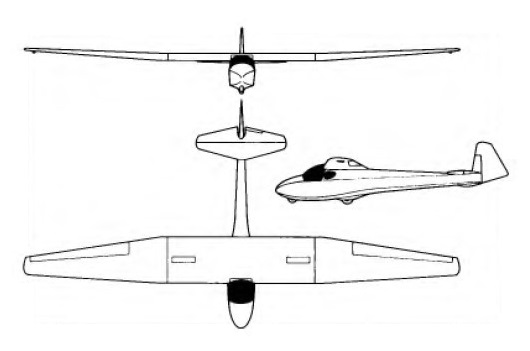
The Boomerang was succeeded by the ES 60B Super Arrow, also designed for competition flying, which first flew in prototype form on 22 September 1969 and which was awarded a C of A on 31 October that year. It was the same as the ES 60 Series 2 Boomerang but had the conventional tail unit of the ES 59 Arrow with an unswept, fixed tailplane mounted at the base of, and forward of the fin instead of the Boomerang’s swept-back ‘all flying’ tailplane, the halves of which were mounted separately on the fin about one-third of the way up, being secured by automatic spring-loaded bayonet couplings. In both cases the tailplanes were cantilever wooden structures with plywood and fabric covering, that of the Boomerang having a trim tab that also acted as an anti-balance tab, the fin being ply-covered and the wooden rudder fabric covered. Apart from their tailplanes, the two types are of the same wooden construction, with a cantilever highset one-piece wing with a laminated beech spar at the 50% chord line, a moulded plastic leading edge and birch ply covering back to 60% chord; wing tip ‘bumpers’ are fitted. There are no flaps, but metal scissor-type air brakes with epoxy-bonded wooden flanges are fitted at 55% chord; the wooden ailerons are plywood-covered. The ply-covered semimonocoque fuselage has glassfibre fairings, and the non-retractable monowheel has an expanding shoe brake; unlike the ES 59 Arrow, there is no nose skid, but there is a spring steel tailskid. The pilot sits under a sideways-opening jettisonable Perspex canopy, and has adjustable rudder pedals and seat back; the customer specifies what instruments are fitted, and oxygen and radio can also be carried.
ES 60B Super Arrow Span: 49 ft .5 in / 15.0 m Length: 23 ft 2.5 in / 7.04 m Height: 5 ft 0 in / 1.52 m Wing area: 138 sq.ft / 12.87 sq.m Aspect ratio: 17.5 Wing section: Wortmann FX-61-184/60-126 Empty weight: 488 lb / 221.5 kg Max weight: 765 lb / 347 kg Water ballast: None Max wing loading: 26.96 kg/sq.m / 5.52 lb/sq ft Max speed: 140 mph / 121 kt / 225 km/h (in smooth air) Max aero-tow speed: 103 mph / 89 kt / 165 km/h Stalling speed: 32.5 kt / 60 km/h Min sinking speed: 2.3 ft/sec / 0.7 m/sec at 47 mph / 40 kt / 75 km/h Best glide ratio: 30.7:1 at 53 mph / 49 kt / 90 km/h
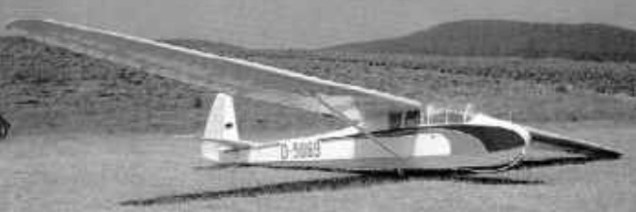
Edmund Schneider, who manufactured at Grunau in Silesia, Germany before World War II, moved to Australia after the war with his two sons and this single-seat general purpose club sailplane was commissioned by the Gliding Federation of Australia.
The prototype Arrow flew for the first time on 14 April 1962, and completed its airworthiness trials on 7 May that year.
The cantilever high-set plywood-covered wooden wing has ‘bumpers’ at the tips and a forward sweep of 3° at the spar; there are wooden scissor-type air brakes at the 45% chord line and flaps are not fitted, the wooden ailerons being ply-covered. A one piece wing designed by Edmund’s son Harry. The fuselage is plywood-covered semimonocoque and the tail unit a ply-covered cantilever wooden structure. There is a non-retractable monowheel with a band brake, and a foam rubber-sprung nose skid forward of it which has a steel shoe; there is also a spring steel tailskid. The pilot sits under a sideways-opening Perspex canopy, and is provided with cushions and a sunshade; extra instrumentation can be installed if required.
Small-scale production was put in hand, and 10 Arrows had been built by 1966, the latest production version being the ES 59 Series 2, which had a shorter swept fin and rudder than the initial production aircraft.
A two-piece 15 m wing version was contructed for the 1965 World Championships.
ES 59 Series 2 Span: 43 ft 5 in Length: 22 ft 2.5 in Height: 4 ft 7 in Wing area: 118.3 sqft Aspect ratio: 16.0 Empty weight: 375 lb Max weight: 616 lb Max speed: 148 mph Max aero-tow speed: 80 mph Min sinking speed: 2.7 ft/sec at 46 mph Best glide ratio: 28:1 at 51 mph
After the war Edmund Schneider, one of the pioneer prewar German sailplane designers and co-creator and manufacturer of the Grunau Baby trainer, was invited by the Gliding Federation of Australia to set up a sailplane factory in that country, and so he transferred his operations there, Edmund Schneider Pty Ltd being duly formed as a private venture at Parafield airport near Adelaide, South Australia. Its first design here was the Kangaroo two-seater, which first flew in 1953, and this was followed by an improved version of the Baby, the Grunau Baby 4, the Nymph and Kingfisher, and the ES 52 Kookaburra two-seater side-by-side trainer, which was used by most of the Australian gliding clubs and is semi-aerobatic. Of conventional wooden construction, the ES 52 Kookaburra first flew in prototype form on 20 June 1954, and four Mk Is, eleven Mk IIs and eight Mk IIIs were built. The ES 52B Kookabura IV, which first flew in 1959, featured an increased wing span of 48ft 9in, a nose wheel in place of the rubber-sprung wooden nose skid ahead of the monowheel, a brake for the monowheel and an enlarged cockpit.
By early 1966 a total of 23 Mk IVs had been built, and production ceased when Schneider decided to build the Schleicher Ka 7 two seater under licence. The Mk III’s cantilever high-set one-piece wing is a single-spar wooden structure with a D-section plywood leading edge and fabric covering; there are wooden scissor-type air brakes above and below each wing, and the sealed-gap ailerons are fabric-covered. The fuselage is a plywood-covered semi-monocoque made up of wooden frames and stringers, and there is a non-retractable unsprung monowheel, without a brake on the Mks I-III, these versions having the nose skid and the Mk IV a nose wheel; all Marks have a tailskid. The tail unit is a fabric-covered wooden structure, with a trim tab in the port elevator. The one-piece Perspex canopy hinges rearwards to open, and the two pilots sit in slightly staggered side-by-side seats; there is also a window on each side under the leading edge wing root to improve visibility. Extra instrumentation can be fitted if the customer so desires.
ES 52 Kookaburra Wing span: 11.7 m / 38 ft 4.5 in Length: 7.9 m / 25 ft 11 in Height: 1.38m / 4ft 6.5 in Wing area: 15.0 sq.m / 161.5 sq ft Wing section: Gottingen 549/M-12 Aspect ratio: 9.13 Empty weight: 220 kg / 485 lb Max weight: 393 kg / 866 lb Water ballast: None Max wing loading: 26.2 kg/sq.m / 5.36 lb/sq ft Max speed: 119 kt / 220 km/h Stalling speed: 36 kt / 67 km/h Min sinking speed: 1.05 m/sec / 3.4 ft/sec at 39 kt / 72 km/h Max rough air speed: 81.5 kt / 151 km/h Best glide ratio: 20 at 44 kt / 81 km/h
ES52 Mk.III Span: 38ft 5in Length: 25ft 11 in Height: 4ft 6.5 in Wing area: 161.5sqft Aspect ratio: 9.13 Empty weight: 484lb Max weight: 865lb Max speed: 136mph (in smooth air) Max aero-tow speed: 70mph Min sinking speed: 3.36ft/sec at 45mph Best glide ratio: 20:1 at 50 mph
Edmund Schneider, who designed the Grunau Baby and manufactured at Grunau in Silesia, Germany before World War II, moved to Australia after the war with his two sons. With support from the Gliding Federtion of Australia, Schneider established the sailplane business there and produced several new sailplane designs.
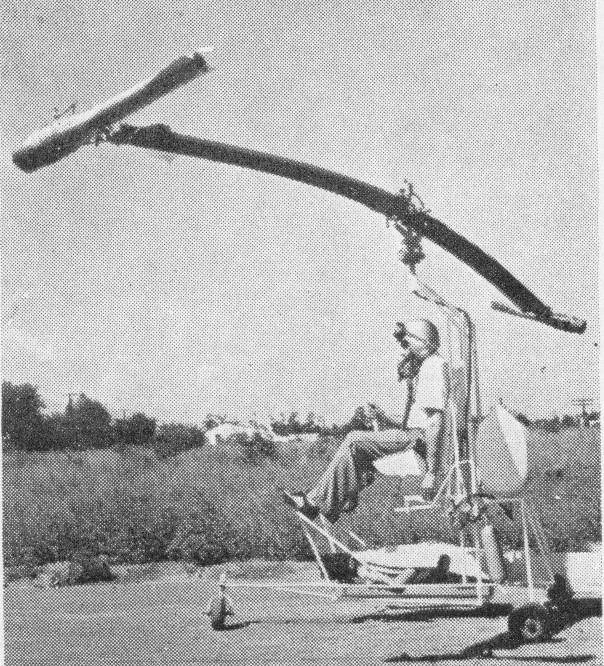
A prototype built circa 1958 by George Schmidt, an engineer who was formerly with Focke-Achgelis in Germany. Designed primarily to rescue wounded from front-line areas: one stretcher can be carried beneath the pilot’s seat.
Power: 2 x 10⁵ lb Schmidt pulse-jets Rotors: 2-blade tip-powered main Rotor diameter: 17 ft 5 in Loaded weight: 775 lb Max. speed: 132 mph Ceiling: 12,300 ft Seats: 2
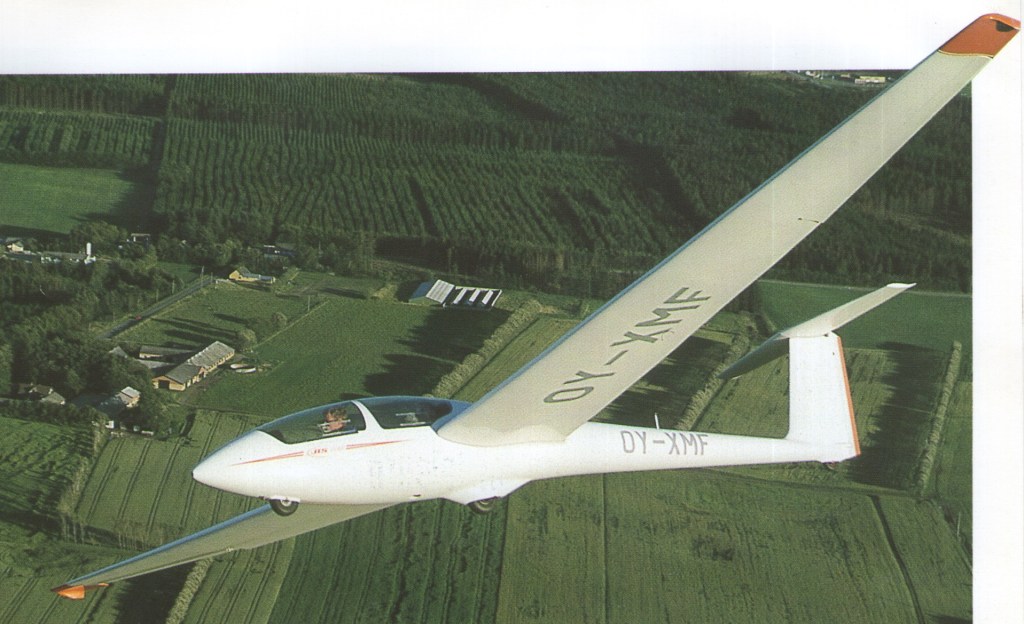
Designed by Rudolf Kaiser, the ASK-21 was Schleicher’s entry to the composite two-seat sailplane market, first flew in 1979 and is approved for a number of aerobatic maneuvers. Originally an improved version of the AS-K 13 with glassfibre wings and T-tail was studied but the requirement for a new two-seater was met instead of the AS-K 21. Differing from the AS-K 13 in having a wing span increased to 17m (55ft 9.25in), a T-tail, a more streamlined fuselage, and a non-retractable semi-recessed nose wheel, as well as a sprung fixed monowheel with drum brake and a steel-shod rubber tailskid. A tailwheel was available as an option instead of a skid. The structure is fiberglass and foam wing, fiberglass honeycomb sandwich fuselage and tail. Schempp-Hirth type airbrakes (upper surface only), ailerons and elevators are operated by pushrods in ball bearing; the rudder is cable-operated. Wings attach with a tongue- and- fork connection and two pins.
The cantilever single-spar mid-set wings have Wortmann aerofoil sections and 4° dihedral, and there are Schempp-Hirth air brakes in the upper and lower surfaces. The wing tips are turned down to reduce tip stalling. The tailplane is fixed, with a separate elevator with spring trim. Unlike the ASK13, there are two separate cockpit canopy sections, the front one opening forwards and the rear one rearwards, and the pilots sit in a semi-reclining position, with dual controls.
Production of the AS-K 21 began in 1979 and the prototype first flew in December 1978. A flight test evaluation by Dick Johnson demonstrated a best L/D of 31:1.
The United States Air Force Academy operates 4 ASK-21’s as the TG-9.
Span: 17.9 m / 55 ft 9.25 in Length: 8.35 m / 28 ft 10 in Height: 1.55 m / 5 ft 3 in Wing area: 17.95 sq.m / 193.21 sqft Aspect ratio: 16.1 Airfoil: Wortmann FX-S0 2-196 and FX 60 – 126 Empty weight: 360 kg / 794 lb Gross Weight: 600 kg / 1323 lb Water ballast: None Wing Load: 31 kg/sq.m / 6.34 lb/sq.ft Max speed: 135 kt / 250 km/h Stalling speed: 33 kt / 62 km/h Max aero-tow speed: 96 mph 94 kt / 175 km/h Min sinking speed: 0.65 m/s / 2.13 ft/sec at 42 mph L/DMax: 35 85 kph / 46 kt / 53 mph Best glide ratio: 34:1 at 59 mph Seats: 2
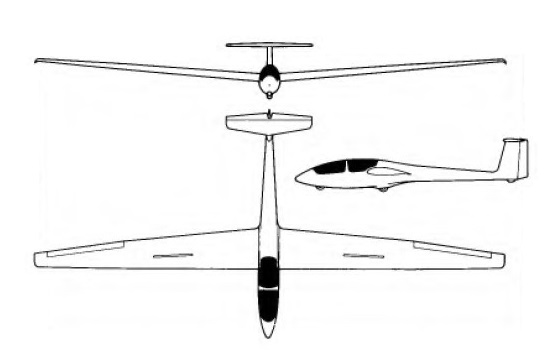
The AS-W20, like the AS-W 19, was designed by Dipl-lng Gerhard Waibel and is a 15m Unrestricted Class version of the AS-W 19 fitted with camber changing flaps to take advantage of the new March 1975 CIVV regulations for this class of sailplane. It has an additional high drag range of flap movement incorporating a special mechanism to eliminate pitch and airspeed changes when the flap position is changed between 30° and 55°. The AS-W 20 also has a new device, developed by Wil Schuemann, that automatically co-ordinates and optimises the flap position to the prevailing airspeed so as to give optimum glide performance and to reduce the pilot’s workload. This device also eliminates the need for underwing air brakes, although the AS-W 20 has larger spoilers in the wing upper surfaces than the AS-W 19.
Apart from its flaps, the AS-W 20 is very similar to the AS-W 19, with longer ailerons of narrower chord, which rise to -8° when the flaps are lowered to 55° for landing, and with the same glassfibre sandwich construction and T-tail; up to 265lb of water ballast can be carried, and the cockpit canopy hinges to open upward like the AS-W 19’s.
The fiberglass ASW-20 prototype first flew on 29 January 1977 and was a success, winning numerous world and national championships. Built for the 15 m racing class, it features trailing edge flaps which interconnect with the ailerons and allow the entire trailing edge to operate as a flap between -9 and +5 degrees. The flaps also act as ailerons, but deflect only half of the aileron amount. The fuselage is similar to that of the ASW-19. Schempp-Hirth type airbrakes are provided on the upper wing surface only and operate in conjunction with the flaps at approach setting.
The -20B model was introduced in 1983 incorporating new aerodynamic developments in the form of pneumatic jets (about 860) placed in the lower wing surface, drawing impact air from pitot inlets and exhausting it into the boundary layer to delay underwing flow separation. The B model has its gross weight increased to 525 kg / 1,157 lb. Other changes include automatic elevator hookup, an instrument cluster attached to the forward-hinged canopy, and a hydraulic disc brake.
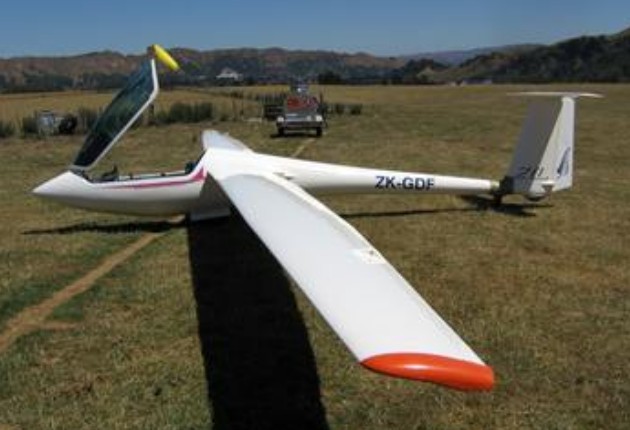
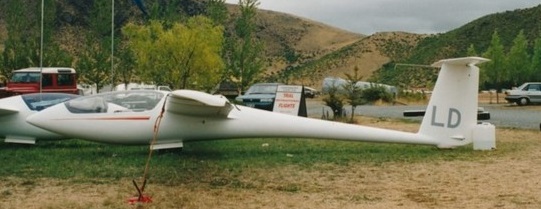
Schleicher ASW 20 ZK-GLD
The -20C model has a slightly modified cockpit, an maximum gross weight of 454 kg / 1,001 lb and water ballast of 120 kg / 264 lb.
Schleicher also introduced an ASW-20L variant (the L denoting Lang, or long), with span extended to 16.59 m (54ft 1.5in) by use of detachable tip extensions, making the ASW- 20L, -20BL and 20CL for Open Class competition. 48 of this variant had been built by the beginning of 1980. In these, water ballast is restricted to 50 kg / 110 lb and gross weight is 430 kg / 948 lb (BL) and 380 kg / 837 lb and no ballast (CL). With the extended tips, best glide ratio goes up to about 46.
The Schleicher ASW 20-L is a high performance single-seat competition glider of all-composite construction with a mid-wing layout and T-tail. The L version indicates optional extended wing tips from 15 to 16.59 metres. The glider’s flight controls consist of a cable operated rudder and push-pull rods for the elevator, ailerons, flaps and the upper wing surface airbrakes. The flap system incorporates a mechanical mixing unit that provides partial flap movement to augment aileron control when the control stick is moved laterally. In addition, the flaps have five selectable positions that are designed to maximise laminar flow over a variety of speed ranges. The flap positions that provide the low drag performance are position one to four. Flap five is a high drag configuration and used for landing.
The range of speeds to fly, at particular flap positions and various wing loadings are provided in the Flight Manual. For example, flap position four is recommended when thermalling. At a wing loading of 1.3g, (40 degrees angle of bank), the best low drag speeds are between 49 and 55 kts. The Flight Manual also provides minimum speeds to fly for the various flap configurations. At 454 kg MAUW, in a wings level attitude at flap position four, the recommended minimum speed is 43 kts. It is claimed the glider spins easier and flatter in the Flap 4 and 5 configurations than with negative (up) flap settings. The explanation goes on further to point out that negative flap should be used to prevent wing drops and spins but recognises that this is impossible when thermalling at low level. In that regard, the Flight Manual recommends the use of safety speeds in excess of the minimum recommended. For spin recovery, the Flight Manual includes a recommended recovery technique and some additional remarks: ‘(1) Apply opposite rudder, i.e. against the direction of rotation of the spin. (2) Short pause. (3) Ease the control column forward, until the rotation ceases and sound airflow is established again. (4) Centralise rudder and allow sailplane to dive out. Recovery from spin can be easier achieved if the flaps are set in negative position. Extending the airbrakes slows down rotational speed but needs more height for recovery and therefor is less recommended. If the Schleicher ASW 20 recovers itself from a spin, it starts a spiral like side-slip with high increase in speed. Recovery from this flight attitude is done by usual control inputs. At forward C. of G. positions the ASW 20 -L spins very steeply and starts a spiral dive in less than one turn, whereas at rear C. of G. positions the gliders pitch becomes steeper and steeper after an initial flat and slow turn (approximately 30 degrees negative pitch) until the transition into a spiral-dive develops after five to seven turns.’
The ASW-20 was also license built by Centrair in France in three variants. The ASW-20F and ASW-20FL are the Centrair equivalents to the 20 B and 20BL model while the 20 FP is an F model with NASA winglets designed to improve performance in weak conditions. The Centrair ASW 20F is said to have improved water ballast and wheel brake systems, as well as a better cockpit finish. This received its French certification on 31 March 1978.
Two AS-W 20s at the 1981 World Gliding Championships were fitted with winglets for improved performance. ASW-20’s won 2nd and 3rd places in the 15 m class at the 1983 World Championships at Hobbs, NM. Roy Mcmaster, Karl Striedeck and John Seymour won jointly, with others, the world triangle distance record of 1,435 km / 891.6 miles in 1994 in an ASW-20B.
No. of aircraft built to 6/30/81 365. 1982 Standard price $22,500.
ASW-20 Span: 49 ft 2.5 in / 15.0 m Length: 22 ft 4.5 in / 6.82 m Height: 4 ft 9 in / 1.45 m Wing area: 113.0 sq.ft / 10.5 sq.m Wing section: Wortmann FX-62K-131 Aspect ratio: 21.43 Empty weight: 551 lb / 250 kg Max weight: 1,000 lb / 454 kg Max speed: 168 mph (in smooth air) Max useful load: 450 b Water ballast: 265 lb / 120 kg Max wing loading: 8.85 lb/sq.ft / 43.2 kg/sq.m Max speed: 146 kt / 270 km/h Max aero-tow speed: 112 mph Min sinking speed: 1.97 ft/sec / 0.60 m/sec at 45.5 mph 39 kt / 73 km/h Stall speed: 35 kt / 65 km/h Rough air airspeed: 97 kt / 180 km/h Best glide ratio: 43:1 at 62 mph Glide ratio (L/D): 42:1 at 54 kt / 100 km/h Seats: 1
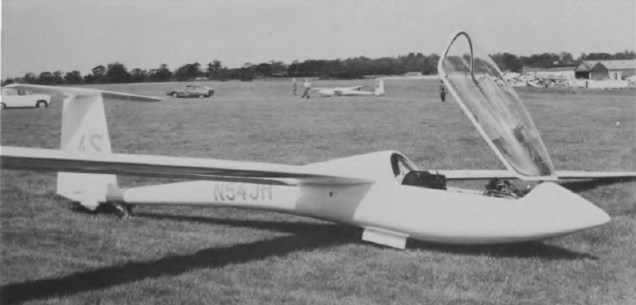
Designed by Gerhard Waibel, the fiberglass ASW-19 superseded the ASW-15B as Schleicher’s Standard Class Sailpane using a thinner airfoil and a T tail assembly. The ASW 19 was designed to take advantage of the new Standard Class and 15m Unrestricted Class rules of 1975, which now permit camber-changing flaps and water ballast.
The cantilever laminar flow mid-wings are of glassfibre/foam sandwich construction, with a glassfibre roving main spar and Schempp-Hirth metal air brakes above and below each wing. Up to 220lb of water ballast can be carried. The tail unit is also of glassfibre/foam sandwich and the tailplane is an all-moving surface; the AS-W 19B has a tailplane and elevator, and air brakes on the upper wing only. The fuselage is a glassfibre/honeycomb sandwich structure with a reinforced keel, and the nose tapers to a point like that of the AS-W 17. There is a retractable monowheel with an internal drum brake and a tailskid.
The pilot sits in a semi-reclining seat under a large flush-fitting one-piece canopy which hinges at its front end to open upwards. The AS-W 19 Club is a club class version with a fixed unsprung monowheel, no water ballast carried and larger air brakes.
The AS-W 19 first flew in prototype form on 23 November 1975, and production began in the spring of 1976. No. of aircraft built to 6/30/81 319. 1982 Standard price: $19,500.
Bear Selen of the Netherlands won the Standard Class at the 1978 World Championships at Chateauroux in France flying an ASW-19.
The Royal Air Force used 5 ASW-19’s (known as the Valiant T. Mk.1) in its Air Cadet training program.
ASW-19 Span: 15.0 m / 49 ft 2.5 in Length: 6.8 m / 22 ft 3 3/4 in Height: 1.42 m / 4 ft 8 in Wing area: 10.86 sq.m / 118.4 sq.ft Aspect ratio: 20.4 Airfoil: Wortmann FX 61-163/ FX 60-126 Empty weight: 250 kg / 551 lb Gross Weight: 450 kg / 994 lb Payload: 200 kg / 442 lb Water ballast: 100 kg / 220 lb Wing Load: 41.06 kg/sq.m / 8.47 lb/sq.ft Max speed: 152 mph / 138 kt / 255 km/h Max aero-tow speed: 109 mph Max rough air speed: 132 kt / 245 km/h Stalling speed: 36 kt / 67 km/h Min sinking speed: 0.62 m/s / 2.30 ft/sec / 1.20 kt at 53 mph / 39 kt / 72 km/h Best glide ratio: 38.5:1 at 67 mph / 60 kt / 110 km/h Seats: 1
ASW19B Seats: 1 Length: 22 ft Height: 5 ft Wingspan: 49 ft Wing area: 118.4 sq.ft Wing aspect ration: 20.4 Max wt: 1000 lb Standard empty wt: 540 lb Max useful load: 460 lb Water ballast: 220 lb Wing loading: 8.4 lbs/sq.ft Min sink: 122 fpm @ 39 kt Max speed: 138 kt Stall speed: 35 kt Glide ratio: 39-1 @ 51 kt Rough air airspeed: 95 kt