Formed 1935, but for several years was concerned mainly with aircraft repair work and management of flying school and airport (Prestwick, Scotland).
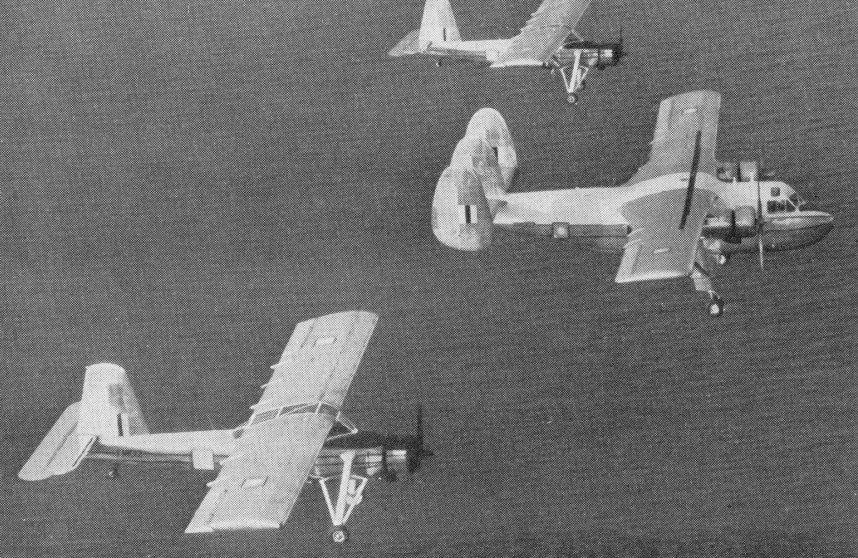
First aircraft produced was Prestwick Pioneer single-engined five-seat STOL monoplane, first flown 1950. Twin Pioneer of 1957 first appeared as 16-passenger civil type, but was used also by RAF.
Malayan Air Force 1959
Company re-engaged in important repair, maintenance and modification work, involving Lockheed aircraft, and made freighter conversion of Vickers Viscount. Has made large components for Lockheed Hercules over long period. Final aircraft under its own name were Bulldog (flown originally in 1968 as military trainer version of Beagle Pup); Bullfinch with retractable landing gear, first flown August 1976; and twin-turboprop Jetstream, developed 1966-1970 by Handley Page and continued by BAe.
The Beagle Aircraft Ltd Bulldog was taken up by Scottish Aviation Ltd after Beagle went into receivership in 1970 and finally found its last home with British Aero¬space in 1978.
Handley-Page, through Jetstream Aircraft, became part of Scottish Aviation in 1970.
Merged into British Aerospace in April 1977; as a British Aerospace company offered support facilities for Beagle Pup, B.206, and Basset.
Construction of the aircraft was started by Ron Scott in the mid 1960s starting with a model rather than a drawing.
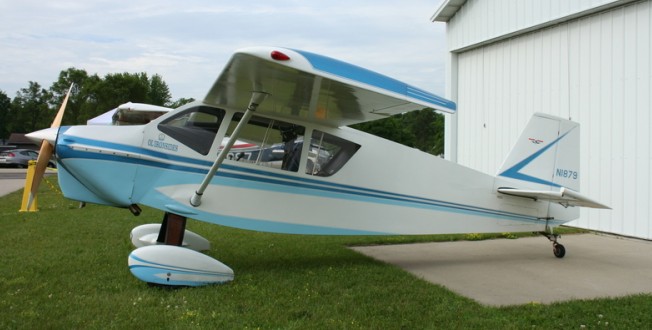
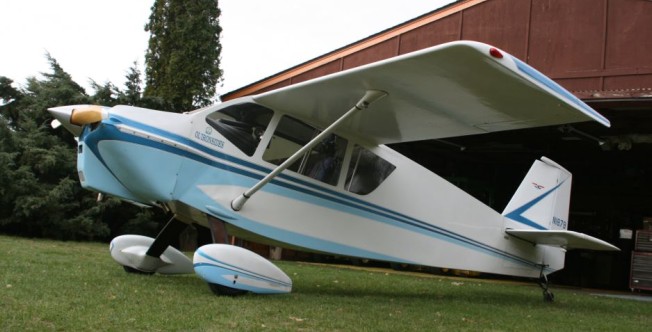
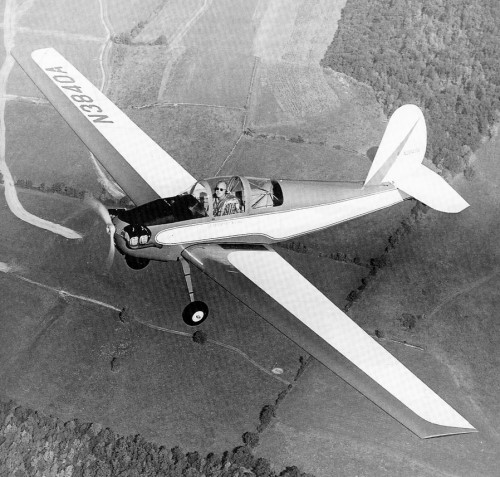
The Scott Ol’ Ironsides is an early homebuilt aircraft using wood construction with stressed fiberglass panel construction. Ol’ Ironsides is a strut-braced high-wing aircraft with conventional landing gear arrangement. The wooden fuselage is made of Sitka Spruce. Fiberglass composite skins were formed in 4 x 8 sheets using two layers of cloth with resin over a waxed Masonite table. The landing gear legs, fuel tank, wink tips, wheel pants, and cowling were also formed out of fibre-glass. Scott integrated elements of the Bowers Fly Baby and Champion J-1 Jupiter construction with the Wittman Tailwind airfoil and general layout into the design. The craft cost US$1530 in 1969.
Ol’ Ironsides first flew on 22 November 1969 with a Continental C-85 engine sourced from a Cessna 140. In 1985 the prototype aircraft was restored and re-engined with a Continental O-200 and Sterba wooden propeller.
A 79-year-old pilot suffered head injuries after crashing his single-engine airplane at an airstrip in East Troy on Saturday, November 24th 2012. The crash happened just before 3:30 p.m. It occurred on a privately-maintained grass airstrip known as Air Troy Estates. Many residents who reside nearby have planes and hangars adjacent to the runway. The pilot, identified as Ronald Scott, was attempting to land his plane on the runway when he crashed. He had to be removed from the plane — which ended upside down. He was taken to a Waukesha Hospital to be treated for his injuries. Scott was flying an experimental 1969 Scottbuilt (he designed and built this plane) fixed wing XS-1 known as “Old Iron Sides”. The Walworth County Sheriff’s Office and the FAA were coordinating this investigation.
Ol’ Ironsides Construction Number (C/N): 1 Registration Number: N1879 Engine: 1 × Continental C-85, 85 hp (63 kW) Engine: 1 × Continental O-200, 100 hp (75 kW) Wingspan: 19 ft 6 in (5.94 m) Wing area: 79.2 sq ft (7.36 m2) Length: 17 ft (5.2 m) Empty weight: 720 lb (327 kg) Gross weight: 1,125 lb (510 kg) Fuel capacity: 18 USgal Cruise speed: 117 kn; 217 km/h (135 mph) , 145 mph (233 km/h) with O-200 Stall speed: 48 kn; 89 km/h (55 mph) Rate of climb: 1,200 ft/min (6.1 m/s) Seats: 1
A division of Scintex SA, a mechanical and electrical equipment manufacturer, held an exclusive license to build improved versions of the Piel Emeraude. Built the CP301C, also in C1, C2 and C3 versions; the two-seat Super Emeraude with fixed landing gear as the CP1310/CP1315; and the 4/5-seat ML 250 Rubis, with retractable landing gear, which first flew on June 1962.
Der Fledermaus is a one-of-a-kind homebuilt designed and built by E. Alvin Schubert with specific parameters: ease of entry good visibility stability in flight, economy of building and operation, single-place only able to use a VW engine. He picked up a used 25-hp VW in 1960 and rebuilt it to deliver 36-hp with 88-mm cylinders and heads. All goals were achieved. Built circa 1975, it was registered N7873.
Gross weight 745 lbs Empty weight 441 lb Fuel capacity 7 Usgal Wingspan 21 ft Length 16 ft Engine 25-hp VW uprated to 36 hp with 88mm cylinders Vmax 120 mph Cruise speed 90 mph IAS Climb rate 600-800 fpm Ceiling 10,000 ft Takeoff run 600 ft Landing roll 800 ft
Schweizer developed a line of gliders starting in World War II. The 2-31 was not intended to be a motor glider, but rather a light aircraft utilizing some glider and sailplane technologies, common parts with other Schweizer designs and an affordable price as a result of using smaller powerplants.
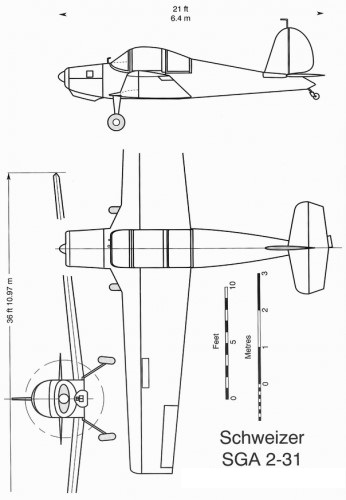
A two-seat version of the 1-30, the Schweizer SA 2-31 first flew in July 1960 but not put into production due to competition in the light aircraft market. No further motorgliders were built by the company until 1982.
Schweizer SA 2-31 Wingspan: 36 ft (11 m) Length: 21 ft (6.4 m) Crew: one Capacity: one passenger
The Schweizer SA 1-30 was the first entry by Schweizer in the powered aircraft market. The 1-30 was not intended to be a motor glider, but rather a light aircraft utilizing some glider and sailplane technologies, common parts with other Schweizer designs and an affordable price as a result of using smaller powerplants. Removable wings, and the ability to be transported by trailer were also criteria for keeping airport-based hangar costs down.
The 1-30 shares the same wings and tail surfaces as the 1-26 glider. The fuselage is of aluminum construction with a welded steel tube tail structure. The wings are removable using the same design as the 1-26. The engine uses a cowling with exposed cylinders like a J-3 Cub for simplicity and cooling efficiency. Wing mounted spoilers were retained from the 1-26, allowing steep low-speed descents at about a 5:1 glide ratio. Three sets of wings were tested including a set (the third) from the model 2-31. An early configuration with the full length SGS 1-26B wings, fuselage and tails, cub cowl and Cessna 170 landing gear legs.
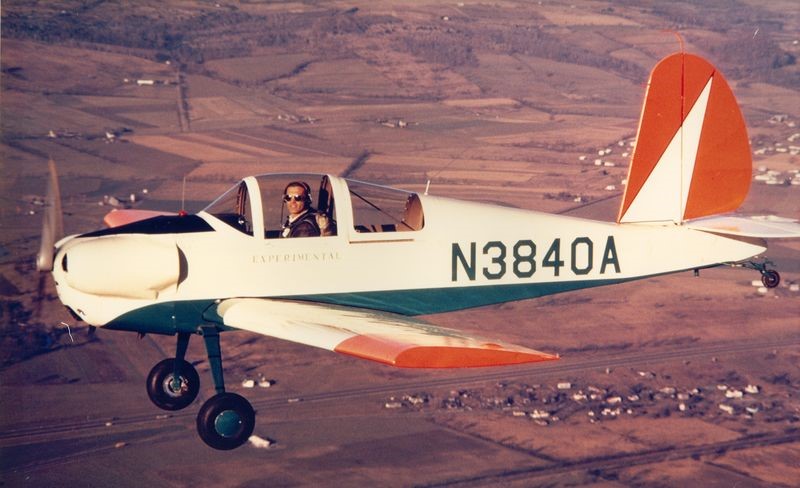
Construction of the prototype was started in April 1958 and first flew in July. The aircraft was tested as a glider aero-towing aircraft using a Schweizer SGU 2-22C. The single-place 1-30 was not intended to go into production, the two-place 2-31 was envisioned as the production model, but was also not produced beyond a single prototype.
The SA 1-30 was modified with a 4 ft (122 cm) shorter wing by simply clipping the length of the wing and aileron at the tips and a fully cowled more powerful engine, re-designated SAU 1-30.
The aircraft was painted twice; once a light tan & red with the second being the tan, green and “day-glow” orange.
Schweizer SA 1-30 Engine: 1 × Continental A65, 65 hp (48 kW) Wingspan: 40 ft (12 m) Wing area: 160 sq ft (15 sq,m) Aspect ratio: 10 Length: 20 ft 3 in (6.17 m) Empty weight: 700 lb (318 kg) Gross weight: 1,100 lb (499 kg) Maximum speed: 96 kn (110 mph, 180 km/h) Cruise speed: 87 kn (100 mph, 160 km/h) Stall speed: 33 kn (38 mph, 61 km/h) Rate of climb: 1,000 ft/min (5.1 m/s) Capacity: 1
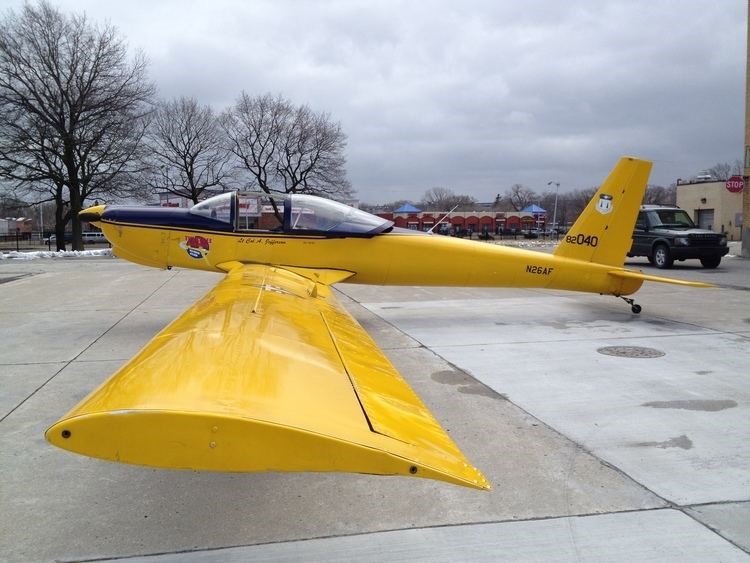
The SGM 2-37 self-launching two-place, side-by-side, fixed gear, motorglider designed by Leslie Schweizer at the request of the USAF for use at USAFA.
To save both money and development time the aircraft used a number of existing aircraft components: Nose, cowling and engine installation adapted from the Piper PA-38 Tomahawk Wings adapted from the Schweizer SGS 1-36 Sprite, including extensions to bring it from the Sprite’s 46.2 feet (14.1 m) to 59.5 feet (18.1 m) and leading edge cuffs to improve stall characteristics Tail from the Schweizer SGS 2-32
The design was intended to be available as a civil aircraft as well as a military aircraft. The USAF version was delivered with a Lycoming O-235-L2C 4-cylinder aircraft engine of 112 hp (84 kW). The civil version offered the same engine or an option of a Lycoming O-320 of 150 hp (112 kW) or a Lycoming O-360 of 180 hp (134 kW).
The aircraft is of all-metal aluminum monocoque construction. The engine cowling is made from fiberglass and plastics are employed in some of the nonstructural components.
The 2–37 features a 27 cu ft (760 L) baggage compartment behind the side-by-side seating. The aircraft does not have flaps, but instead has top-and-bottom wing-mounted balanced divebrakes, similar to other Schweizer glider designs, and has the capacity to operate as a towplane for other gliders.
First flying in 1982, a total of twelve were produced between 1982 and 1988, including nine for the United States Air Force Academy, which designated it the TG-7A. The TG-7A was retired from USAFA service in April 2003.
USAFA TG-7A
The SGM 2–37 was certified by the Federal Aviation Administration under type certificate G1NE on 22 March 1983. The 2–37 type certificate was later held by K & L Soaring of Cayuta, New York. K & L Soaring provided all parts and support for the Schweizer line of sailplanes.
Soaring, the journal of the Soaring Society of America, described the SGM 2–37 as: “Very versatile, very promising, very expensive”. The publication’s review noted that the $70,000 base price did not include a feathering propeller, gyro instruments, wheel fairings, long range fuel tanks or other optional extras.
Examples of the TG-7 were used by the US Army from 1985 on covert surveillance duties under the Grisly Hunter project. The two aircraft were then transferred to the US Coast Guard by mid 1989, were modified and were re-designated RG-8A. The aircraft were used on coastal patrols from the US Coast Guard base at Miami wearing a grey low visibility color scheme in 1989.
RG-8A surveillance aircraft of the US Coast Guard at Opa Locka, Miami, in 1989.
There were nine aircraft still registered in the US in April 2008. Current owners include the Tuskegee Airmen National Historical Museum and designer Leslie E. Schweizer.
The SA 2-37A is a two-seat special-mission surveillance aircraft built for the Central Intelligence Agency and US Army and equipped with a Lycoming O-540-B powerplant of 235 hp (175kW) and first flown in 1982 and eight. The US aircraft register records six SA-2-37As, including four belonging to Vantage Aircraft Leasing with serial numbers as high as 8. All are in the experimental exhibition category.
The SA 2-37B is a development of the 2-37A equipped with a Lycoming TIO-540-AB1AD powerplant of 250 hp. The aircraft is optimized for covert surveillance missions and carries FLIR and electronic sensors. It has a 500 lb (231 kg) sensor payload in a 70-cubic-foot (2,000 L) fuselage bay. With a fuel capacity of 99 US gallons (370 L) it can remain on station for up to 12 hours. Gross weight is 4300 lb (1950 kg). The US aircraft registry records four SA 2-37Bs, all owned by Schweizer Aircraft. All are in the experimental Research and Development category.
Operators also included the Colombian Air Force and Mexican Air Force.
SA2-37B of the Aerial Surveillance Squadron, 3rd Air Group, Mexican Air Force at Santa Lucia Air Force Base
The 2–37 was later developed into the SA 3–38, known in military service as the Schweizer RU-38 Twin Condor.
SGM 2–37 / TG-7A Engine: 1 × Lycoming O-235-L2C, 112 hp (84 kW) Prop: aluminum fixed pitch Wingspan: 59 ft 6 in (18.14 m) Wing area: 195.7 ft2 (18.18 m2) Airfoil: Wortmann Fx 61–163 Aspect ratio: 17.9 Length: 27 ft 6 in (8.5 m) Height: 7 ft 8 in (2.4 m) Empty weight: 1200 lb (544 kg) Useful load: 650 lb (295 kg) Loaded weight: 1850 lb (839 kg) Max. takeoff weight: 1850 lb (839 kg) Never exceed speed: 135 mph (219 km/h) Maximum speed: 135 mph (181 km/h) Cruise speed: 112 mph (181 km/h) Stall speed: 48 mph with divebrakes closed (78 km/h) Range: 230 mi (372 km) Service ceiling: 14,000 ft (4300 m) L/DMax: 28 MinSink: 0.96 m/s / 3.16 fps / 1.87 kt Glide ratio: 19.3:1 – 19.7:1 Wing loading: 9.45 lb/ft2 (46.15 kg/m2) Power/mass: 16.51 lb/hp (0.100 kW/kg) Baggage compartment: 27 cu.ft / 760 lt Crew: two side-by-side
SA 2-37A Engine: 1 × Lycoming TIO-540-B, 235 hp (175kW) Crew: two side-by-side
SA 2-37B Engine: 1 × Lycoming TIO-540-AB1AD, 250 hp Gross weight: 4300 lb (1950 kg) Fuselage bay: 70-cubic-foot (2,000 L) Sensor payload: 500 lb (231 kg) Fuel capacity: 99 US gallons (370 lt) Time on station: 12 hr