After war Siebel produced the Si 222 Super-Hummel and 3-seat Si 308.
Post WW2
Siebel MBB-SIAT 223 Flamingo
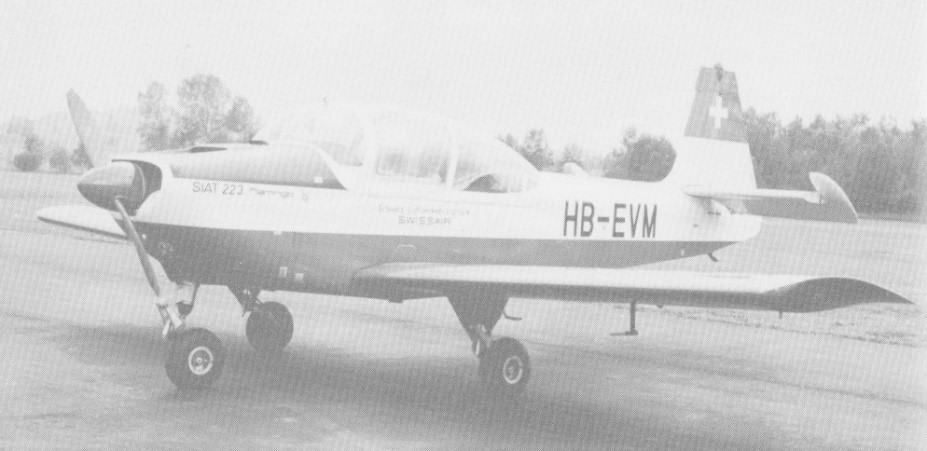
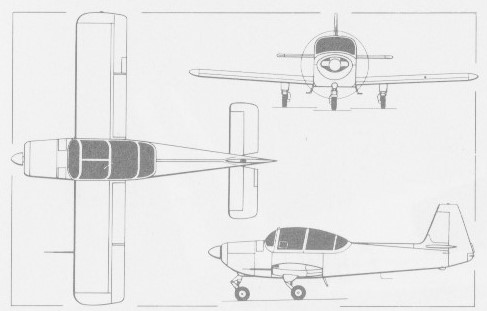
Designed by the Siebelwerke and first flying in 1967 the Flamingo was turned into an aerobatics trainer.
There are two seats side-by-side at the front of the cabin with provision for fitting a folding seat for one adult or two children in the baggage area. Removable dual controls are fitted.
Originally produced in Germany by SIAT, CASA produced the 223A1 basic version in the Normal Category as a there/four-seater or agricultural aircraft, or in Utility Category as a two-seater intended primarily for training airline pilots.
The 223K1 single-seat fully-aerobatic version with a specially modified IO-360-C1B engine and stressed to +6 / -4g was also originally produced in Germany by SIAT, then CASA in Spain.
Later, in 1986 the Flamingo was used as a testbed for the new developed Porsche aviation engine.
CASA 223A1
Engine: Lycoming IO-360-C1B, 200 hp
Wingspan: 27 ft 2 in / 8.28 m
Length: 24 ft 4.5 in / 7.43 m
Empty weight equipped: 1610 lb / 685 kg
MTOW Norm: 2315 lb / 1050 kg
Max cruise 76%: 116 kt / 134 mph / 216 kph
ROC SL: 846 fpm / 258 m/min
Service ceiling: 12,300 ft / 3750 m
Range 30min res: 620 nm / 715 mi / 1150 km
Seats: 3-4
Baggage capacity: 200 lb / 90 kg
Cabin length: 7 ft 2.5 in / 2.20 m
Cabin width: 3 ft 8 in / 1.12 m
Cabin height: 3 ft 11 in / 1.20 m
MBB 223 PFM Flamingo
Engine: Porsche PFM 3200, 207 hp
Wingspan: 27.231 ft / 8.3 m
Max take off weight: 2425.5 lb / 1100.0 kg
Max. speed: 124 kts / 230 km/h
Range: 756 nm / 1400 km
Crew: 3
Siebel Si 222
After war Siebel produced the Si 222 Super-Hummel and 3-seat Si 308.
Siebel / Flugzeugwerke Halle GmbH
Siebelwerke-ATG GmbH
Siebelwerke-ATG GmbH name was that of F. W. Siebel (1891-1954), associated with early sport-flying in Germany and who helped form the Klemm company, for which he took charge of new works at Halle (Saale). In 1937 Siebel established own company as Flugzeugwerke Halle GmbH, later renamed Siebelwerke-ATG GmbH. First aircraft was Fh 104 5-passenger monoplane of 1937. Si 201 was experimental military reconnaissance aircraft; Si 202 Hummel of 1938 a sideby- side 2-seater. In Second World War Siebel contributed to production of standard German military types; also built own Si 204 communications aircraft, though this was mainly built by SNCAC in France.
Klemm joined Siebel in 1940.
ATG joined Siebel in 1945 to become Siebel ATG (SIAT).
After war produced Si 222 Super-Hummel and 3-seat Si 308. As member of Nordflug group helped with Noratlas.
Siebel ATG (SIAT) joined MBB in 1973.
Sidou Joao Grande
Designed by Eng Antonio Menezes Sidou of Porto Alegre in the state of Rio Grande do Sul, this Brazilian tandem two-seater is intended for primary and advanced training and Open Class contest flying, and Eng Sidou hoped to begin construction of the Joao Grande (or Stork) at Paso Funde in Rio Grande do Sul early in 1978. It is a cantilever midwing monoplane similar to the IPD Urupema in appearance but with a T-tail and cambered wing tips, of all-wooden construction with plywood covering and abrasion-resistant plastics finish; it is designed for aerobatics and cloud flying. There are Schempp-Hirth air brakes on the upper and lower surfaces of the wing, which has long span ailerons and a dihedral of 3° 36′. The ailerons, elevators and rudder are both statically and dynamically balanced, a narrow-chord tailptene being mounted on top of the swept back fin. There is a retractable rubber-sprung monowheel with rubber shock absorbers and a brake, and a tail bumper. The two pilots sit in tandem under a long flush-fitting one-piece jettisonable Plexiglas cockpit canopy.
Span: 59 ft 0.75 in
Length: 29 ft 6.25 in
Height: 8 ft 3.25 in
Wing area: 139.5 sqft
Aspect ratio: 25.0
Empty weight: 595 lb
Max weight: 992 lb
Max speed: 112 mph (in rough air)
Min sinking speed: 1.87 ft/sec at 50.5 mph
Best glide ratio: 43.9:1 at 59 mph
Savoia-Marchetti SM.101
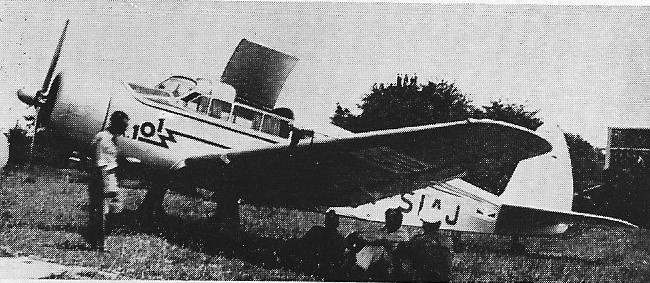
Flown for the first time on 20 December 1947, the SM.101 was designed as a six-seat light transport and is powered by a 235 hp Walter Bora radial engine.
Welded steel-tube construction is used with fabric covering. Fowler-type flaps are fitted to the wing and dual controls are fitted.
Engine: 235 hp Walter Bora
Wingspan: 54 ft 1 in
Wing area: 322 sq.ft
Length: 33 ft 6 in
Height: 9 ft 9.5 in
Empty weight: 2910 lb
Loaded weight: 4828 lb
Max speed: 149 mpg at SL
Cruise: 140 mph at 9020 ft
Range: 777 mi
Service ceiling: 15,750 ft
SIAI-Marchetti SV-20
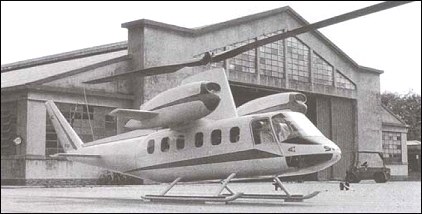
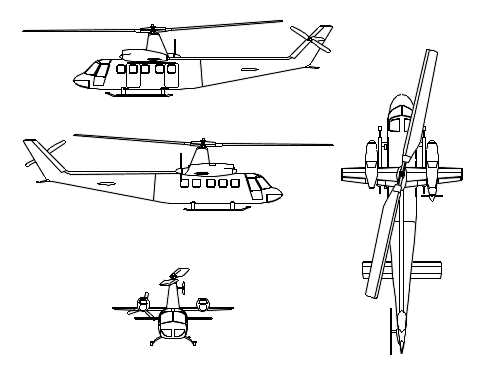
As a result of the seeming success of the SH-4, SIAI-Marchetti’s Sezione Volo Verticale (Vertical Flight Division) was formed in 1968 under the leadership of Dr. Emilio Bianchi.
In July of that year, development began of the SV-20A (A = Alato or “winged”) – a 14-seat twin-engine, winged, high-speed helicopter – as well as the SV-20C (C = “compound”) – an improved performance version with a pusher propeller. The SV-20 was a project to design a helicopter that weighed 4,000kg when carrying a load greater than its empty weight and cruised at 390km/h.
In December 1968, fabrication of dynamic components and major dynamic assemblies, as well as a number of airframes, was begun (first flight was originally expected in 1970). A full-scale mock-up of the SV-20A was also completed and was shown at the Paris Air Show. By the end of 1972, about 200,000 manhours had been spent on the SV-20 design, including wind tunnel testing at the Universities of Turin, Milan, and Pisa, but a prototype was not completed.
The SIAI-Marchetti SV-20 had a two-blade teetering-hub main rotor, anti-torque rotor and a high mounted cantilever wing. The SV-20C compound added a three-blade variable pitch pusher propeller driven by the right engine. The two United Aircraft of Canada PT6C engines would have been built under license by Motoren-und-Turbinen-Union (the successor to MAN) in Germany. Each engine had a maximum rating of 900hp, and were located in two nacelles on the wing; the Turbomeca Astazou XIVA or Rolls-Royce RS.360 were considered as alternates based on customer preferences. The cabin was designed to transport 12 passengers or 1250kg of cargo in addition to the two pilots. The SV-20C was projected to be about 80kg heavier than the SV- 20A, but about 110km/h faster.
The wings of the SV-20 had movable surfaces acting as flaps or ailerons, allowing the pilot to vary the load between the rotor and the wing. During high speed flight, the rotor was to be partially unloaded by the wing and the surfaces were used to augment roll control. A version with a “Fenestron” type tail rotor was planned in 1970.
Production jigs reportedly had produced numerous examples of many components by the end of 1972. A market of 500 units was expected, producing 40-60 SV-20s per year. Three prototypes were planned, but, despite initial talks with the FAA and the Registro Aeronautico Italiano (RAI) in January 1972, none of the prototypes were ever completed and the project was abandoned the following year. Agusta, which had acquired 30% of SIAI-Marchetti in 1970, had increased its stake to about 60% by 1973 and reached complete ownership in 1983.
CV-20C
Engines: 2 x PT6C-30, 671kW
Main rotor diameter: 12.86m
Tail rotor diameter: 2.50m
Length overall: 15.63m
Height overall: 3.55m
Wing span: 6.0m
Max take-off weight: 4000kg
Empty weight: 1950kg
Max speed: 390km/h
Cruising speed: 352km/h
Hover ceiling, OGE: 4400m
Hover ceiling, IGE: 6000m
Rate of climb: 9.65m/s
Range: 815km
Endurance: 3.7h
SIAI-Marchetti XY / SH-4 / Silvercraft SH-4
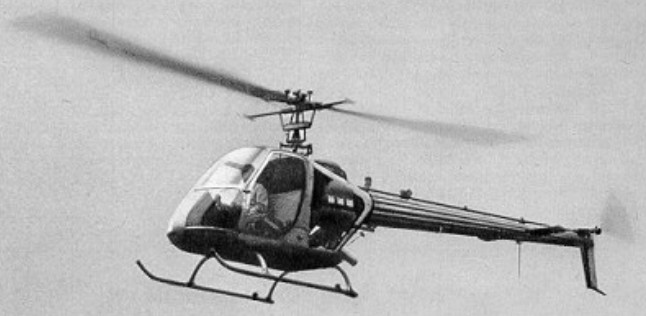
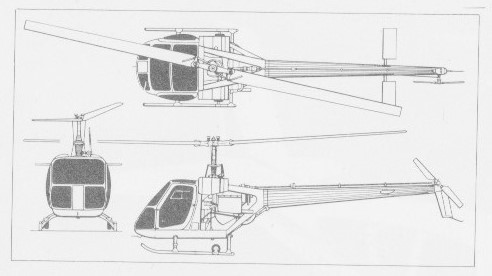
n October 1963 Silvercraft SpA flew the XY prototype light helicopter further developed with financial and technical assistance of shareholder SIAI-Marchetti as the all-metal three-seat SH-4, the prototype of which (I-SILX) made its first flight in March 1965.
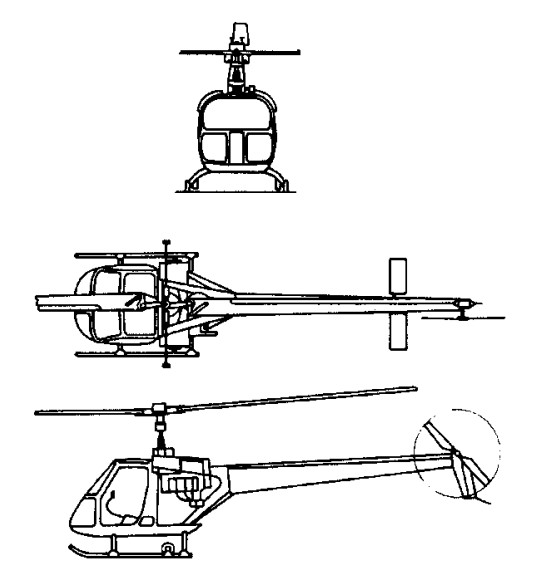
The SH-4 had a skid undercarriage and a high-set tubular corrugated tailboom with a small fin and tailplane and a two-blade tail rotor and powered by a 235hp (derated to 170hp) Franklin 6A-350-D1B piston engine. The main rotor had two blades and a transverse mass-balanced stabiliser bar.
A pre-production model was displayed at the 1967 Paris Air Show, certification was achieved in September 1968. The first helicopter of all-Italian design and construction to receive both Italian and U.S. certification. The SH-4 went into production at Silvercraft’s works at Sesto Calende in basic form. Variations were the SH-4/A for agricultural use and as the SH-4/C with a supercharged Franklin 6AS-350-D1 engine.
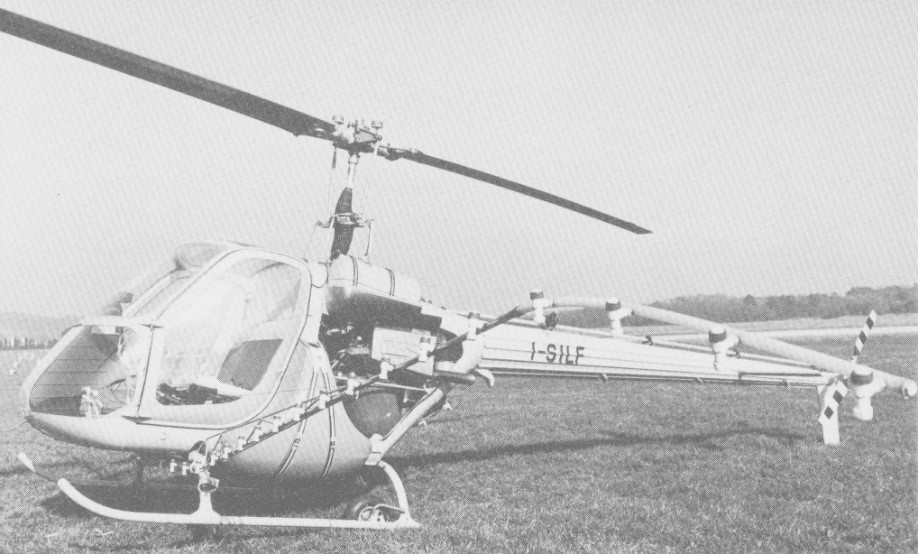
Serious production had begun as SIAI-Marchetti/Silvercraft SH-4, but under name Silvercraft alone deliveries began 1970. Production ceased 1977. Production of a batch of about 50 SH-4s was started at the Sesto Calende works with the aid of Fiat Aviazione (Motori), who manufactured mechanical parts for the rotor transmission, but the firm ran into difficulties over the Franklin engine, which had gone out of production.
A total of 21 SH-4s were completed with individual examples being exported to Brazil, South Africa, France and Holland. One aircraft was delivered to the Italian Air Force.
The company ceased operations in the late 1970s.
SH-4 / SH-4A
Engine: Franklin 6AS-350-S1, 235 hp de-rated to 170 hp
Main rotor diameter: 29 ft 7.5 in / 9.03 m
Fuselage length: 25 ft 1.25 in / 7.65 m
Empty weight: 1142 lb / 518 kg
MTOW norm: 1900 lb / 862 kg
Max cruise: 70 kt / 81 mph / 130 kph
ROC: 1180 fpm / 360 m/min
Service ceiling: 15,100 ft / 4600 m
Range max fuel: 173 nm / 200 mi / 320 km
Seats: 3
SH-4A ag capacity: 54 USG / 200 lt / 441 lb / 200 kg
External cargo hook: 441 lb / 200 kg
Cabin length: 4 ft 9.75 in / 1.47 m
Cabin height: 4 ft 0.25 in / 1.24 m
Savoia-Marchetti SM.1019
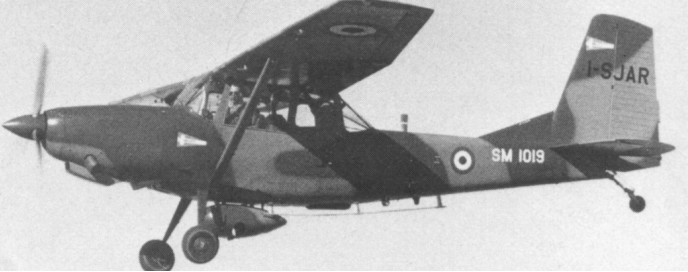
The Cessna O-1 provided the basis for the Italian development of a turboprop version. A two-seat STOL light monoplane powered by a 298kW Allison 250-B17 turboprop engine, the prototype first flew on 24 May 1969.
Savoia-Marchetti SM.1019 Article
The SM 1019 was evaluated by the Italian Army Light Aviation, which ordered 80 SM.1019E1s, under the designation AL-2. Optional armament or equipment is carried on two underwing hardpoints.
Engine: Allison 250-B15G, 317 shp
Wingspan: 10.97 m / 36 ft 0 in
Max. speed: 280 km/h / 174 mph
Savoia Marchetti SM.102
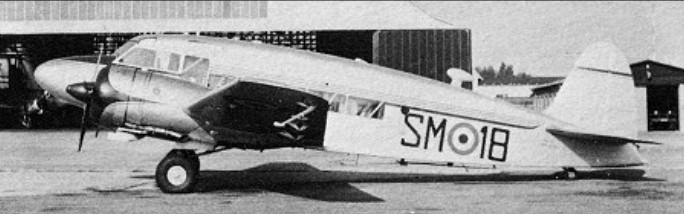
Twin-engined light transport aircraft accommodating eight passengers. The first prototype flew on 24 February 1949. Originally powered with two 500 hp Ranger SVG-770-C1B, the type was modified to take two Pratt & Whitney R-985 Wasp Junior radials and a small batch was built for the Italian Air Force.
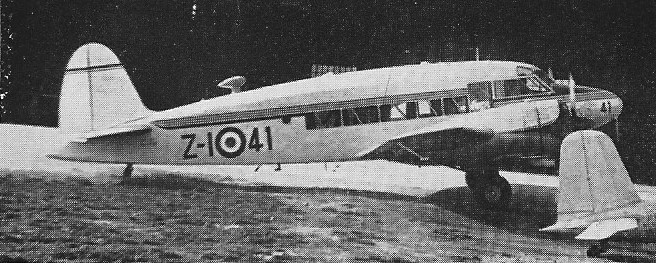
Engines: two Pratt & Whitney R-985 Wasp Junior
Wingspan: 18 m / 59 ft 1 in
Length: 43 ft
Height: 11 ft 5 in
Empty weight: 7600 lb
Max take-off weight: 5050 kg / 11133 lb
Max. speed: 330 km/h / 205 mph at 3280 ft
Cruise: 180 mph at 11,480 ft
Time to 5000ft: 6 mon
Service ceiling: 19,700 ft
Max range: 932 mi
 All Aero