The 1911 Poix & Deroig monoplane was designed and built by Poix and Deroig in France.
Span: 36’1″
Length: 32’10”
Weight gross: 1278 lbs
The 1911 Poix & Deroig monoplane was designed and built by Poix and Deroig in France.
Span: 36’1″
Length: 32’10”
Weight gross: 1278 lbs
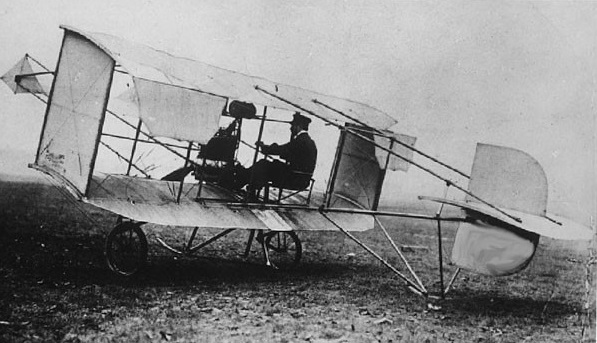
Brune Poelke of Frankfurt, Germany, built two types, the first was this cellular biplane with front horizontal surface and rear conventional surfaces and a Hoffman GHF engine. It was tested at the Griesheim Exerzierplatz near Darmstadt, but reportedly crashed immediately.
The 1911 Pochin biplane was designed and built by A. W. Pochin in the UK.
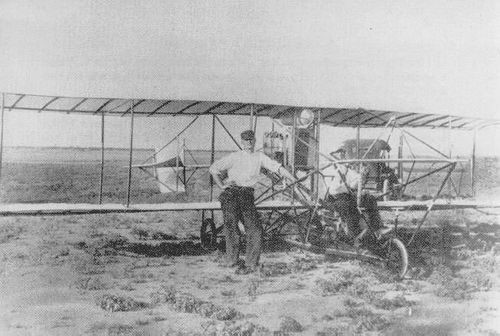
A Curtiss-pusher influenced design built by John V. Pliska and Gray Coggin of Midland, Texas; famed as being the first aeroplane to be built and flown in that state. In the photo, Pliska is on the left: his partner in the aviation project, Coggin, is in the pilot’s seat. Pliska was claimed to have been inspired by a Wright Flyer II (piloted by Robert G. Fowler) that landed in the area on November 19, 1911, and that he and Coggin carefully studied. It flew only once, but not very well, so was stored until rediscovery in 1962 and donation to a museum at Midland-Odessa airport and today is on exhibit at the Midland International Airport.
Engine: 50hp converted Roberts marine
Seats: 1
John V Pliska and Gary Coggin
Midland TX.
USA
Built a biplane in 1912.
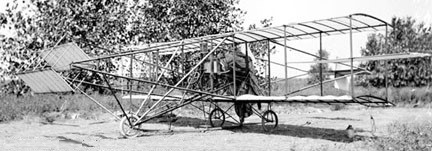
Built by J E Plews, the Plews 1910 biplane was a single-place Curtiss copy.
Chicago IL.
USA
Built a Curtiss copy in 1910.
The 1909 Platel monoplane was designed by Platel in France.
Span: 19’8″
Length: 23′
Weight: 328 lb
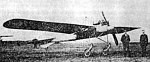
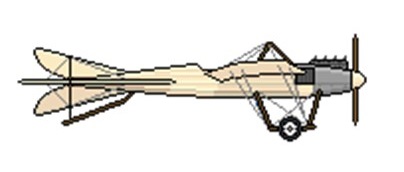
After the unsuccessful Plage I, its designer Emil Plage continued his works in Berlin and in 1911 he designed there, together with Max Court a very elegant and aerodynamically well developed for its time monoplane aircraft. Built by Kühlstein Wagenbau, Germany, it made first flight in autumn 1911 and was met with interest from German military authorities which run its further trials.
In the next year Plage and Court built slightly upgraded version of the aircraft, which made numerous flights, including successful participation in several air contests, until it crashed in October 1912.
Torpedo I
Span: 38′
Length: 25’11”
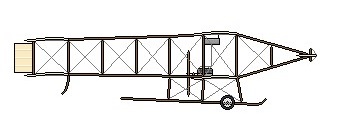
Emil Plage, son of the founder of Mechanical Works Plage & Laśkiewicz in Lublin (which, in independent Poland become one of major aircraft manufacturers) built in 1910 at Rumpler works in Berlin a biplane modeled after Farman aircraft. Unfortunately, during the first flight attempt the engine malfunctioned and aircraft crashed, although the designer/pilot was unhurt.
 All Aero