Rupel Flying Machine

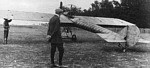
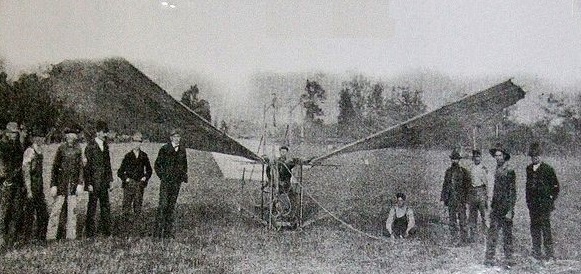
Albert Rupel in his Flying Machine

This machine was tested in October 1904, pulled by an automobile, but when the car reached a moderate speed the plane lifted, but a gust of wind tipped a wing so that the wheels on the opposite side were crushed. As a substitute, ordinary boards like skis were used, but then the car stalled without getting the plane off the ground, so horses had to be used. A team of draft horses pulled the rope and caused the plane to soar as high as the tree tops. Its builder Albert Rupel of Indianapolis, Indiana died of lockjaw less than a year later after stepping on a nail, before he could test it with a proper engine.
Rumpler Wassertaube

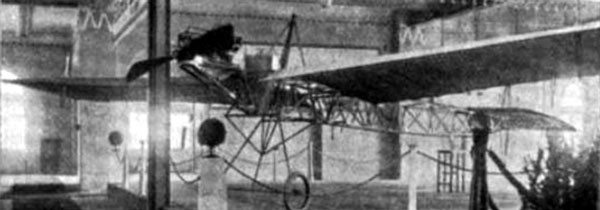
Sea based training aircraft, Germany, 1911

Length : 32.808 ft / 10.0 m
Wingspan : 49.213 ft / 15.0 m
Wing area : 387.504 sq.ft / 36.0 sq.m
Max take off weight : 1808.1 lb / 820.0 kg
Weight empty : 1323.0 lb / 600.0 kg
Max. weight carried : 485.1 lb / 220.0 kg
Max. speed : 49 kts / 90 km/h
Cruising speed : 43 kts / 80 km/h
Wing load : 4.72 lb/sq.ft / 23.0 kg/sq.m
Range : 92 nm / 170 km
Engine : Argus 100 PS, 99 hp
Crew : 2

Rumpler GmbH

E. Rumpler Luftfahrzeugbau

Germany
Founded before First World War as E. Rumpler Luftfahrzeugbau, with the company’s works and flying school based at Berlin/Johannisthal airfield, and with a military flying school at Monchelberg. Began production with license construction of Etrich Taube monoplane, but subsequently became famous for a series of armed biplane reconnaissance aircraft in First World War, including the C.I, CIV and C.VII. Went into liquidation about 1919 owing to lack of work.

Rudlicki R-I

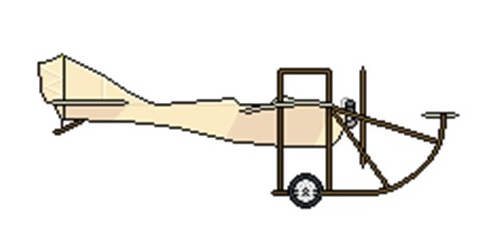
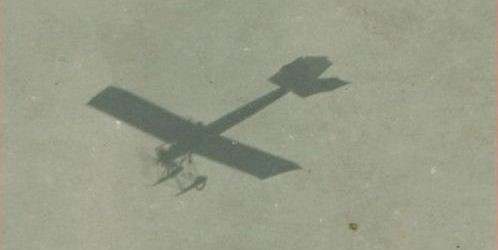
Shortly before the outbreak of the Great War, student Jerzy Rudlicki (who later become known aircraft designer), after building several successful gliders 1912-1913 designed an aircraft named R-I. Its construction commenced with support of the Aero Club of Odessa (where Rudlicki resided at that time), which supplied Anzani engine. When the war erupted the plane was nearing completion and was therefore requisitioned by the Russian military which finalized the construction and made several (3 or 4) flights on it (before the plane crashed due to engine failure).

Span: 29’6″
Length: 29’6″
Weight: 320 lbs

Rozum-Bechiny 1910 monoplane

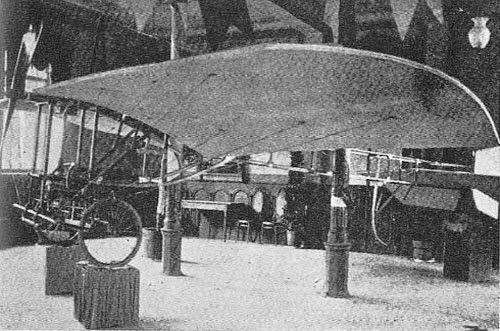
Designed by the Czech engineers Rozum and Bechyne and built by Emil Rudawski and Co. in Krakow. The construction of the aircraft was completed in April 1910. It was equipped a 40 hp air-cooled radial engine of their own design, one of the first Polish aircraft engines. It was presented at the factory on 4 April and the first flight was announced on 5 May.

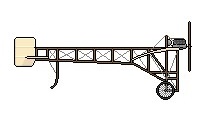
In 1910 Pole Rozum and Czech Bechiny built in Kraków, Poland, an aircraft broadly modelled after Bleriot XI and with engine of their own design. Static tests of the engine and airplane were apparently successful, but it’s unclear if there were any flights made on it.