Russian Empire airship / Vozduhtsentr / Dirizhablestroy

In 1906 the Chief Engineer’s Office Russian Empire was specially seconded to France, with a delegation of engineers and professionals for the development of on-site experience of the most advanced airship.

In 1923, the Society for the Friends of the Air Fleet of the USSR was created special Vozduhtsentr with tasks which included the promotion of Russian airship in Russia. After a while Vozduhtsentr was renamed vozduhsektsiyu Osoaviahima USSR and in the autumn of 1924 completed the construction of another Myagenko airship under the title “Moscow chemist rezinschik” (MHR). This title pointed to the fact that it was made by means of chemical industry workers in and around Moscow. The designer of this project was N. Fomin.

At the end of 1931 at CAB CAF was created under the title “Dirizhablestroy.” This organization was to unite the efforts of various groups of professionals working in the field, as do the planned deployment of the work in designing and building the next Russian airships. Also, the organization should take the time to research on the topic of aeronautic and improve methods of exploitation airships.

Nobile worked in the USSR from 1931 until 1935. He is believed to have been responsible for the design of nine semi-rigid airships.
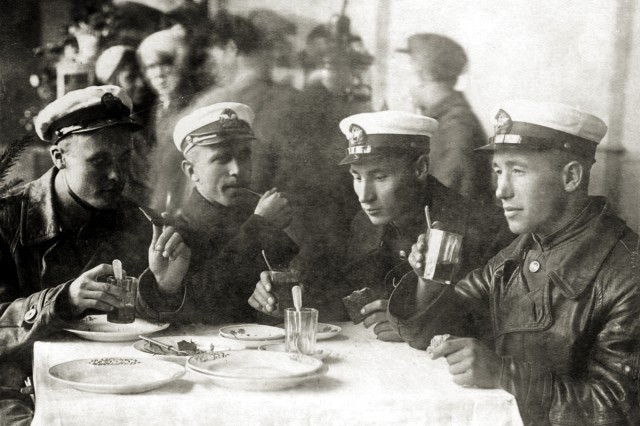
Russian airship crewmen (left to right) – Nikolai Gudovantsev, Ivan Obodzinsky, Ivan Pan’kov and Vladimir Ustinovich. 1933

The rationale for the Soviet program was to provide transport to distant rugged regions, notably Siberia, as well as such utility functions as surveying.

There were works at Leningrad, and Zagi near Moscow, the latter also the center of Tsiolkovski’s metalclad efforts. The plan was to make 92 ships but it is unknown how many were actually made.

There were also some non-rigids built in 1937 at Zagi.
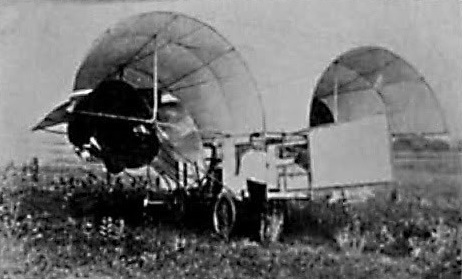
Russ Flyer

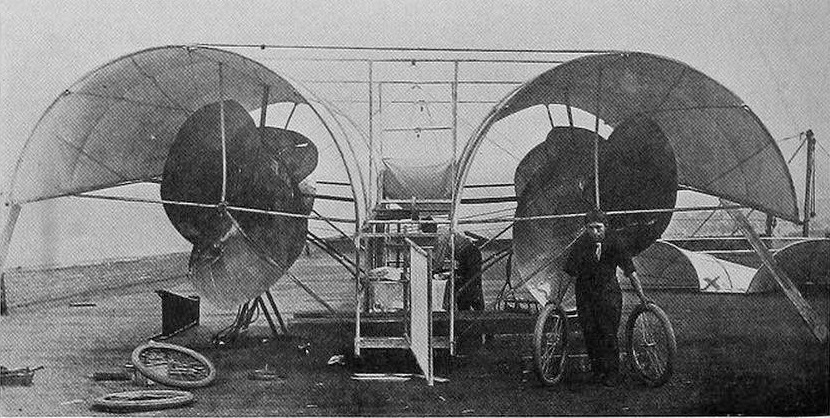
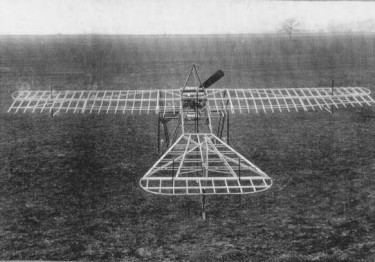
The Fritz Russ Flyer of 1910 was an American flying machine with wings in the form of half cylinders and immense helical spirals, or screws, set within them.

Aircraft” – October 1910 – page 296
“The Johnstown Aero Company, of Johnstown, Pa., have purchased the patent rights of the Fritz Russ flyer and are building men-carrying machines of that type. The ship is of novel design, being 39 feet long and 22 feet wide in rear and tapering to a point in front like a boy’s dart. It is constructed throughout of seamless steel tubing and is fitted with an Elbridge engine driving four spiral screw propellers.”

Rusjan EDA VII

EDA VII was a monoplane with a small second wing, with which from August to the end of 1910, flew successfully several times.

With its construction, in the summer of 1910, the brothers Rusjan exhaust all their financial possibilities. Their savings and those of the father Franc were gone. They sort finance in France, Austria and Hungary but with little success.

Rusjan EDA VI / Merćep-Rusjan

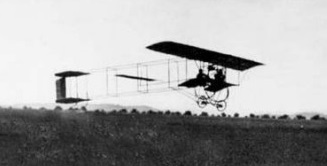
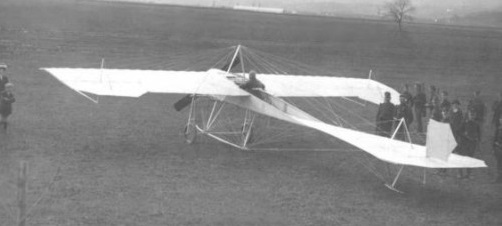
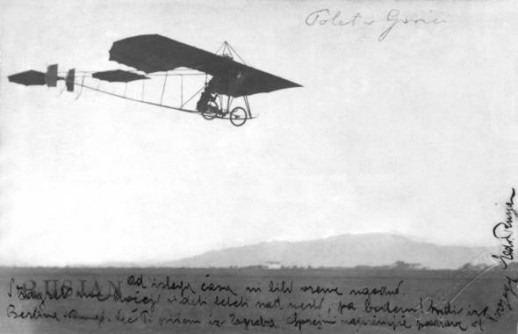
The EDA VI over Merna field, flying at an altitude of 40 meters. It was one of the best prototype

In the summer of 1910, a new and important phase of the Rusjan work began. During one of bicycle racing, events in Gorizia, Edvard and Josiph met Mihailo Mercep, an aviation enthusiast from Zagreb. The three agreed to a joint venture to built a new airplane and later make public flights and participate in air races. In August 1910, they went to Paris and bought the best 50-horsepower Gnome rotary engine available. They began work on the new airplane by the end of the month. They named the monoplane Mercep-Rusjan.

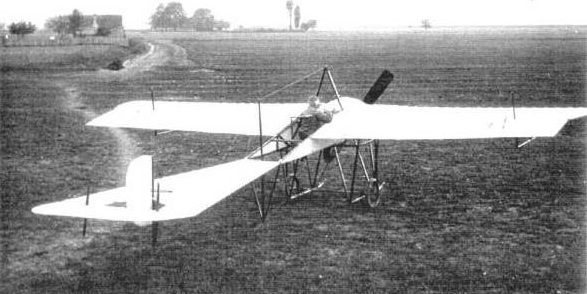
With enough financing and having a powerful enough engine, Edvard and Josiph had the opportunity to build an airplane that would achieve top performance. The airplane had a span of 14 meters. The framework was built of firewood and covered with rubber-treated fabrics. Controls for pitch and roll were moved by means of straps attached to the pilot’s body, a unique technique for keeping the hands free.

Built by the Rusjan brothers at the workshops of Mihajlo Merćep in Zagreb, construction of the airplane was completed in November 1910 and flight tests began. The prototype takes off in 28 meters (world record). Early in the program, Edvard reached altitudes of 100 meters. During a public demonstration, he made several successful flights that thrilled the Zagreb citizens. Spectators carried Edvard on their shoulders and honored him with eight-leaf wreaths, a high Yugoslavian honor.

After their successful flight demonstration with the Mercep-Rusjan, and in accord with the custom of the time, Edvard and Mercep organized a tour of European cities, the first stop being Belgrade.

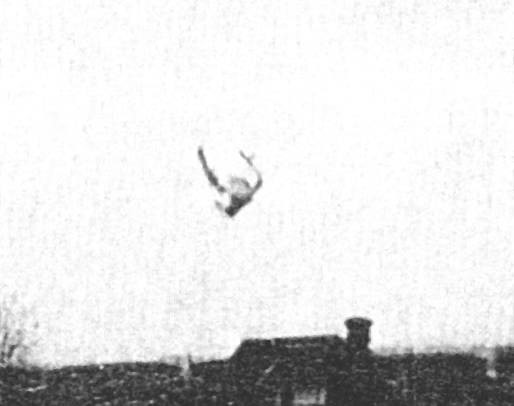
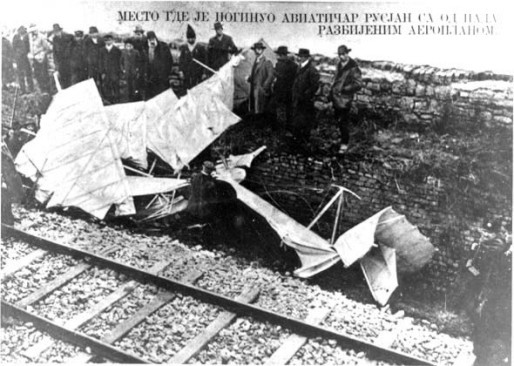
The first Serbian air meeting, which was organised on 9 January 1911, was fatal for Rusjan. In impossible weather conditions, Edvard demonstrated courageous flying to the Belgrade crowds, who had not until then seen such a thing. His takeoff and flight over the town and a railway bridge over the Sava River were uneventful but when he flew close to the Kalemegdan fortress, just before landing a strong gust of wind tore off the wing of his aircraft, at an approximate height of 20 meters.

The accident was fatal, Eduardo died on the way to the hospital, and at 25 years old he became the first victim of flying in Serbia and the 34th victim of motorised flying in the world.

Engine: Gnome 50 hp
Wingspan: 14 m
Ceiling: 400 m
Take-off run: 28 m
Landing run: 60-70 m

Rusjan EDA V

Since Rusjan could not realise the planned development of aircraft to commercial production in Slovene circumstances, in the middle of 1910 he concluded a partnership with the Serb, Mihailo Mercep, a well-known Zagreb photographer and cyclist, who planned the production of aircraft for the market. So the Mercep-Rusjan monoplane (a supplemented variant of EDA VI) was created in the first aircraft factory in Croatia, and it rose into the air after a record 28 metes flight. Edvard successfully flew over Zagreb with it at the end of 1910.

The EDA V monoplane proved the best performances.

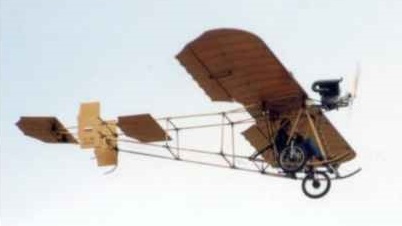
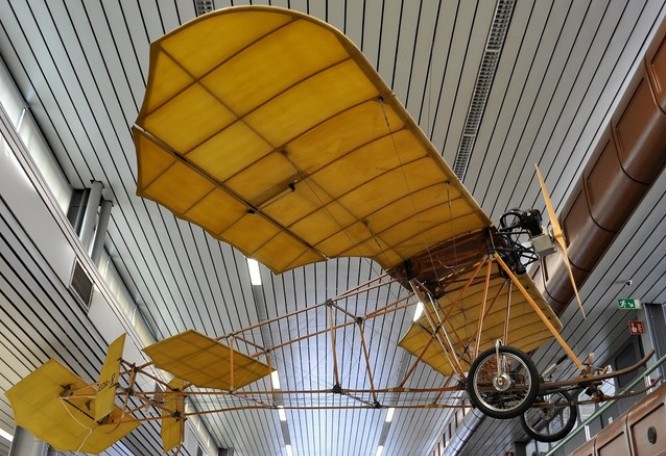
In 2000, a modern reconstruction of EDA V flew by Aidussina (Slovenia). Emil Novak was at the same time the designer and test pilot.

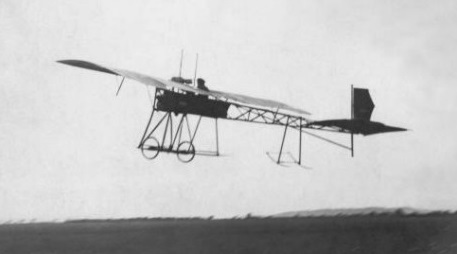
EDA V replica in flight at the Cerklje Airshow 2000

At the air meeting which was held in Cerklje ob Krki on 24 and 25 July 2000, the Slovenian President Milan Kucan baptised a copy of Edvard’s aircraft EDA V.

EDA V replica

Rusjan EDA IV

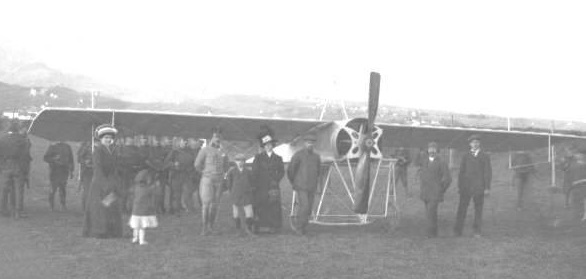
In September 1909, Edvard Rusjan visited an international air meeting in Brescia (Italy), where he examined the construction of the most successful aircraft and got to know the French airman, Louis Blériot. One airplane, built according to the Blériot design, made its first flight on June 25, 1910.

EDA IV was a small monoplane copy of the aircraft with which Blériot had flown the English Channel. Although he managed to fly to a height of 40 m, at a 2nd meeting in Gorica on 26 June 1910, where 10,000 viewers gathered, it did not succeed in flying.

Rusjan EDA III

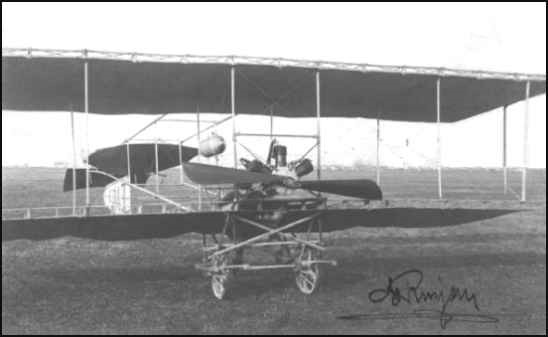
EDA III was a biplane developed from the EDA I, with a similar flying capacity as EDA I.Edvard was able to perform maneuvers, and on March 28, 1910 made his first public flight for the citizens of Gorizia.

The brothers gained aeronautical knowledge rapidly and learned that the Anzani engine was not powerful enough for the biplane, so they decided to make only monoplanes in the future.

Rusjan EDA 2

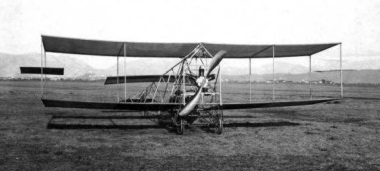
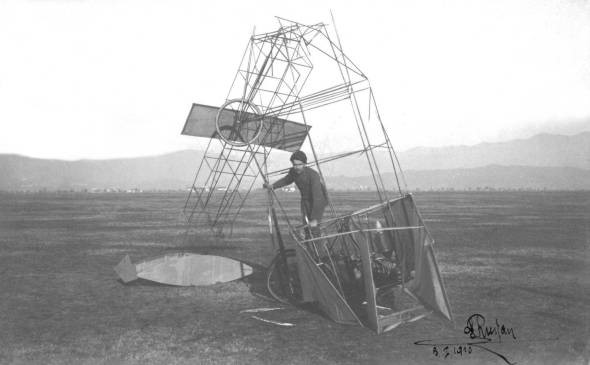
First in a series of new airplanes designed by the Rusjan brothers was the EDA 2 Triplane which incorporated progressive construction techniques that helped reduce its empty weight to 90 kilograms. With the EDA 2, the pair hoped to attain an altitude of 100 meters.

The triplane EDA II had the rudders beside the wings and the motor behind.

However, during the first flight on January 5, 1910, the airplane was damaged beyond repair.

Rusjan EDA 1

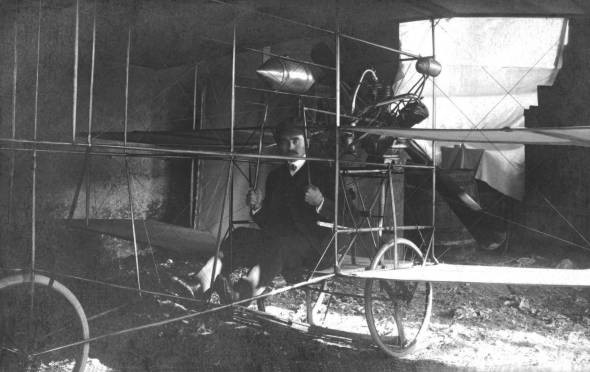
After returning to Gorica, with his brother’s help Edvard Rusjan built a motor biplane on the model of the Curtiss and Farman aircraft, which had been most successful in Brescia. In the fall of 1909, the Rusjan brothers began work on a powered airplane using a 3-cylinder, 25-horse-power. Anzani-model engine. The airplane was a canard-type biplane with paper covered wings, 8 m wingspan, with the larger part of the horizontal stabilizer forward of the wings.

Flight tests, however, fell short of expectations. By relocating the vertical stabilizer aft of the wings in what has evolved as the conventional configuration, they achieve success. On November 25, 1909, on the Mila Rojice Airfield in the neighborhood of Gorizia, Edvard made the first successful powered flight in Yugoslav Aviation history in his EDA 1 airplane.

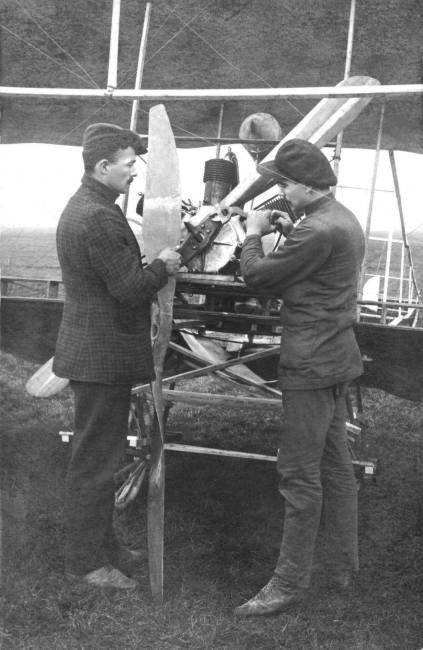
Giuseppe and Eduardo replacing the propeller of EDA I (1909)

The flight lasted about 10 seconds and Edvard traveled approximately 60 meters at a height of 2 meters. Four days later, he increased his distance to, 500 meters at a maximum altitude of 12 meters. Observers estimated that the airplane reached speeds between 50 and 60 kilometers per hours. It was a remarkable flight for Edvard – he was the first Yugoslavian to successfully fly an airplane.

After these two flights, all the Rusjan’s tests were transferred over a field called “Campagna Grande” (great meadow) by Merna.

Span: 26’3″
Length: 39’4″

Rusjan, Edvard

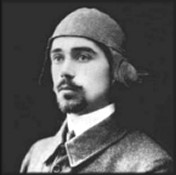
Edvard Rusjan was born in Trieste, Austro-Hungarian Empire, on July 6, 1886. While still a lad, his family moved to Gorizia where he spent his youth and attended public secondary school and an evening course in trade. During his school years, he was apprenticed barrel maker and was a successful racer.

In 1900, the Rusjan brothers made a model aircraft with a propeller drive on a spring. Edvard’s aviation career began in 1908 when he started designing and building model airplanes. One design, a helicopter that was strapped on like a backpack, was a portent of things to come decades later. With older brother Josiph’s help, he designed a glider that became a pattern for future airplanes.

They continued their self-education and in 1908, received his father’s support for the production of the first aircraft. In September 1909, Edvard Rusjan visited an international air meeting in Brescia (Italy), where he examined the construction of the most successful aircraft and got to know the French airman, Louis Blériot.

In the fall of 1909, the Rusjan brothers began work on a powered airplane using a 3-cylinder, 25-horse-power. Anzani-model engine. The airplane was a canard-type biplane with paper covered wings with the larger part of the horizontal stabilizer forward of the wings. Flight tests, however, fell short of expectations. By relocating the vertical stabilizer aft of the wings in what has evolved as the conventional configuration, they achieve success. On November 25, 1909, on the Mila Rojice Airfield in the neighborhood of Gorizia, Edvard made the first successful powered flight in Yugoslav Aviation history in his EDA 1 airplane.

From December 1909 to the end of June 1910, the Rusjan brothers built and flight tested five airplanes of entirely different designs.

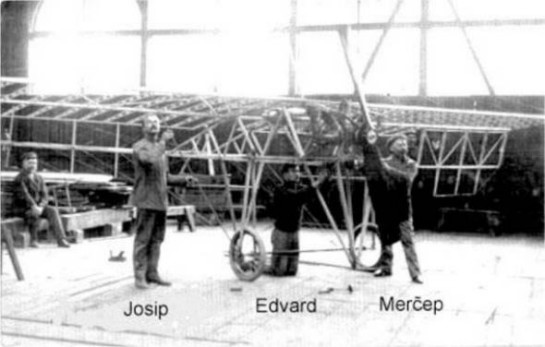
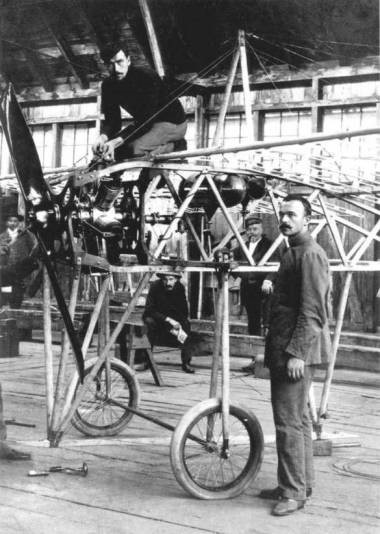
Zagreb, Eduardo and Giuseppe working

Since Rusjan could not realise the planned development of aircraft to commercial production in Slovene circumstances, in the middle of 1910 he concluded a partnership with the Serb, Mihailo Mercep, a well-known Zagreb photographer and cyclist, who planned the production of aircraft for the market. After the agreement with Merćep, they had no more financial problems and a large hangar is available for their planes. So the Mercep-Rusjan monoplane (a supplemented variant of EDA VI) was created in the first aircraft factory in Croatia.

After their successful flight demonstration with the Mercep-Rusjan, and in accord with the custom of the time, Edvard and Mercep organized a tour of European cities, the first stop being Belgrade. On January 9, 1911, despite strong gusty winds, the 24-year-old Edvard went ahead with a demonstration flight. His takeoff and flight over the town and a railway bridge over the Sava River were uneventful. However, while the airplane was returning for a landing, at an approximate height of 20 meters, a strong gust ripped off a wing and the airplane crashed against a tower wall located on the riverbank. Edvard was killed.

His work was successfully continued by his brother Joze, who built a further 3 aircraft after Edvard’s death.