In Russia they built several small dirigibles including the “Mikst” in 1911. Built by A.I. Shabsky.
Pioneers
Russian Empire airship Kobchik / Falcon
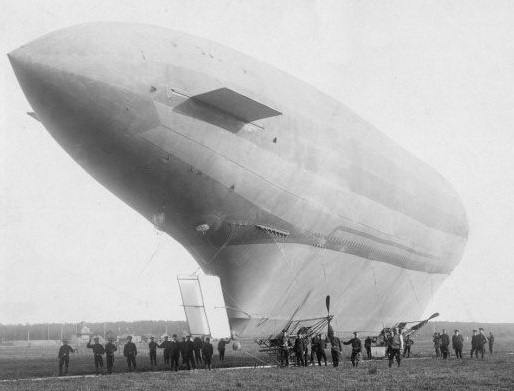
Designer by Nemchenko and built in 1912 at the plant “Duflon, Constantinovich and Co”, the semi-rigid Kobchik / Falcon airship was sent to the Far East, but not used. Builders S. Nemchenko and A.E. Garut.
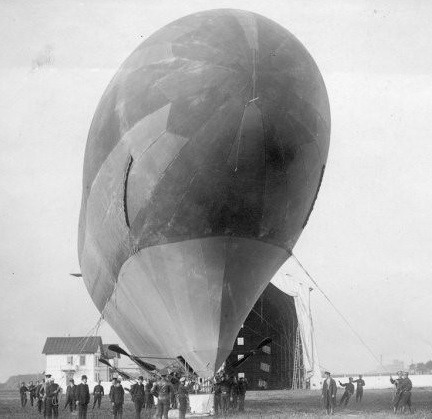
Engines 2 x 50 hp
Envelope: 2150 cu.m
Length: 48 m
Diameter: 9.5 m
Max speed: 50 kph
Russian Empire airship Golubj / Dove
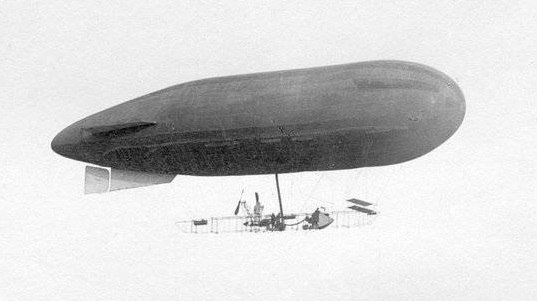
Before WW 1, Russia had constructed about 10 non-rigid dirigibles. There were 3 small dirigibles including the 1910 non-rigid Golubj (Pigeon). These ships had arms, but were out-of-date.
Airship Голубь / Dove was built in 1910 in Russia at the Izhora plant, located in Kolpino near Petrograd, according to the design of professors Van der Fleet and Konstantin Petrovich Boklevsky (Константин Петрович Боклевский), as well as engineer V.F. Naidenov with the participation of captain B.V. Golubova.
Their ceiling and speed did not meet the requirements, for a military dirigible. During the war the Голубь made several reconnaissance flights, but never crossed the front lines. They were used for training.
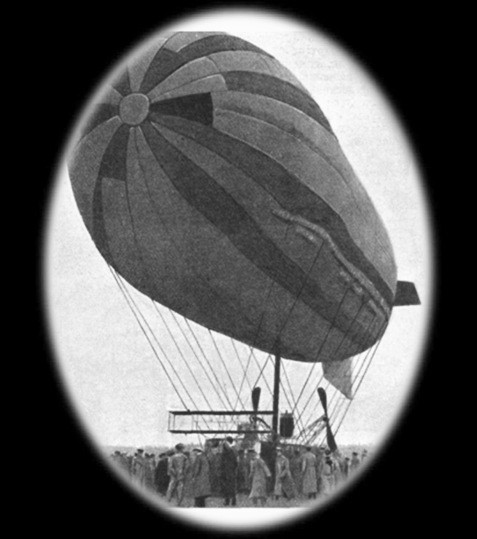
In October 1914 the Голубь was transported to Lida, 160 km west of Minsk and was taken down. In the Summer of 1916 the Голубь was assembled but as the dirigible stood in the open it was destroyed during a storm, which ripped the envelope.
Envelope capacity: 2270 cu.m
Engine 74 hp
Length: 42 m
Diameter: 9.8 m
Max speed: 50 km / h
Russian Empire airship Hawk / Yastreb
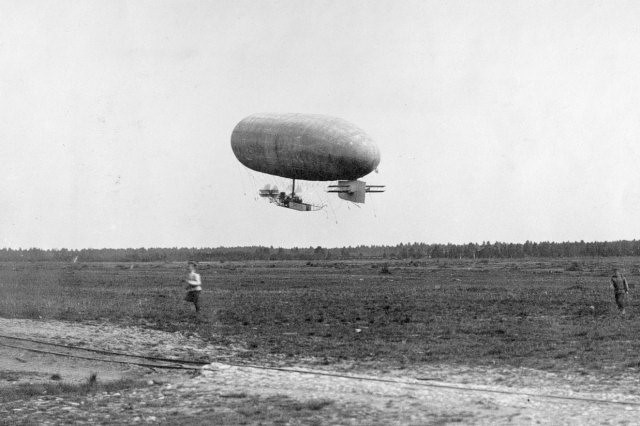
The dirigible “Hawk” (“Yastreb”), designed by A.I. Shabskiy, was constructed in Russia in 1910 in Moscow by “Dooks” Ltd.

At some point there were alterations. Differences include no annular insert in the shell, and a slightly different design of the stabilizer.
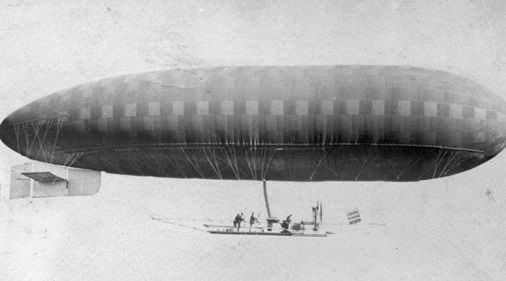
Before WW1 in Russia there were 3 small non-rigid dirigible including the 1910 Jastreb (Hawk). These ships had arms, but were out-of-date. Their ceiling and speed did not meet the requirements, for a military dirigible. They were used for training.
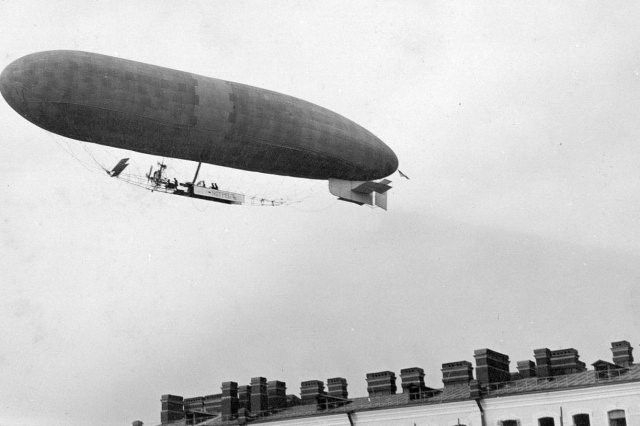
Volume: 2,700 cu.m
Length: 46 m
Width: 10 m
Max speed: 47 km/h
Engine: 1 x 63 hp
Russian Empire airship Falcon / Sokol
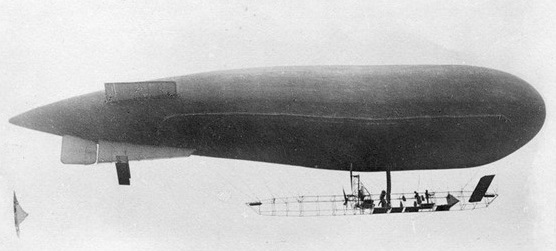
The non-rigid airship Falcon / Sokol was built in 1912 in Russia on Izhorskij. Builders B.V. Golubov and D.S. Sukharzhevsky. It was used for training.
Engine: 1 x 79 h.p
Length: 50 m
Diameter: 9 m
Envelope volume: 2500 cu.m
Maximum speed: 54 km / h
Russian Empire airship Merlin
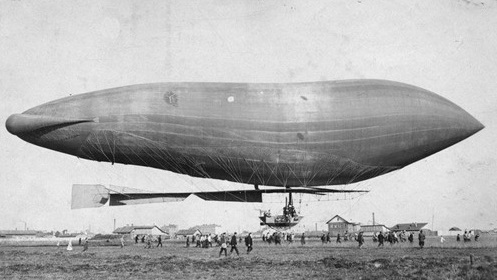
The airship “Merlin” was built in 1910 in Russia.
On 7 October 1910 it crashed at Saint Petersburg killing a prominent Russian-Ukrainian pilot L.M.Matsievich. Matsievich was buried as a national hero.
Length: 70 m
Width: 11 m
Envelope volume: 6900 cu.m
Maximum speed: 43 km / h
Russian Empire airship Albatross
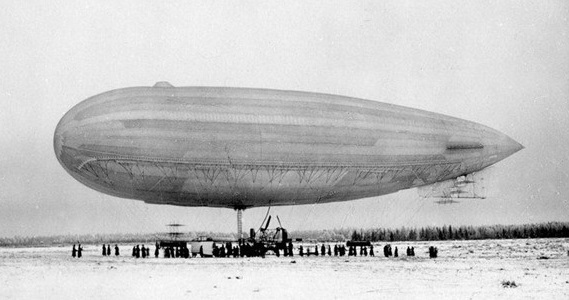
The airship “Albatross” was built on Izhorskij in 1912.
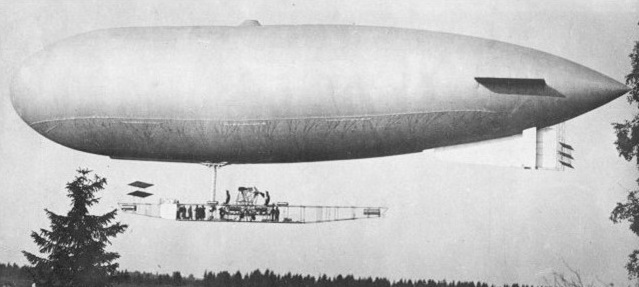
After one test flight in the hangar the “Albatross” burst. The dirigible was reassembled in Petersburg, Russia in 1913 and changed to the non-rigid “Albatross-II”.
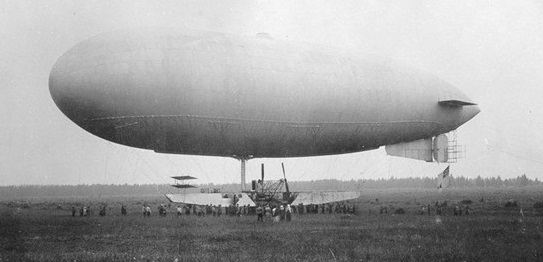
During the First World War the Albatross II made seven bombing patrols but the missions were never completed either because of low clouds, fog, or other reasons.
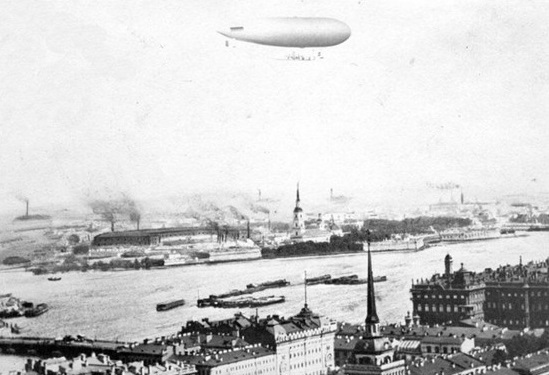
When flying on October 13, 1914, the Albatross II got into a thick fog with a strong wind, and walking at low altitude, flew into a tree and crashed. The crew were not injured.
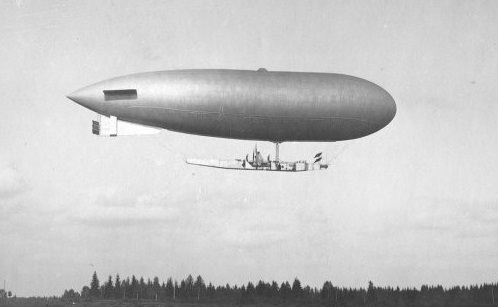
Albatros
Envelope volume: 10000 cu.m
Endurance: 20 hr
Albatross II
Engines: 2 x 158 hp
Length: 77 m
Width: 15 m
Envelope volume: 9600 cu.m
Maximum speed: 68 km / h
Russian Empire airship Red-footed Falcon
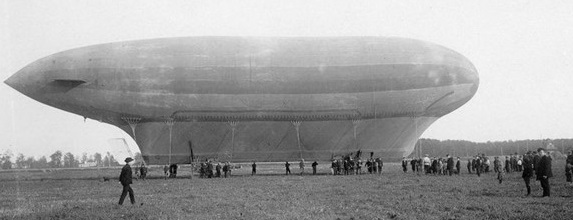
Designed by Nemchenko, the “Red-footed Falcon” airship was built in 1912 in Russia at the “Dyuflon, K. & Co.”.
Length: 45 m
Width: 8 m
Envelope volume: 2150 cu.m
Max speed: 50 km / h
Russian Empire airship Forsman
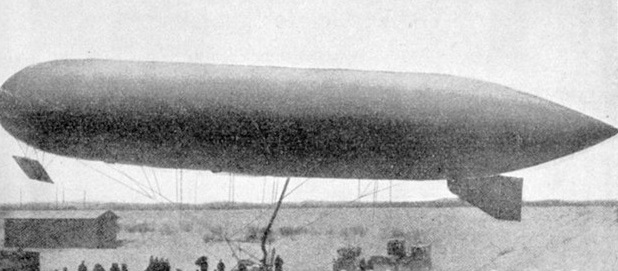
The airship “Forsman” was purchased in Sweden by order of the Russian military. This airship was the smallest in the world. Planned acquisition was for a series of small airships for the intelligence service in the Russian army.
It is unclear if the airship was delivered in Russia. Due to the small volume of the airship there was no gondola, but a board for the pilot’s seat and mechanics. The 28 hp motor weight was 38 kg.
Engine: 28 hp
Length: 36 m
Width: 6 m
Envelope volume: 800 cu.m
Maximum speed: 43 kph
Russian Empire airship Training / Uchebnyi
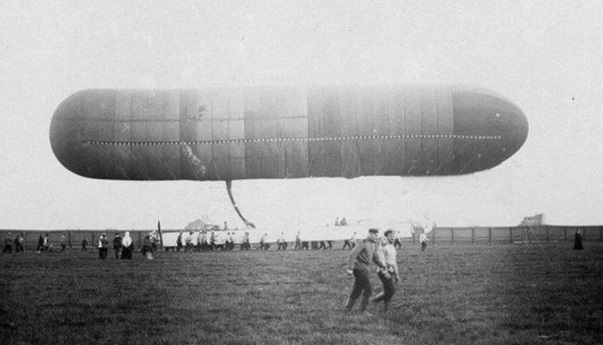
Built in 1908 in Russia the very first Russian airship titled “Training.” The shell was made from two old “Parseval” airships.
This machine was a test board for airship design and operation. “Training” had a solid rate of climb, overtaking the characteristics of the “Zeppelin” and very often used for training crews.
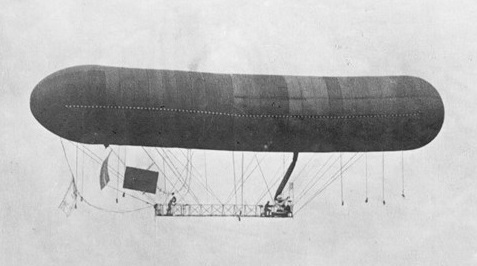
The non-rigid airship was demolished in 1909 due to the dilapidated shell.
Length: 60 m
Width: 6.55 m
Envelope volume: 1200 cu.m (later 1500 cu.m)
Maximum speed: 21 km / h
Engine: 1 x 16 hp (later 25 hp)
 All Aero