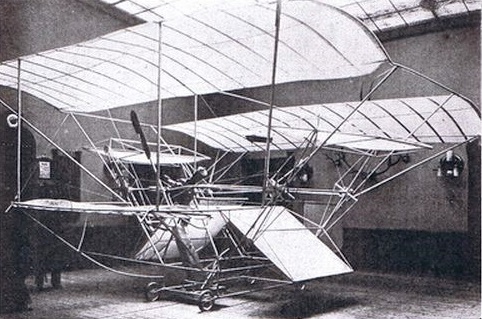
Combination Drachenflieger-Radflieger designed by the Sächsiche Verein für Luftschiffahrt. The machine was powered by a 30 hp engine constructed by Fritz Hayn. Actual construction was done by the “Maschinenfabrik von Hayn u. Leilich” in Chemnitz in 1909.
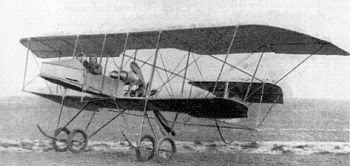
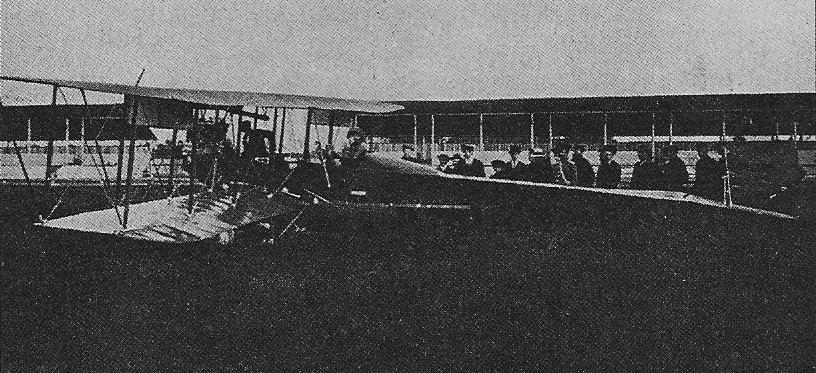
The Sachsen Doppeldecker of 1911 was the first Sachsen doppeldecker – powered by a 55 hp Argus and built by Alfred Manhardt and Erich Schmidt at the Sächsische Automobil- und Flugzeugwerke; the fore-runner to Deutsche Flugzeug Werke (D.F.W.).
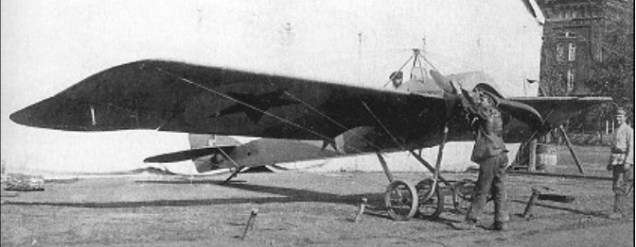
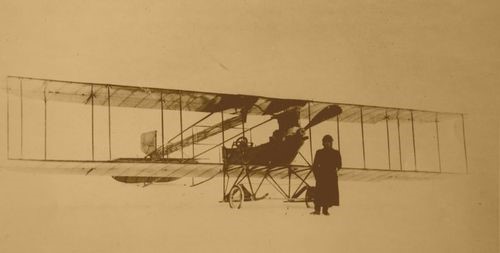
The first aircraft of the Carinthian Dr. Josef Sablatnig, built and flown in 1911 in Austria by the Osterreichisch-Ungarische Autoplan (Werner&Pfleiderer) works. Motor is a 85 hp Gnôme. With about 120 km/h it was maybe the fastest aircraft in Austria then.
Austrian Josef Sablatnig experimented and flew before First World War. Moved to Germany and in 1913 became a director of Union Flugzeugwerke GmbH, where he did technical work and flying. When Union company went into liquidation (1915) he founded Sablatnig Flugzeugbau GmbH in Berlin, famous for seaplanes used by German Navy but built other types also. SF1 floatplane (1915) developed into very successful SF2 (license-built by LFG and LVG); SF4 was single-seat fighter floatplane, built both as biplane and triplane; SF5 was widely used SF2 replacement; SF8 was last Sablatnig floatplane built in numbers (trainer of 1918). Landplanes included trainers, single engined night bombers, and a monoplane. N1 was two-seat land fighter used at Kiel. After war developed civil types, including P1 four-passenger biplane and P3 six passenger high-wing monoplane. One light sports type built, but aircraft work ceased 1921.
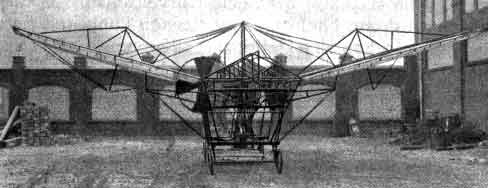
Ruthenberg built a flapping wing monoplane (‘Schwingenflieger’ in German) in 1909. In his complex construction the wings were moved (flapped) by rods moved by an engine which was mounted in the fuselage. The same engine also drove two pusher propellers in contrary motion. The undercarriage was fitted with a four wheel undercarriage. To make the tests of this machine less dangerous a small balloon was mounted in the fuselage, which as was said could lift the machine almost on its own. Tests revealed that the machine did not leave the ground.
The S-12 was built at the suggestion of George Yankovsky as a lighter, single-seat version of the S-11 with an 80hp Gnome. He looped it in September 1913, the first time a Russian aircraft had performed this manoeuvre, and set a Russian height record of 3680m shortly afterwards. Most of the dozen or so S-11s that were built survived the war, and served in the earliest Soviet Air Force units during the Revolution. Several were still operational in 1922, mostly with an 80hp Le Rhone engine.
Developed from the larger and heavier S-9, the 1913 S-11 Polukroogly (half-round) had a conventional wooden fuselage and 100hp Gnome Monosoupape engine. It was initially equipped with ailerons that were operated by steel tubes inside the wing. Trials revealed that they were not efficient, so they were replaced by wing warping. The pilot and observer sat side-by-side, with controls only for the left seat. A top speed of 100km/h, stalling speed of 70km/h and take-off run of 75m were good enough to gain the S-11 second place in the 1913 military competition for a reconnaissance aircraft; but it was not ordered into production.
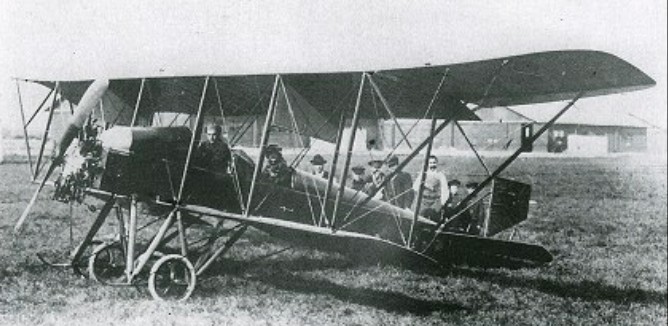
Constructed in Kiev, this 100 hp Argus-powered biplane was used by Igor Sikorsky to set new Russian flight records in November 1911, even setting a world-record with his design – a distance record with two passengers.
S-6A
S-10
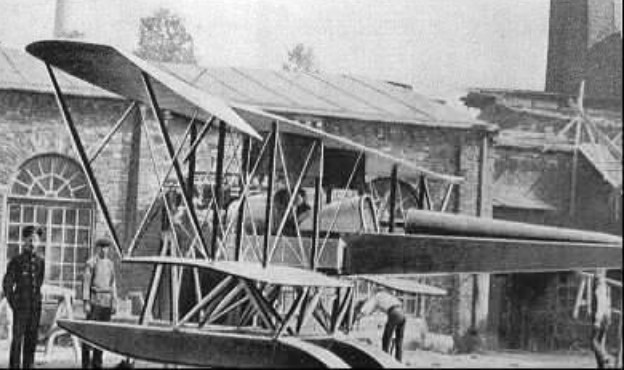
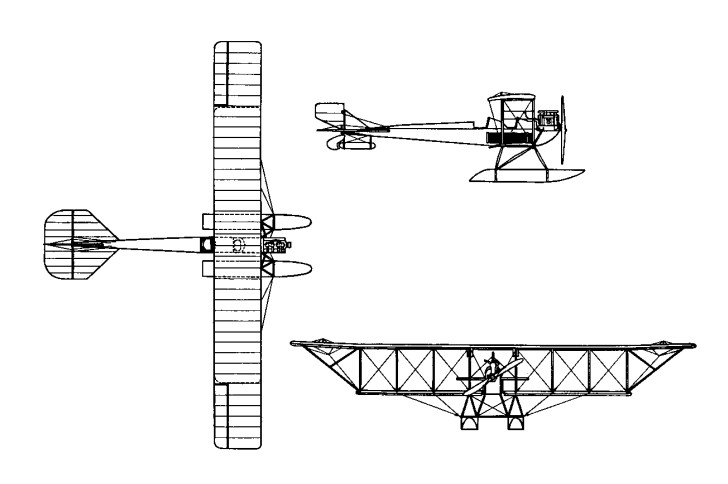
Under the designation S-10, about sixteen production versions of the S-6B were built by the RBVZ. The majority were delivered as twin-float seaplanes for service with the Baltic Fleet, from the summer of 1913 to 1915, with 100hp Argus or Gnome Monosoupape engines. Some were deployed on the world’s first operational seaplane carriers.
S-10
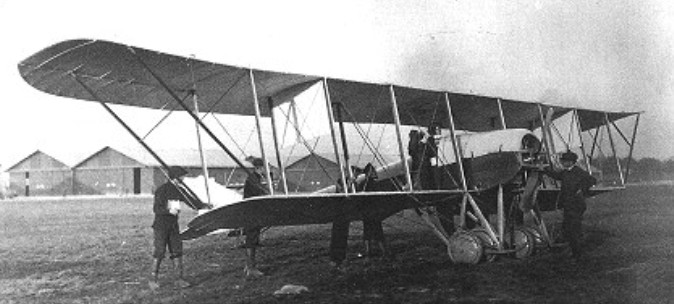
A special Competition S-10 landplane, with 80hp Gnome engine, was built for the 1913 military aircraft competition. The wing span was increased to 16.75m, with outer panels that could be folded for storage. The two seats were placed side-by-side, and the control wheel could be swung from pilot to co-pilot during flight. Production test pilot Alechnovich set a Russian record by flying it 500km in 4 hours 56 minutes, and it took first prize in the 1913 competition although it lacked the speed and manoeuvrability of the S-6B. After its span had been reduced to 13.70m and a 100hp Monosoupape installed, it served as a trainer with the Baltic Fleet.
S-10
The S-10A’s span of 13.7m and two seats in tandem set the standard for all S-10 seaplanes, and its 125hp (de-rated to l00hp) Anzani engine gave it better speed and rate of climb than the Competition S-10. Its flying characteristics were less good, preventing it from gaining first prize, but it set a new Russian height record of 3420m, piloted by Gleb Alechnovich. Modified to have a 100hp Monosoupape and floats, it was assigned to the Baltic Fleet.
Engine: 1 x 100hp Argus Wingspan: 16.9 m / 55 ft 5 in Length: 8.0 m / 26 ft 3 in Height: 4.1 m / 13 ft 5 in Wing area: 45.0 sq.m / 484.38 sq ft Max. speed: 90 km/h / 56 mph



 All Aero