Schädler Brothers Human-powered

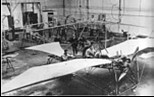
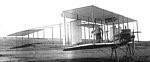
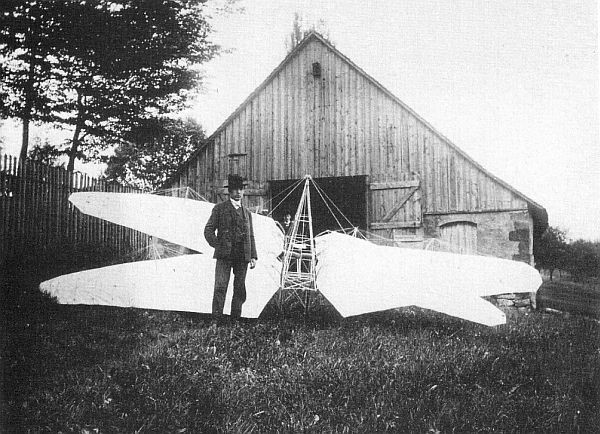
The three Schädler brothers in Landstuhl in Pfaltz had already in 1912 had begun the construction of a human powered aircraft. With the assistance of a teacher living locally, they began work began in their father’s carpentry workshop. The resulting machine was a light monoplane of 12.50m span and 5.50m length. The fuselage had a big nose, and a large propeller of approx. 1.8m, made of alder wood, driven by pedals connected to a gearbox. In the autumn of 1912, the first rolling tests, in order to test the traction of the propeller, were carried out. Since these proved satisfactory, they moved on to actual flight testing. The youngest of three brothers, Eugen Schädler, succeeded in making a flight at a height of approximately 1 – 1.50m above the ground, and flying for a distance of 70m. On landing, the right wheel of the undercarriage broke. According to reports by Anton Schädler, further tests were to be carried out, but the advent of the war meant those plans had to be cancelled. The first pilot of a human powered aircraft died as a soldier in France on 28.6.1916.
Savary Biplane

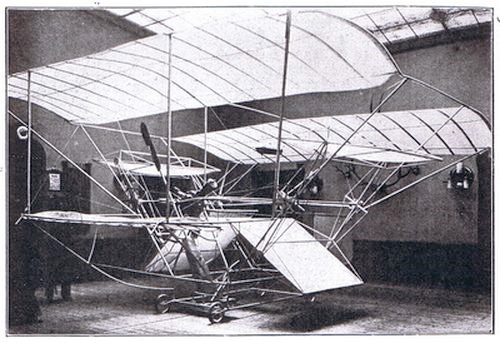
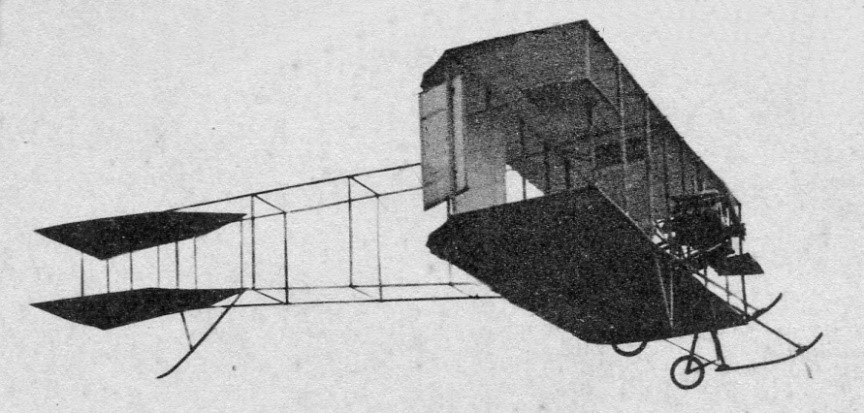
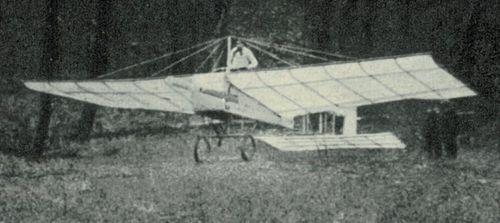
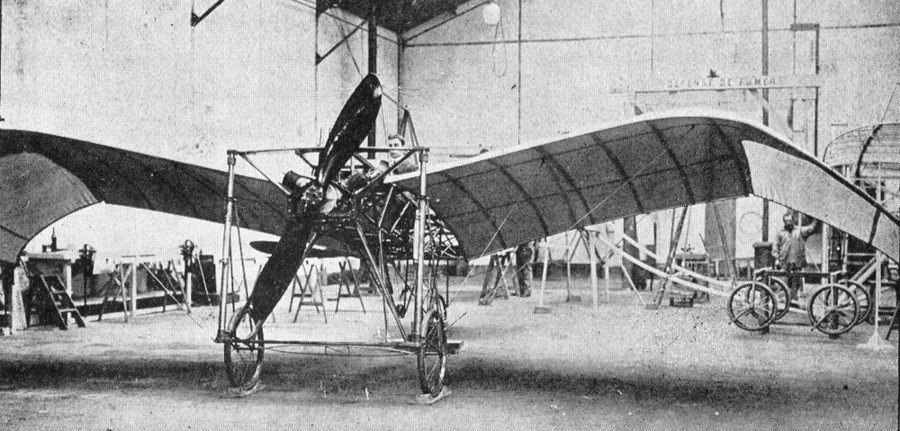
The Savary biplane, built by Leon Boller, was characterized by the biplane horizontal tail surfaces, without any rudder. The rudders were instead placed at the wingtips. This single-propeller version was flown by Pierre Picard (Brevet No. 164) at the 25 August – 6 September 1910 Baie de Seine Meeting.

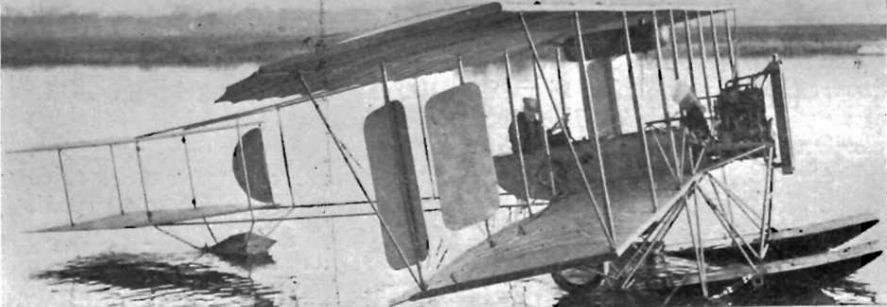
A seaplane version of Savary’s unique two-propeller biplanes with wing-tip rudders, powered by first by a 75 hp Renault engine and later by a 70 hp Labor. The machine was wheel-tested at Juvisy on 2 January 1913.

In February 1913 Joseph Frantz established time-to-height record on Savary biplane with Salmson engine, carrying five passengers, but prewar output was ten machines only.

Gallery

2-seater
Span: upper 47’7″ lower 32’10”
Length: 32’10”
Weight: 1800 lb
Speed: 56mph

3-seater
Span: upper 64′ lower 46′
Length: 39’4″
Weight: 2460 lb
Speed: 56 mph

Savary, Robert

France
Founded at Chartres by Robert Savary. Was building biplanes in 1910. Won order for three aircraft after military trials in 1911. In February 1913 Joseph Frantz established time-to-height record on Savary biplane with Salmson engine, carrying five passengers, but prewar output was ten machines only. In 1915 Robert Savary was associated with Henri de la Fresnaye in forming a joint company to build Nieuport fighters. No aircraft built after First World War.

Saulnier 1910 Monoplane

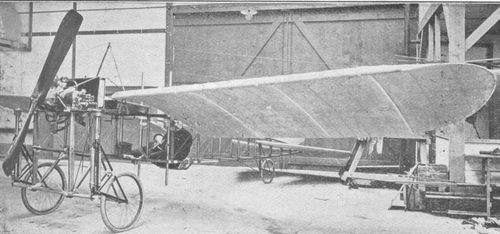
Raymond Saulnier did design work on the Blériot VIII and XI (the famous Channel machine). Some sources say he did most or all of the designing of the Type XI. He then started his own aeroplane construction firm at Courbevoie. His monoplane – which looks like a development of the Blériot XI – was an excellent flyer. The pilot was seated low in the completely open fuselage, a great difference with the Blériot. The machine was fitted with a two-cylinder Darracq engine and later with an Anzani 3-cylinder. The machine was mostly piloted by Emile Duval.