1892: Matthew B Sellers Jr,
Olive Hill KY, Norwood OH, and Baltimore MD.
USA
Matthew B Sellers Jr experimented with multiplane gliders and powered craft circa 1907-27 with 52 different designs.
1892: Matthew B Sellers Jr,
Olive Hill KY, Norwood OH, and Baltimore MD.
USA
Matthew B Sellers Jr experimented with multiplane gliders and powered craft circa 1907-27 with 52 different designs.
In 1909 the pilot Gaudard founded the Société d’Étude pour la Locomotion Aérienne (SELA) in France. G Badini, their designer, built two similar aircraft powered by 55 hp Aviatik engines, one appeared in 1910 at St Cyr, the other, a variant, in 1911. This machine was sponsored by “La Dentelle au Foyer”, a lace-workers’ magazine which later bought a Farman for the Army, christened “La Dentelle de Puy”; the city of Puy was famous for its lace industry.
Designed by G.Badini and built by Societe d’Etude pour la Locomotion Aerienne
Similar to 1910 SELA-2
In 1909 the pilot Gaudard founded the Société d’Étude pour la Locomotion Aérienne (SELA). G Badini, their designer, built two similar aircraft powered by 55 hp Aviatik engines, one appeared in 1910 at St Cyr, the other, a variant, in 1911.

Designed and built by Robie Seidelinger for the Wilmington Aero Club, and flown by Eddie Bloomfield.
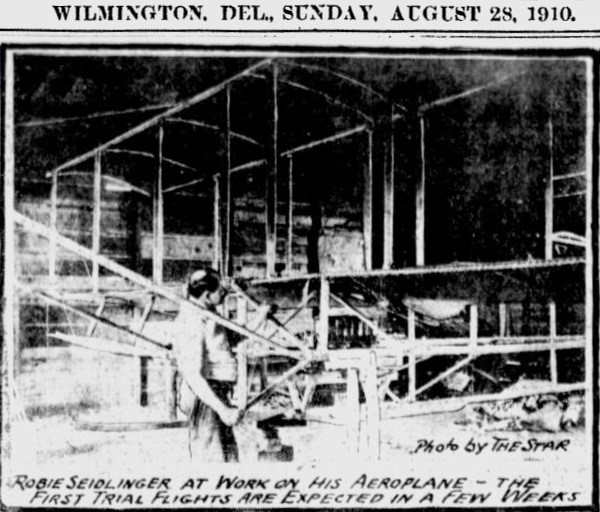
According to “Delaware Aviation History” by Frebert, taxi tests in the configuration shown resulted in moving the engine to a position after the wings rather than under the pilot’s seat, and use of a single propeller, as well as shortening the rear fuselage. In this later form it flew 300 yards on October 21, 1910, and made several other fights on the following days. It was destroyed when lightning struck its storage shed.
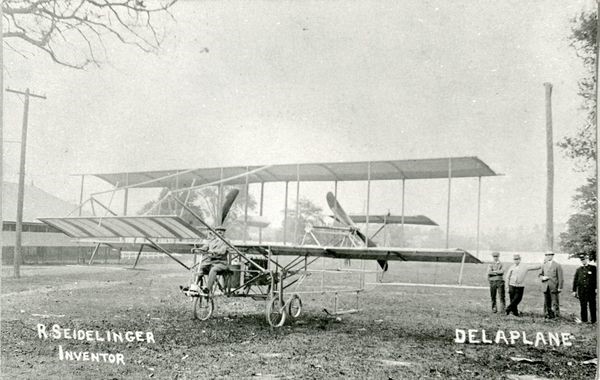
While built by Seidelinger, it was funded by the Wilmington Aero Club.
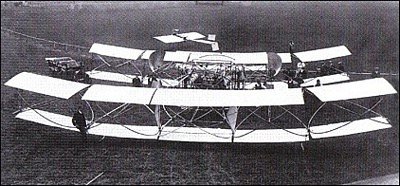
In 1908 Lieutenant John W. Seddon of the Royal Navy was inspired by a flying paper model to design a giant tandem biplane, with which he hoped to win a GBP10,000 prize for the first Manchester to London flight. Convinced that hoops of high-tensile steel tube were much more efficient than conventional wood and wire bracing, he persuaded the Navy to give him leave to work on his project and his mother largely to pay for it. The aircraft, named the ‘Mayfly’, was built in a bicycle factory and used up 610m of steel tubing.
The Seddon “Mayfly” of 1910 was a large and elliptical tube framework tandem biplane flying machine, employing Beedle aluminium sheet propellers, contracted by John W. Seddon to the English engineering company of Accles and Pollock just one year after Blériot’s Cross-Channel flight.

It was intended to take six people aloft – one pilot and five passengers. The aircraft never flew, and achieved nothing more than a high-speed ground-run. On its only high-speed run, a wheel collapsed and the aircraft was damaged. Repairs and modifications were hampered by Seddon’s return to duty and the Mayfly never did fly, eventually being dismantled by souvenir hunters. Often referred to as the Accles and Pollock aeroplane.
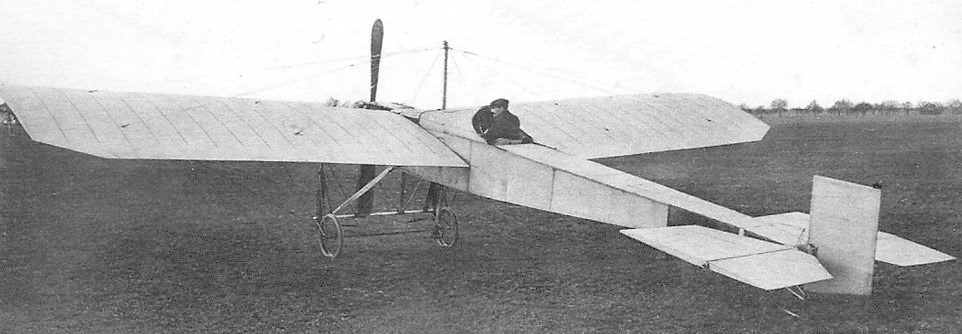
The 1911 Nottingham monoplane was designed and built by Searby, Allen and Searby in the UK.
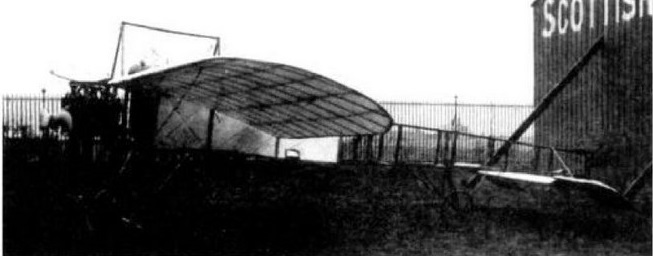
Similar to a Bleriot XI, the Scottish Aviation Co. Dart was constructed during 1911 with modifications mainly to the undercarriage. A single-seater, it was powered by a 35 hp JAP eight-cylinder engine.
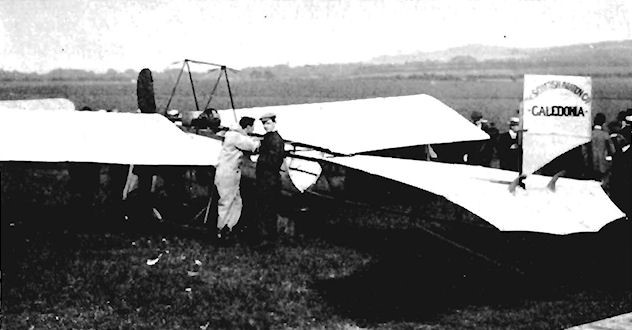
The Caledonia monoplane was built by the Scottish Aviation Co. from designs by Mr. F. Norman, the General Manager of the Company.
Mr. Norman is standing by the machine in overalls and talking across to Mr. Wilson, of the W. W. Proofing Co., a firm which is making a speciality of balloon fabrics in Glasgow.
The single-seat Caledonia was powered by a 35 hp JAP eight-cylinder engine and was fitted with a four wheel undercarriage, plus skids and flying in November 1911.
A Colonel J F Scott “flew” a weird contraption briefly in 1909 that was launched by towing it with a motorcycle. A Cincinnati paper on 3/31/09 reported: “The ‘Purple Flier’ Airship almost flew this morning when its inventor, Col J F Scott, took it out for a trial around the 500-acre field on the farm of Henry A Bobrink, but the engine failed to work properly. The machine also rose a few inches from the ground, but two of the four cylinders refused to work. Col Scott believes that with the machinery properly working the airship will fly. His machine weighs a little less than 1,000 pounds and has a 40 horsepower eight-cylinder air-cooled engine. The aeroplane is started with a motorcycle that is compelled to run at the rate of 25 miles an hour in order to raise the airship in the air.”
Engine: 40-45hp water-cooled
Wingspan: 35’0″
Gross wt: 900 lb
Empty wt: 675 lb
Seats: 1
 All Aero