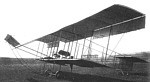
Special Sommer biplane of 1911 lifted 13 persons.
Span: 39’4″
Length: 41′
Special Sommer biplane of 1911 lifted 13 persons.
Span: 39’4″
Length: 41′
France
Roger Sommer had built an aircraft of his own design in 1908, achieving a few short straight-line flights in early 1909. This was housed at Châlons, where Sommer had a hangar between those occupied by Gabriel Voisin and Henri Farman. In May 1909 Sommer bought a Farman III aircraft, and on 7 August 1909 he gained fame in this by breaking the endurance record held by Wilbur Wright, making a flight lasting 2 hr 27 min 15 sec. Later that year he made a successful appearance at the Doncaster flight meeting, winning the prize for the greatest distance flown during the meeting. Meanwhile, he had started building an aircraft of his own design at Mouzon in the Ardennes, where his family had a felt-making business.
First began aeronautical work in 1904. Special Sommer biplane of 1911 lifted 13 persons. After a dormant period the company resumed aircraft construction 1915, and at the Armistice the Sommer works was claimed to have been producing up to 200 aircraft per month under subcontract.
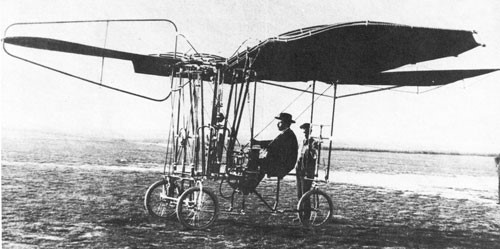
The “Sturmvogel” was an ornithopter designed by Austro-Hungarian engineer Andreas Soltau. It was powered by a carbonic acid engine. It was a relatively large machine, with a span of 11 meters and a wing area of 30 square meters. It had an elevator at the rear, a birdlike construction, and the rudder in front.
The machine was not successful, as the flapping had a too low frequency to lift it off. Tests were made at Linz on 16 August 1909, which were highly published in the contemporary Austro-Hungarian press. After his adventure with the Sturmvogel, Soltau left aeronautics, but he can still be traced in patents dating from the 1920s, one of which features a hot-air engine.
Austro-Hungarian engineer Andreas Soltau designed the “Sturmvogel” ornithopter. The machine was not successful, and after his adventure with the Sturmvogel, Soltau left aeronautics, but he can still be traced in patents dating from the 1920s, one of which features a hot-air engine.
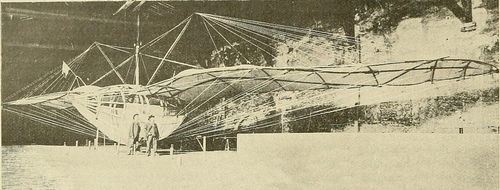
MM. Solirène, preparers at the Montpellier School of Pharmacy, undertook in 1903, the construction of the gigantic glider. Built during 1903/1904 by Solirène and son from Montpellier, the first was never flown due to financial problems.
A second, smaller glider was built.

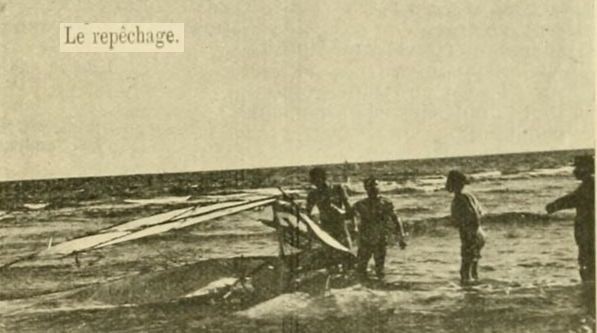
Around Montpellier, on a 12 meters high pylon by the sea in Palavas, the glider was launched.
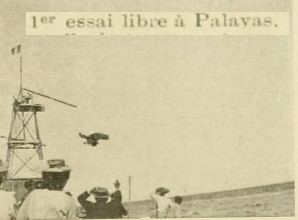
The airplane gets up a bit but the right side where all the wires of the right wing are attached breaks and the airman falls roughly to the side, the depth of the water (0.30m) not being sufficient to cushion the fall.
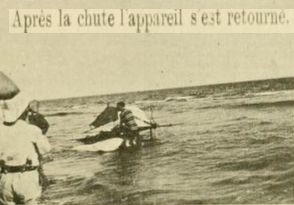
The damage was repaired, Mr. Solirène beginning on August 23, 1905.
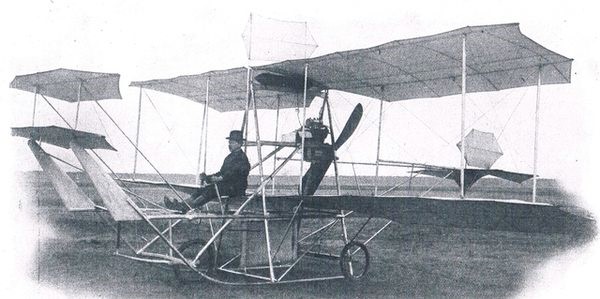
German flight-technician Emil Sohn seated on his doppeldecker during one of his trials at Johannisthal 1909. Sohn’s machine was a Wright-like biplane with a Haake motor. The engine didn’t work and Sohn was left without enough money to purchase a better one.
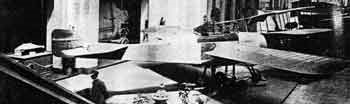
Societa italiana aeroplani – founded in Milan in 1912 by attorney Enrico Luzzatto after the close of the Helios firm – made use of the work of engineer Flaminio Piana Canova, who left the workshops of Somma Lombardo’s Battaglione Aviatori, and briefly assumed the role of technical director for all of Asteria where soon he built an almost identical monoplane to the Sia Italia, called Asteria MB, and also presented at the 3rd International Exhibition of Aerial Locomotion of Turin (May 17-24, 1913).
Harry B Snell
Toledo OH.
USA
Built some kind of flying machine circa 1910. Classified by Jane’s as “Miscellaneous,” this creation had wings as “supporting surfaces, which rotate in a direction opposite to the direction of flight.”
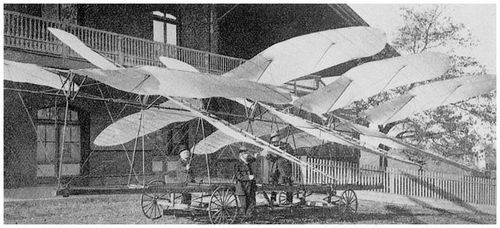
The “Flying Dragoon” was devised by T. F. Smith and dates from about 1909, likely in or around New York City.
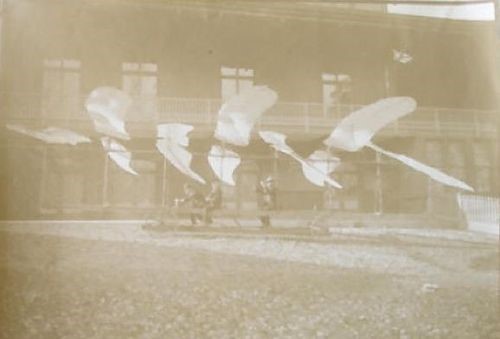
The two-place open cockpit biplane built by Floyd Smith in 1912 was claimed to be the first tractor biplane built in the US.
Powered by a 60hp Hall-Scott engine, with his wife, Smith flew from Santa Ana to Griffith Aviation Park (Glendale) on 19 July 1912. The 45-mile journey took 01h:07min.
 All Aero