Stebbins-Geynet Tri-Bi-plane / Model A / Model B

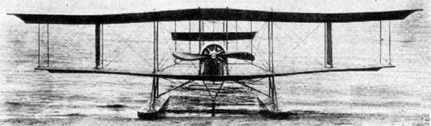
Airplane built by the Stebbins-Geynet Aeroplane Company of Norwich, Connecticut (William H. Stebbins of the USA and Louis Geynet of France), possibly the model A of 1909, which was equipped with a Cameron 25-30 hp four-cylinder, air-cooled engine. As a tri-bi-plane it had a detachable middle wing, which once removed converted the machine from a triplane into a biplane. Positive control was secured by use of the Stebbins-Geynet “auto-control” system. A pull or push movement operated the elevating rudders, while the balancing was done by means of side movements or slight turns. The rear vertical rudder was manipulated by means of a foot lever. It featured a single-place, open cockpit.

The Model B followed in 1910, same as the Model A, but with a seven-cylinder Holmes-modified Gnôme rotary, and 6sqft rudder instead of 10sqft.

Model A
Engine: 35-40hp Cameron pusher
Wingspan: 24’0″
Seats: 1

Model B
Engine: Gnôme
Wingspan: 24’0″
Seats: 1

Stentzel Schwingenflieger

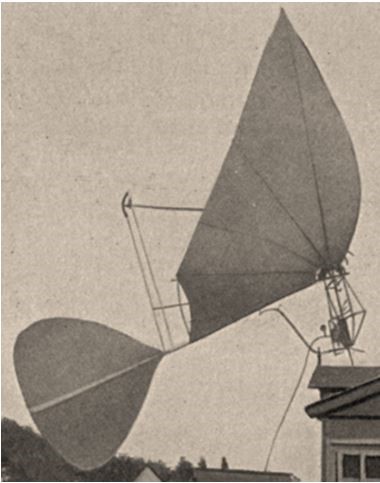
Arthur Stentzel of Hamburg-Altona, Germany, began experimenting with gliders and ornithopters in the early 1890s. In 1896, he demonstrated his flapping wing flying machine at Berlin. The Stentzel machine had cambered bird-like wings of 6.5 m. wingspan and a rounded cruciform tail. It was powered by a carbonic acid engine mounted forward and below the wings. The flying machine ran along a horizontal wire, off which it lifted when in motion. The machine achieved a speed of 4.5 m/s.

Steiger, Carl

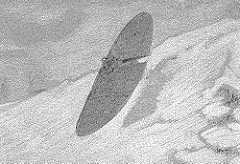
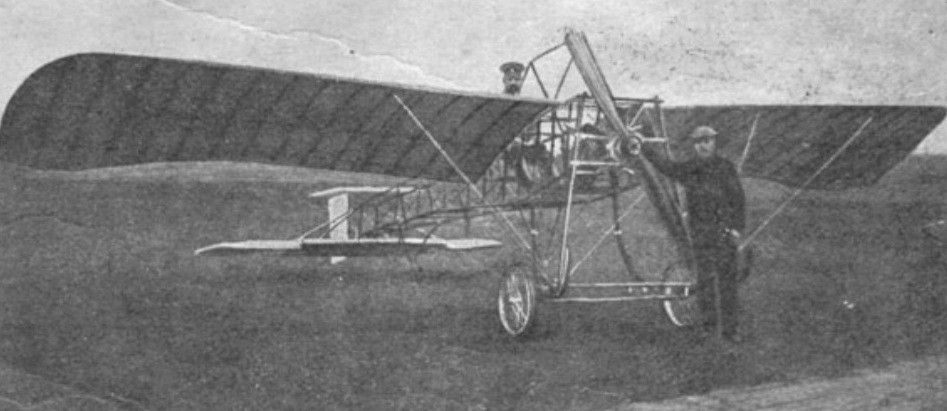
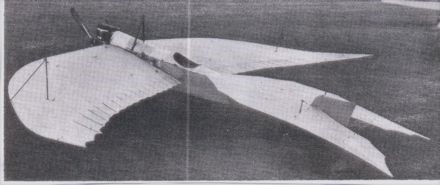
Swiss pioneer Carl Steiger-Kirchhofer (1856-1946) made some flights with this parabolic wing tail-less glider in 1891. In the same year he published the booklet “Vogelflug und Flugmaschine”, in which he proposed several very designs with surprisingly modern-looking features. He continued with other projects, such as a 1908 underpowered biplane and several studies of bird flight and bird models, including wind tunnel experiments.

Steco Aerohydroplane

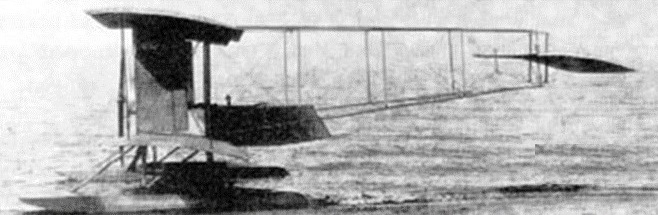
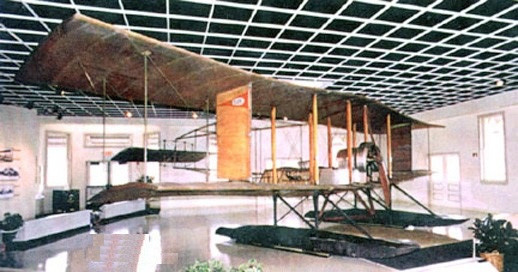
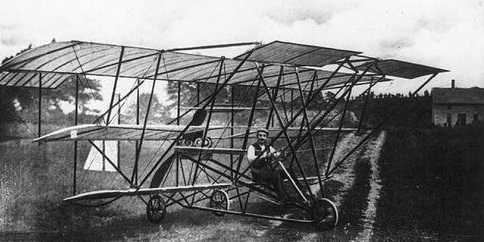
The (James S & Ralph C) Stephens Engineering Co Aerohydroplane of 1911 was designed by James Stephens as an open biplane on wheel or floats. Interplane stabilizer panels were non-controllable—for a right turn, the right panel stayed in place and the left panel swung free, and vice-versa. This prevented the aircraft (wings) from sideslipping or stalling. Turning was accomplished by the empennage flight control steering system (not wing-warp) which gimbaled 360 degrees. These was no elevator, rudder, or ailerons. 1915 US aircraft patent #1,127,105.

Tricycle gear or all known pictures show two 16′ Burgess pontoons.

Stored in 1914, it was recovered in 1990 to the American Wings Air Museum at Blaine MN, where reassembly began in Feb 2002. It was to be fitted with the tricycle landing gear, which incorporates pneumatic shock absorbers, independent main gear brakes, and has nosewheel steering.

Engine: 50hp Gnôme Omega
Span: (upper) 41’8″
Span: (lower) 36’0″
Length: 31’0″
Speed: 50 mph
Seats: 1
Statax 40hp

In 1913 Statax-Motor of Zurich, Switzerland introduced a swashplate engine design. Only a single prototype was produced, which is currently held in the Science Museum, London. In 1914 the company moved to London to become the Statax Engine Company and planned on introducing a series of rotary engines; a 3-cylinder of 10 hp, a 5-cylinder of 40 hp, a 7-cylinder of 80 hp, and a 10-cylinder of 100 hp.
It appears only the 40 hp design was ever produced, which was installed in a Caudron G.II for the British 1914 Aerial Derby but was withdrawn before the flight. Hansen introduced an all-aluminum version of this design in 1922, but it is not clear if they produced it in any quantity. Much improved versions were introduced by Statax’s German division in 1929, producing 42 hp in a new sleeve valve version known as the 29B. Greenwood and Raymond of San Francisco acquired the patent rights for the US, Canada, and Japan, and planned a 5-cylinder of 100 hp and a 9-cylinder of 350 hp.