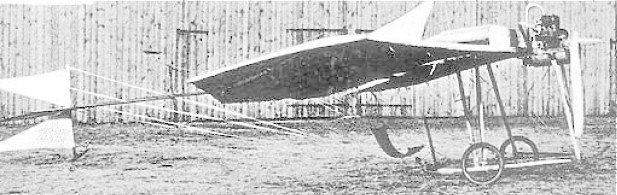
Karl Strack built his first Eindecker in 1910. It was somewhat inspired by the Grade Eindecker and powered by a 25 hp Hilz Type 1 engine. Brief flights were made in June 1910 on a grass field around Duisberg, Germany.
Karl Strack built his first Eindecker in 1910. It was somewhat inspired by the Grade Eindecker and powered by a 25 hp Hilz Type 1 engine. Brief flights were made in June 1910 on a grass field around Duisberg, Germany.
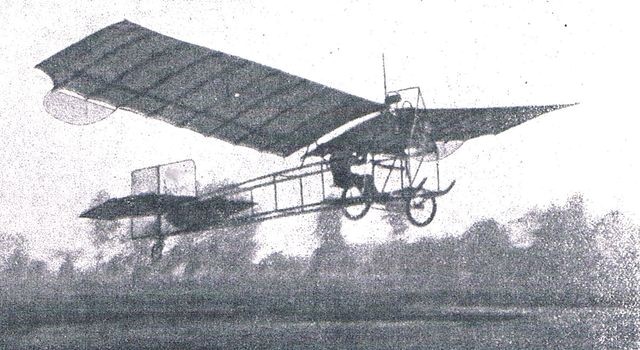
The Strack Hochdecker of 1911 is a high-wing monoplane built by the Strack Flugzeugwerke of Duisburg; a completely open model of tubular metal construction, fitted with a two-cylinder rotary engine which drove two counter-rotating propellers.

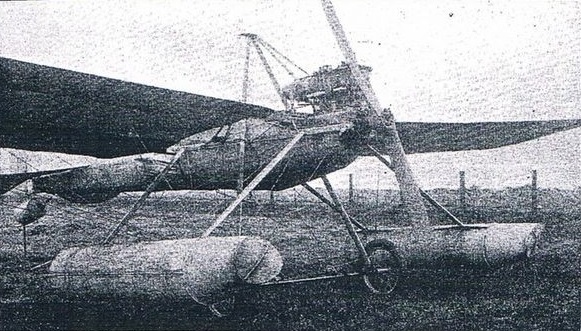
Amphibian monoplane entered by the builder Strack Flugzeugwerke (Duisburg) into the Bodensee-Wasserflug 1913. The machine had a unique amphibian construction which worked such that the land undercarriage was fixed but the floats could be moved up and down. When landing on the water the floats were set in the down position, so that the fixed land undercarriage cleared the water.
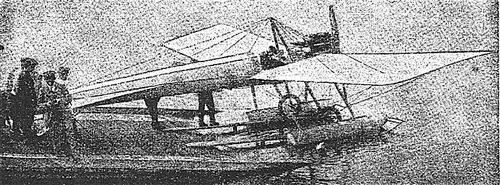
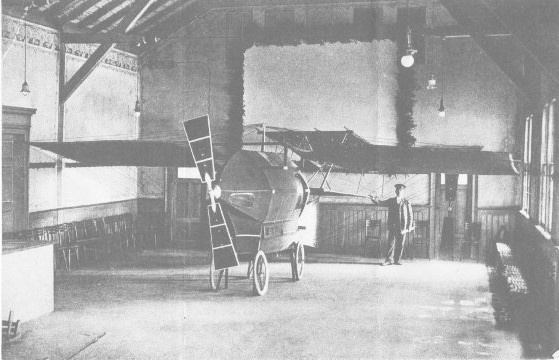
Franz Stolz built his design in 1909 in the German town Rastatt. Due to its form it was named the ‘Torpedo-Flugmaschine’ [Torpedo Flying machine]. To fund (further) construction the design of Stolz was exhibited against payment in the Carl Franz Halle, but this financial help was not enough. Stolz had to auction his machine in December 1909 and the machine never did fly.

This monoplane appeared at Issy around 1908-09. The work of a Blériot XI pilot, the main frame looked a lot like a contemporary wheelchair. The wing was prominently curved, Stoeckel designed it to reassemble a bird’s “half-folded” wing.

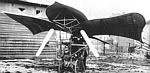
Engine: Revel, 12 hp
Wing span: 5 m
Wing area: 28 sq.m / 282 sq.ft
Length: 6 m
Max weight: 300 kg / 661 lb
Seats: 1
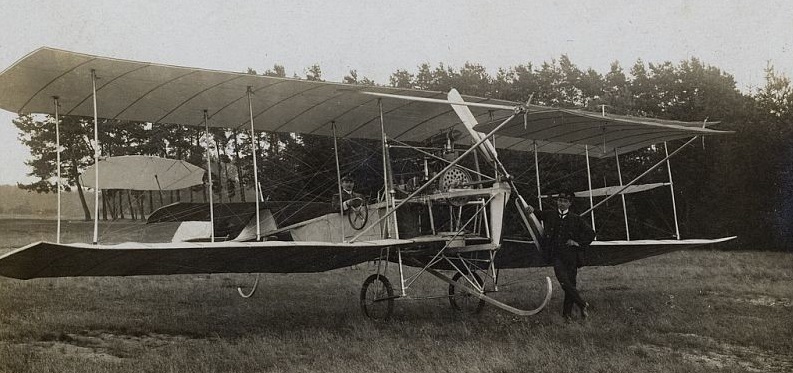
In 1910-1911, a small group of aviation enthusiasts from Paderborn, Johann Stockhausen, Oskar Martini, Paul Schröder, Karl Vogt and Anton Bickmeier built their tents on the edge of the parade ground at Dörenkamp in Paderborn, Germany, working on their projects for the conquest of the air, but nothing further is known.
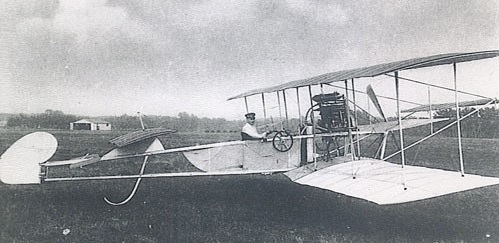
In February and March 1911, Stockhausen and Schröder leased on the edge of today’s airfield Bad Lippspringe, the former parade ground, a land on which they built the first Paderborn aircraft hall proudly bearing the name “Aeroplanhalle Joh. Stockhausen”. For the 17 May 1912 Stockhausen invited pilot Gustav Tweer. The biplane of Stockhausen had a 60 hp engine.
The 1919 Stout Cootie was a single-place open cockpit, mid-wing monoplane with a thick cantilever wing. The wingspan was about 18 feet. Taken to Morrow Field in Detroit for testing in March 1919, but the 38hp two-cycle Sperry-Wills engine refused to run and the aircraft never flew.
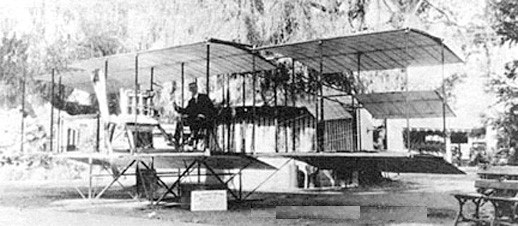
The 1911 Stewart Aerial Vehicle Co 1911 Biplane was a single place Boxkite type with multi-paneled wings. The motor drove twin pusher props. Apparently. several variations were made. US Patent #984,311 was granted.
In 1910 the (Robert W) Stewart Aerial Vehicle Co built an open, single-place, parafoil type with tractor twin-props. US Patent #951,154 was granted.
This was followed in 1911 by a Boxkite type.
In 1910 Frank Steffan of Los Angeles CA., USA, built the single-place, open cockpit, Re-inforced Biplane. The frame with a large, forward-pointing, triangular plane on the top frame and two aft-pointing triangular, kitelike planes set above it; Curtiss motor chain-driving two pusher props.
 All Aero