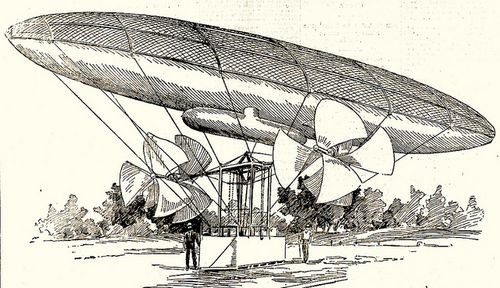
Sweany-Davenport 1897 Airship

Non-rigid design with an external ballonet, from which was slung a car fitted with two sets of 6-bladed aluminium propellers that were to be driven by a 4 hp gasoline engine. However, the project at Green Island, California was never brought to its final construction. The designers had high hopes for their machine, and talked about making “a transcontinental journey to the national capital.” The envelope was described as circumscribed along its length with bicycle tubing to prevent it from collapsing. This tubing, a part of the suspension band, was probably inflated to pressure and thereby stiffened. This device was similar to an idea developed and demonstrated by the notable aeronaut Louis Capazza using a free balloon in the 1880s; that if the envelope were to suffer a catastrophic loss of lift gas during flight, the suspension band would keep the envelope from folding, or rather collapsing, and thus allow the gas bag to act as a parachute in slowing the descent of the airship.
Swanson Airplane Company Inc

1917: Swen Swanson,
Williamsburg VA.
USA

1922: Univ of South Dakota,
Vermillion SD.
USA

S. S. Swanson was an amateur constructor, and in 1923 co-producer of Swanson-Freeman light biplane.

1925: Swanson-(Edgar) Freeman,
Vermillion SD.

Later worked with Lincoln-Standard Aircraft Corporation.

Swanson Airplane Company Inc incorporated 1930, and developed Swanson Coupe two-seat high-wing cabin monoplane.

1931: Rockford IL.

Swanson Aircraft Co Inc,
Hopewell VA.

1934: Swanson-(Olaf “Ole”) Fahlin,
at Nicholas-Beazley Airplane Co,
Marshall MO.

1935: Fahlin Mfg Co (propellers).

Sverchkov Cycloplane

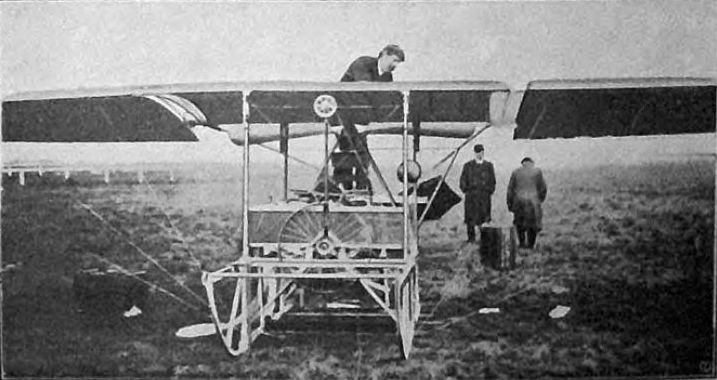
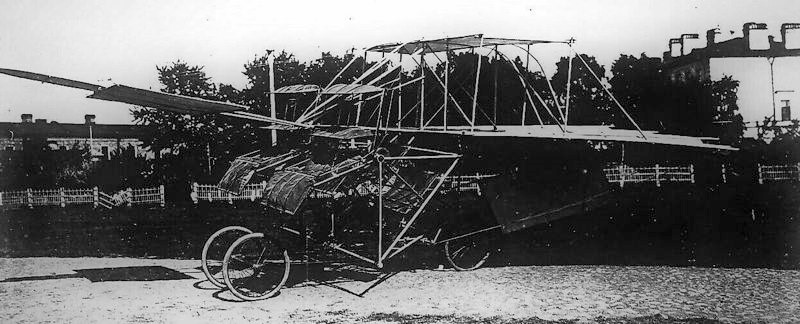
This strange machine with shovel-shaped paddle-wheel rotors that were intended to give direct lift, controlled by a system of springs and eccentrics, was built in 1909 at the expense of the Main Engineering Directorate of the Russian Army (GINJU). In the same year it was exhibited and even won a medal at the St. Petersburg Exposition of Modern Inventions. However, when tested, the machine refused to even move.

Svachulay Kolibri

Kolibri I

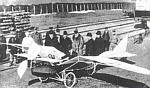
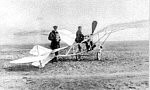
The 1909 Svachulay Kolibri I monoplane was designed and built by Sandor Svachulay in Hungary.

It managed just a few hops, but it was a start for later success.

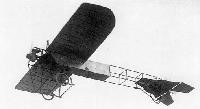
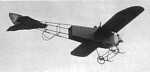
The Kolibri II was built in 1911.

Kolibri II

Kolibri I
Span: 23′
Length: 16’5″
Take-off Weight: 375 lb
Speed: 44 mph

Kolibri II
SSpan: 21’4″
Length: 18′
Take-off Weight: 485 lb

1913 Kolibri IV
Span: 19’8″
Length: 16’5″
Take-off Weight: 440 lb
Speed: 78 mph

Sutro 1913 Hydroaeroplane

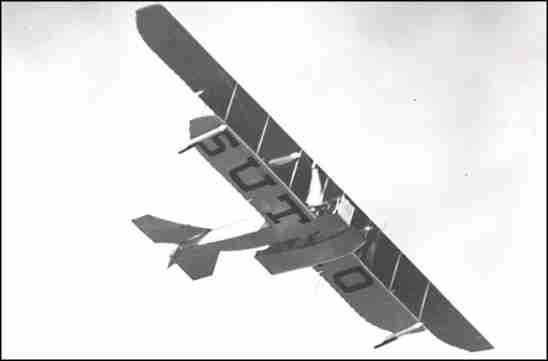
Assisted by Waldo Waterman, California millionaire Adolf Gilbert Sutro designed and built this machine in San Francisco, and, powered by a Hall-Scott 60 hp engine, it flew quite successfully.

Reportedly it was used to set several international records, including a speed record of 51 mph in 1913.

Engine: Hall-Scott 60 hp
Upper span: 45 ft
Lower span: 33 ft
Length: 25 ft