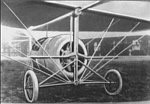
In 1913 the English Marconi Company commanded Vlaicu to create a two seat aircraft out of metal. After a few months, the Vlaicu III was finished. The Vlaicu III was the first fully functional aircraft in the world built in metal.
In 1913 the English Marconi Company commanded Vlaicu to create a two seat aircraft out of metal. After a few months, the Vlaicu III was finished. The Vlaicu III was the first fully functional aircraft in the world built in metal.
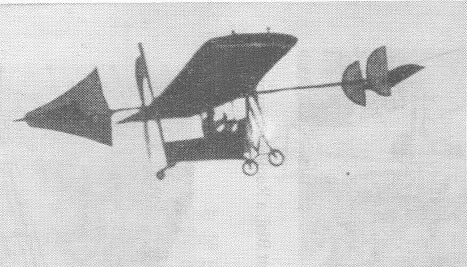
In 1911 Vlaicu built a second plane which he flew in several cities in the Kingdom, in major tournaments.
The most distinguishing feature was the now fully enclosed nacelle. In front of the nacelle was a Gnôme 7-cylinder rotary engine delivering 50 hp, driving the two propellers via a chain. This machine participated in the June 1912 competition at Aspern flying field at Vienna.
He participated in the war during the Balkan campaign, where he performed some aerial observation missions.
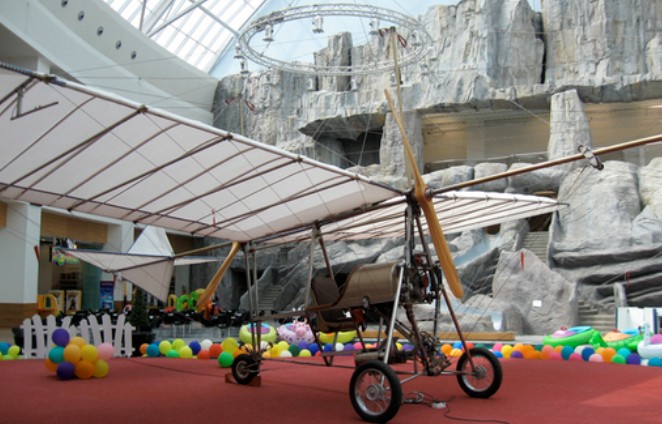
Supported by the Royal House and the Romanian Army, Vlaicu started building at the workshops of the Army Air Arsenal the Vlaicu I, the first plane built on Romanian territory.
Vlaicu first flew the aircraft on 17 June 1910 above the Cotroceni field.

At the urging of his school friend, the poet Octavian Goga, Vlaicu went to Bucharest, where in front of an audience he demonstrated his prototype aircraft.
Aurel Vlaicu graduated from high school in Lica Sibiu State, in 1902, followed by two quarters in the Faculty of Mechanical Engineering of Budapest’s Polytechnic School. He receivrd his diploma in engineering after finishing the Ludwig-Maxmiliams-Universitrt Munich.
Returning to Romania in 1908, he finished his first glider a year later, helped by his brother, John, who made several flights in Brintinti village.
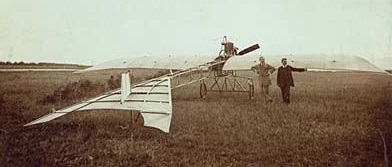
The Vlach No.4 was the first successful Czech aircraft, including its Czech engine, a 38 hp Laurin & Klement type L. Beginning in 1908 Metoděj Vlach was employed as the chief mechanic at Laurin & Klement in Mladá Boleslav where his first airplane, an underpowered biplane, was built. His No.4 was already started in 1911 and together with helpers Vítek and Ševit the new monoplane was finished in the summer of 1912 and exhibited at the Mladoboleslavská severočeská výstava (Northern Czech Mlada Boleslav Exposition), there winning the Gold medal.

Metoděj Vlach was born on July 6, 1887 at Říkovice near Přerov, Bohemia. After studying at a secondary school he went to work at Maribor, a train manufacturing company and then on to the firm Puch (Steier), a company producing cars. Beginning in 1908 he was employed as the chief mechanic at Laurin & Klement in Mladá Boleslav where his first airplane, an underpowered biplane, was built.
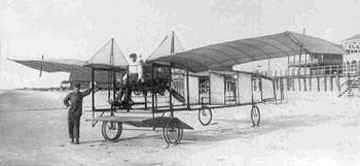
The Virginia I monoplane was built in 1910 at Virginia Beach, Virginia, VA.
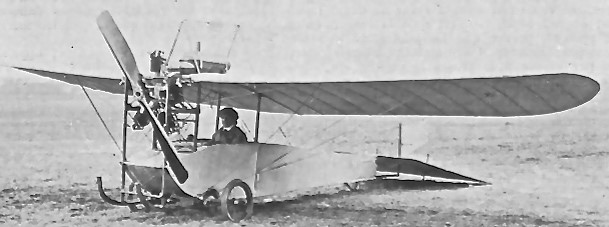
G. Vinet, an automobile and automobile-body builder of Courbevoie, northwest of Paris, started his aviation activities by building the first glider of Archdeacon. He then built several one-off monoplanes in 1910-1913. The type D was designed by P. James and completed in June 1911. It was tested at Chateaufort, but was found unsatisfactory.
Span: 28’4″
Length: 21’4″
Weight: 550 lb empty
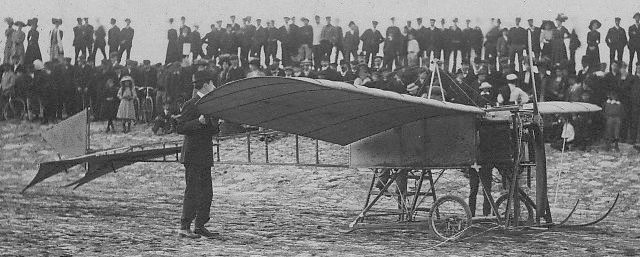
A Blériot-like monoplane with Hanriot-like undercarriage, powered by a 40 hp Gyp inline four built in 1911.
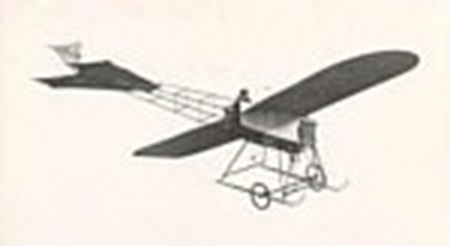
Span: 29’6″
Length: 25’7″
Weight: 462 lb empty
Speed: 56 mph
 All Aero