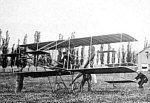
The 1909 Vosgiens biplane was designed and built by Atelier Vosgiens in France.
The 1909 Vosgiens biplane was designed and built by Atelier Vosgiens in France.
Atelier Vosgiens built aircraft in France circa 1909.
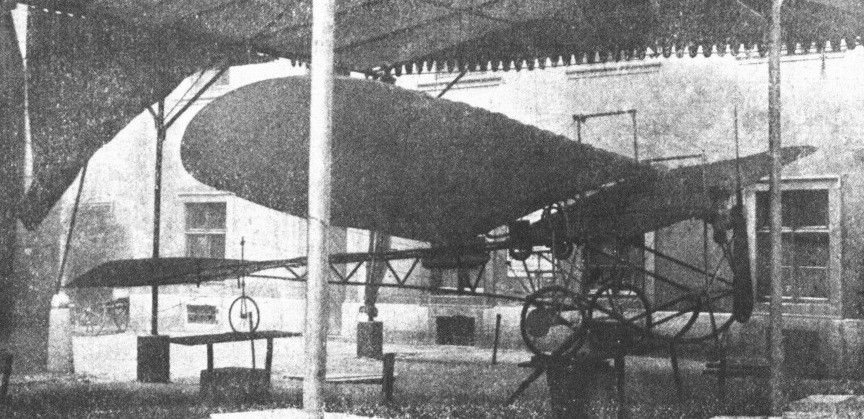
A monoplane with a variable geometry wing, designed by Hauptmann Rudolf Vorauer from Graz, in what is now Austria, in 1910. Vorauer had the rank of Artilleriehauptmann in the k.u.k. Armee.
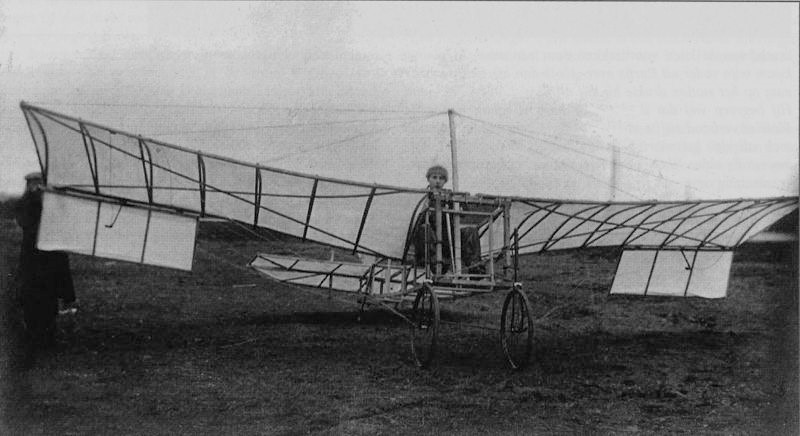
A glider built by Walton White Evans von Hemert. The machine was built in 1911 in a carpenter workshop in Amersfoort, Netherlands. Von Hemert (born 1894) was then 17 years of age. He made several flights with the glider, one of which was on 5 February 1911, as reported in the Dutch aviation magazine “De Luchtvaart”. The glider was towed by a car via a connecting line and the flight lasted about one minute at a height of around 10 meters. All of a sudden a gust of wind broke the left wing, crashing the machine. The wings were wrecked but the fuselage and the part where the pilot sat was intact. The rudder sported the identification “Aeroplane V. Hemert No. X”.
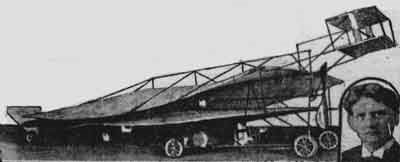
Built by German immigrant Alexander von Hagan in Seattle, Washington, the machine had two sets of silk wings, an aluminium framework, two motors and three propellers. It weighed 600 pounds without the operator. One propeller was in the front, the second three-quarters back, and the third at the rear. One 40 hp motor ran the two front propellers and a smaller one of 35 hp powered the rear. Von Hagan was born in 1859 and served in the German army for 14 years.
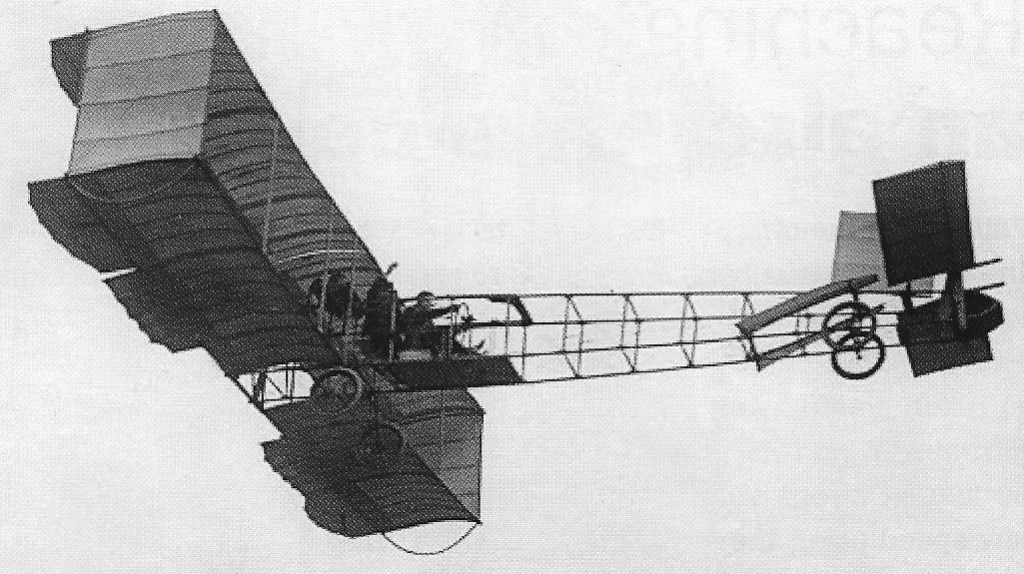
The Voisin Canard was an aircraft developed by Voisin brothers during 1910 and first flown early in 1911. It was originally flown as a landplane: with the addition of floats it became one of the first seaplanes used by the French Navy.
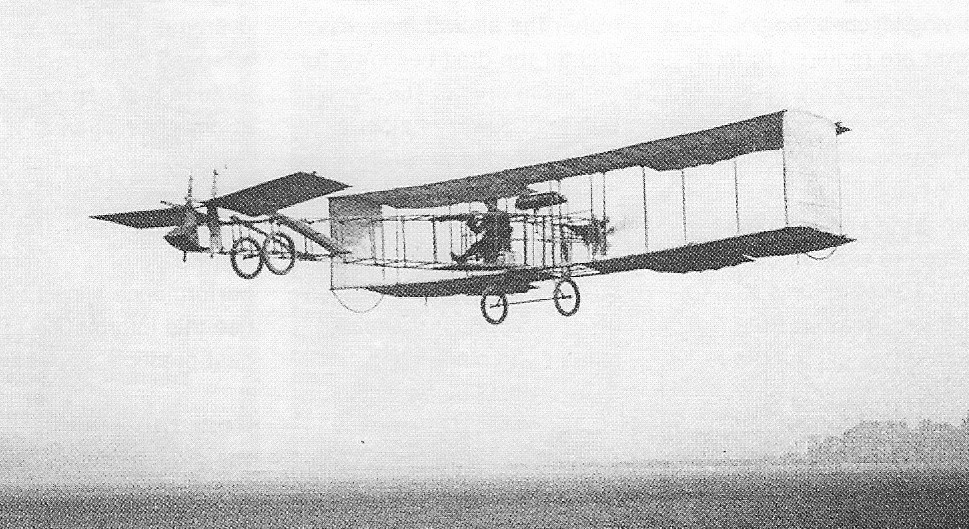
As first flown at Issy-les-Moulineaux by Maurice Colliex, the aircraft had an uncovered fuselage of wire-braced wood construction with the 50 hp (37 kW) Rossel-Peugeot rotary engine at the rear and the front-mounted control surfaces consisting of an all-moving elevator divided into two halves, one either side of the fuselage, a rectangular balanced rudder mounted above the elevator, and a pair of short-span fixed horizontal surfaces with a high angle of attack mounted behind and below the elevators. Voisin’s characteristic side-curtains were fitted to the outermost pair of interplane struts and roll control was achieved using trailing-edge ailerons on both upper and lower wings.
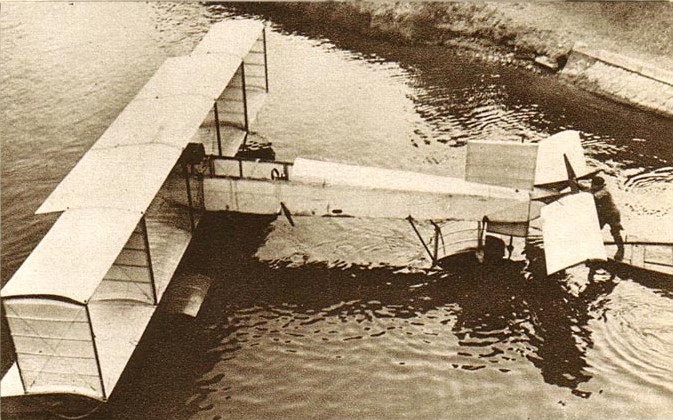
The aircraft was judged a success and Voisin manufactured a number of examples. There are variations between the individual production aircraft: the two examples flown in the French military aircraft trials in 1911 had a wingspan of 15 m (49 ft 3 in).; one was powered by a 56 kW (75 hp) Renault and the second by a 97 kW (130 hp) Gnome. The number of sets of side curtains varied, some aircraft having two or even three sets.
The seaplane variant, fitted with floats designed by Henri Fabre, was initially built to the order of Prince Bibesco, who intended to use it make a flight across the Black Sea. It was first successfully flown from water on 25 April 1911.
One example was bought by the French navy in March 1912 to equip the seaplane tender La Foudre, the first seaplane carrier in history. A second example was delivered to the Navy in December 1913.
47 of the 1911 Voisin Canard (amphibian) were built.
Powerplant: 1 × Gnome, 52 kW (70 hp)
Wingspan: 12 m (40 ft)
Wing area: 43.9 m2 (473 sq ft)
Length: 7.9 m (26 ft)
Gross weight: 549 kg (1,210 lb)
Maximum speed: 90 km/h (56 mph, 49 kn)
Seats: 2
1911 Voisin Canard (amphibian)
Span: 36’1″
Speed: 47 mph
1911 Voisin 17m canard biplane
Span: 55’9″
Length: 37’9″
Weight: 2140 lb empty
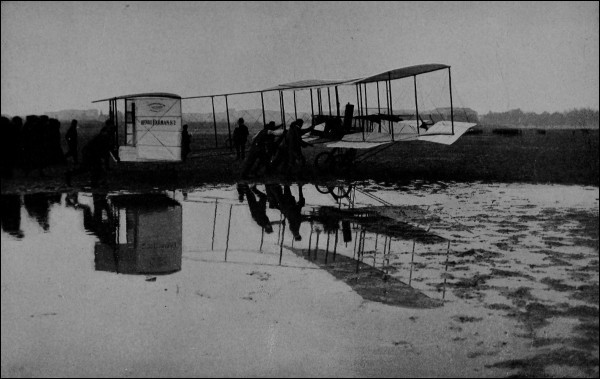
During 1908, the Voisin brothers built for Farman another aircraft, to be called the Farman II, incorporating refinements in the design based on Farman’s specifications. After the break in his association with Voisin in early 1909, Henry Farman started aircraft construction for himself.

The first flight in Peru was made in Lima on 15 January 1911 by Juan Bielovucic, with the original configuration of the machine. The whole flight lasted one minute and Bielovucic only rose to 40 meters. Later cross-country flights were made with the machine locally modified with an extended top wing to get more lift.
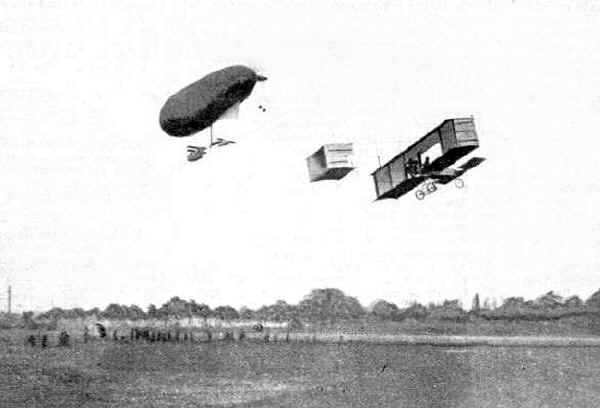
Originally, George White of Bristol Aeroplanes wanted to build licensed copies of the Zodiac biplane designed by Gabriel Voisin, after one was bought by White to show at the 1910 London Aero Meet.
After taking the Zodiac to Brooklands airfield for tests, no one could get the plane of the ground—perhaps due to an under-powered engine to plane weight ratio, and the shallow camber of the wing section—a fact commented on by the pioneering aviation magazine, Flight.
To compensate for the wing problem, White and company added a different set… but still… a weak motor is a weak motor.
On May 28, 1910, pilot Maurice Edmond was able to achieve a short flight, but on June 10, 1910, an accident that damaged its undercarriage had the frustrated crew give up on the Zodiac… even with five other such copies being built by the British and Colonial Aeroplane Company at its headquarters at Filton.
Two identical pusher biplane machines, with Antoinette engines, had been built by the Voisin brothers for two early aviation pioneers, one for Léon Delagrange in March 1907, and the second for his friend and rival the Anglo-French pioneer Henry Farman (1874-1958) in October 1907.
Gabriel and Charles Voisin were among Europe’s leading pioneer aviators. Their classic 1907 pusher biplane was one of the most significant aircraft of the pre-World War I era. In 1912, they developed a military version. Thereafter they built aircraft almost exclusively for military contracts.
The Voisin 1912 Type, as it was referred to by the French military, also called the Type 1, launched the standard configuration of almost all Voisin aircraft throughout the war. The Voisin design philosophy was conservative. There were only slight, incremental design changes in the airframes during the war. Improvements principally consisted of installing more powerful engines, usually necessitating wings of greater span.
 All Aero