WALCO / Weckler-Armstrong Lillie Corporation

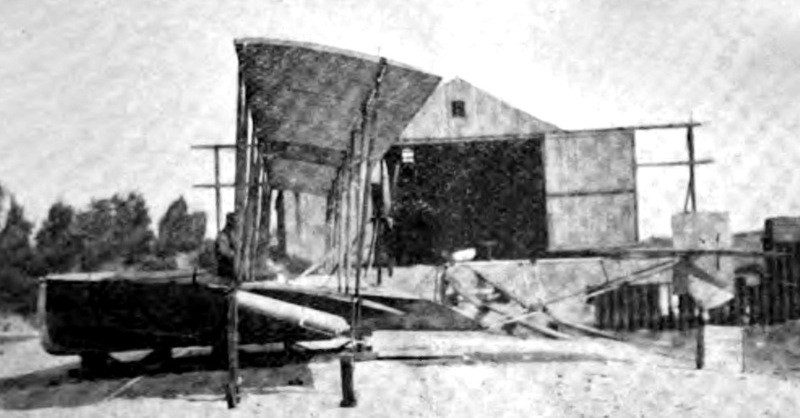
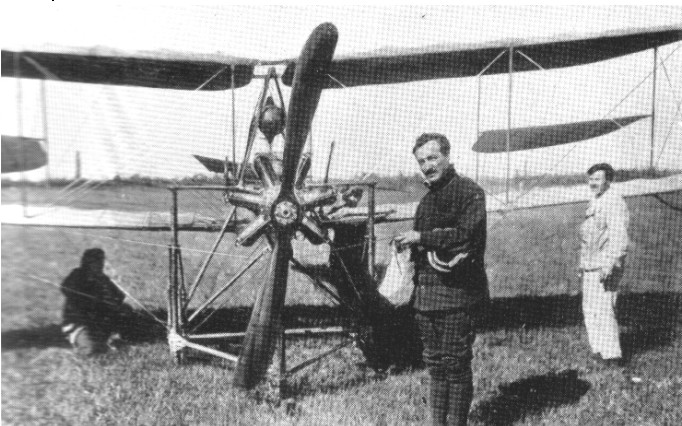
Max Lillie (1881-1913, born in Sweden as Maximillian Theo Liljestrand) announced the formation in Chicago of the Weckler-Armstrong Lillie Corporation [WALCO] in February 1913, with the aim to manufacture airplanes and airboats. Adam F. Weckler was a racing boat builder and E. R. Armstrong was an airplane builder and expert on aerodynamics. Max Lillie was the driving force in the new firm.

The exact identity of the plane is either a modification of the earlier unsuccessful “Airboat” tandem monoplane design or a second follow-up design.

Two WALCO planes were entered for the 1913 Chicago-Detroit Aero and Hydro Great Lakes cruise, but none actually started.

Wadsworth Flying Fish

In 1911, Detroit industrialist and boat tycoon Frederick Elliott Wadsworth built a hydro-aeroplane named the Flying Fish which debuted at the New York Boat Show. The vehicle was designed to skim on top of the water at speeds of up to 65 mph, with the ‘skipper-pilot’ seated in a wicker chair at the rear of its canoe-like hull. The Flying Fish was successfully tested on the ice of Lake St. Clair but no further development occurred.

Wade 1909

Circa 1909 and mentioned in Jane’s as “Extraordinary claims have been made for this machine and its applicability to an ordinary motor car, producing the opinion that it is a mere myth. It appears, however, to be in the ordinary category of ‘air suckers,’ collecting air in front and above, creating a partial vacuum, and expelling the air behind and below.”

Vuia No.2

Later Vuia aircraft, al¬though more conventional for their time and (in the case of the No 2 design) fitted with a more reliable engine, did not achieve flights of any great length compared with others of their day.

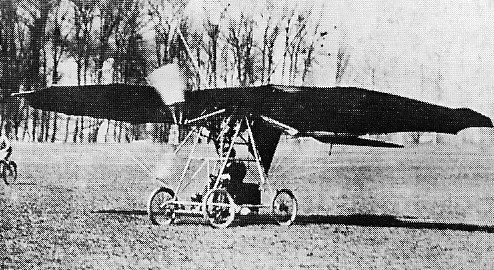
Designed and built by Romanian pioneer Traian Vuia in 1907, the No.2 was claimed to be a rebuilt Vuia 1.

The compact airframe and folded wings are distinctive features of this design which was powered by a 25 hp Antoinette motor.

Span: 25’7″
Length: 10′
Take-off weight: 530 lb

Vuia No.1 Monoplane

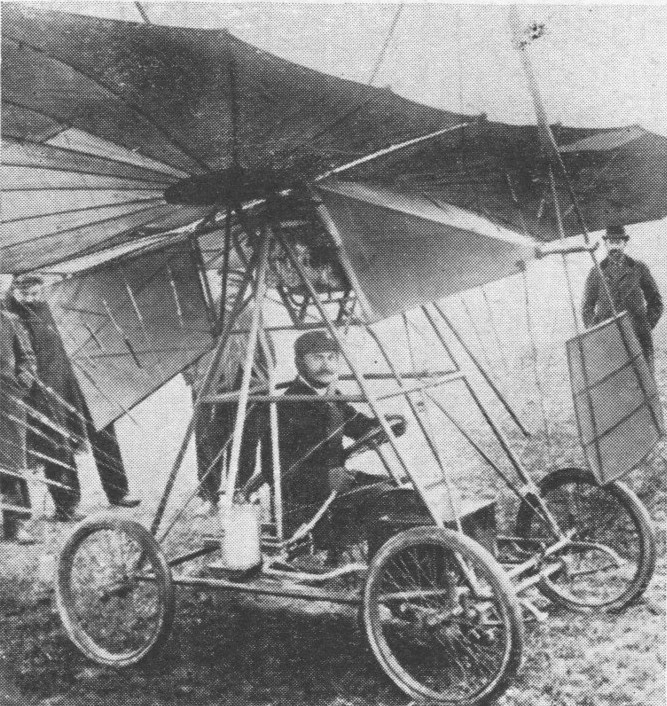
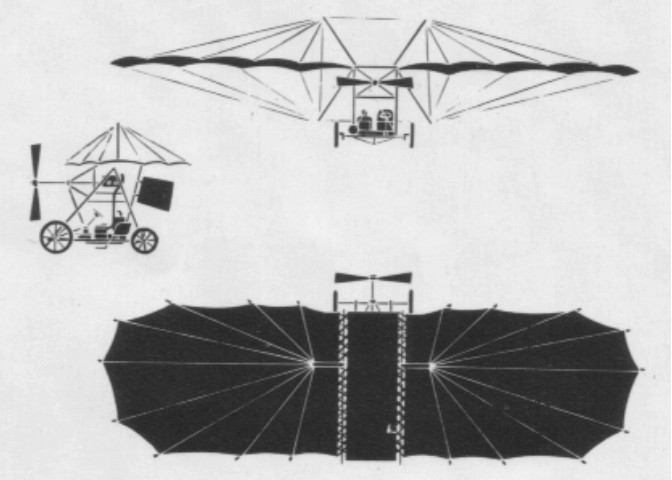
One of the first Europeans to make a powered flight (18 March 1906) in his own aeroplane. Traian Vuia is claimed as Romania’s first aviator, although at the time of his early flights he was resident in Paris and his birthplace was then apart of the Austro-Hungarian empire. His first aeroplane, built with the assistance of Frenchman Victor Tatin, travelled no more than 78.75 ft (24 m) on its longest hop-flight, but had several novel features, including a variable incidence wing and an undercarriage with pneumatic tyres.

Vuia No.1 Monoplane Article

The endurance of the motor was only three minutes.

Engine: modified Serpollet carbonic acid gas engine, 20 hp
Prop: 7 ft 2.5 in (2.20 m) dia two blade
Wing span: 22 ft 11.5 in (7.00 m)
Length: 10 ft 6 in (3.20 m)
Wing area: 204.5 sq.ft. (19,00 sq.m)
Gross weight: 531 lb (241 kg)
Seats: 1