Warchałowski V / Vindobona Racer / VI

The Warchalowski V was built by Autoplan, Austria.

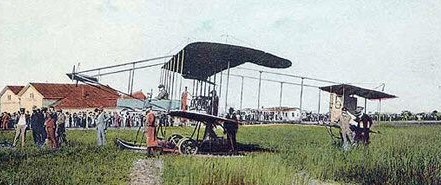
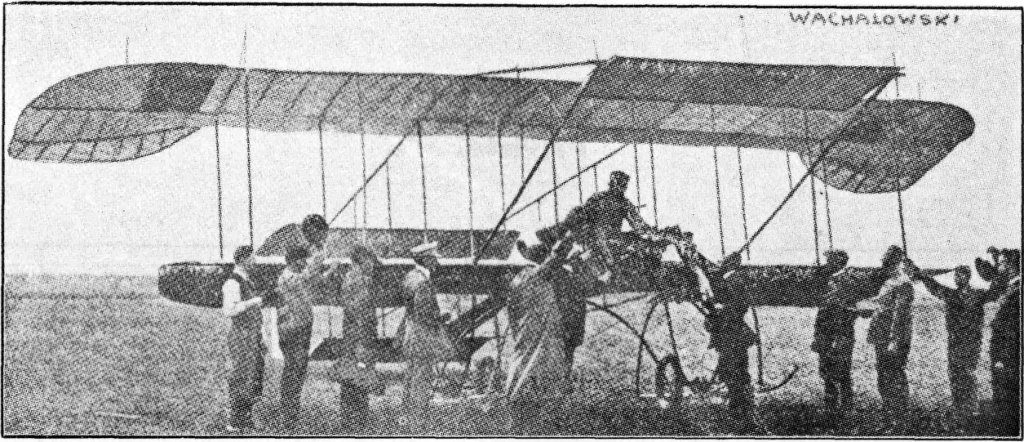
1911 Warchalowski V single-seater pusher biplane

From 1910 to 1912 Adolf Warchałowski started designing and building aircraft based roughly on Farman design. Within two years he built 15 aircraft that differed with various details. Warchłowski’s planes were highly succesful for a time and gained several records of Austria.

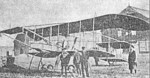
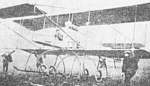
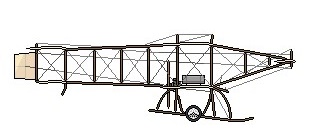
The Warchalowski V (“Vindobona Racer”), was flown by the constructor on June 7, 1911. It was a development of the Warchalowski IV and was reported to have a single rudder and a Gnôme engine. Examples were built. Two Warchalowski V aircraft took top positions in the Air Meeting in Wiener-Neustadt (11-18.06.1911). On 9.08.1911, a night flight over Vienna was made on a plane equipped with headlights. The VI version was reported to have a single horizontal tail was used and a Daimler inline engine. In August and September 1911, three examples were built. On this plane, in August and September 1911, the constructor participated in military exercises. One was broken down by J. Sablatnig on October 1, 1911, a second was crashed by Sablatnig on August 19, 1911 during a flight around lower Austria, where he reached a speed of 106 km/h.

1911 Warchalowski VI

Warchałowski, Adolf

In 1910 Adolf Warchałowski, Austrian citizen of Polish origin, living in Vienna, started designing and building aircraft based roughly on Farman design. Within two years he built 15 aircraft that differed with various details. Warchłowski’s planes were highly succesful for a time and gained several records of Austria.

Karl Warchalowski,
Autoplan Werke,
Odoakergasse 35,
Vienna XVI.

Wanke 1912 biplane

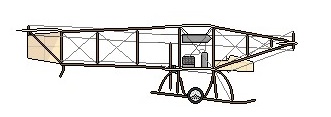
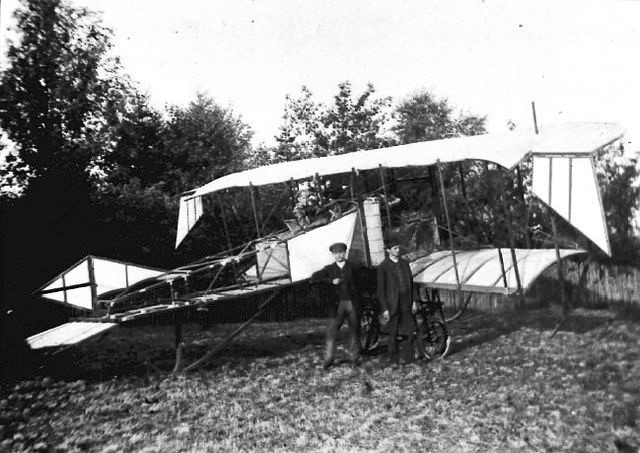
Carl Wanke of Coswig/Anhalt, Germany, started in 1912 to build aircraft. He set up a small workshop and with help of local carpenters, technicians and other enthusiasts he constructed his first aircraft. That was said to have been projected as monoplane, but it was only able to move some 30 metres on the ground. Then Wanke rebuilt the wings and apparently created the biplane shown above. It was tested with some hops, but after a somersault during the first public trial flight it was wrecked.

Wanke, Carl

Carl Wanke of Coswig/Anhalt, Germany, started in 1912 to build aircraft. He set up a small workshop and with help of local carpenters, technicians and other enthusiasts he constructed his first aircraft. That was said to have been projected as monoplane, but it was only able to move some 30 metres on the ground. Then Wanke rebuilt the wings and apparently created the biplane of 1912. It was tested with some hops, but after a somersault during the first public trial flight it was wrecked. In 1913 followed a classic Taube aircraft and the “published” single-seater sports monoplane in early 1914. At that time Wanke had moved his activities to the airfield Wittenberg-Teuchel, where he operated his monoplanes and a “three year old Harlan machine” until WWI ended his flying adventures.

Walter Stein Aeroplanbau Eindecker 1911

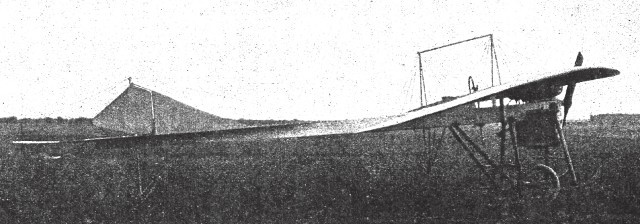
The Walter Stein Aeroplanbau in Teltow/Berlin built two or three disserent designs, depending on how you count. The first was built by Rumpler in the spring of 1910. It was followed by a distinct reconstruction by Stein himself. The machine retained the Aeolus engine but got a sturdier undercarriage and new Taube-like wings. As with his first design, Stein was struggling to get the machine in the air during Autumn 1910. In 1911 Stein built a second Eindecker, fitted at first with a Rumpler Aeolus engine and later modified with a Gregoire-Gyp-Motor. This was the challenge machine. It was later modified, probably in 1912, with a tailwheel and an additional strut to the lower king-post.

Walsh Bros Seaplane

The business syndicate, displeased with Vivian’s seemingly excessive caution, took possession of the Manurewa; soon after, it crashed and was damaged beyond repair. Recovering from this setback, Leo, with Vivian’s help, began to design a flying boat of the American Curtiss type which he thought would suit New Zealand conditions. The brothers gained the financial and practical assistance of R. A. Dexter, an American engineer and motor dealer in Auckland, who was to be a consistent supporter.

Fifteen months’ spare time work went into the construction of this aircraft; all the work was carried out by the Walsh brothers, Leo and Vivian, with the exception of the steel fittings which were manufactured by Mr R.A. Dexter, an Auckland engineer who was backing the project.

The hull planking was cedar with ash stringers and mahogany ribs; the hull weighed 305 lbs. Aluminium decking was provided on the forward portion of the hull and the after portion was covered with a special cloth stretched over cedar battens. Seven watertight compartments were built into the hull. The two mainplanes (each 41 ft 6 ins long) had front and rear spars of ash with cedar rib. The fabric covering the wings and the tailplane was doped with cellulose. The aircraft was powered by a 10-cylinder 4-stroke Anzani engine fitted in a special housing at the rear end of the top mainplane. An 8 ft laminated walnut and mahogany propellor with brass tips was fitted.

The aircraft was constructed at the Walshs’ home in Remuera and when completed was dismantled and carried to Bastion Pt, Orakei. After re-assembly the aircraft was launched on January 1, 1915. After taxiing trials and final adjustments, Vivian Walsh took off in the flying boat for a short test flight around Bastion Pt. Many practice flights followed and on March 14 carried its first passengers (covering a distance of five miles).
Even with the light weight of this aircraft (1,200 lbs) the 80 hp Anzani radial engine was only just sufficient to keep the aircraft flying and many hours of work by Leo Walsh were required to keep the engine tuned.

In March 1915 Vivian took the first of many passengers on a flight of five miles. The flying boat itself lasted only 15 months before being dismantled and parts from it were used in the building of an im¬proved flying boat known as “The Roberts”.

Engine: 80 hp Anzani
Weight: 1,200 lbs