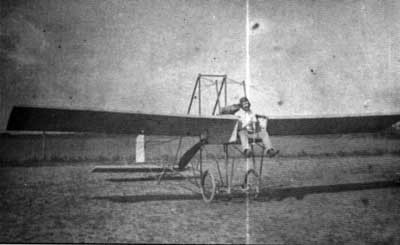
The first of two monoplanes built at San Jerónimo Sud, Argentina, by Santa Fe aeronautical pioneer/constructor Ingeniero Friedrich Gottfried Weihmüller, aka Federico Godofredo Weihmuller (frequently spelled Weighmüller).
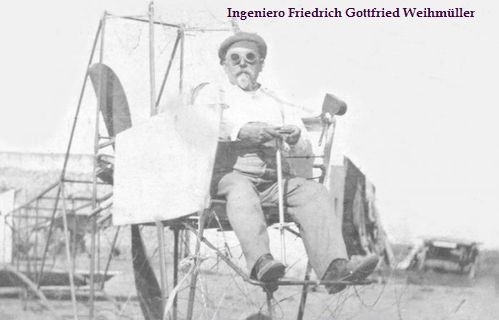
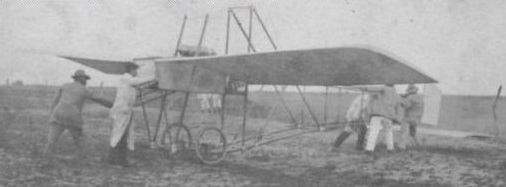
The first of two monoplanes built at San Jerónimo Sud, Argentina, by Santa Fe aeronautical pioneer/constructor Ingeniero Friedrich Gottfried Weihmüller, aka Federico Godofredo Weihmuller (frequently spelled Weighmüller).
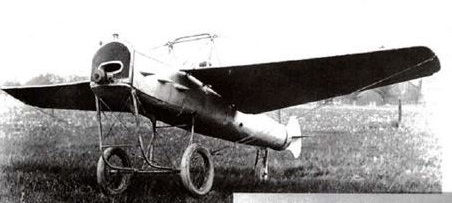
In 1910 brothers George and Edward Wiedman of the (George) Weidmann Body & Trailer Co built a single place, open cockpit, mid-wing monoplane.
Powered by an automobile engine, it was all-steel, including rolled-steel wing covering with folding wings and cruciform tail surfaces supported by a big ball-shaped universal joint.

It was probably built in 1918, even though Aerofiles and a magazine article give the date as 1910, which might be explained by a statement that the brothers had spent ten years developing the plane.
It was reportedly flown in April 1918 by a pilot by the name of “Dare Devil” Mills.
(George) Weidmann Body & Trailer Co
North Tonawanda NY.
USA
Circa 1910 built the Flying Tank
During 1910-11 Elling O Weeks and E A “Gus” Riggs built two aircraft, fairly traditional Wright-type designs.
Then Weeks and O E Williams built two tractor biplanes in Scranton PA in 1912, after which he joined forces with Gus Riggs for a couple more in 1915-16.

Elling O Weeks and E A “Gus” Riggs
Terre Haute IN.
USA
Circa 1910-11
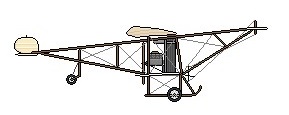
Professor of the Politechnika Lwowska (Lvov Institute of Technology) Zygmunt Sochacki and his assistant Jan Weber designed and begun construction of Farman-inspired aircraft. In November 1910 it made first short flight that ended with damage after it hit an obstacle. A repair was attempted but snowfall caused collapse of the shed in which it was stored.
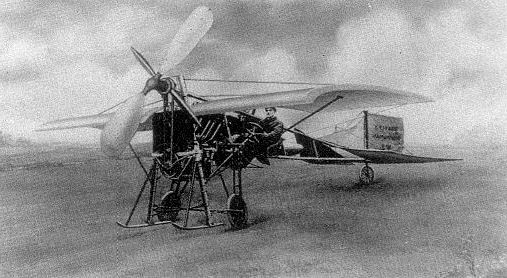
William Arthur Weaver’s Ornithoplane No. 2 was a two-seater monoplane of conventional layout, with a fuselage of triangular section, using bamboo and aluminum in its construction. It was converted from parts of the No. 1 ornithopter and was re-engined in 1907-1908 with a special lightweight water-cooled engine of about 35/40hp built by The Alpha Engineering Company, Coventry. The aluminium propeller was chain driven, and was claimed to have variable pitch in flight, which seems to have been achieved by a small auxiliary propeller revolving behind the main one. Unusually, the pilot’s seat and control wheel were mounted on the starboard bottom longeron. The tail unit consisted of a rectangular rudder and large elevators, which flapped to provide lift. The machine made various short hops at Hampton-in- Arden between 1906 and 1908 culminating in a flight of a quarter of a mile on 17 May 1910.
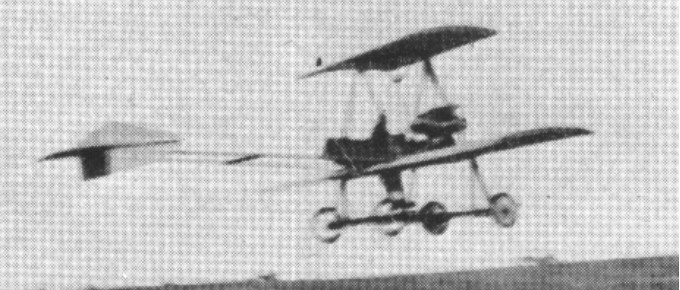
In 1913 Watson’s biplane won a Diploma for a safety device against side-slip, in a competition near Paris.
Engine: Anzani, 60 hp
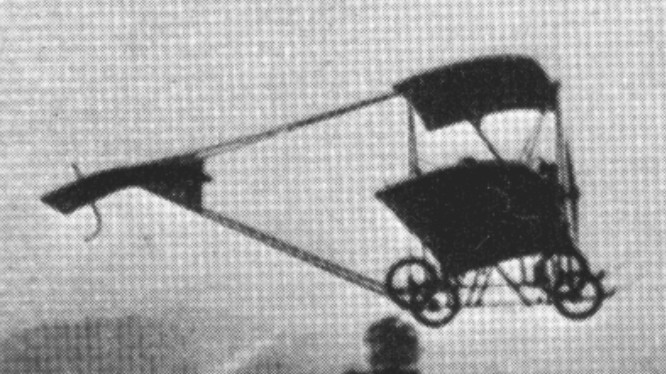
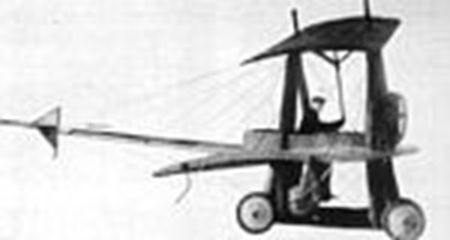
Preston Watson’s 1908 aircraft was flown many times at Errol by Watson, his brother James and Archie Dickie.
Engine: Humber, 30 hp
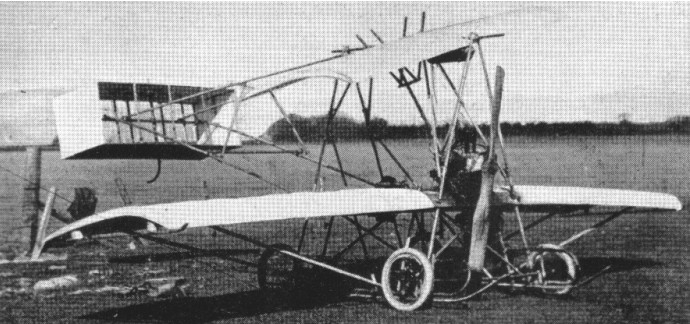
In 1902 Scotsman Preston Watson is said to have fitted a Santos-Dumont engine to a biplane glider and flown it successfully. The improved version is said to have made many successful flights in 1908.
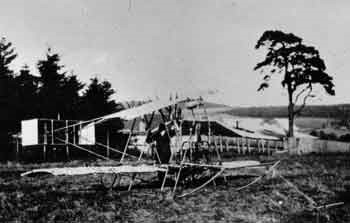
Engine: 30 hp Humber
 All Aero