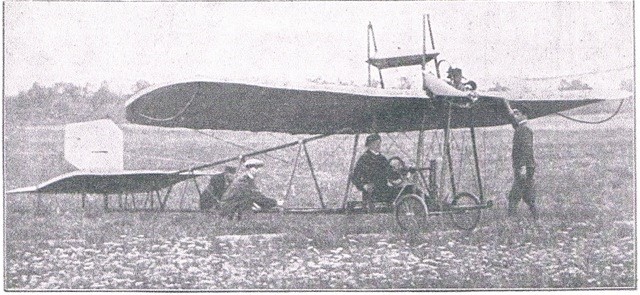
The Deutsches Flugtechnische Institut in Köppern i.T. Eindecker, also known as the Bruno Werntgen Eindecker. Built by him in 1910, with his mother’s help. They often flew together.
The Deutsches Flugtechnische Institut in Köppern i.T. Eindecker, also known as the Bruno Werntgen Eindecker. Built by him in 1910, with his mother’s help. They often flew together.
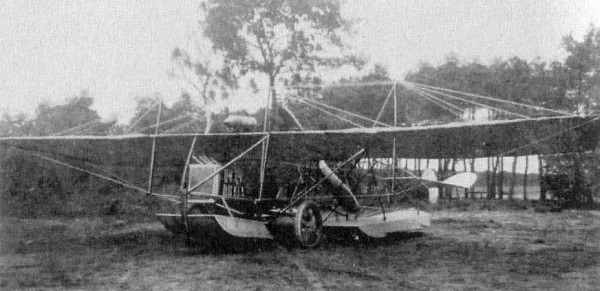
Bruno Werntgen modified one of his Dorner T.III monoplanes with three wide floats to convert the aircraft into an amphibian. He wanted to compete at the first German amphibian contest at Heiligendam in summer 1912. During a trial flight on 26 August, two days before the meeting, Werntgen crashed it.
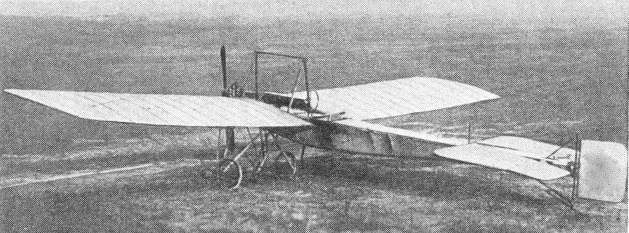
The first Wenskus Eindecker of 1911 was powered by a 20 hp Volt engine.
The second Wenskus Eindecker was a conventional tractor monoplane, very similar to the first, was built late 1912 or very early 1913. It was powered by a 35 hp Volt engine, built by Wenskus himself.
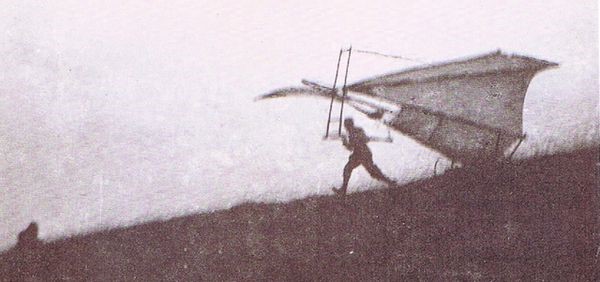
A 16-year old Friedrich Wenk built his Hängegleiter of 1909 at Blaubeuren and flew it at Allmendingen. In 1920 he designed the Wenk-Peshkes flying wing sailplanes, and then, among many other works, the “Weltensegler” flying wings.
A 16-year old Friedrich Wenk built his Hängegleiter of 1909 at Blaubeuren and flew it at Allmendingen. In 1920 he designed the Wenk-Peshkes flying wing sailplanes, and then, among many other works, the “Weltensegler” flying wings. Later, the wings for “Moazagotl” and “Minimoa”.
Dr. Wenk died in 1966.
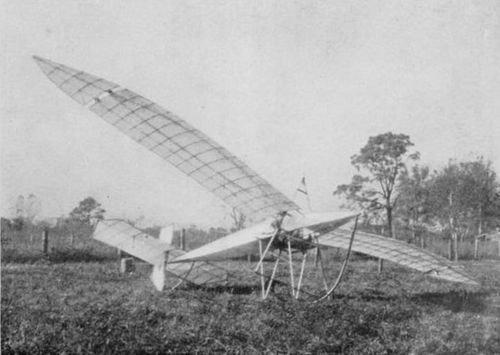
An aerodynamic design built by Daniel D. Wells of Jacksonville, Florida, during 1909/1910. Wells, an early inventor, patented the skid (US Patent 935075) and claimed to have made models with wing-warping already in 1897.
An aerodynamic design, designed and jointly built by a local mechanic, Daniel D. Wells, and a 21 year old machinist of the Seaboard Airline Railroad, Robert Kloeppel, who had just come to Jacksonville from Germany a few years earlier.
Unable to afford an aircraft engine at the time, they installed a Franklin automobile engine.
Kloeppel had received no flying instructions except those he read in a mechanics magazine, yet he shortly prepared the flimsy craft for takeoff. Flexing his piano wire controls he applied power and the plane moved rapidly about 75 feet and rose briefly four or five feet in the air, but when he sought to gain altitude by applying full power, the crankshaft suddenly broke and the plane settled down to earth, a complete wreck. Kloeppel was uninjured but never again built another plane or attempted to fly one.
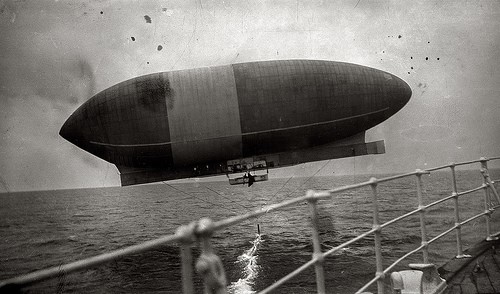
A 108 foot long semi-rigid airship of 200,000 cu.ft was built in 1907 in Paris for journalist-adventurer Walter Wellman and the engineer Melvin Vaniman. This airship, the America, powered by two 50 hp engines, was shipped to Spitsbergen the same year for an attempt on the North Pole, but was forced to return after only a few hours’ flight with engine trouble.
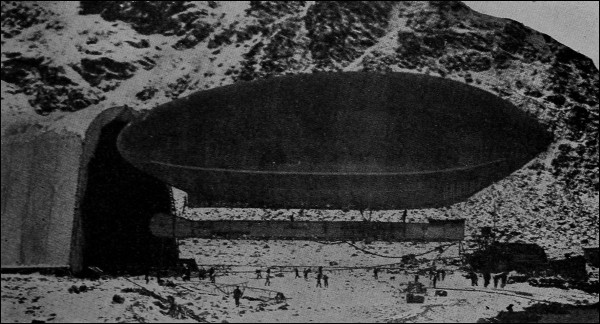
Originally the 1906 Godard-designed, French-built polar exploration airship, the “America” had already been rebuilt and enlarged twice by the time it was lost at sea. It was lost at sea in 1910 due to engine failure during an attempted transatlantic crossing. Walter Wellman, aero-pioneer Melvin Vaniman, four crewmen (and one ship’s cat) were recovered by RMS Trent near Bermuda 72 hours and 1000 miles into the Trans-Atlantic voyage; no losses.

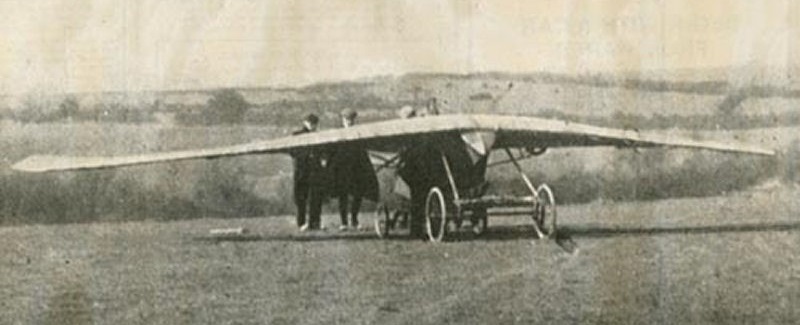
While working for Pemberton Billing, Eric Gordon England met José Weiss, who designed and built tailless gliders, and England became an assistant to Weiss. On 27 June 1909, Gordon England flew a Weiss glider (named Olive after one of Weiss’s five daughters), at Amberley Mount, Sussex, on a height-gaining flight that reached 100 feet. It is the first recorded soaring flight, and is considered to be the birth of the sport of Gliding.
Circa 1908 José Weiss designed and built tailless gliders, and Eric Gordon England became an assistant to Weiss.
On 27 June 1909, Gordon England flew a Weiss glider (named Olive after one of Weiss’s five daughters), at Amberley Mount, Sussex, on a height-gaining flight that reached 100 feet. It is the first recorded soaring flight, and is considered to be the birth of the sport of Gliding.
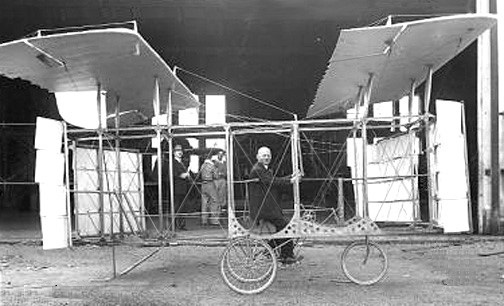
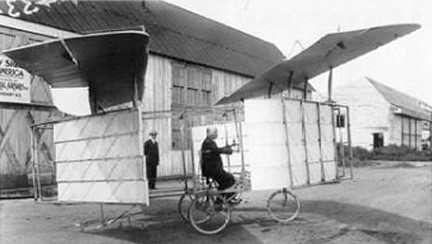
The Ornithopter, or Bicycle Bird, was built by Lehman Weil in 1927. Inventor Wilde insisted “This Bicycle Bird will fly”.
Weighing 275 pounds, there was a sprocket-and-gear arrangement that flapped the wings while a pilot treadles and iron pipes for struts.
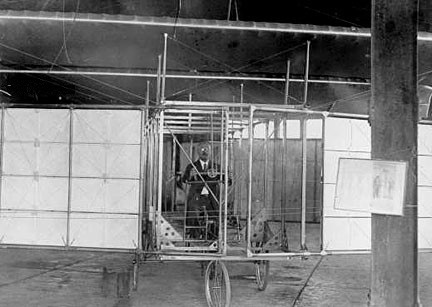
During tests at Curtiss Field on Long Island the airplane was not successful. There were stories of chasing the thing across Staten Island as the wings flexed and its engine strained.
 All Aero