Willows No.2

The Willows airships were a series of pioneering non-rigid airships designed and built in Wales by Ernest Thompson Willows. The larger Willows No. 2 first flew on 26 November 1909. It was 86 ft long and 22 ft in diameter with a 29,000 cubic feet (820 m³) volume.

On 4 June 1910 Willows landed the No. 2 outside of Cardiff City Hall and then flew back to his shed at East Moors. On 11 July 1910 it flew from Cheltenham to Cardiff and the following month on 6 August it returned to London. The trip included navigating by night and landing a Crystal Palace at dawn. The 122-mile (196 km) flight was a record for a cross-country flight in Britain and Willows was the first aviator to cross the Bristol Channel in a powered aircraft. No. 2 was powered by a JAP 30 hp air-cooled V8 engine and had two swivelling propellers mounted either side of the suspended car. It was also fitted with a rudder for directional control. After six flights it was rebuilt and lengthened and became No. 3, which was named “City of Cardiff”.
Willows No.1

E.T.Willows of Cardiff, with his No.1 of 12,000 cu.ft capacity, first flew in September 1904 and over the next few years made a series of flights or resonable duration, utilising its unique directional thruster propellers for lateral control.

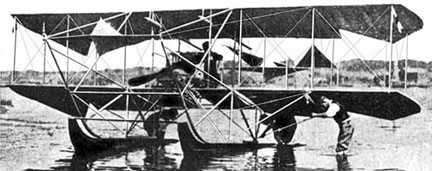
Willoughby War-Hawk

The Capt Hugh L. Willoughby War-Hawk built circa 1910 was described in Aero 10/14/11: “[Willoughby}, who built the famous War-Hawk, perhaps the largest biplane ever constructed…”

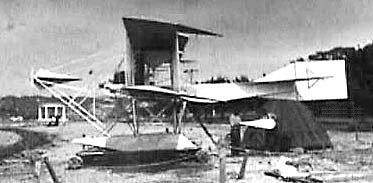
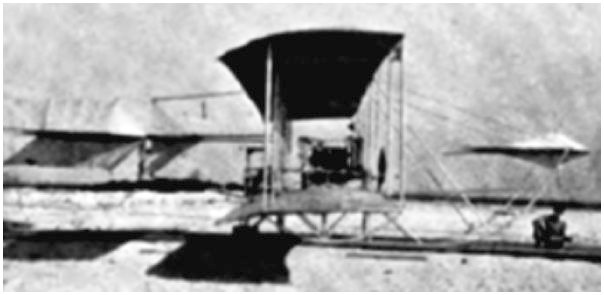
Hugh L. Willoughby (1856-1939) made his first flights in this machine at Atlantic City in the autumn of 1910. The pusher biplane with dart-shaped tail surfaces featured design cues from both Wright and Farman. It was powered by a 30 hp engine built by the Pennsylvania Automobile Co.

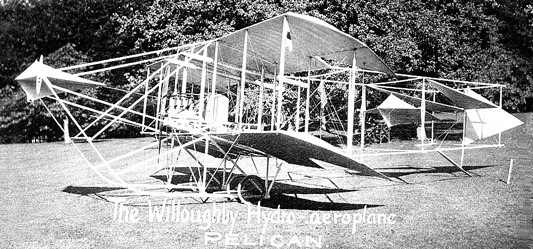
Willoughby Pelican

Willoughby Pelican

The 1911 Pelican was a single place “modernized” Wright-type hydroaeroplane by Capt Hugh L. Willoughby with a 50hp tractor engine; span: 30’0″. Patented double tails, brass-sheathed twin pontoons, a side-mounted wheel for pitch control, a control column that worked the rudders for yaw, shoulder-operated ailerons, and a spring-mounted pedal accelerator as in an automobile but working in reverse—depress to close the throttle, and foot off for full speed.

Willoughby Pelican on wheels

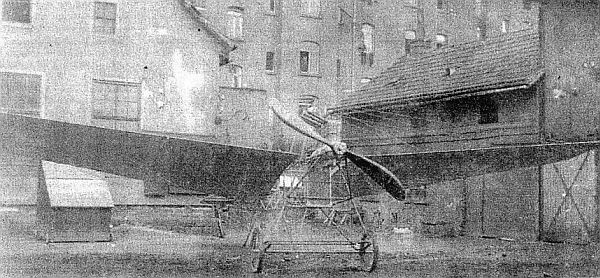
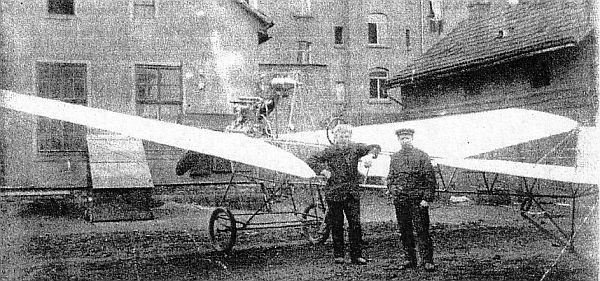
Willing Eindecker Nr.3

Karl Willing’s third monoplane and first Gotha aeroplane. Willing had already built two monoplanes, when in 1912, lacking money for further work, asked for help from the Gothaer Waggonfabrik (Thüringen). This third monoplane was built in the old Gothaer Waggonfabrik shops and was powered by a 70 hp RAW engine. The machine was offered to the army but refused before it was ever flown, and apparently it never was.