The Wright D Scout, or Army scout, of 1913 were single place, open cockpit biplanes. Two were built for the Signal Corps as SC19 and SC20.
Engine: Wright 6-60, 50hp
Wingspan: 26′ 6″
Length: 24’11”
Speed: 67 mph
Seats: 1
The Wright D Scout, or Army scout, of 1913 were single place, open cockpit biplanes. Two were built for the Signal Corps as SC19 and SC20.
Engine: Wright 6-60, 50hp
Wingspan: 26′ 6″
Length: 24’11”
Speed: 67 mph
Seats: 1
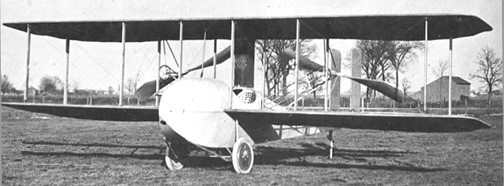
The 1914 Wright H featured twin chain-driven propellers and a boat-like fuselage. Five long- and short-nosed versions were produced.
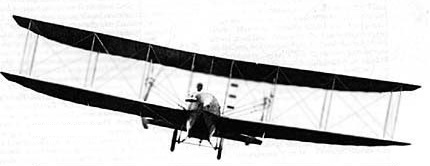
The Wright HS was a 1915 version with shorter-span wings than its Model F predecessor and saw service in the Mexican border campaign.
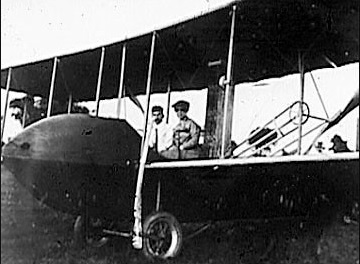
Engine: Wright, 60hp
Wingspan: 32’0″
Length: 26’6″
Speed: 100 mph
Seats: 2
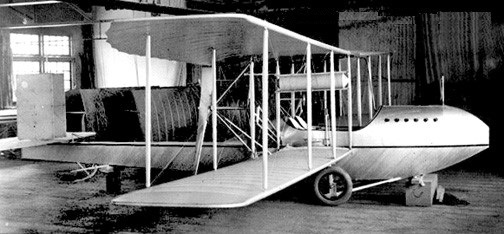
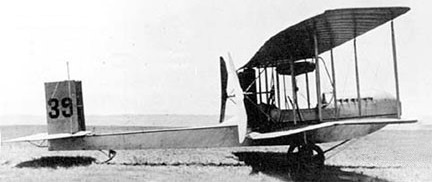
The 1913 Wright F, or Tin Cow, was the first of the fuselage models, but it still retained wing-warping and two chain-driven propellers.
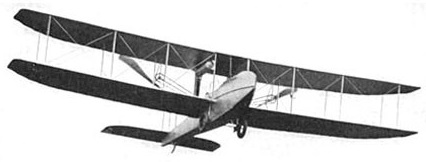
Although this designation is often seen applied to the Model B built under license by Burgess as their model F, only one was ever produced by the Wrights, delivered in 1914 to US Signal Corps as SC39.
W.Burgess built the Burgess-Wright F in 1911.
The Model F evolved into the 1915 model HS.
Engine: Austro-Daimler 6, 90 hp
Wingspan: 42’0″
Length: 29’6″
Speed: 60 mph
Seats: 2
Burgess-Wright F
Span: 39’2″
Length: 29’6″
Seats: 2

The Wright EX was a 1911 long-wing versions of the model R, one of the two built was flown in 1911 by Calbraith P Rodgers, dubbed Vin Fiz Flyer for his soft-drink sponsor, in the first transcontinental flight, from New York to California, with many crashes (including a mid-air collision with an eagle) and repair layovers. At the flight’s end in Los Angeles, a rudder and one strut were said to be the only surviving original parts.
Wright Vin Fiz Trans-Continental Article
EX
Engine: 35hp Wright pusher
Wingspan: 32’0″
Length: 24’5″
Weight: about 903 lbs
Seats: 1
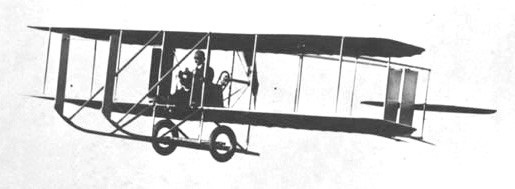
The model E was built in 1913 and was the first in the series of Wright Flyers that used a single propeller. The Model E featured 24 inch tires. It was flown with four and six cylinder Wright engines.
The 1913 Wright Model E was similar to EX, except only one 7′ pusher and 2 large 24″ balloon tires.
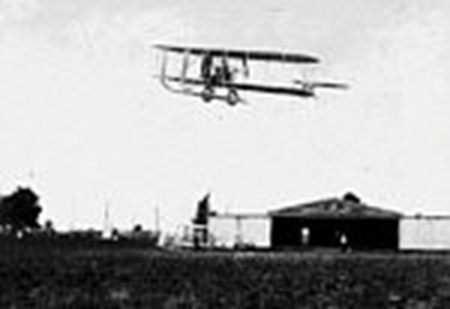
The aircraft was also the test demonstrator for the first automatic pilot control. The model E was fitted with a prototype autopilot that used a wind driven generator and pendulums to drive the wing warping controls. The design was quickly eclipsed by a gyroscopic autopilot developed by Lawrence Sperry for the competing Curtiss Aeroplane Company.
On 31 December 1913, Orville Wright demonstrated a Model E with an “automatic stabilizer” flying seven circuits around Huffman Prairie field with his hands above his head. The Model E demonstrations earned the Wright Brothers the 1913 Collier Trophy from Aero Club of America.
Albert Elton (1881–1975) purchased the sole Wright Model E for exhibition flights.
Engine: four and six cylinder Wright
Propeller: 2-bladed fixed pitch, 7 ft (2.1 m) diameter
Wingspan: 32 ft (9.8 m)
Length: 27 ft 9 in (8.46 m)
Wing area: 316 sq ft (29.4 sq.m)
Empty weight: 730 lb (331 kg)
Crew: one

The Wright Vertical 4 engine was an early aircraft piston engine with four inline cylinders.
Among other aircraft the Vertical 4 powered the U.S. Navy’s first Wright aircraft, the B-1 “hydroaeroplane”.
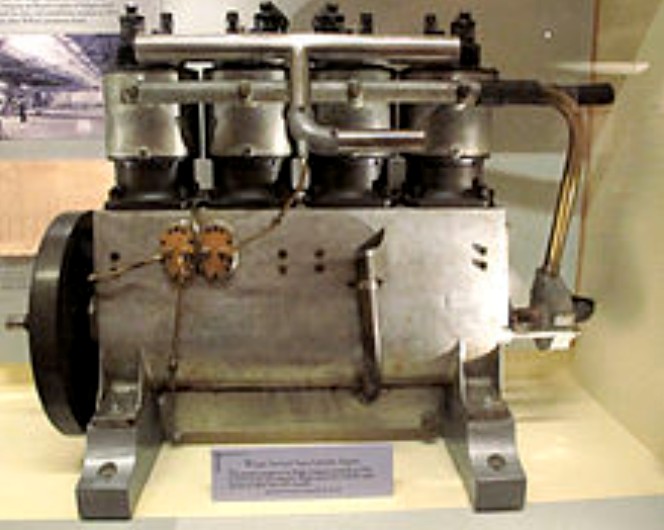
Type: 4-cylinder, liquid-cooled inline piston aircraft engine
Displacement: 240 cubic inches (3.9 l)
Length: 25 inches (635 mm)
Width: 14 inches (356 mm)
Height: 35 inches (890 mm)
Dry weight: 180 pounds (81.6 kg)
Cooling system: liquid-cooled
Power output: 36 horsepower (27 kW) at 1600 rpm
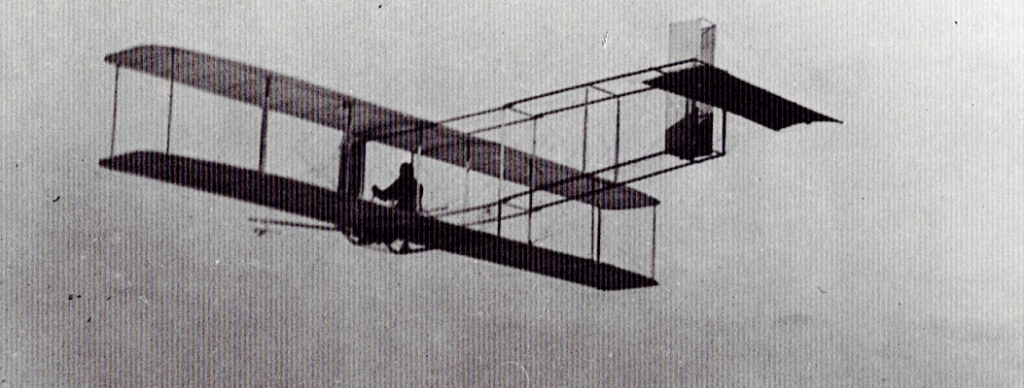
Though the Wrights were now producing advanced models of their powered Flyers, Orville wanted to test a new unpowered machine and try his hand at gliding once more. Orville made a trip to Kitty Hawk while Wilbur stayed behind to attend to business.
Orville was accompanied by his brother, Lorin, Lorin’s ten-year-old son Horace, and the British pioneer Alexander Ogilvie. They stayed at the old campgrounds at Kill Devil Hills for three weeks in October 1911, and made nearly one hundred successful glides.

The new glider, a biplane with a 32 ft wingspan, performed beautifully. On October 24, Orville remained aloft for 9 minutes 45 seconds – a world record for soaring flight that would stand unbeaten for a decade.

The 1911 Wright racer was a single place, headless pusher for competitions, and possibly a short-span Model B.
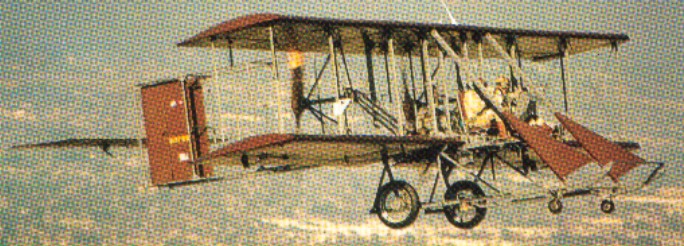
The Model B is the first Wright Engine produced in quantity. The major modifications were the use of a more powerful engine and elevons instead of the wing warping feature. First Wright use of a true rear elevator and last of the open-frame tail boom models. At College Park, Md., in Oct 1911, a Wright “B” was used for the first military trials of a bombsight and bomb-dropping device.
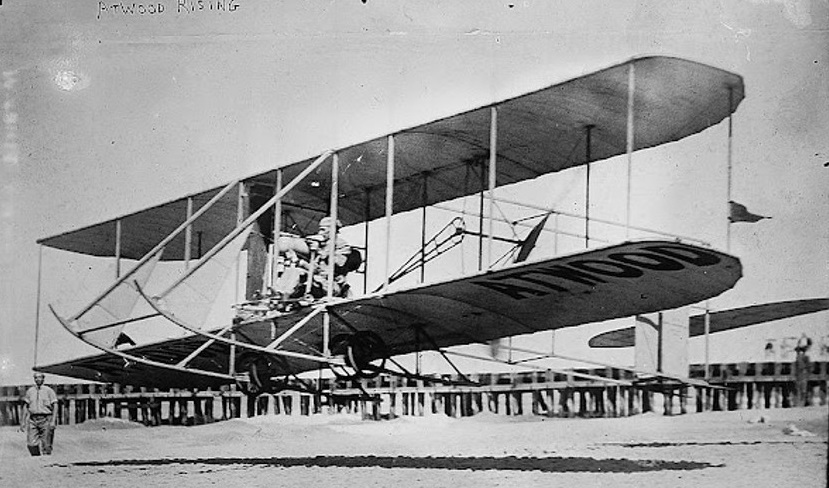
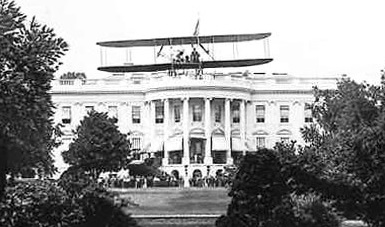
After completing the longest cross-country flight in the USA at the time, from Bonton to Washington, a distance of 461 miles, Harry Atwood received the gold medal of the Aero Club of Washington from President William Howard Taft. He flew to and from the White House south lawn to receive the medal in his Wright B.
Frank Coffyn used a B as the first to fly under the Brooklyn and Manhattan bridges in 1912, which became a popular diversion with other pilots until city authorities finally slammed the lid on their fun.
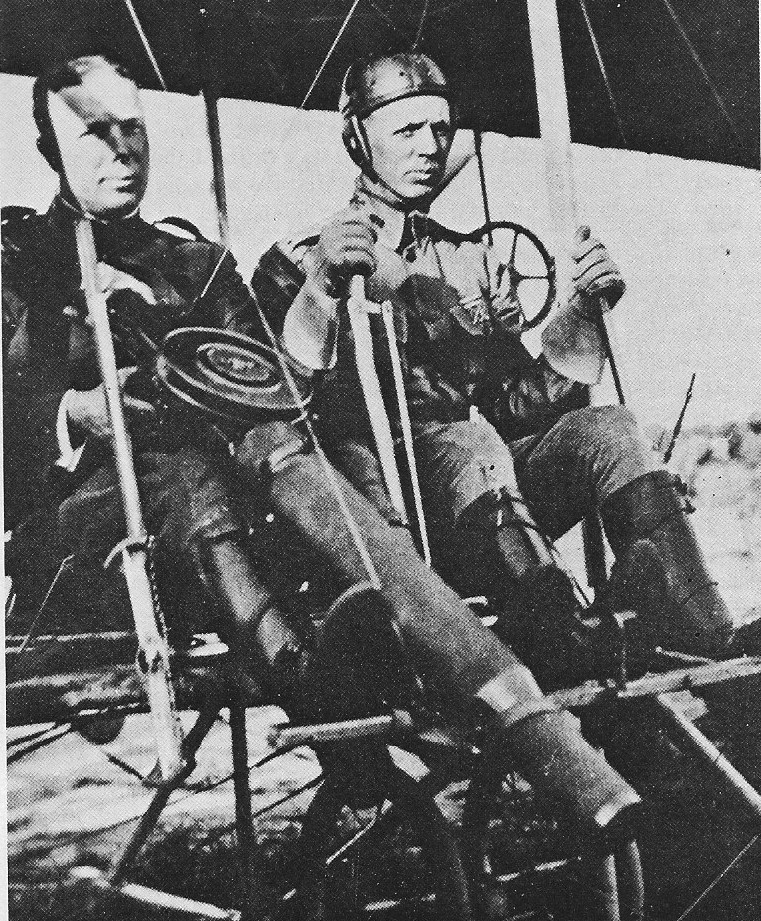
In Mexico, General Francisco Villa had purchased six Wright B biplanes to equip an aviation component of his Division del Norte, hiring six American pilots to fly them. Some missions were flown before three of the aircraft were destroyed, the remaining three being captured.
Produced, as well, in civil seaplane versions as B-1 with two steel and aluminum-alloy pontoons, and -2 with a single, large float in 1913.The Wright B-1 seaplane version of the model B went in production in 1910.
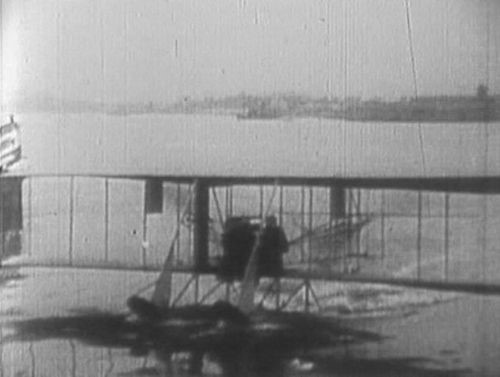
The Army planes were AS3 and AS4, and also went to USN in 1911 in hydroplane form as AH-4 (B1), -5 and -6. One of three early U.S. Navy hydroplanes serial B-1 to B-3, renumbered AH-4 to AH-6. B-2 caused the first fatality in U.S. naval aviation.
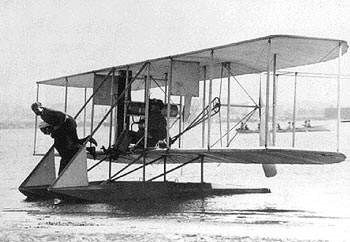
On June 20, 1913, Ensign W. D. Billingsley, while piloting the B-2 at 1,600 feet over water near Annapolis, Maryland, was thrown from the plane and fell to his death. Admiral John Henry Towers, also unseated in the turbulence, was nearly killed in the same accident as he clung to the plane and fell with it into the water, receiving serious injuries. The Clemson-class destroyer USS Billingsley (DD-293) was named in his honor.
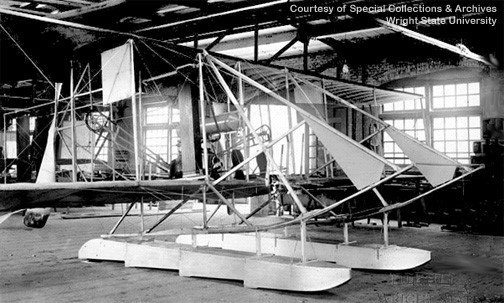
The 1912 model C was similar to the Model B, with a 50hp Wright 6-60 pusher engine. Featuring dual controls, seven went to the US Army as the M-1 (AS7, AS10-14, and AS16]. Civil production as the Model C featured 4-cyl motor.
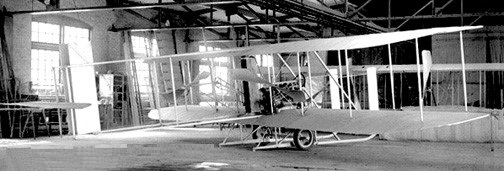
The Grover Loening designed Aeroboat of 1913 looked like a standard Model C with the undercarriage replaced by a small boat. The engine was mounted forward of the cockpit in the aluminum hull. The 60hp Wright engine driving two pusher props. One model G was built in 1913 and one in 1914 for the USN as AH-19.
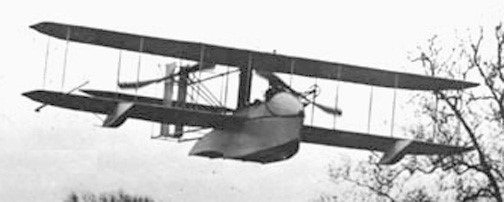
The 1913 Wright Model CH, Wrights’ first hydroplane, was a modified Model C.
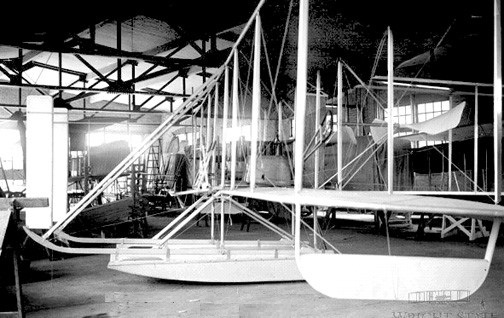
Engine: Rausenberger 8-Cyl., 74 hp
Wingspan: 41.995 ft / 12.8 m
Length: 30.151 ft / 9.19 m
Height: 9.35 ft / 2.85 m
Max take off weight: 1400.2 lb / 635.0 kg
Max. speed: 39 kts / 72 km/h
Endurance: 2 h
Crew: 2
B, B-1, -2, -3
Engine: Wright 4, 30-35 hp
Wingspan: 39′ 0″
Length: 26’0″ – 31′ 0″
Speed: 45 mph
Crew: 2
C / M-1
Engine: 50hp Wright 6-60
Wingspan: 38’0″
Length: 29’9″
Speed: 45 mph
G / Aeroboat
Engine: 60hp Wright
Props: 2
Span: 38′
Length: 28′
Weight: 1200 – 1300 lb
Seats: 2
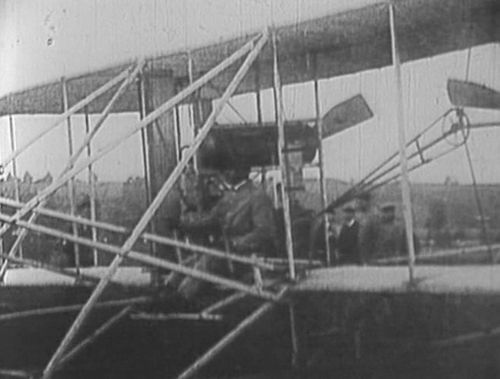
A canard biplane with one 30-to-40-horsepower Wright vertical four-cylinder engine driving two pusher propellers via sprocket-and-chain transmission system. No wheels; skids for landing gear. Natural Muslin fabric finish; no sealant or paint of any kind.
In 1908, the U.S. Army Signal Corps sought competitive bids for a two-seat observation aircraft. Winning designs had to meet a number specified performance standards. Flight trials with the Wrights’ Type A-2 entry began at Fort Myer, Virginia, on September 3, 1908 with the second Wright A built, with a Dayton-built Wright engine.

After several days of successful flights, the longest being 1 hr 15 min, tragedy occurred on September 17, when Orville Wright crashed with Lt. Thomas O. Selfridge, the Army’s observer, as his passenger. Orville survived with severe injuries, but Selfridge was killed, becoming the first fatality in a powered airplane.
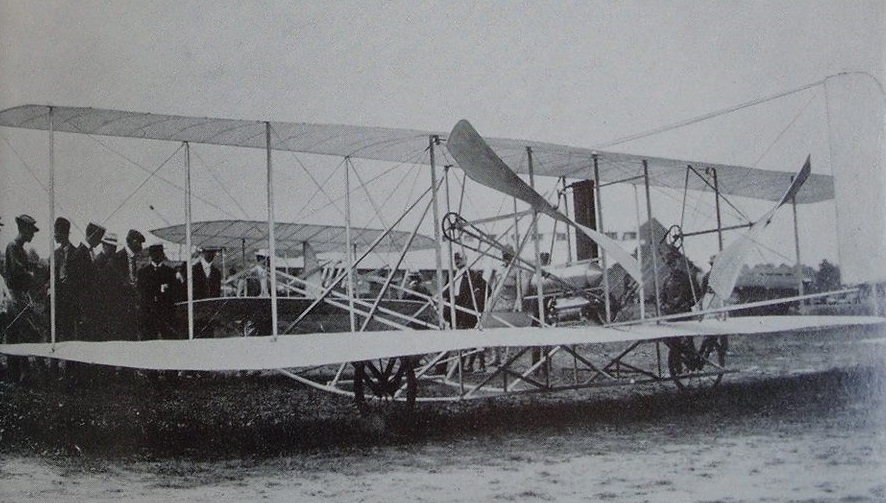
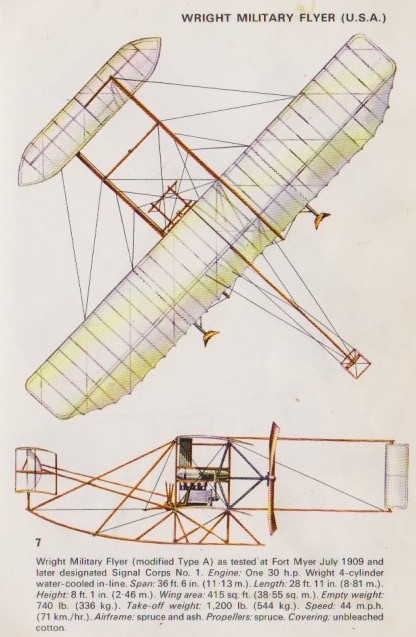
Piloted by Orville Wright, it set an endurance record of 1h:02m on 9 September 1908. Rebuilt as 1909 Military Flyer with a 30hp Wright, wingspan: 36’6″, length: 28’11”, useful load: 460 lb, speed: 42 mph. On June 3, 1909, the Wrights returned to Fort Myer with a new airplane to complete the trials begun in 1908. Satisfying all requirements, the Army purchased the airplane for $30,000 on August 2nd, 1909 – $25,000 (plus a $5,000 bonus for exceeding 40mph).

It performed well (as Knabenshue-Wright) at the 1910 Dominguez Hills Air Meet.
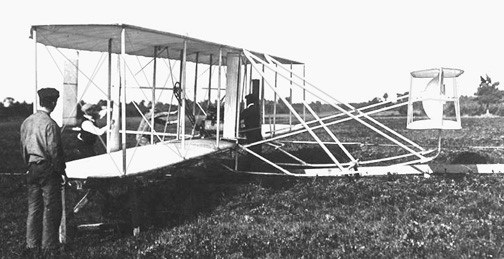
As AS1/SC1 it was used for pilot training at College Park MD and San Antonio TX.
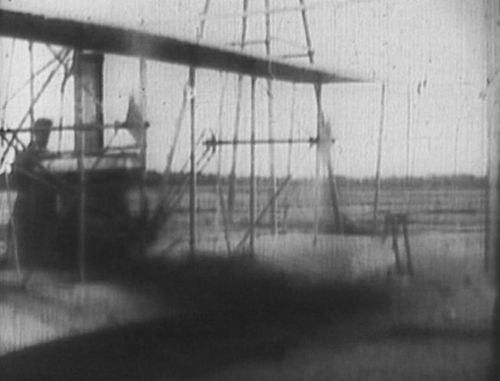
It was used in October 1909 for giving flight instructions to Lts. Frank P. Lahm and Frederic E. Humphreys at College Park, Maryland, and in 1910 it was used by Lt. Benjamin D. Foulois to teach himself how to fly at Fort Sam Houston, in San Antonio, Texas. By March 1911 the airplane was no longer in use and was retired. It was given to the Smithsonian in 1911. It is now on exhibition at the NASM, Washington DC.
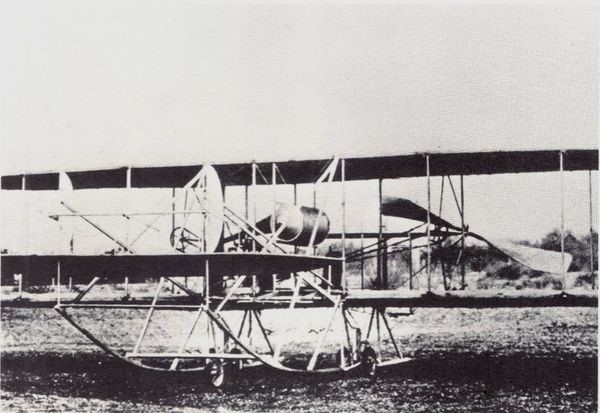
Seven were built, with one shipped to France. In France Wilbur Wright achieved approximately 133 flights in 26 hr 2 min flying time. The longest flight was 2 hr 20 min 23 sec / 77 miles.
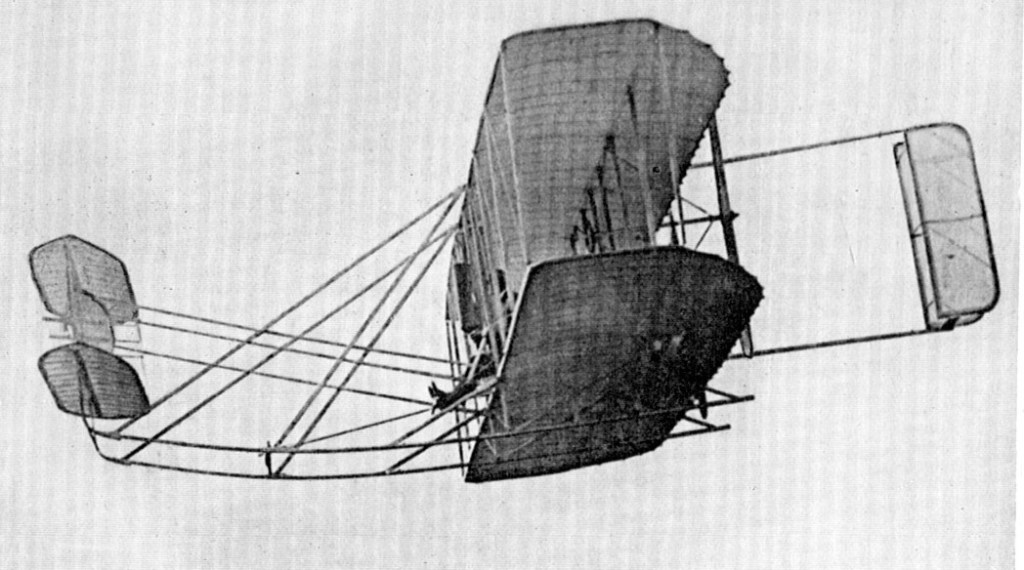
In France, Wilbur flew at Hunaudieres and Auvours from August to December 1908. Passengers were carried on some 60 occasions. It flew from August 18 to October 30 with its original Dayton-built Wright engine then, owing to a breakage, it flew with a Wright engine built under lcence by Bariquand and Marre in Paris.
The two place Transitional Model A of 1910 was 33 ft 9 in long and otherwise similar to the Flier, with variations in control surfaces and a rear-mounted, rudimentary stabilizer and elevator, the first such on Wright’s machines.
The two place Transitional Model A of 1910 was 33 ft 9 in long and otherwise similar to the Flier, with variations in control surfaces and a rear-mounted, rudimentary stabilizer and elevator, the first such on Wright’s machines. The first of their planes with a horizontal surface behind the tail rudders, first fixed and than replaced it with a flexible elevator, giving the plane a front and a rear elevator. Later they reduced the size of the canard.
Built at the Wright’s flight school in Montgomery AL, one set a new altitude record of 6,000′ on 17 June 1910, piloted by Walter Brookins. At least three were built, and several built under license in France and Germany.
One of the first Wright biplanes built in England by the Short Brothers was bought by Alan Ogilvie, who made mainly flights from Camber Sands, near Rye, including a 139.5 mile, 3 hr 25 min flight in 1910.
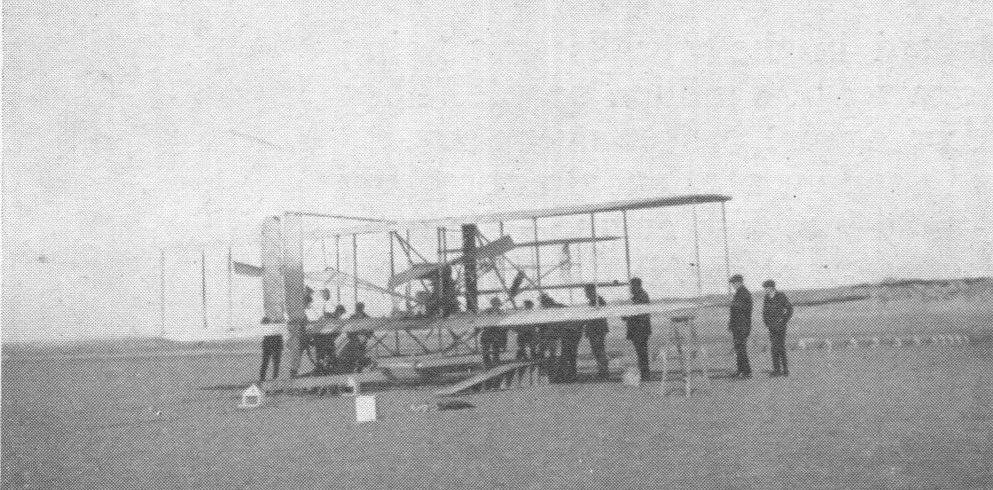
The 1907 Wright Model A was the world’s first production airplane from 1907 to 1909.
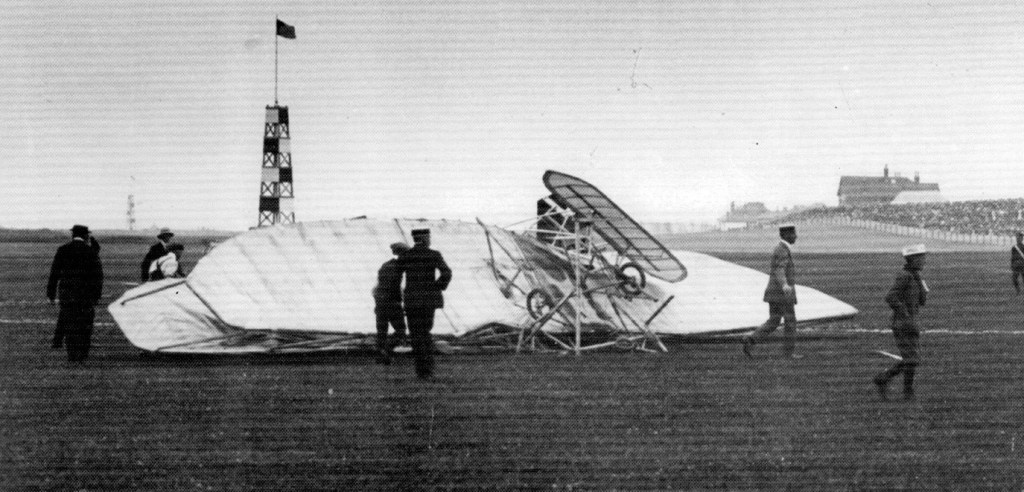
Type A-1
Length: 29 ft (8.5 m)
Wing span: 41 ft (12 m)
Wing area: 510 sq.ft
Flying wt approx: 1000 lb
Engine One 30 hp Wright
Seats: 2
Type A-2
Length: 29 ft (8.5 m)
Wing span: 41 ft (12 m)
Wing area: 510 sq.ft
Flying wt approx: 1000 lb
Engine One 30 hp Wright
Seats: 2
Longest flight: 1 hr 14 min 20 sec / 50 miles
Total no of flights: 10
Total flying time: 5 hr 56 min
A / Flier / Military Flyer
1907
Engine: Wright pusher, 39hp
Wingspan: 36’4″
Length: 28’0″ (some early plans show 27’9″ and 27’10”)
Useful load: 460 lb
Speed: 44 mph
Seats: 2
 All Aero