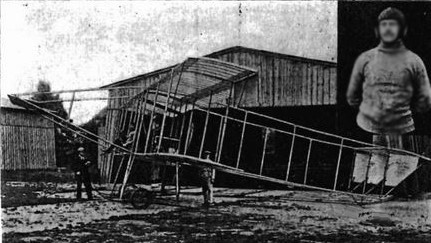
Ader Avion III

Ader’s progress attracted the interest of the minister of war, Charles de Freycinet. With the backing of the French War Office, Ader developed and constructed the Avion III (with the help of Ing. Morel). It resembled an enormous bat made of linen and wood, equipped with two four bladed tractor propellers, each powered by a steam engine of 30 hp (22 kW). Using a circular track at Satory, Ader carried out taxiing trials at the Satory army base near Versailles on 12 October 1897 with the aircraft taxiing along a circular track, and two days later attempted a flight. After a short run the machine was caught by a gust of wind, slewed off the track, and came to a stop. After this the French army withdrew its funding, but kept the results secret. After the Wright brothers made their flight, the commission released in November 1910 the official reports on Ader’s attempted flights, stating that they were unsuccessful.

The Avion III had a 52 ft 6 in (16.0 m) wing span, gross weight of about 882 lb (400 kg).

Clément Ader’s Avion III is still displayed at the Musée des Arts et Métiers in Paris.

Ader Avion
First flight: 1897
Wing span: 17m / 56 ft
Weight: 400 kg / 882 lb

Ader Eole

Clément Ader turned to the problem of mechanical flight and until the end of his life gave much time and money to this. Using the studies of Louis Pierre Mouillard (1834–1897) on the flight of birds, he constructed his first flying machine in 1886, the Éole. It was a bat-like design run by a lightweight steam engine of his own invention, with 4 cylinders developing 20 horsepower (15 kW), driving a four-blade propeller. The engine weighed no more than 4 kg/kW (7 pounds per horsepower). The wings had a span of 14 m (46 ft). All-up weight was 300 kg (650 lb). On 9 October 1890, Ader attempted a flight of the Éole, in the grounds of the Chateau Pereire at Armainvilliers. It is accepted that the aircraft took off, reaching a height of 20 cm, (8 in) and flew uncontrolled for approximately 50 m (160 ft), 13 years before the Wright Brothers.

Engine: One 20 hp Ader four-cylinder steam engine
Prop: 4 blade tractor propeller, approx 11 ft 6 in (3.50 m) dia.
Wing span: 45 ft 11 in (14.00 m)
Wing area: 301.4 sq ft (28.0 sq.m)
Length: 21 ft 4 in (6.50 m)
Weight empty: 498 lb (226 kg)
Gross weight: 652 lb (296 kg)
Accommodation: Crew of 1

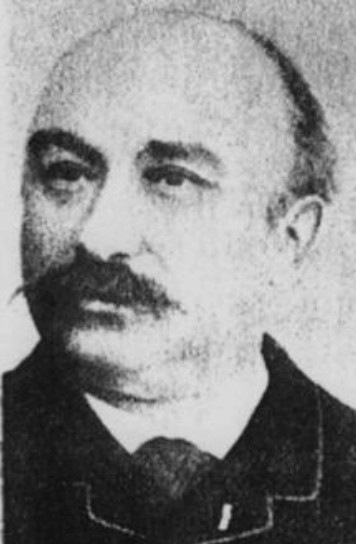
Ader, Clement

Clément Ader (2 April 1841 – 5 March 1925) was a French inventor and engineer born in Muret, Haute Garonne, and is remembered primarily for his pioneering work in aviation.

Ader was an innovator in a number of electrical and mechanical engineering fields. He originally studied electrical engineering, and in 1878 improved on the telephone invented by Alexander Graham Bell. After this he established the telephone network in Paris in 1880.

He turned to the problem of mechanical flight and until the end of his life gave much time and money to this. Using the studies of Louis Pierre Mouillard (1834–1897) on the flight of birds, he constructed his first flying machine in 1886, the Éole. It was a bat-like design run by a lightweight steam engine of his own invention, with 4 cylinders developing 20 horsepower (15 kW), driving a four-blade propeller. The engine weighed no more than 4 kg/kW (7 pounds per horsepower). The wings had a span of 14 m (46 ft). All-up weight was 300 kg (650 lb). On 9 October 1890, Ader attempted a flight of the Éole. It is accepted that the aircraft took off, reaching a height of 20 cm, (8 in) and flew uncontrolled for approximately 50 m (160 ft), 13 years before the Wright Brothers.

Ader undertook the construction of a second aircraft he called the Avion II, also referred to as the Zephyr or Éole II. Most sources agree that work on this aircraft was never completed, and it was abandoned in favour of the Avion III. Ader’s later claim that he flew the Avion II in August 1892 for a distance of 100 m (330 ft) in Satory near Paris, was never widely accepted.

Ader’s progress attracted the interest of the minister of war, Charles de Freycinet. With the backing of the French War Office, Ader developed and constructed the Avion III. It resembled an enormous bat made of linen and wood, with a 15 m (48 ft) wingspan, equipped with two four bladed tractor propellers, each powered by a steam engine of 30 hp (22 kW). Using a circular track at Satory, Ader carried out taxiing trials on 12 October 1897 and two days later attempted a flight. After a short run the machine was caught by a gust of wind, slewed off the track, and came to a stop. After this the French army withdrew its funding, but kept the results secret. After the Wright brothers made their flight, the commission released in November 1910 the official reports on Ader’s attempted flights, stating that they were unsuccessful.

Clément Ader remained an active proponent of the development of aviation. In 1909 he published L’Aviation Militaire, a very popular book which went through 10 editions in the five years before the First World War. It is notable for its vision of air warfare and its foreseeing the form of the modern aircraft carrier, with a flat flight deck, an island superstructure, deck elevators and a hangar bay. His idea for an aircraft carrier was relayed by the US Naval Attaché in Paris and were followed by the first trials in the United States in November 1910.

An airplane-carrying vessel is indispensable. These vessels will be constructed on a plan very different from what is currently used. First of all the deck will be cleared of all obstacles. It will be flat, as wide as possible without jeopardizing the nautical lines of the hull, and it will look like a landing field.
—Clément Ader, L'Aviation Militaire, 1909

Ader is still admired for his early powered flight efforts, and his aircraft gave the French language the word avion for a heavier-than-air aircraft. In 1938, France issued a postage stamp honoring him. Airbus named one of its aircraft assembly sites in Toulouse after him.

Clement Ader Article

Adelmann 1911 Doppeldecker

A Farman-like biplane, built by Max Friedrich Adelmann of Chemnitz, Germany. Little is known of the machine. It was powered by a 60 hp Schneeweiß “Wodan” engine from Chemnitz and according to early press reports “engine and aircraft performed very well”. Adelmann proposed a cross country flight to Leipzig in Summer 1911, but after that nothing of his flying ventures was reported.

Adams-Farwell Rotary

Like another builder of rotary engined road vehicles, Stephen Marius Balzer of New York, the Adams Company offered light gyrocopter engines which successfully powered experimental flying machines by Emile Berliner in 1909-1910 and J. Newton Williams in 1909. A modified 1907 Adams-Farwell engine powered three man-lifting experimental helicopters designed by Emile Berliner.

Cylinders: 5
Cooling: air
Capacity: 621 cu.in
Output: 63 hp
Dry weight: 250 lb

Adams-Farwell

Adams-(F O) Farwell Co
21 Athol St
Dubuque IA
USA

The Roberts & Langworthy Iron Works, located at 57 South Main Street in Dubuque, were manufacturers of “fine light castings” like grave crosses and park benches. Eugene Adams invested in the company in June, 1883 when Roberts decided to retire, and Adams took the position of a secretary and manager. A change of the company name to Langworthy and Adams Iron Works followed in 1885. When Langworthy retired in 1892, Eugene’s brother Herbert bought his share and the company was re-organized as The Adams Company, foundry and machine shop. The plant burnt down the same year in a disastrous fire, and the company opened new facilities at East Fourth Street. Now, machine castings and household devices like a patented floor heating vent with inner rotating portion that distributed warm air in upper level rooms, or laundry stoves were added. In 1895, Fay Oliver Farwell (1859-1935) became manager of the company.

Also about 1895, Farwell begann experimenting with an internal combustion engined automobile, for which he conceived a horizontally mounted rotary engine with three cylinders. The vertically standing crank shaft was fixed in the chassis. Farwell felt this configuration was lighter than conventional engines as it used neither a flywheel nor radiator. He completed the first prototype in 1898. Basically a horse drawn carriage, he mounted his engine between the front wheels.

Like another builder of rotary engined road vehicles, Stephen Marius Balzer of New York, the Adams Company offered light gyrocopter engines which successfully powered experimental flying machines by Emile Berliner in 1909-1910 and J. Newton Williams in 1909. A modified 1907 Adams-Farwell engine powered three man-lifting experimental helicopters designed by Emile Berliner.

Engine production lasted longer than automobile manufacture although it is not clear when this stopped, too. The Adams Company then relied on their iron foundry and manufacture of gears, shafts and parts for power transmissions which it does until today.

When F. Oliver Farwell left the company in 1921, he had about 20 patents on his name and tried to build up a business on one he held for a novel transmission for merry-go-rounds. Later, he worked again in a gear-cutting company in Toledo, Ohio.