In 1909 in the USA, George Armitage built a single-seater monoplane. Reportedly it made 57 flights.
Pioneers
Argus As I
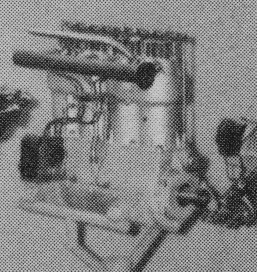
The Argus As I was a four-cylinder, water-cooled, aircraft engine produced in Germany by Argus Motoren in 1913.
Applications:
Sikorsky Ilya Muromets
Power output: 100 horsepower (75 kW)
Argus Motoren
Argus Motoren was a German manufacturing firm known for their series of small inverted-V engines and the V-1 (flying bomb) pulse jet engine.
Started in Berlin in 1906 as a subsidiary of Henri Jeannin’s automobile business, Argus Motoren company spun off entirely in November 1906. Their early products were car and boat engines, but later that year they were contracted to produce engines for the French airship, Ville de Paris, supplying them with a converted boat motor. They turned increasingly to the aviation market, and were widely used by 1910, receiving an order from Sikorsky for one of his large airplanes under construction in Russia. During World War I Argus produced engines for the German army and air corps.
After WWI the company manufactured automobile engines and acquired a majority interest in Horch Automobile in 1919. In 1926 they resumed aircraft engine design, producing a series of inverted inline and V engines. Although all were at the “low-power” end of the market by the start of World War II, they saw extensive use in training aircraft and other utility roles. Most famous of these designs are the Argus As 10, used in the Fieseler Fi 156 Storch, in the Arado Ar 66 and in the Focke-Wulf Fw 56 Stösser; and the Argus As 410, used on many German trainers, including the Arado Ar 96.
The Berlin-Reinickendorf subcamp of Sachsenhausen concentration camp provided labor for the Argus-Werke.
The firm became defunct at the end of WW2.
Anzani 1909 Monoplane
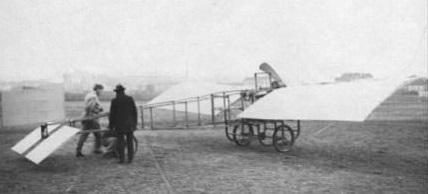
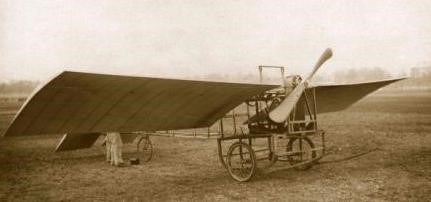
Anzani built his plane in 1909, the same year he took up flying a Voisin type machine. The Anzani had a span of 8 meters and was powered by a 3 cylinder Anzani engine with a belt drive to the propeller. The project had limited success and was financed by de Mas.
Anzani 20-cyl
By 1912 Anzani had built the world’s first two-row radial engine, the ten-cylinder Anzani 10, which came in two sizes, the bigger 12.1-litre one producing 100-110 hp. By the middle of 1913 the company had a double version with four rows of five cylinders, rated at 200 hp called the Anzani 20. This was displayed at the Paris show of that year and had much in common with the ten-cylinder engine. An air-cooled motor, its cylinders were made of cast iron, with integral cooling fins. The pistons and their rings were also cast iron, machined inside and out. Conical seats for the inlet and exhaust valves were ground into the flat cylinder head, the nickel steel valves being of the poppet type. The automatic, atmospheric pressure operated inlet vales of the earliest Anzani engines were retained, but, as in other later Anzanis the exhaust valves were push-rod and rocker operated.
The aluminium crankcase was made in three parts, a drum and two end plates plates, bolted together and the cylinders were fixed to it by long bolts from the cylinder heads which joined other bolts through the crankcase. As with Anzani’s other multi-row engines there was significant overlap between the rows in order to bring the big ends close together along the crankshaft. The hollow crankshaft was of nickel steel and mounted in ball bearings. It had a pair of crankpins set 180° apart, one for each group of ten cylinders front and back. Lubricating oil was pumped through the crankshaft and then distributed by centrifugal force; there were two oil pumps, one for each “half” of the engine. There were two crankcase mixing chambers, each fed from its own carburettor and distributed by inlet manifolds on the two outer faces of the engine. Each half also had its own magneto, running at 3,000 rpm. The inlet manifold position resulted in the exhaust valves being close to the engine centre line, exiting via short Y-shaped tubes.
Specifications:
Type: 4-row 20-cylinder air-cooled radial
Bore: 105 mm (4.13 in)
Stroke: 140 mm (5.51 in)
Displacement: 24.25-litre (1,476 cu in)
Dry weight: 259 kg (572 lb)
Valvetrain: automatic inlet valves; exhaust valves operated by rockers and push rods driven by two pairs of cams in the crankcase for each half engine
Fuel system: two Zenith carburettors and two crankcase mixing chambers, one pair for each half engine
Reduction gear: none
Ignition: two Gilbaud magnetos running at 3,000 rpm; one plug/cylinder
Power output: 150 kW (200 hp) at 1,200 rpm
Specific fuel consumption: 0.30 kg/kW/hr (0.49 lb/hp/hr)
Oil consumption: (max) 0.06 kg/kW/hr (0.10 lb/hp/hr)
Power-to-weight ratio: 0.56 kW/kg (0.35 hp/lb)
Anzani 10-cylinder
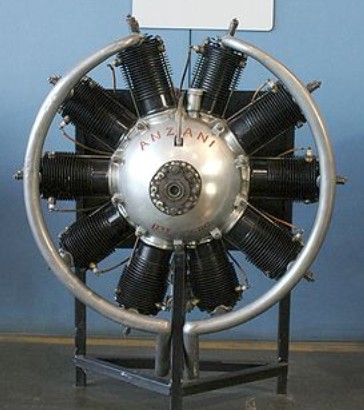
The Anzani 10 was a 1913 10-cylinder air-cooled radial aircraft engine. It powered several experimental aircraft and also the later production versions of the Caudron G.3 reconnaissance aircraft, the Caudron G.4 bomber/trainer and the first production Cessna, the Model AA.
By 1912 Anzani had built the Anzani 10, a 10-cylinder engine, air-cooled like its predecessors, which, like other Anzani engines, was made with different size cylinders. One of the more powerful versions produced about 110 hp (82 kW) from 12.1 litres, a British-built Anzani 10 was rated at 125 hp and a smaller version with a displacement of 8.27 litres produced 80 hp (60 kW). It was a double row engine, built with two rows of five cylinders separated along the crankshaft by about a cylinder radius, giving the engine a slimmer profile than other contemporary two-row radial engines. Each half had its own crankpin, 180° apart, with the connecting rods,of chrome nickel steel, broad and flat to bring the two halves close together. Cylinder heads and pistons were made of cast iron, the latter machined inside and out and fitted with a pair of rings. Oil was forced through the crankshaft to the crankpins, then moved under centrifugal force to the cylinders and pistons from inside the crankcase which was a single light alloy casting.
Both inlet and exhaust valves were in the cylinder heads. The automatic inlet valves of earlier Anzani engines, opened by atmospheric pressure and closed by valve springs were retained, but fuel was fed from a mixing chamber in the crankcase via inlet tubes placed at the rear of the engine to avoid cooling of the mixture by the oncoming airflow. This arrangement placed the exhaust valves at the front of the engine, where they were operated from a cam in the rear of the crankcase via push rods and rockers. A single carburettor fed the crankcase chambers from below. Some versions used a single Gibaud magneto, running at 3,000 rpm, though others built by British Anzani had a pair of Bosch magnetos, running slower. Plugs (K.L.G. for the British variant) were mounted in the sides of the cylinder heads, sloping upwards to avoid plug fouling by lubricating oil. The exhaust was collected by a prominent pair of semi-circular rings.
One British-built 125 hp Anzani 10 underwent exhaustive tests at Farnborough in 1914. Several early aircraft built singly or in small numbers flew with the Anzani 10, but the major users were the Caudron G.3 and G.4, particularly the later ones in which the Anzani replaced the lower powered rotary Gnomes. Numbers of these are uncertain because of the engine change. Because they powered the 66 Caudron G.4s purchased by the American Expeditionary Force after September 1917, used largely as trainers, many Anzani 10s went to the USA. The first production aircraft built by Clyde Cessna, the Model AA was powered by the Anzani 10, and 14 of these were made. Huff-Daland also used them in several aircraft.
Applications
Avro 504 K G-EBWO
Blackburn Land/Sea monoplane 1915
Blackburn White Falcon 1915
Blackburn Sidecar 1921
Caudron Type K 1913
Caudron G.3 1914
Caudron G.4 1915
Central Centaur IV 1919
Cessna Model AA 1920s
Handley Page Type G 1913
Huff-Daland HD-1B
Huff-Daland HD-4
Huff-Daland HD-9A
Huff-Daland TA-2
L. and P. biplane
Sopwith Grasshopper
Sopwith Greek Pusher
Timm Collegiate
Vickers F.B. 12C 1917
Specifications (110 hp)
Type: two-row ten-cylinder radial piston engine
Bore: 105 mm (4.13 in)
Stroke: 140 mm (5.51 in)
Displacement: 12.12 litres (739.8 cu in)
Dry weight: 140 kg (308 lb)
Valvetrain: One inlet and one exhaust valves/cylinder. Automatic inlet valves, push and rocker operated exhaust valves.
Fuel system: Single carburettor mounted between lowest cylinders, mixing chamber in crankcase. Single magneto. Plugs were fitted in the upper side of the cylinder head to avoid fouling.
Cooling system: air-cooled
Power output: 82 kW (110 hp)
Power-to-weight ratio: 0.59 kW/kg (0.36 hp/lb)
Anzani 6-cylinder / TNCA Aztatl
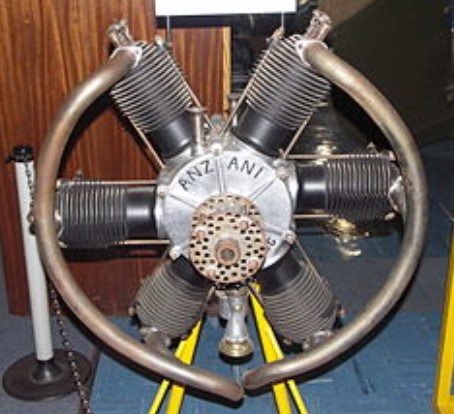
Alessandro Anzani developed the first two-row radial from his earlier 3- cylinder Y engine by merging two onto the same crankshaft with a common crankweb.
By December 1909 Anzani had a 3-cylinder air-cooled true radial engine running, developed from the earlier 3-cylinder fan configuration engines (semi-radials) that had powered Bleriot across the Channel. By about March 1910 he had completed the first two-row radial engine, a 6-cylinder unit made by merging two 3-cylinder units together, one slightly behind the other and at an angle of 60°. The engine therefore had a lot in common with the early 3-cylinder motors: cylinders were a single iron casting with built-in valve cells and ribs, and pistons were steel with cast-iron rings. The early versions were side-valve engines with automatic (atmospheric pressure opened) inlet valves and exhaust valves mechanically operated via cams in the crankcase. By the end of 1912, as with the smaller engines the exhaust valves were moved to the cylinder heads and operated by push-rods and rockers. The exhaust valves were at the front of the engine, with the fuel inlet manifold at the rear. A prominent pair of 150° exhaust tubes were fitted. Plugs were mounted in the cylinder sides, in the plane of the engine and on the upper side to minimise plug fouling by lubricant.
The crankcase was an aluminium casting and in later models contained a fuel mixing chamber. These later versions also used long bolts to attach the cylinders to the crankcase. The engine used a single, kinked crankweb, coupled to slim but broad connecting rods in order to minimise the axial displacement between the two rows. This was less than in more recent double row radials, the rear face of the front row falling on the centre plane of the back row. The engine was not strictly a radial, as the crankweb geometry slightly offset the centres of the two rows, an arrangement best seen from the back of the engine, where the superimposed inlet tubes and push-rods of the later engine highlight the cylinder centre lines. Such an offset between cylinder centre line and crankshaft is often termed désaxé.
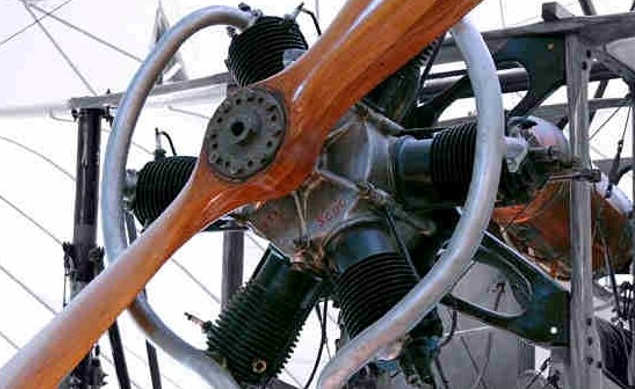
The earliest of the 6-cylinder radials had with a bore of 90 mm and stoke of 120 mm giving a displacement of 4.58 litres (280 cu in) and an output of 34 kW (45 hp) at 1,300 rpm. Its weight was 70 kg (154 lbs). A later version produced 45 kW (60 hp) from 6.33 litres (380 cu in).
Variants:
45 hp (34 kW)
Anzani’s first two-row radial developed 34 kW (45 hp) from 4.58 L (230 cu in) displacement.
60 hp (45 kW)
Larger cylinders gave 45 kW (60 hp) at 1,300 rpm from 6.23 L (379 cu in ) displacement.
TNCA Aztatl
A direct copy of the 60 hp 6-cylinder Anzani, produced in Mexico by TNCA (Talleres Nacionales de Construcciones Aeronáuticas – national aviation workshops).
Applications:
Aeromarine EO
Austin Whippet
Caudron Type N
Farman Scout
Perry Beadle T.2
Westland Woodpigeon II
Specifications:
60 hp overhead valve
Type: 6-cylinder double row air-cooled radial
Bore: 105 mm (4.13 in)
Stroke: 120 mm (4.72 in)
Displacement: 6.23 litres (379 cu in )
Dry weight: 91 kg (200 lb)
Valvetrain: automatic inlet valves, mechanical exhaust valves driven by crankcase can operated pushrods and rockers. One inlet, one exhaust per cylinder
Fuel system: carburettor, mixing chamber in crankcase.
Oil system: splash lubricated
Cooling system: air-cooled, finned cylinders
Ignition: single magneto, one plug/cylinder
Power output: 45 kW (60 hp) at 1,300 rpm
Power-to-weight ratio: 0.49 kW/kg (0.30 hp/lb)
Anzani Y
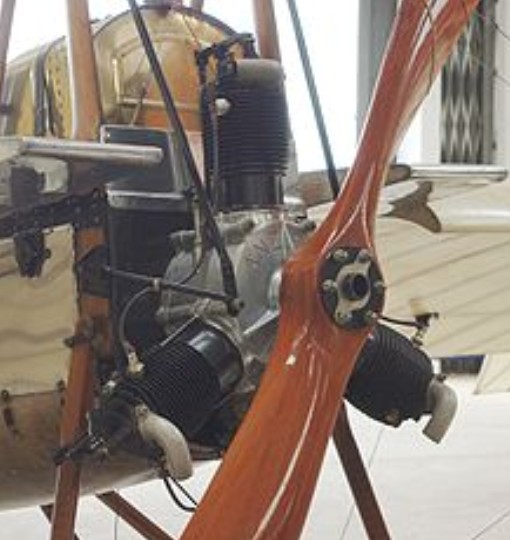
Anzani was aware of the weight cost of the counterweight in the fan configuration and by December 1909 he had a symmetric 120° three-cylinder radial engine running. One example was a 3.1 litre (186 cu in) unit producing 22 kW (30 hp) at 1,300 rpm. Although termed the Y engine after its symmetric cylinder arrangement, it ran in an inverted Y position so that the plugs, mounted on the upper in-plane side of the two lower cylinders were less than 30° below the horizontal and less prone to oiling than one serving a piston at 180° from upright. Radials are smoother running than the less symmetric fan engines as well as lower weight but with the low power available from their three cylinders they had limited applications. They led, however, to Anzani’s two-row radial engines, beginning with the 6-cyl radials, two Ys on a common crankshaft.
Applications:
Blériot XI
Caproni-Pensuti triplane
Deperdussin Type A
Sikorsky BIS-2
Perry Beadle T.1
Survivors
The restored and flyable Blériot XI, registry number N60094 at Old Rhinebeck Aerodrome uses one of these Anzani three-cylinder “true radial” engines for its straight-line, short distance “hop” flights. Another Blériot XI, with British registration G-AANG, is allowed to fly similar short ‘hops’ at the Shuttleworth Collection. Its original “fan-type” Anzani three-cylinder engine is thought to be the oldest airworthy aircraft engine in the world. A 1910 Deperdussin monoplane that is also restricted to straight ‘hops’ uses a ‘Y’ type Anzani engine.
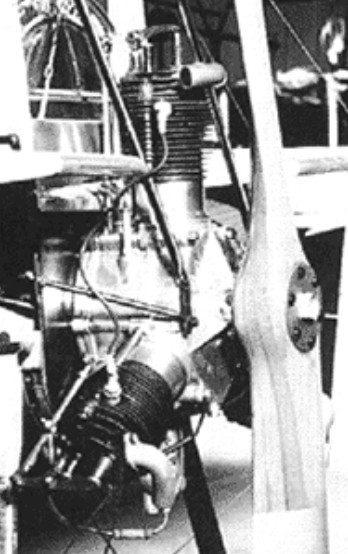
Specifications:
Channel flight engine
Type: 3-cylinder air-cooled fan
Bore: 100 mm (3.94 in)
Stroke: 150 mm (5.90 in)
Output: 30 hp
Displacement: 3.53 litres (216 cu in)
Dry weight: 65 kg (143 lb)
Valvetrain: Automatic inlet valves, mechanical exhaust valves driven from three separate cams in crankcase. One inlet, one exhaust per cylinder
Fuel system: Gronville and Arquembourg carburettor, mixing chamber in crankcase.
Oil system: Splash lubrication
Cooling system: Air, ribbed cylinders
Ignition: Battery ignition, one spark plug per cylinder
Anzani Fan / W / W-3 / Brownback Tiger Kitten
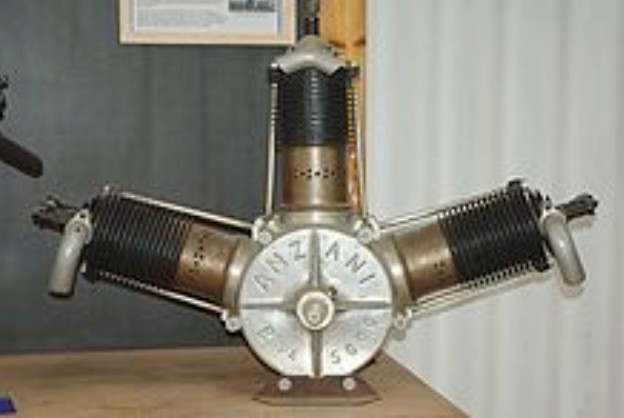
Alessandro Anzani began building motorcycle engines in France around 1905. His motors were air-cooled, making them light. His first designs were two-cylinder V-engines, and he rode machines powered by them to records and race success in 1905 and 1906. In the same period he had developed a three-cylinder version, more powerful than the twins. Engines with cylinders arranged radially but only in the upper half-circle were termed fan type, or semi-radials; by about 1910 other manufacturers were building e.g. five-cylinder fan engines, most notably R.E.P. Three-cylinder fans were alternatively known as W or W-3 engines. The appeal of the fan configuration was that, because all the cylinder were above the horizontal there was little danger of the plugs being fouled by the lubricating oil. The disadvantage, particularly for an aircraft engine, was the extra weight required to counterbalance the pistons.
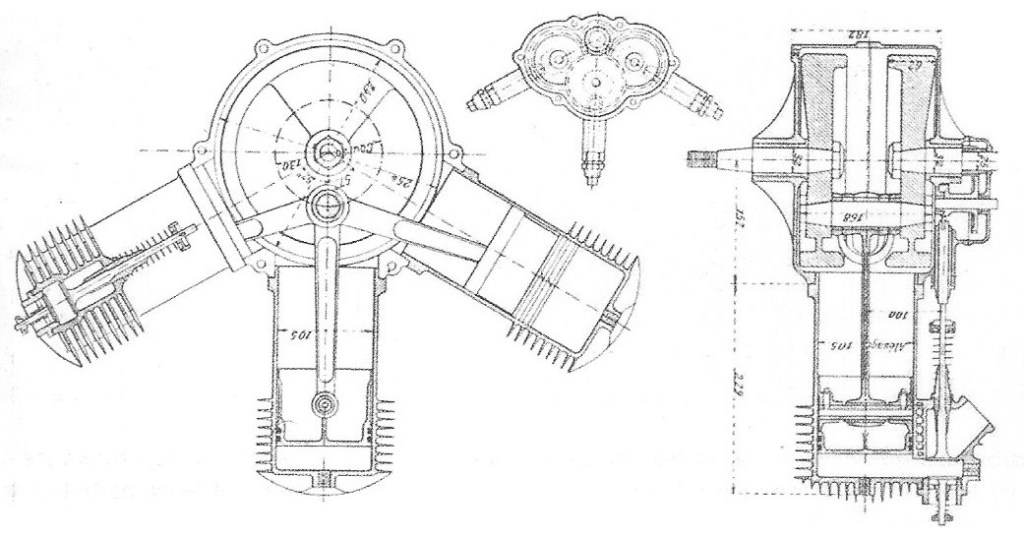
In response to the growing interest in aviation in France after the Wright brothers’ visit in 1908, Anzani produced the first of a series of three-cylinder fan flight engines. The cylinders were each a single iron casting and the one-piece crankcase was aluminium. Pistons were steel with cast rings. In most of these the outer cylinders were at 60° to the central one, though a contemporary diagram shows one, described as the cross channel engine, with a 55° angle. They were all air-cooled side-valve engines; each exhaust valve was controlled from below by a cam in the crankcase. Each was mounted in a cell to the side of the cylinder, with the automatic, atmospheric pressure -driven spring-loaded inlet valve immediately above it, partly to minimise volume and partly to help cool the hot exhaust valve. Most contemporary and pre-1921 sources agree that the bores of these early engines were between 100 and 105 mm (3.93 and 4.13 in), but strokes between 120 and 150 mm (4.72 and 5.90 in) are quoted. Most put the output of these engines at about 18 kW (24 hp) at around 1,400–1,600 rpm.
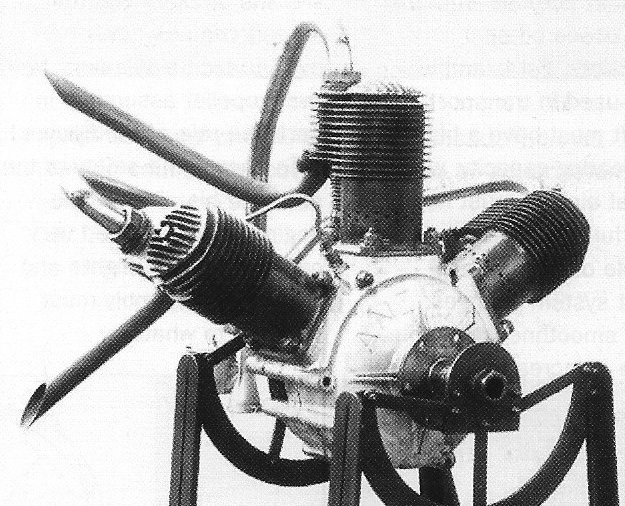
It was an engine of this sort that famously powered Louis Blériot’s Type XI monoplane across La Manche (the English Channel) on 25 July 1909. Contemporary sources differ on its bore, stroke and swept volume. The first description of the successful machine in Flight describes the engine as having dimensions of 100 × 150 mm, or a capacity of 3.53 litres. However, a few months later they printed the engineering drawing of the 55° engine, which has dimensions of 103 x 120 mm marked on it, clearly captioned as “used … in the cross-Channel flight”. If their identification was right, then Bleriot used a 3.00-litre engine. A head-on photograph of the cross-channel aircraft also shows a 55° engine.
Even before the channel flight, Anzani was selling more powerful versions with larger bores: a 120 mm bore, 4.4-litre (269 cu in) variant produced 26 kW (35 hp) and a 135 mm bore, 6.4-litre (390 cu in) engine gave 36 kW (45 hp). These fan engines remained in production until at least 1913,[8] though there were important improvements. The exhaust valve was moved to the cylinder head and operated by rockers via push rods, and a mixing chamber was arranged in the crankcase. The 1913 three-cylinder Anzani fan engine had a cylinder separation of 72°, presumably to lighten the counterbalance. By this stage it had its inlet manifold at the rear of the engine to minimise airflow cooling of the fuel air mixture.
Brownback built a 20hp three-cylinder radial licensed version of the Anzani as the Brownback Tiger Kitten.
Variants:
Anzani 3-cylinder fan engines
10-12 hp (7.5-9 kW)
Bore x Stroke: 3.35 in × 3.35 in (85 mm × 85 mm)
Capacity: 88.5 cu in (1.45 lt)
12-15 hp (9-11 kW)
Bore x Stroke: 3.35 in × 3.94 in (85 mm × 100 mm)
Capacity: 104 cu in (1.70 lt)
25-30 hp (19-23 kW)
Bore x Stroke: 4.13 in × 5.12 in (105 mm × 130 mm)
Capacity: 206 cu in (3.38 lt)
40-45 hp (30-34 kW)
Bore x Stroke: 5.32 in × 5.92 in (135 mm × 150 mm)
Capacity: 393 cu in (6.44 lt)
45-50 hp (34-38 kW)
Anzani
Société des Moteurs Anzani
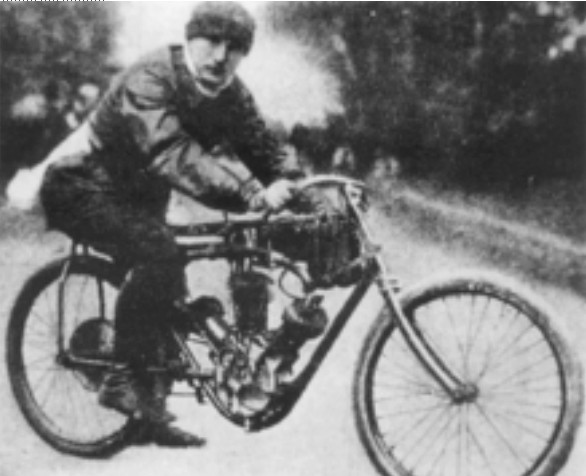
Anzani was an engine manufacturer founded by the Italian Alessandro Anzani (1877–1956), which produced proprietary engines for aircraft, cars, boats, and motorcycles in factories in Britain, France and Italy.
From his native Italy, Anzani moved to France where he became involved in cycle racing. He moved on to motorcycles and designed and built a record breaking lightweight engine. In 1907, he set up a small workshop in Paris with three staff and while they were building his engines, he designed a hydrofoil powered by one of his engines and propellers. The original Anzani Moteurs d’Aviation was situated at 112 Boulevard de Courbevoie, Courbevoie, Paris.
He supplied one of his engines to Enrico Forlanini and developed it further into a three-cylinder, air-cooled, radial engine ideal for the new aeroplanes. One of the early engines, the 25 hp Anzani W-3 or Fan type, was supplied to Louis Blériot who used it on his successful crossing of the English Channel in 1909.
Demand for the engines continued to grow and the original Paris workshop was replaced by a new factory at Courbevoie, Paris, and one in London was also added as well as licensed production by other makers. Another factory at Monza, Italy was added in 1914.
In 1920, Anzani turned to motor racing and built a small car with one of his 750 cc two-cylinder engines, air-cooled of course, which won several competitions. They also made a 1098 cc cyclecar between 1923 and 1924, as used in the T.B. Sports cyclecar.
On his 50th birthday in 1927, Anzani decided to sell his factories in Paris and London, keeping only the Monza works for sentimental reasons, and managed by Natale Baccanti.
 All Aero