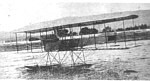
The 1911 Astra Type C biplane was designed and built by ASTRA in France.
Span: 41′
Length: 34’1″
Weight: 1100 lb empty
Speed: 50 mph
The 1911 Astra Type C biplane was designed and built by ASTRA in France.
Span: 41′
Length: 34’1″
Weight: 1100 lb empty
Speed: 50 mph
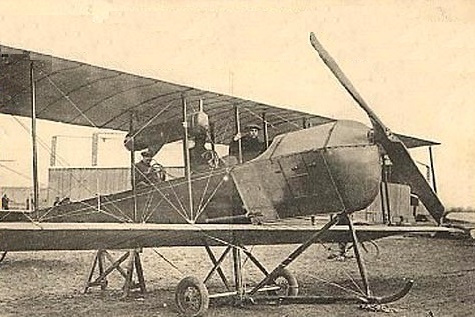
The 1911 Astra Biplane Concourse Militaire was designed and built by ASTRA.
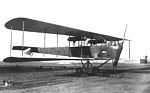
Span: 40’5″
Length: 35’11”
Weight: 2200 lb gross
Speed: 53 mph
Airship, France, 1911
Engines: 2 x Brasier, 118 hp
Length: 284.449 ft / 86.7 m
Width of hull: 45.932 ft / 14.0 m
Contained volume: 316114 cu.ft / 8950 cu.m
Max. speed: 28 kts / 52 km/h
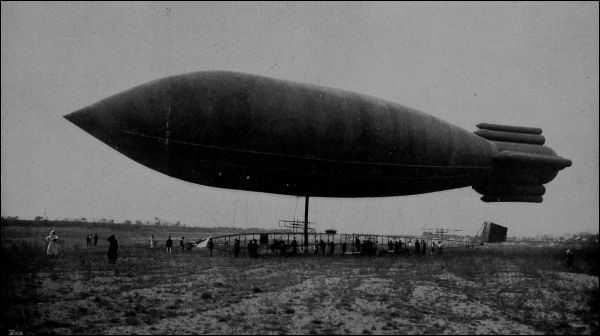
The 1909 Ville de Paris movable rudders may be either hand or motor-operated. The double vertical steering rudder of the Ville de Paris had an area of 150 square feet. The horizontally pivoted rudders for vertical direction had an area of 130 square feet.
The motor in the Ville de Paris was at the front of the car, the operator behind it. This car had the excessive weight of nearly 700 pounds.
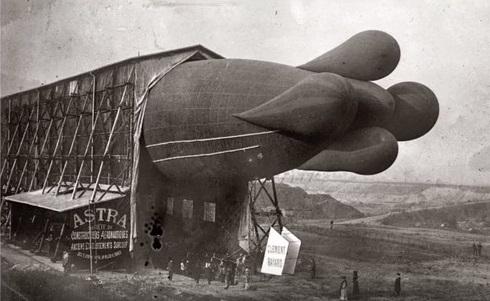
The 1908 non-rigid Astra-Torres (or Astra XIII), was purchased by the Russian Empire in 1913.
During WW1 “Astra” made six missions but was dismantled in 1915. From 1915 until 1920 “Astra” was kept at the Aeronautic school depot.
An attempt to revive aeronautics in the Russian Empire was made in 1920. Analysis of the legacy of the Russian Empire equipment and parts of old airships showed that at best hull at the time was the airship “Astra-Torres”, and it was decided to work on its recovery.
Following the production of individual suspension parts, the latest in autumn 1920 in the village of Salizi (near Petrograd), an aeronautic squad began to work on the assembly airship renamed Krasnaya zvezda (Red Star). The shell was made of three-layer rubberized material and has an inner wall that divided the volume of the two equal parts. This partition allowed to reduce transfusion of gas along the shell with trim of the aircraft. This work is finished in the middle of November. On 23 November 1920 the airship envelope filled with gas, and on January 3, 1921 it performed the first flight.
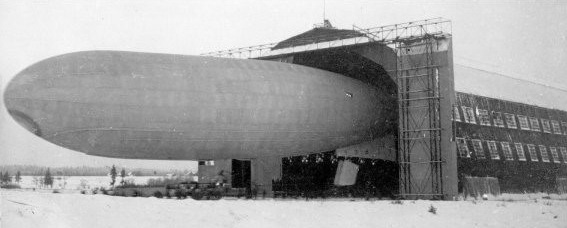
In total this airship performed 6 flights, the total duration of which was about 16 hours.
Volume: 10,500 cu.m
Length: 78 m
Diameter: 15 m
Engines: 2 x 197 hp
Max.speed: 59 km/h
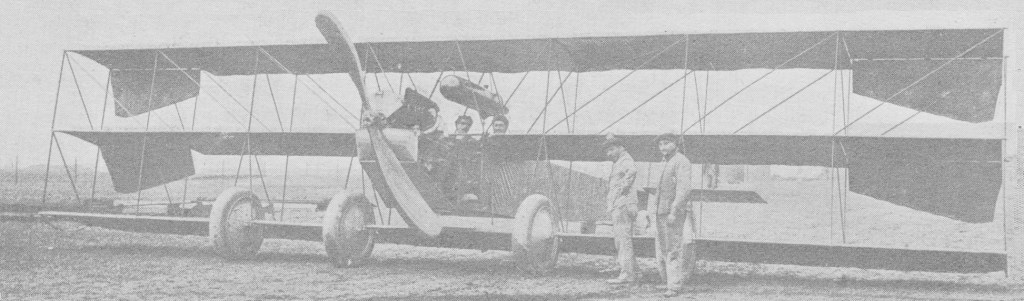
The Astra Triplane showed great promise in the 1911 French Military trials.
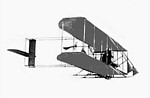
The Astra-Wright BB was a headless, short-coupled pusher on skids produced under license by Astra in France circa 1910.
A single seater, it was used for early bombing trials.
The Astra-Wright Type E biplane was built in 1910.
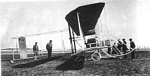
Astra -Wright BB
Span: 41′
Length: 39’4″
Empty weight: 990 lb
Seats: 2
Astra-Wright Type E
Span: 52’6″
Length: 34’11”
Empty weight: 1375 lb
Astra obtained from the Wright Brothers in 1909 a license to build their aircraft in France. They introduced their own modifications, and one Astra-Wright was used for early bombing trials. A Triplane also built. During First World War made military airplanes and airships, having been famous for lighter-than- aircraft before the war. Components also manufactured. In 1921 amalgamated with Nieuport as Nieuport-Astra, thenceforth abandoning airship work entirely.
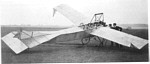
The 1909 Astley monoplane was designed and built by H. J. D. Astley in the UK.
Span: 24′
Length: 24′
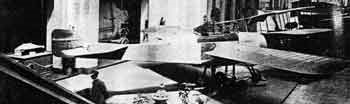
Societa italiana aeroplani – founded in Milan in 1912 by attorney Enrico Luzzatto after the close of the Helios firm – made use of the work of engineer Flaminio Piana Canova, who left the workshops of Somma Lombardo’s Battaglione Aviatori, and briefly assumed the role of technical director for all of Asteria where soon he built an almost identical monoplane to the Sia Italia, called Asteria MB (Monoplano Biposto), and also presented at the 3rd International Exhibition of Aerial Locomotion of Turin (May 17–24, 1913).
 All Aero