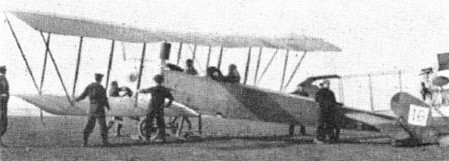
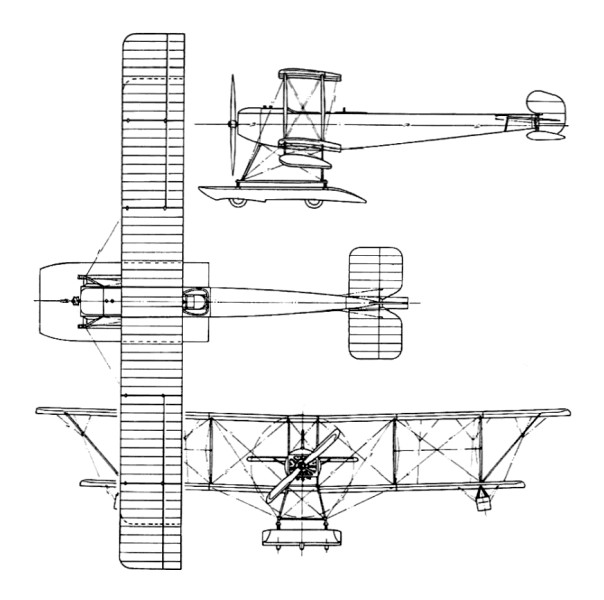
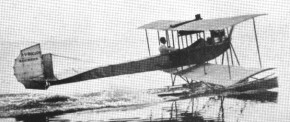
One of the reasons that the Avro Flying School and airfield were moved from Brooklands to Shoreham in the autumn of 1912 was because tests could be carried out on both landplanes and float planes. The latter had come about after Commander Schwann’s experiments with the Avro Type D that he converted to a seaplane. A.V.Roe had been watching Schwann’s experiments with interest, and could see the possibilities in developing a seaplane. The result was the Avro 501, which was an enlarged Avro 500 with a strengthened top wing and floats in place of the undercarriage. It had a wide central float 15 feet long and 7 feet wide, in which were fitted three wheels: one at the front and two at the rear. Because of the large wingspan of 47 ft 6 in, small floats were fitted to the wingtips to stabilise the aircraft when taxiing.
Powered by a 100 hp Gnome engine, the Avro 501 was one of the first amphibians built, and first flew in November 1912. There were stability problems right from the start, and despite a number of modifications the central float was eventually replaced with two separate floats. Tests were carried out, and the fitting of the two floats worked sufficiently well enough for the Admiralty to ask for the aircraft to be delivered to their testing ground on the Isle of Grain.
Encouraged by the interest shown in the float plane by the Admiralty, Roe produced a larger version of the Avro 501, the Avro 503. The success of the Avro 503H caused the Avro 501 to be cancelled. The single centreline float was removed and replaced with a wheeled undercarriage after the Navy agreed to accept it as a landplane. Three more Avro 503 Type H models were purchased by the Navy to be used by the Royal Navy Air Service.
Engine: Gnome 100 hp / 75 kW Top span: 47’6″ Bottom span: 39’6″ Wing area: 478.0 sq.ft / 44.41 sq.m Length: 33 ft 0 in / 10.06 m Height: 12 ft 6 in / 3.81 m Empty weight: 1740 lb / 789 kg MAUW: 2700 lb / 1225 kg Speed max landplane: 65 mph / 105 kph Seats: 2
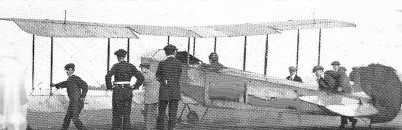
The Type E biplane was designed in response to a War Office specification for a two-seat aircraft capable (amongst other things) of carrying a 350 lb (160 kg) payload, at a speed of 55 mph, and with a total endurance of 4.5 hours. There was one major stipulation: the aircraft had to be designed, built and tested within nine months.
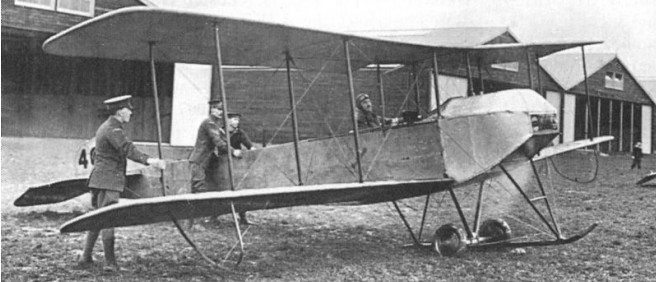
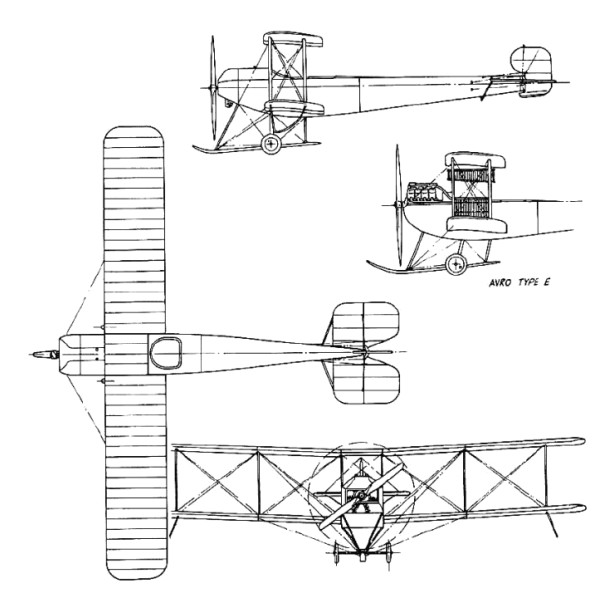
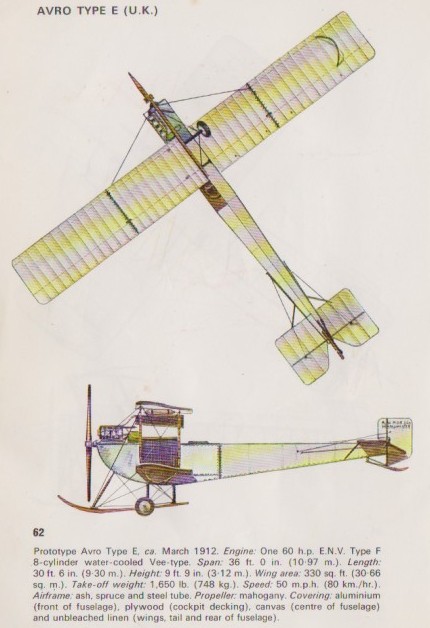
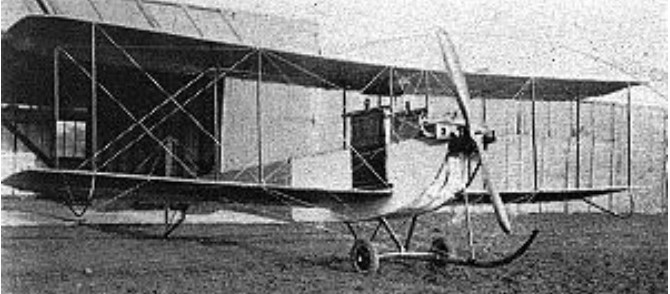
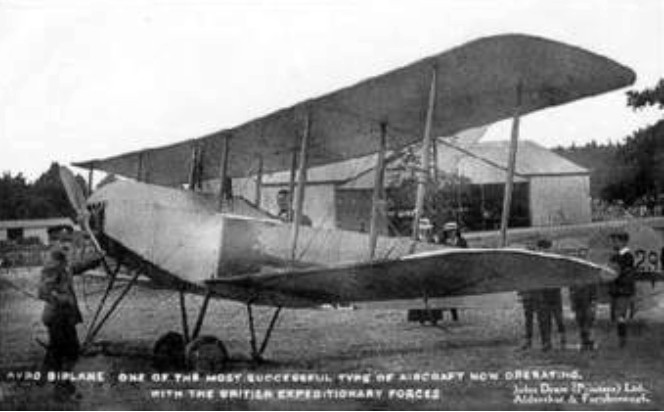
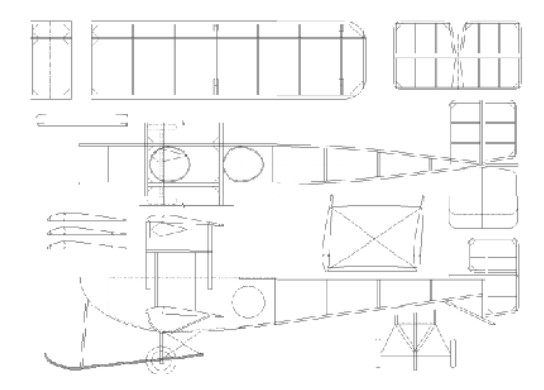
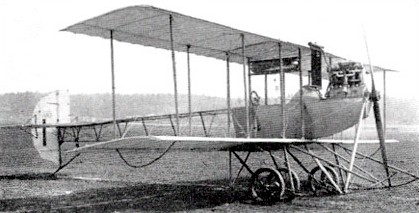
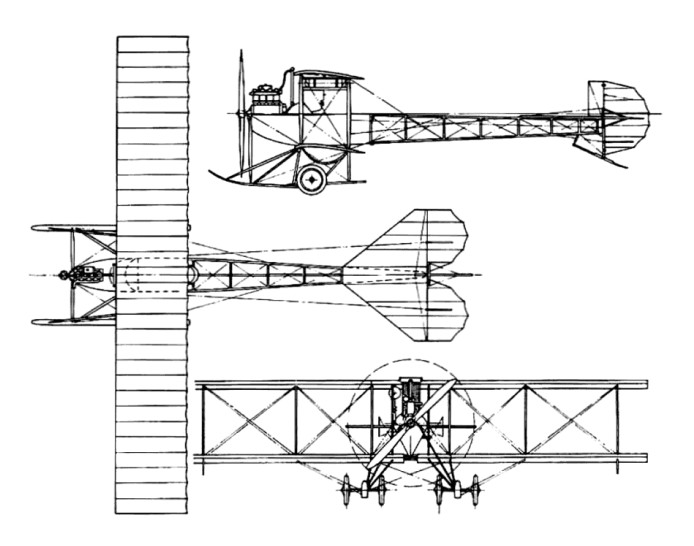
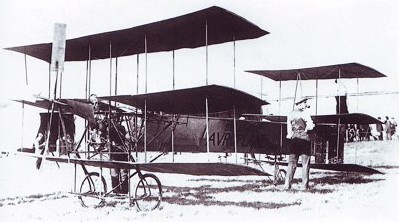
The Avro submission was based on the Avro Duigan design, differing principally in being slightly larger and having a more powerful (60 horsepower (45 kW)) water-cooled E.N.V. engine, and was originally named “Military Biplane 1”. It was a two-bay biplane with equal-span, unstaggered wings, and a box-girder rectangular-section fuselage that tapered toward the tail section. The front engine section was covered in a metal plate, while the rear section was fabric covered. The undercarriage, with its centre skid, was taken from the Duigan model and a rubber-sprung skid supported the tail section. Like the Duigan model, celluloid panels were set into the floor to give the pilot and the observer downward vision. The two-bay mainplanes were of equal length, and were constructed in three sections for ease of transport. Lateral control was by wing warping. In service, most were fitted with ailerons and a revised rudder.
The 60 hp E.N.V. water-cooled engine, which was mounted on top of the longerons, and was cooled by two-spiral tube radiators mounted on each side of the front section of the fuselage. Two gravity fuel tanks were mounted on the centre section struts, while the main fuel tank was fitted in front of the observer’s position.
The aircraft was first flown on 3 March 1912 by Wilfred Parke from Brooklands, and while top speed and rate of climb did not meet expectations, the aircraft excelled in every other way.
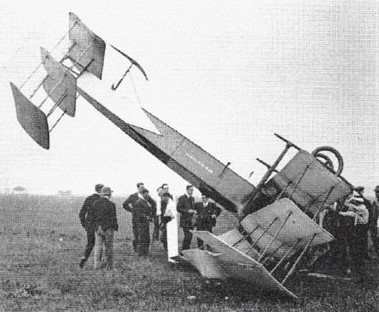
It climbed to 1000 ft in six minutes, which for its time was spectacular. A number of successful test flights were carried out over the following weeks, but on taking off for Hendon to take part in a competition for the Mortimer Singer Prize, the aircraft suffered engine failure. Wilfred Parke managed to carry out an emergency landing which demolished the undercarriage and wings. The fuselage rolled onto its side, trapping W.H.Sayers, the engineer travelling with the aircraft, inside. He had to be freed by cutting a large hole in the side of the fuselage and removing auxiliary radiators. When the aircraft was rebuilt, the auxiliary radiators were moved to a lower position. The re-built Avro Type E was put through its paces at the Farnborough trial in June, and then returned to Brooklands to be used as a testbed for the new 60 hp A.B.C. A number of trials were carried out using the engine, causing a number of modifications to be made to the airframe. At the beginning of 1913 the E.N.V. engine was re-installed, and the aircraft was assigned to the Avro School, by now at Shoreham, to be used for instruction. The aircraft was later destroyed in the first fatal accident involving an Avro aircraft.
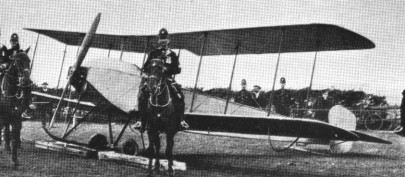
A second example was built, modified to take the much lighter 50 hp (37kW) Gnome air-cooled radial engine. This first flew on 8 May 1912, and a height of 2,000 ft (610 m) was reached in five minutes. The next day the aircraft was flown from Brooklands to Laffan’s Plain, covering the 17 miles (28 km) in 20 minutes. The same day it demonstrated its ability to meet the requirements laid down by the War Office in the requirements for a “Military Aircraft” that had been published in connection with the forthcoming Military Aeroplane Competition, and the authorities were impressed enough to buy the aircraft and placed an order for two more examples of the aircraft, which Roe now renamed the Avro 500.
Avro 500
The type proved an immediate success, and orders for another four machines plus five single-seat derivatives (designated 502 by Avro) soon followed. Other examples produced included six for the British Admiralty’s Air Department, one presented to the government of Portugal (paid for by public subscription), one kept by Avro as a company demonstrator, and one bought by a private individual, J. Laurence Hall (commandeered by the War Office at the outbreak of World War I). The first prototype was destroyed in a crash on 29 June 1913 that killed its student pilot.
18 examples of different versions were produced between May 1912 and January 1914, most used by the UK armed forces.
Avro 500s were flown by the British armed forces during the first years of the war, mostly as trainers. In service, most were fitted with ailerons and a revised rudder.
Operators
Portugal United Kingdom
Royal Flying Corps No. 3 Squadron RFC No. 4 Squadron RFC No. 5 Squadron RFC Royal Naval Air Service
Avro 500 Engine: 1 × Gnome rotary, 50 hp (37 kW) each Length: 29 ft 0 in (8.84 m) Wingspan: 36 ft 0 in (10.97 m) Height: 9 ft 9 in (2.97 m) Wing area: 330 ft2 (30.7 sq.m) Empty weight: 900 lb (409 kg) Gross weight: 1,300 lb (590 kg) Maximum speed: 61 mph (98 km/h) Rate of climb: 440 ft/min (2.2 m/s) Crew: one pilot Seats: 2
The Avro Duigan was single seat tractor biplane built by A.V. Roe for the pioneer Australian aviator John Robertson Duigan in 1911. Only one was built, but several examples of the very similar slightly larger two-seater aircraft built by Roe at the same time, the Avro Type E, were bought by the RFC
Roe’s first biplane design, the Avro Type D had first flown in April 1911. The Avro Duigan was a major refinement of this fundamentally successful aircraft. It had a square rather than triangular cross section fuselage, simplifying construction and allowing the crew seats to be lower down, giving more protection. The wings were supported using an aerodynamically cleaner ordinary two-bay layout, replacing the two and a half bay arrangement of its predecessor, which had a third pair of interplane struts close to the fuselage. The undercarriage was simpler, a V-strut below the wing leading edge bearing a leaf-spring axle whose wheels had the refinement of covered spokes, and under this a single long skid supported by a second V-strut below the trailing edge and a single strut from the extreme nose of the aircraft. The tailplane was steel framed, with a rectangular fixed stabiliser and elevator and rudder. Other details were as previous aircraft. The fuselage was constructed of wire-braced ash metal covered forward of the cockpits. The observer sat in front with the pilot sitting behind the cut away trailing edge, an arrangement which positioned the front cockpit close to the centre of gravity of the aircraft and allowed it to be flown without a passenger with no change its balance. The wire-braced high aspect ratio two-bay wings had ash spars and poplar ribs with the curved ends formed from cane. Lateral control was by wing warping. A sprung tailskid was mounted below the rudder and small hoops were fitted below the outer interplane struts to protect the wingtips. The aircraft had dual controls and was fitted with small “Cellon” window to improve downward vision.
The aircraft was initially powered by a 40 hp (30 kW) two-cylinder horizontally opposed Alvaston but soon replaced by a 35 hp (26 kW) E.N.V. V-8 motor. Both were water-cooled engines, with pairs of large coiled tube radiators positioned parallel to the fuselage on either side of the front cockpit.
Trials with the Alvaston engine at Huntingdon racecourse were not successful, the aircraft barely lifting off. On his return to Brooklands, the E.N.V. motor was fitted and on 10 March 1912 Duigan, flying solo managed some long, straight flights in his too-evidently underpowered machine. Some intensive engine tuning, together with a new propeller resulted in more success that April, with solo circuits, figures of eight, and an hour long series of circuits at about 500 ft (150 m). Nonetheless, Duigan won his Aviator’s Certificate and returned to Australia. His aircraft, without its engine, was sold to the Lakes Aircraft Co. for £180 who rebuilt it as the Lakes Sea Bird floatplane in October 1912, powered by a 50 h (37kw ) Gnome engine. In this form, it performed well. The slightly larger Avro 500, powered by a 60 hp (45kW) E.N.V. was the first Avro aircraft type to be built in any quantity.
Duigan Engine: 1 × E.N.V. type D, 35 hp (26 kW) Wingspan: 34 ft 0 in / 10.36 m Length: 29 ft 4 in / 8.9 m Height: 10 ft 6 in / 3.2 m Empty weight: 350 lb / 158 kg Loaded weight: 500 lb / 226 kg Maximum speed: 40 mph / 65 km/h Range: 100 mi / 160 km Crew: 2
Lakes Sea Bird Engine: Gnome 50 hp Wingspan: 39 ft 4 in / 11.9 m Length: 29 ft 4 in / 8.9 m Height: 10 ft 6 in / 3.2 m Empty weight: 350 lb / 158 kg Loaded weight: 500 lb / 226 kg Maximum speed: 62 mph / 99 km/h Range: 100 mi / 160 km
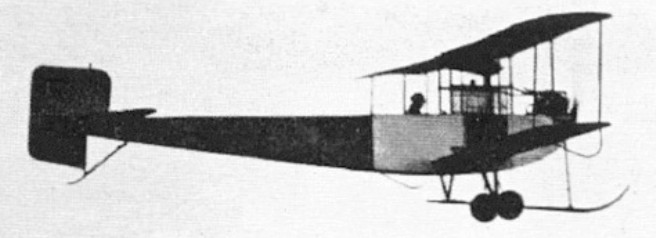
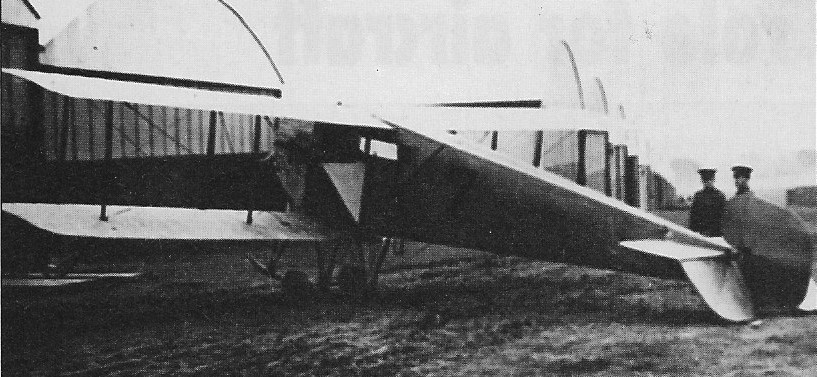
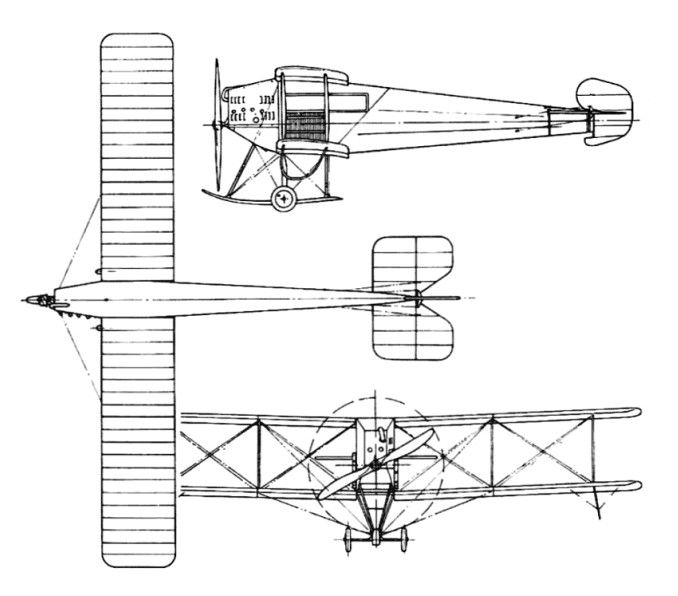
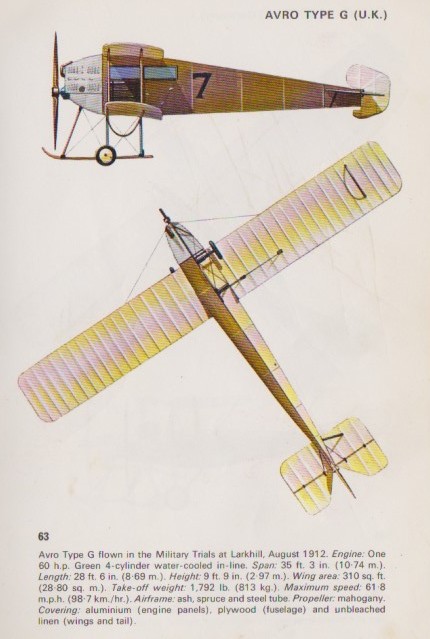
With the loss of the Avro Type F monoplane, A.V.Roe decided to build a second model; this time, it was a two-seat biplane with a fully enclosed cabin. Loosely based on the structure of the Type F, the Avro Type G, as it was known, had a very narrow cabin with maximum beam of 2 ft 3 in, tapering to 1 ft 3 in at the end. Powered by a 60 hp Green engine which had spiral tube radiators mounted either side of the cabin, the engine was enclosed in louvered cowlings with the exhaust extending over the roof of the cabin. Access to the cabin was through a hinged door in the fuselage.
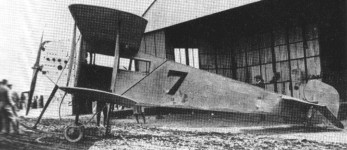
Two models were built: the first, No.6, was to be powered with the 60 hp Green engine, the second, No.7, was to be fitted with a 60 hp A.B.C. engine. The later engine was not ready in time and because it was a real rush job, the Green engine was fitted. It was intended to enter the aircraft in the 1912 Military Aeroplane Competition at Larkhill, Salisbury Plain. The aircraft was completed, crated and shipped off by rail from Manchester. On arrival the aircraft was assembled and Wilford Parke, the pilot, took off on a three hour endurance trial. The weather closed in and the air became so turbulent that Parke was forced to return to Larkhill. Landing downwind, the aircraft overturned, causing extensive damage. The Avro Type G No.7 was returned to the factory in Manchester for extensive repairs.
In the meantime, aircraft No.6 had been completed and sent to Larkhill to compete in the competition and sent to Larkhill to compete in the competition. All the tests went well, including Parke flying into a heavy rainstorm for almost 45 minutes. The Avro won the assembly test, in 14½ min, and the fuel consumption test. The watching military observers were impressed, but not so impressed as to give Avro any orders for the aircraft. The aircraft returned to Shoreham, where it joined the fleet of Avro aircraft at the Avro Flying School. Nothing more was heard of it.
Engine: 1 x 60hp Green Take-off weight: 814 kg / 1795 lb Wingspan: 10.74 m / 35 ft 3 in Length: 8.69 m / 29 ft 6 in Height: 2.97 m / 10 ft 9 in Wing area: 31.12 sq.m / 334.97 sq ft Max. speed: 100 km/h / 62 mph Range: 555 km / 345 miles
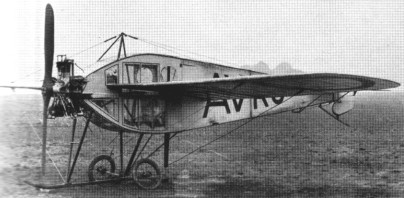
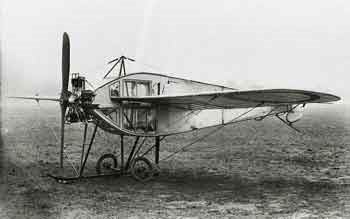
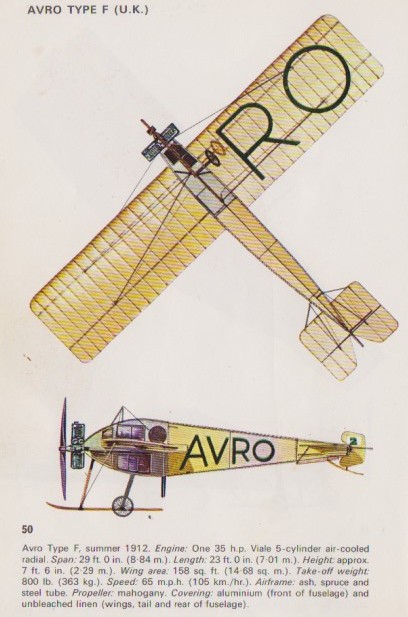
Powered by a 35 hp Viele five cylinder radial engine, the Avro Type F, flown by Wilfred Parke, took off from Brooklands on 1 May 1912. This was the first flight in the world of an aircraft with a completely enclosed cockpit. The 2 ft (0.61m) wide fuselage was deep enough for the pilot to be totally enclosed. Lateral control was by wing warping.
Over the next few days a number of successful test flights were carried out, but then on 25 May, when the aircraft was due to appear at Hendon for flight tests, the engine failed on takeoff, and the aircraft hit a fence on crash landing. It was dismantled and repaired but stayed in the hanger until September, when R.H.Barnwell took it out for a test flight. Once again the aircraft performed well, but on landing the front skid broke and the aircraft flipped over on to its back, causing considerable damage. The damage was extensive and beyond economical repair, so the Avro Type F was scrapped.
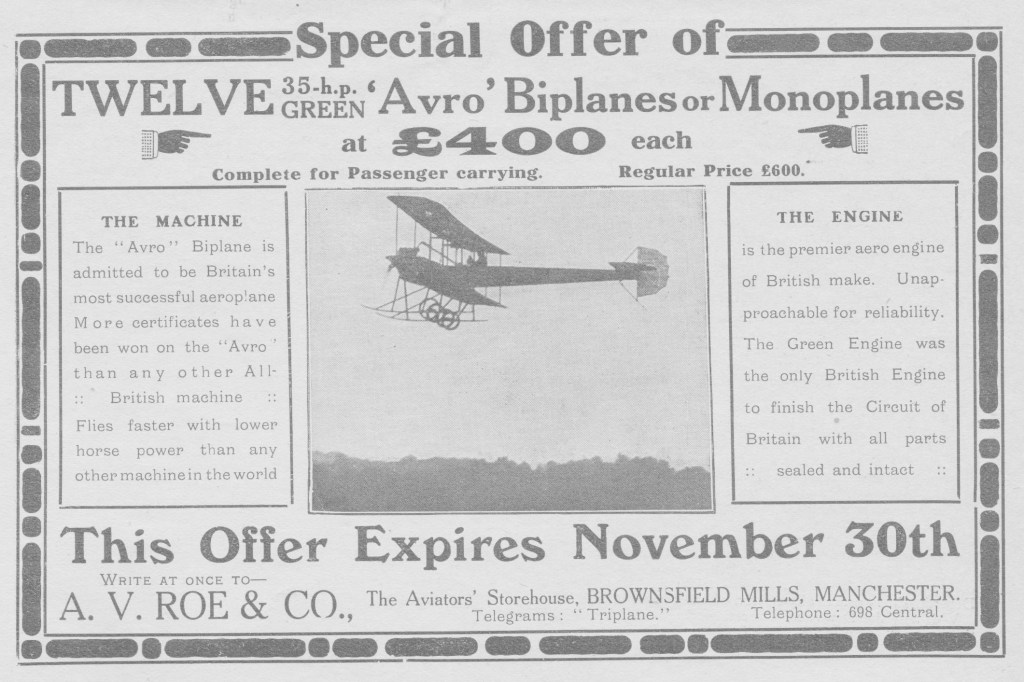
The type ‘D’ was designed by A. V. Roe, the aircraft was erected at Brooklands in March of 1911, it appears to have been powered by a 35HP Green engine and first flown on April 1st 1911 by C. Howard Pixton.
It is believed that six examples of the Type D of 1911, with its triangular shape fuselage, were manufactured. They were all different, including one example with a 60hp engine that was intended to compete in the Daily Mail Air Race, but suffered a prior accident. The Avro Type D was the company’s first successful and (semi) production standard design.
In England A.V.Roe & Co had put the first Type D on floats and it left the water on 18 November 1911 at Barrow-in-Furness using stepped floats, but dropped back into the water and was damaged. It flew successfully in April 1912, though always underpowered.
The fourth Type D was powered by a 45hp Green engine.
November 1911
A float plane version at Cavendish Dock, Barrow-in-Furness, circa 1911, was flown by Commander Schwann, of HMS Hermione, carrying out early morning trials on the Roe biplane, which had been fitted with float attachments of his own invention.
Schwann float attachments
Built by A.V.Roe for Cdr. Oliver Schwann of the Royal Navy. He crashed it. It was rebuilt and flown successfully by Major S.V.Sippe.
One of the reasons that the Avro Flying School and airfield were moved from Brooklands to Shoreham in the autumn of 1912 was because tests could be carried out on both landplanes and float planes. The latter had come about after Commander Schwann’s experiments with the Avro Type D that he converted to a seaplane. A.V.Roe had been watching Schwann’s experiments with interest, and could see the possibilities in developing a seaplane. The result was the Avro 501.
Engine: 1 x 35hp Green / 1 x 45 hp Green / 1 x 35 hp Viale / 1 x 50 hp Issacson Wingspan: 9.45 m / 31 ft 0 in Length: 8.53 m / 28 ft 0 in Height: 2.79 m / 9 ft 2 in Empty weight: 158 kg / 350 lb Loaded weight: 226 kg / 500 lb Max speed: 78 km/h / 48 mph Range: 160 km / 100 miles Seats: 3
Sesquiplane Wingspan upper: 9.45 m / 31 ft 0 in Wingspan lower: 7.0 m / 23 ft 0 in Length: 8.53 m / 28 ft 0 in Height: 2.79 m / 9 ft 2 in Empty weight: 158 kg / 350 lb Empty weight: 452 kg / 1000 lb Max speed: 78 km/h / 48 mph
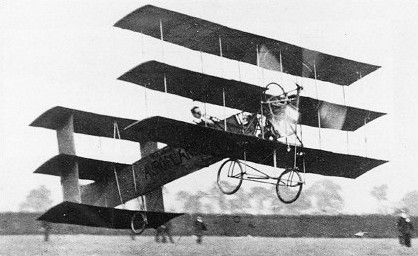
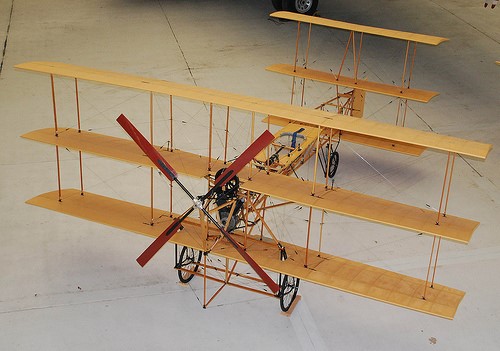
Three Avro IV Triplane (one static) were built in 1964 by the Hampshire Aero Club for the film “Those Magnificent Men in Their Flying machines”. Of all-wood construction and powered by a Cirrus II engine, they were designed by R.Hilbourne. The construction of the triplane followed A.V. Roe’s specifications and was the only replica that utilised wing-warping successfully. With a more powerful 90 hp Cirrus II replacing the 35 hp Green engine that was in the original design.
The first was flown on 9 May 1964. One passed to the Shuttleworth Trust after the film, who kept it airworthy at Old Warden as BAPC.1.
Replica
Replica: Bianchi Avro IV Triplane
Engine: 1 x 35hp Green Wingspan upper: 9.75 m / 32 ft 0 in Wingspan middle: 9.75 m / 32 ft 0 in Wingspan lower: 6.0 m / 20 ft 0 in Length: 10.3 m / 34 ft 0 in Height: 3.3 m / 11 ft 2 in Wing area: 27.31 sq.m / 293.96 sq ft Empty weight: 158 kg / 350 lb Take-off weight: 295 kg / 650 lb Max speed: 64 kph / 40 mph
Engine: 1 x 35hp J.A.P. or 35 hp Green Wingspan upper: 9.45 m / 31 ft 0 in Wingspan lower: 6.0 m / 20 ft 0 in Wing area: 26.66 sq.m / 286.97 sq ft Length: 7.01 m / 23 ft 0 in Height: 3.3 m / 11 ft 1 in Empty weight: 158 kg / 350 lb Take-off weight: 341 kg / 752 lb Max speed: 64 kph / 40 mph
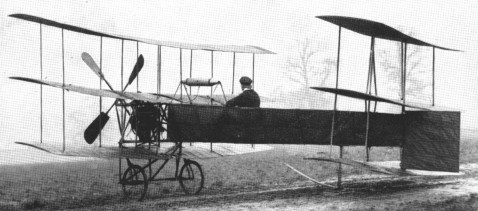
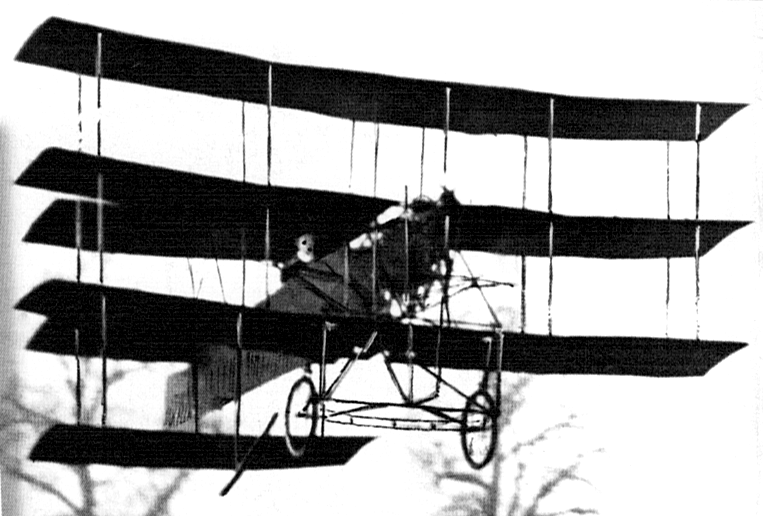
After A.V.Roe moved his entire operation back to Brooklands, he constructed the first aircraft to be built by the company; the Roe II Triplane, named Mercury. It was designed by Alliott Verdon Roe as a sturdier development of his wood-and-paper Roe I Triplane.
It was a single seat triplane powered by a 35 hp Green water-cooled, four cylinder engine. The engine’s radiators were mounted flush along the side of the front section of the triangular shaped fuselage, which was constructed from ash, with silver spruce struts and spars, all covered in Pegamoid fabric. The three wings were of equal length, as was the triplane tail section, from which control of climbing and diving by means of pivoting the entire section, which was in turn linked to the centre mainplane variable incidence gear, was carried out. Control of the mainplane was by a single cntrol stick in the pilot’s cockpit. The two wheeled undercarriage was secured to the axle by rubber shock absorber cord, which in turn was fixed to a rigid, tubular steel triangulated structure.
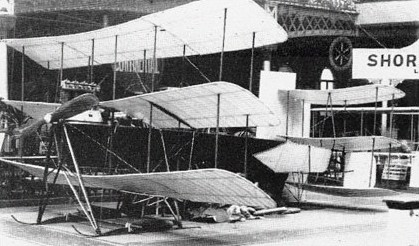
On 4 March 1910, the aircraft appeared in public for the first time at the Olympia Aero Show in London. A.V.Roe showed the Prince and Princess of Wales around the machine himself. Priced at £550, including instruction, an order was received while at the show, from Sir Walter Windham, MP, who also manufactured car bodies.
First flown in April 1910, the show aircraft was retained by the company for training and experimental purposes. During a flight training sessions, student pilots crashed on landing, rolled twice on take-off, resulting in a number of modifications being made. After the second crash the centre of gravity was corrected by moving the pilot’s seat forward, the wing warping control was abandoned and large, unbalanced ailerons were fitted to the upper wing. The work was completed in ten days, and tests carried out proved to be more than satisfactory.
At the beginning of May, Sir Walter Windham’s aircraft was ready and after some initial instruction he took control of his aircraft. The taxying trials were successful, and Sir Walter took to the air a couple of days later. Not much is known about what happened to the aircraft, but it is known that on one of his landings the ground turned out to be too soft and the aircraft flipped on to its back.
The performance of the A.V.Roe aircraft improved and it was finally dispatched by rail to the Blackpool Flying Meeting with the Roe III but on the journey the goods train set fire due to sparks coming out of the engine and landing on the truck. Both the Roe III and Mercury were totally burnt-out.
The longest recorded flight made by the II Triplane was only 600 ft (180 m).
Engine: × Green C.4 4-cylinder inline water-cooled, 35 hp (26 kW) Propellers: 2-bladed Wingspan: 26 ft (7.9 m) Wing area: 280 sq ft (26 sq.m) Length: 23 ft (7.0 m) Height: 9 ft (2.7 m) Empty weight: 150 lb / 68 kg Gross weight: 550 lb (249 kg) Maximum speed: 45 mph (72 km/h; 39 kn) Seats: 1
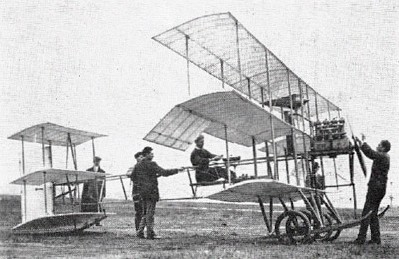
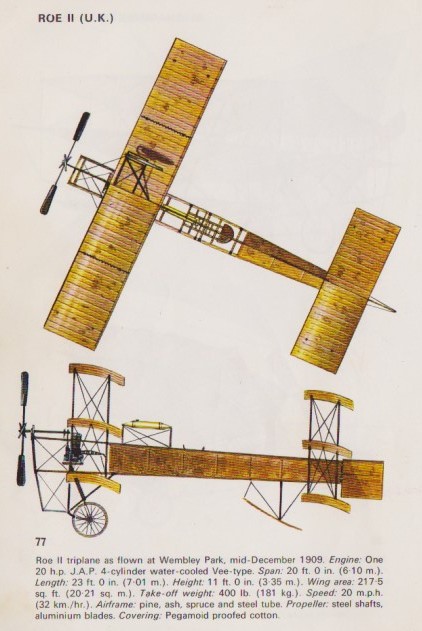
Alliot Verdon Roe transferred his experiments to Lea Marshes in 1909 and designed a triplane. Unable to afford the hire of the Antoinette engine, he built a triplane and covered its wings with brown paper in the hopes that it would be light enough to fly on 9 hp. On 13 July 1909 at Lea Marshes, with Roe at the controls, the Triplane No 1 became the first British built and piloted aeroplane to make a successful flight in England.
Testing at Wembley Park in January 1910, the 20 hp /JAP engine was sufficient to allow circuits of the airfield with few mishaps.
His triplane is now preserved in the National Aeronautical Collection at South Kensington.
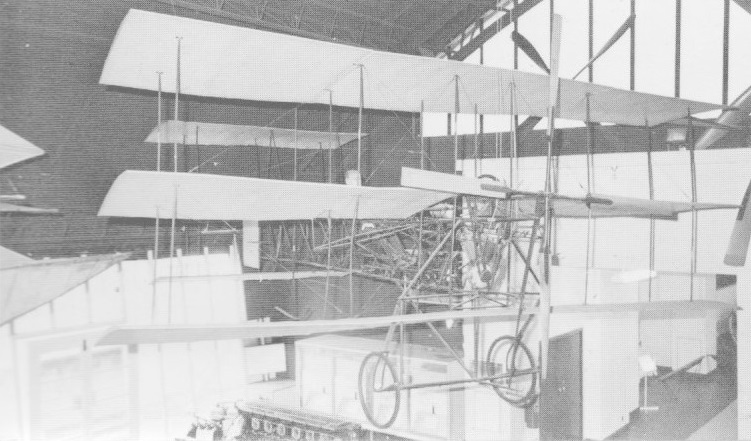
In London movie makers needed a full-size flying reproduction of A.V.Roe’s 1909 triplane for the 1964 “Those Magnificent Men and Their Flying Machines”. Blueprints were available so Avro built one for the movie scenes.
full-scale Roe Triplane replica at the Museum of Science and Industry in Manchester, UK.
Engine: 1 x 9hp JAP 2-cylinder / 20 hp JAP Wingspan: 6.10 m / 20 ft 0 in Wing chord 3 ft. 71 in. Wing area 217.5 sq. ft. Length: 7.01 m / 23 ft 0 in Height: 3.35 m / 11 ft 0 in Weight empty 136 kg / 300 lb Take-off weight: 204 kg / 450 lb Max. speed: 40 km/h / 25 mph Crew: 1







 All Aero