Bates Aero Engines

Carl S. Bates built aircraft motors and gained a reputation for their lightness and reliability.
Early engines included:
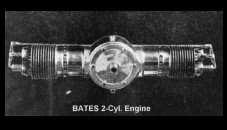
1908 20hp 2 cylinder, horizontally opposed air-cooled
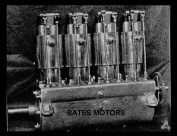
1909 30hp 4 cylinder, horizontally opposed air-cooled
1910 8-10hp 2 cylinder, horizontally opposed air-cooled
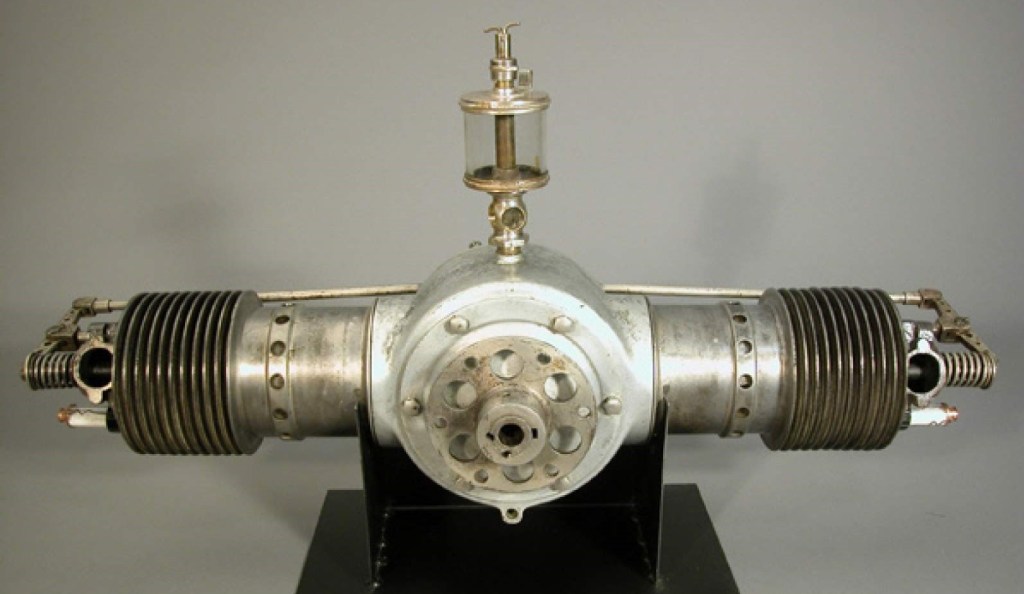
Bates Model 2 B Horizontally-opposed Engine

This engine was manufactured by the Bates Engineering Company of Chicago, Illinois, about 1910. It is believed to be a 19 kW (25 shp) Model 2 B. The engine had automatic intake valves and mechanically actuated exhaust valves.

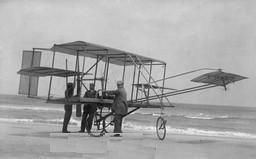
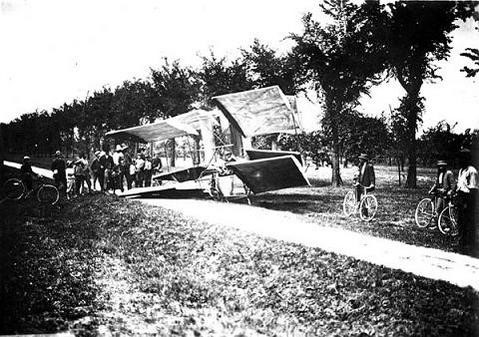
Matthew B. Sellers, builder of the first Kentucky-manufactured aircraft, flew his first quadraplane from 1908 to 1913 powered by various 2-cylinder, horizontally-opposed engines. This Bates Model 2 B was one of these engines.
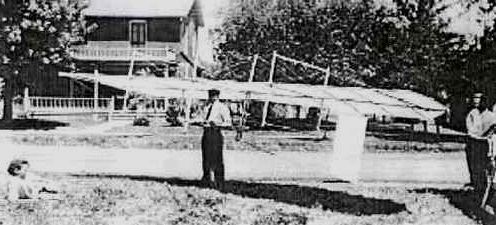
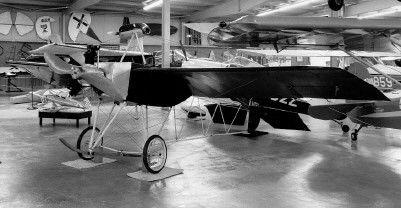
Bates 1911 Monoplane

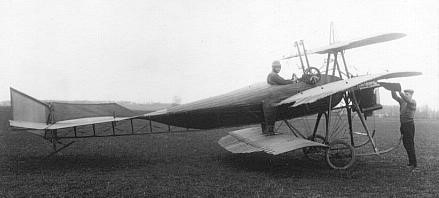
The 1912 Bates Monoplane was built by Carl S. Bates at Cicero Field near Chicago, IL. Bates was a farm boy from Clear Lake, IA who became interested in flying at an early age. He was only 14 when he constructed a man-carrying kite in 1898. In 1903, he moved to Chicago to attend the Armour Institute of Technology and there came under the guidance of aeronautical pioneer Octave Chanute.

In 1911, he is credited with a monoplane of original design, powered with a Bates 30 hp motor. The airplane in the AirVenture Museum is a redesign of that aircraft. The Bates Monoplane fore part of the fuselage is of wood, while the structure back of the cockpit is of steel tubing, oval in cross section, with a “pigeon-tail” empennage and a generous rudder.

Walter Kutz of Skokie, IL who later moved to Waterford, WI, purchased the aircraft in 1918. He stored the aircraft in a barn, but never flew it. In 1957, Leon Tefft, an EAA member, restored the aircraft for Kutz. After Mr. Kutz died, his family decided to loan the airplane to EAA for display in the AirVenture Museum. As displayed in the museum, the aircraft has a Poyer engine.

Bates Aeroplane Co / Bates Motorcraft Co

Carl S. Bates was a farm boy from Clear Lake, IA who became interested in flying at an early age. He was only 14 when he constructed a man-carrying kite in 1898. In 1903, he moved to Chicago to attend the Armour Institute of Technology and there came under the guidance of aeronautical pioneer Octave Chanute.

Bates Aeroplane Co, Chicago IL.

Bates Motorcraft Co, Chicago.

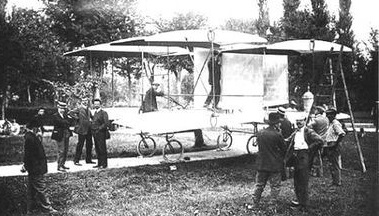
Bates constructed his first airplane in 1908, patterned after the early Curtiss biplanes. He also built aircraft motors and gained a reputation for their lightness and reliability. In 1912 all assets and rights were sold to Heath Aircraft.

Battaille & Brabant Quadruplane   

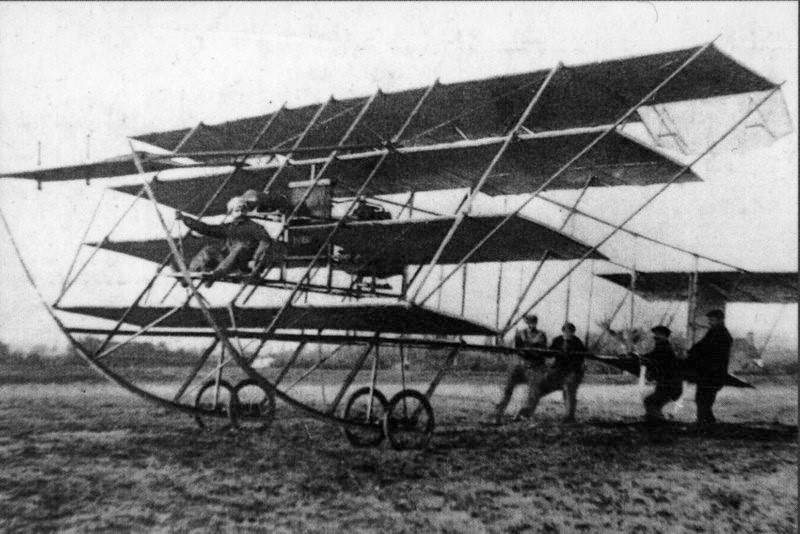
In 1910 Paul Bataille, a mining engineer, and Pierre Brabant, an electrical engineer who worked for Bataille’s company, filed a patent for a quadruplane. The lowest wing was originally going to be a “flapper” (aile battante), but when the quadruplane was actually built it had four fixed wing. The heavily reverse-staggered-wing pusher featured a high forward elevator and a four-wheel undercarriage. The machine was tested in Kiewit in 1910 and in 1911 at the Casteau exercise field where it was piloted by Aimé Behaeghe. After a week of testing, and a roll-over accident, with no success, the decision was made to modify the machine into a triplane. Eventually the aircraft was abandoned.

Basse und Selve GmbH    

Basse und Selve (BuS) were German manufacturers of engines for automobiles, motorcycles, boats, aircraft and railcars, supplying engines for Selve cars built at the Selve Automobilwerke AG, but also various other manufacturers of automobiles and commercial vehicles, such as Beckmann, Mannesman, and Heim. The Altena factory was founded in 1908 by Gustav Selve, employing 2,000 workers, with Dr.Walther von Selve taking over the firm on the death of Gustav Selve, his father.

Basse und Selve aero-engines did not make a big impact on the aviation industry in Germany, but did find limited use, particularly in several large aircraft. The largest and most powerful fighter fitted with a Basse & Selve engine was the Hansa-Brandenburg W 34, asingle prototype of which was completed before hostilities ceased in 1918. Several large Riesenflugzeuge were also fitted with Basse & Selve engines, but they were generally replaced with Mercedes or Maybach alternatives as soon as possible.

Basse & Selve continued to build engines until closing its doors in 1932, two years before the closure of its sister company the Selve Automobilwerke AG which closed in 1934.

Applications:

Hansa-Brandenburg W.34
BuS.IVa

AGO S.I
1 x 150 hp BuS.III (1918)

Rumpler C.I
1 x 260 hp BuS.IV (1918)

Siemens-Schuckert R.VIII
6 x 300 hp BuS.IVa (1918)

Rumpler C.IV
1 x BuS.IVa

Zeppelin-Staaken R.VI
4 x 300 hp BuS.IVa, R.52/16 only, later replaced by four 245hp Maybach Mb.IVa engines