In addition to Ardea, the Italian had several pre-war projects. The first was a certain airplane Bergonzi-Vigano “Vi-Ber” about which nothing is particularly known. In the same 1912, an all-metal sports double monocoque took off according to the “duck” Tonini-Bergonzi-Negri “Italia I” scheme with the Gnome-Rhone 50CV engine. The plane was too heavy for such a motor, and besides, it was destroyed during the tests by Tonini who did not have the right to pilot it – Bergonzi should fly on it.
Pioneers
Berger 1910 Doppeldecker
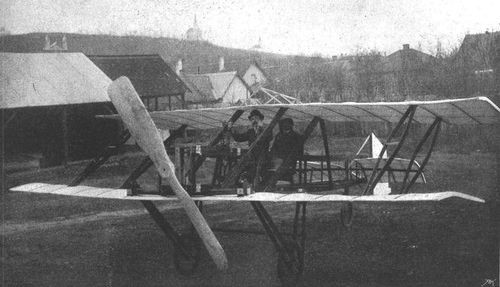
An Austro-hungarian design by Franz Berger, the machine was an early example of negative stagger – the lower wing mounted considerably forward of the top wing. Of wooden construction with the exception of the wing struts which were of aluminium, the photograph was taken before February 19, 1910 in the Hungarian region of the double-monarchy, at Balatonboglár near Lake Balaton (in German: the “Plattensee”) at a time when no engine was fitted. It was however planned to use an Anzani 3-cylinder radial of 35-40 hp.
Berger Monoflygplan
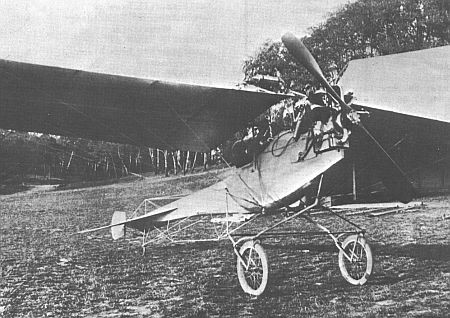
The Monoflygplan of 1911 was an unsuccessful design by Swedish actor Bror Berger, powered by a 42 hp R.E.P 5-cylinder fan type air-cooled engine.
Building began during 1910 in a closed-down cinema behind the Blanchs Café, and in September 1911 Berger tried the machine at Gärdet, Stockholm. The first take-off attempt ended when the landing gear collapsed and the propeller broke. A new propeller was bought from Landskrona while sturdier gear was fitted, and the resulting new trials were, according to the press, very promising. Yet after 1911 nothing more was mentioned of the monoplane until it was donated to the Stockholm Technical Museum in 1927, in the same state of repair as it remains in today.
Berger 1913 monoplane
The 1913 Berger monoplane was designed and built by Berger in Fance.
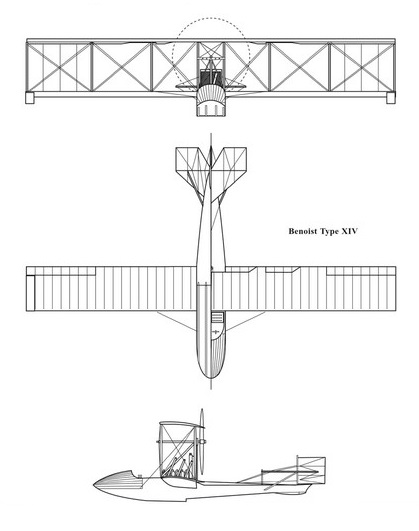
Benoist XIV Air-Boat
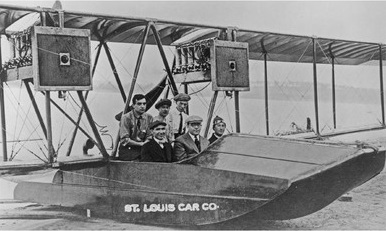
A small biplane flying-boat built in 1914 designed by Thomas W.Benoist and built by Benoist Aircraft Co.
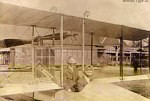
This flying boat conducted the world’s first scheduled airline flight. Designed by Thomas W. Benoist, the Benoist Type XIV first flew from the Florida city of St Petersburg to Tampa in January 1914 and was one of two aircraft belonging to the St Petersburg-Tampa Airboat Line.
In the United States, the St Petersburg-Tampa Airboat Line commenced twice-daily services across Tampa Bay, Florida, using a Benoist flying boat, charging the single passenger US$5 per journey in January 1914.
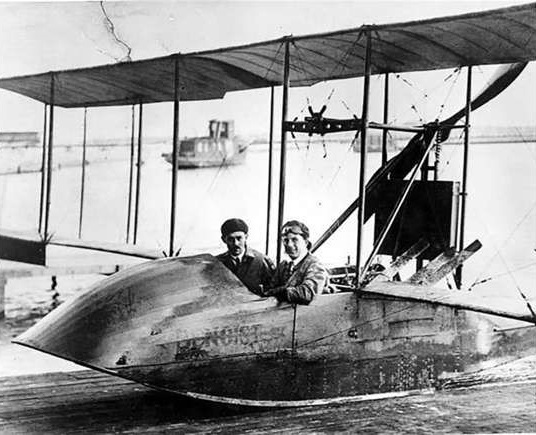
The aircraft was so small there was space for just one passenger who had to sit next to the pilot, quickly rendering the entire operation an unaffordable venture.
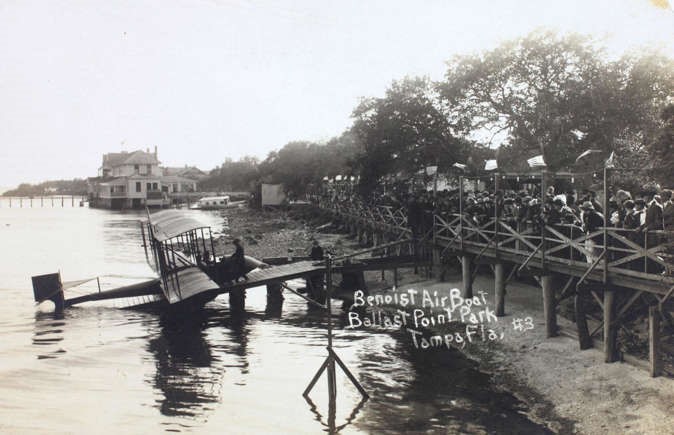
Having carried 1,205 passengers in the space of three months, the airline folded and the Benoist became the plaything of the wealthy. In 1984, a flying replica was built for the 70th anniversary of the flight, which is now on display in the St. Petersburg Museum of History.
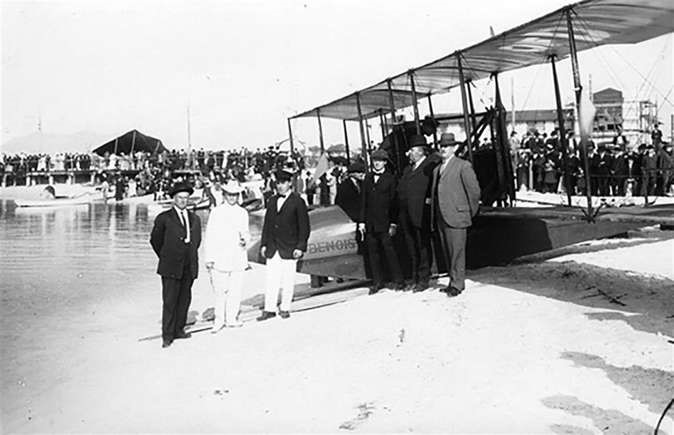
Engine: 70 hp Sturtevant or 75 hp Roberts
Propeller: pusher
Span: 45′
Length: 26′
Range: 175 miles
Benoist 1911 Headless pusher
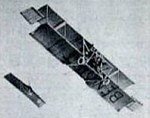
The 1911 Benoist Headless pusher biplane (land and seaplane) was designed by Thomas W. Benoist and built by Benoist Aircraft Co in St. Louis, USA. They were priced at US$ 3950- land; US$4150- with float.
Span: 30′
Length: 22’6″
Range: 180 miles
Bénegent 1910 monoplane
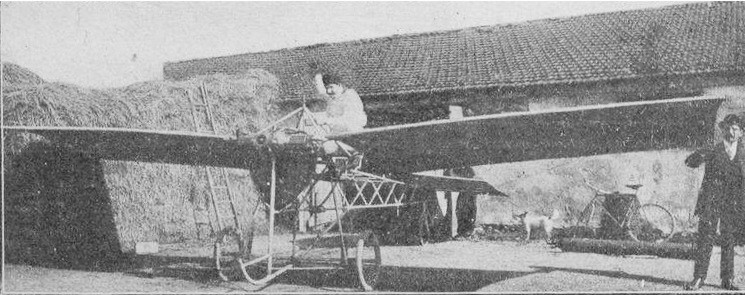
The Bénegent tractor monoplane had a triangular-section fuselage made of welded steel tubing, with the pilot seated on top. It was powered by a horizontally opposed two-cylinder water-cooled engine designed and built by the self-educated Joseph-Désiré Bénégent. The plane was tested at Courneuve outside Paris in late 1910.
Span: 26’3″
Length: 23′
Weight empty: 287 lbs
Speed: 56 mph
Benbow-Myers Montana Meteor
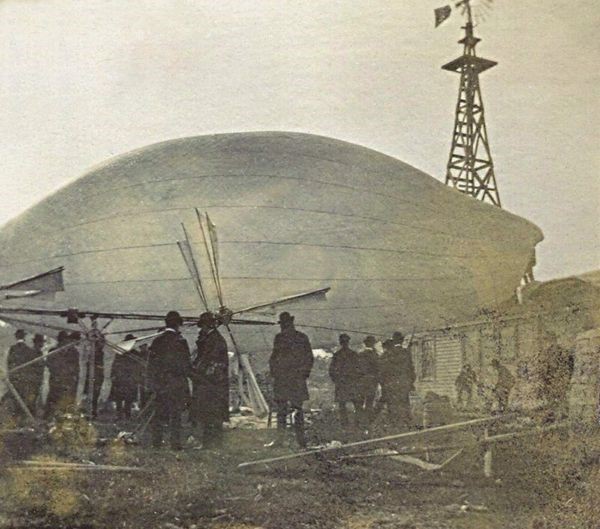
Photographed on November 6, 1903 at the Balloon Farm of “Professor” Carl E. Myers at Frankfort, New York. The “Meteor”, a patented invention of Thomas Chalkley Benbow, was built, assembled, and – during late October-early November – tried at the Balloon Farm. The airship later made brief ascensions with some success at the aeronautical concourse of the Louisiana Purchase Exposition, otherwise known as the St. Louis World’s Fair of 1904. T. C. Benbow filed his Air-ship patent on May 27, 1902, which was accepted on November 8, 1904 – US Patent 774,643.
Bellanca 1912 Monoplane
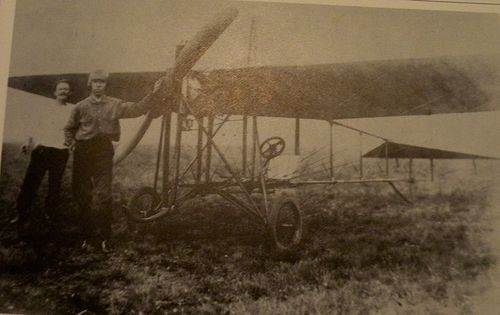
At the urging of his brother Carlo, who was already established in Brooklyn, New York, Giuseppe Bellanca immigrated to America in 1911. Before the end of the year, he began construction of his third airplane design, a parasol monoplane. The engine was a 3-cylinder Anzani of 30 hp, mounted before the wing. Built in the backyard of his brother Carlo’s grocery shop in New York, after construction was completed, he took the small craft to Mineola Field on Long Island, NY, and proceeded to teach himself to fly.
He began by taxiing. He then, taxied faster, which gave way to short hops. The hops got longer, until, on May 19, 1912, there was not enough room to land straight ahead, and Bellanca had to complete a turn in order land safely. Having successfully taught himself to fly, Bellanca then set about teaching others to fly, and from 1912 to 1916, he operated the Bellanca Flying School with two more copies he built. One of his students was a young Fiorello La Guardia, the future mayor of New York City. In return for flying lessons, La Guardia taught Bellanca how to drive a car.
Engine: Anzani 30 hp
Bellanca 1909 Pusher
Bellanca’s first aircraft design was a “pusher” aircraft, somewhat similar to the Wright Flyer. Lacking funds for such an endeavor, he joined with two partners, Enea Bossi, and Paolo Invernizzi. The union of the three produced the first flight of a totally Italian-designed and Italian-built aircraft in December of 1909.
 All Aero