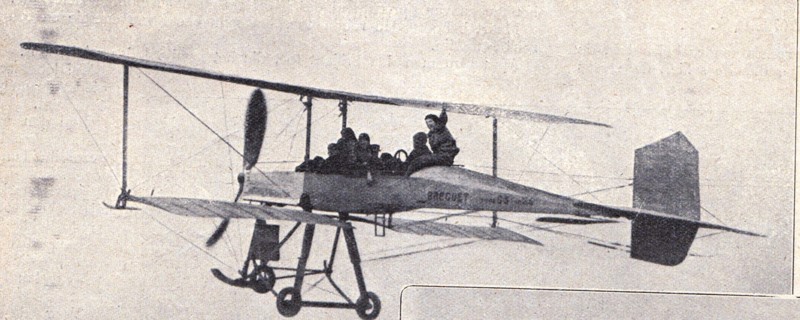
The Bréguet Type IV was developed from the Bréguet Type III which had appeared during 1910. It was a tractor biplane with a tricycle undercarriage.
The Bréguet Type IV was an aircraft built by Bréguet Aviation. It was first flown in 1911, and was the first Bréguet aircraft to be produced in quantity. It was used by the French Army and the British Royal Flying Corps. It is notable for the extensive use of metal in its construction, unusual in an aircraft of its time.
The Bréguet Type IV was produced in a number of variants, differing in their seating arrangement and in the engine fitted.
G, later G.1 powered by a 50 hp (37 kW) Gnome Omega
G.2 powered by a 70 hp (52 kW) Gnome
G.3 powered by a 100 hp (75 kW) Gnome Gnome Double Omega
G.4 powered by a 160 hp (120 kW) Gnome Gnome Double Lambda
R.1 powered by a 50 hp (37 kW) REP
R.2 powered by a 70 hp (52 kW) REP
L.1 powered by a 50 hp (37 kW) Renault 50/60 hp (the ‘L’ for Louis Renault)
L.2 powered by a 70 hp (52 kW) Renault
C.1 powered by a 40 hp (30 kW) Chenu
C.2 powered by an 80 hp (60 kW) Chenu
U.1 powered by an 80 hp (60 kW) Canton-Unné
U.2 powered by an 80 hp (60 kW) Canton-Unné
D.1 powered by a 100 hp (75 kW) Dansette
O.1 powered by an 80 hp (60 kW) Le Rhône
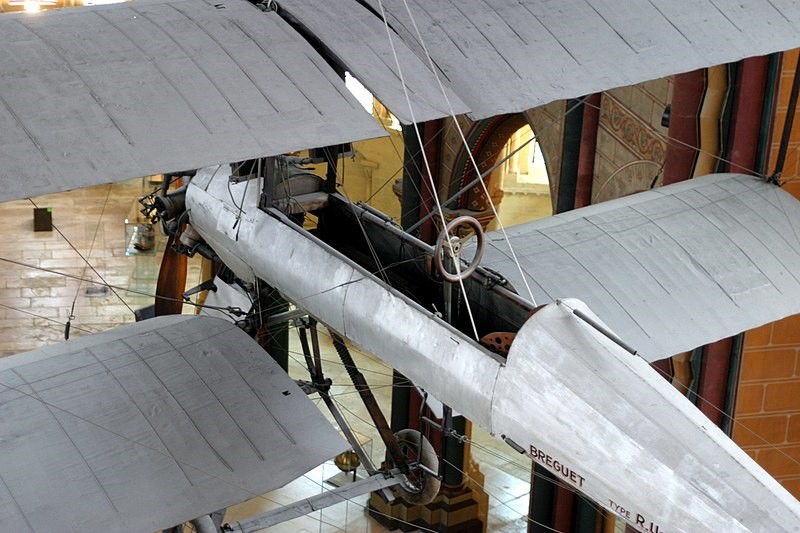
Although Bréguet’s earlier aircraft were referred to using a type number, the aircraft produced after the Type III were generally referred to using an airframe number and a letter/number combination denoting the type of engine fitted.
An example, an R.U.1, is on display at the Musée des Arts et Métiers in Paris.
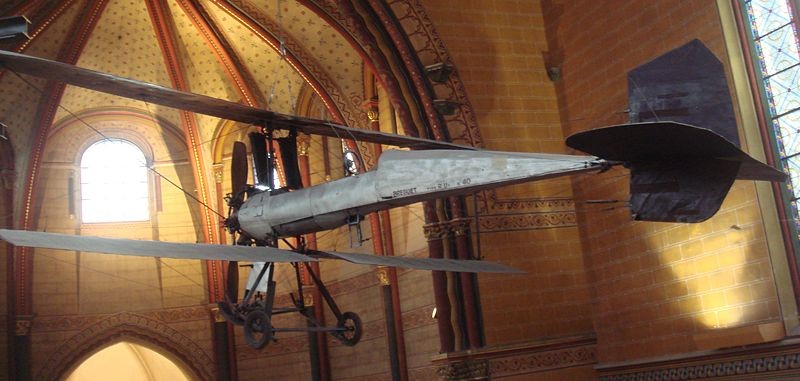
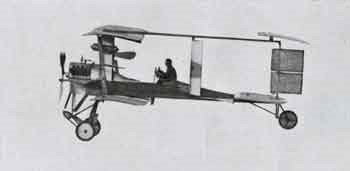
A large Breguet RU1 biplane.
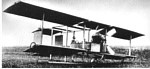
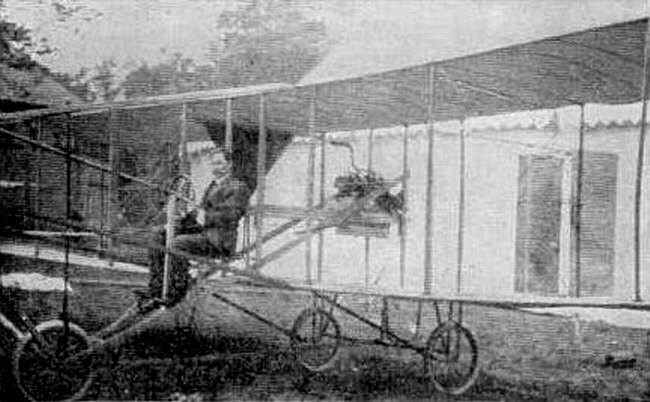
The original 1909 Breguet U.I designed and built by Louis Breguet was later improved into the U.I-bis. Originally the Breguet biplane 1, but after a crash, it was re-designed and rebuilt. Sometimes referred to as the Breguet 2.
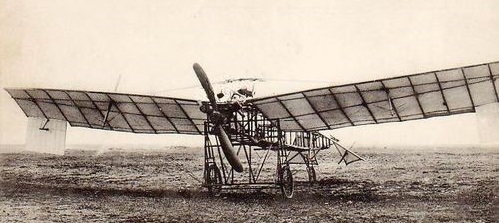
Number 40, of 1911 had a radial engine, two-blade wood propeller.
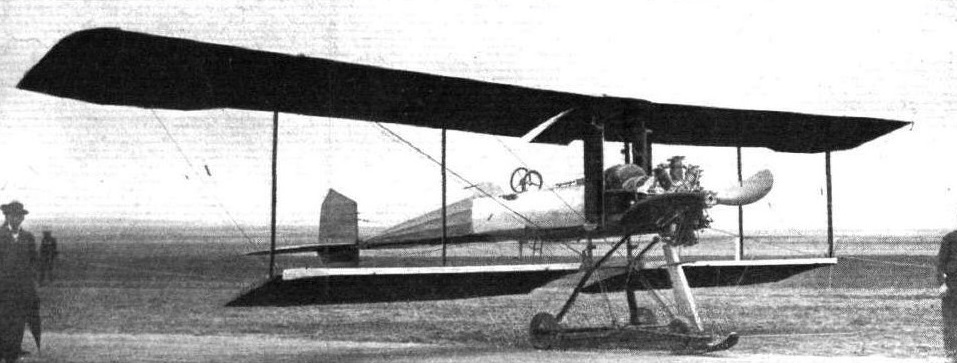
Proposed by the manufacturer to meet a military requirement, the Breguet U2 biplane was presented in various versions from 1911. The 1911 U2 version with a Salmson Canton-9 liquid cooled engine cylinder, two-bladed propeller, had the fuel tank between the two radiators placed vertically. The pilot, in back position, faced a rear-facing passenger, the other passenger, in the front, looked forward.
This machine has a steel structure fuselage, with a main landing gear with four wheels comprising two rear wheels mounted on the same axis and two front wheels detached. On early versions, lateral control was obtained by warping the wings, and later aileron control.
Initially the aircraft was equipped with a 130 hp Gnome rotary engine and was able to carry three people. Many engines were mounted on these machines, including Anzani, Renault 55 or 60 CV, and Canton-Unné of 120 hp. The propellers can be bladed or four-bladed.
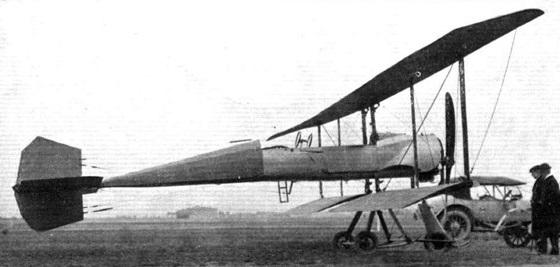
Type U.2 No 45; Another military machine showing in the same Concours. A heavier aircraft than L.1 No 3, with an interwing strut between the earlier 2, retaining the original wiring. 2 tall radiators stood up under the center-section; the nosewheel was now doubled.
Type U.2 No 102: This 3-seater 2-bay single-spar biplane appeared in 1913. The 4-wheel landing gear was supported under the rear cockpit by a tall skid, keeping the cruciform tail off the ground. The fuselage was no longer a single boom aft, but consisted of 4 steel tube longerons supporting a structure faired out with stringers.
Type U.2 No 138: Similar to No 102, this new 1914 machine was a 2-bay 2-spar biplane, with 2 separate cut-out cockpits. The wing cell design was named “semi-rigide,” and the wings still warped.
The Breguet H-U2 and U3 H seaplanes were derived from U-2 biplane. These became famous in April 1913, in Monaco, then in August of the same year in Deauville, in the hands of Henri Brégi and René sparrow.
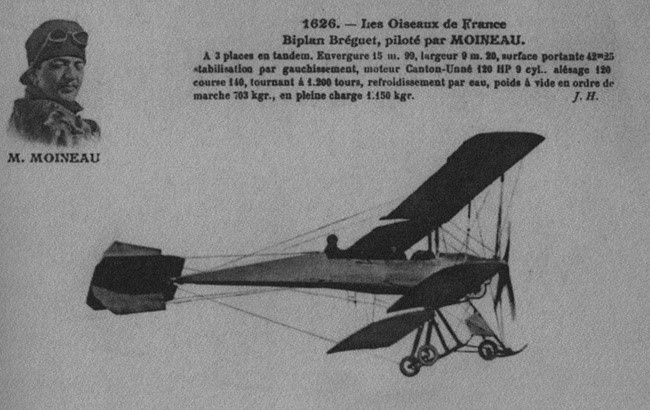
At the beginning of the First World War, the first bombing took place early in August 1914 with an attack of Frascati airship hangar near Metz by the airman Corporal Finck. Projectiles were almost exclusively former 90 or 120 caliber artillery shells. These weapons were crammed into cabins and launched by hand by the observer. Some firebombs were tried, but proved difficult to use and dangerous for the aircraft that carried them. The first months of war dart boxes (cylindrical steel rods of 12 cm long and 8 mm in diameter, tapered tip and Phillips tail to rotate to stabilize during the fall) were used. This process of low efficiency (lack of accuracy and dispersion) was abandoned in early 1915.
Used for reconnaissance missions at the beginning of the First World War these machines had rigid wings equipped with ailerons and a Salmson Canton-Unné liquid cooled 110 hp or rotary Gnome engine of 100 HP that allowed them to reach 110 km / h.
French forces employed about 30 machines.
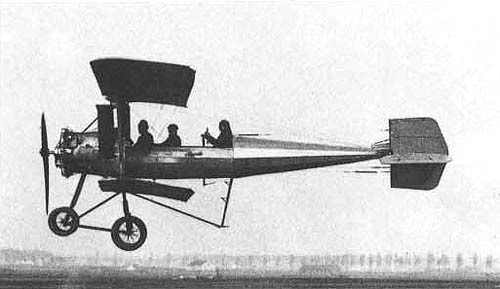
A small batch of the popular Breguet L.2 biplane, powered by an air-cooled Renault V-8, was assembled or built by Albatroswerke, Johannisthal in Germany under license and test flown by Bréguet factory pilot Debussy in March 1912.
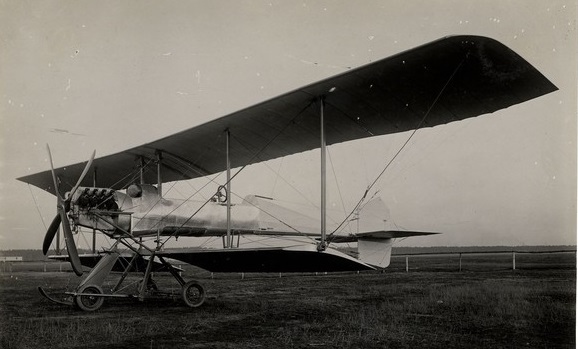
A myriad of versions of the Breguet biplane, were produced between 1910 and 1914. Breguet used a complex letter-number designation for the engine used in the machine. The L.2 uses a 70 hp Renault engine driving a four bladed propeller. In the Breguet system it was then coded as L (= Renault) 2 (70 hp). It might seem strange to code the Renault engine with the letter L, but the letter R was already taken by the R.E.P. engine. Code 2 stood here for 70 hp, where code 1 denoted 50 hp.
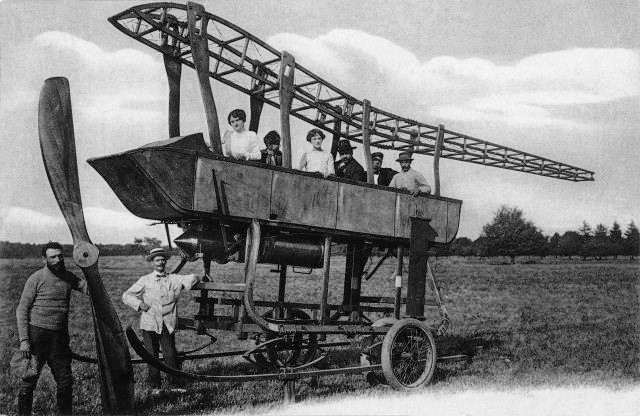
The machine had a tricycle undercarriage with a nosewheel. There were undercarriage skids to prevent the machine from nosing over. The big bulb in the front of the fuselage is the petrol tank. After the tank is a compartment holding two persons and the pilot at the back. The whole fuselage was a metal construction and in this version the big wings are two-bay.
The Breguet Biplane managed to set a world record with seven passengers.
The Royal Flying Corps (RFC) around August 1912 bought two machines of this exact type (L.2). They lasted till December 1913 but did very little flying, at most a few hours.
Just before the outbreak of the War, Breguet had started 2 new aircraft and projected a third. The A-G.4 was a 160 Gnome tractor; the A-U.3 was a 200 hp Canton-Unne tractor, and B-U.3 was a 200 hp Canton-Unne pusher (the A and B now used to distinguish similarly-powered machines only.)
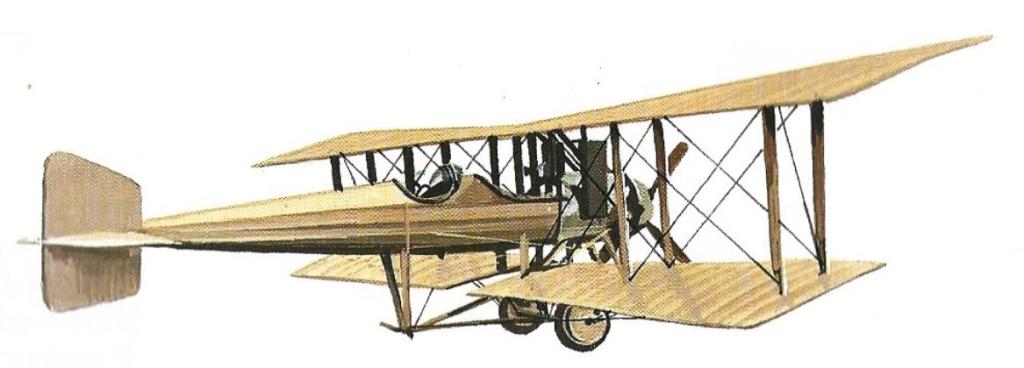
The relative success of the use of cannon in the Breguet BU.3 led the Breguet company to install it in their latest aircraft, the Breguet 5.
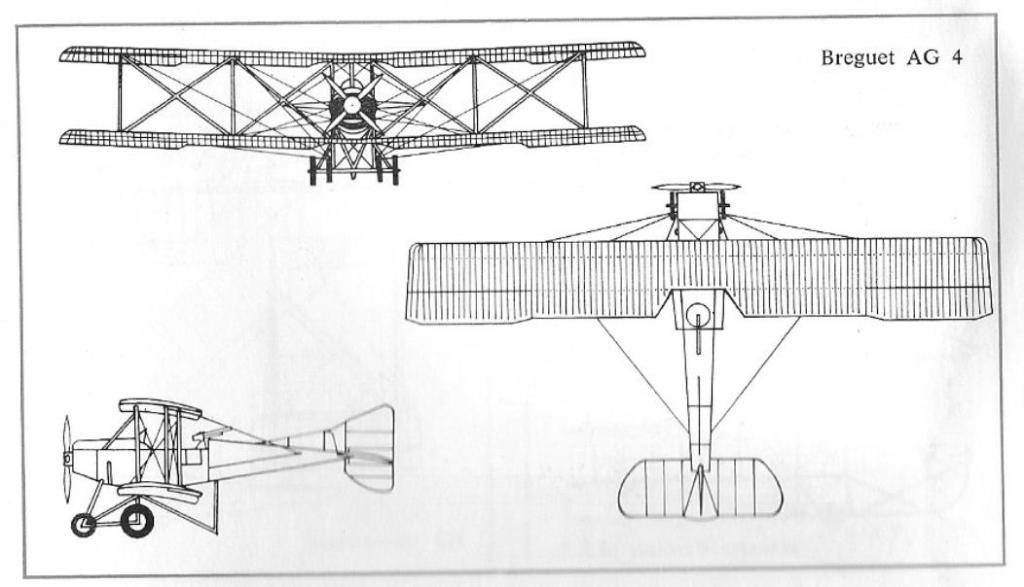
The French forces employed some type A-G4, the British employed some A-G4 for the Royal Flying Corps and 15 A-G4 for the Royal Royal Naval Air Service, the Italians some A-G4.
The A-G4 was the definitive 1913 military version with a rotary engine.
L-1 Cruiser
Propeller: 2.4 m (8 ft) diameter
Upper wingspan: 13.94 m (45 ft 9 in)
Lower wingspan: 8.74 m (28 ft 8 in)
Wing area: 30.43 m2 (327.5 sq ft)
Length: 8.5 m (28 ft)
Crew: 1
Capacity: 1
U.I
Engine: Salmson Canton-Unné, 85 hp
Span upper: 45′ / 13,70 m
Span lower: 39’4″
Length: 30′ / 9.15m
Empty weight: 1275 lb
Total weight: 1150 kg
Speed: 80 kph
U.I-bis
Span: 41′
Length: 27’11”
Weight: 1100 lb
U.2
Engine: Canton-Unné, 110 hp
Wingspan: 44 ft 4 in / 13.5 m
Length: 27 ft 10 in / 8.5 m
Height: 8 ft 4 in / 2.5 m
Empty weight: 1234 lb / 560 kg
Loaded weight; 2116 lb / 960 kg
Max speed: 68 mph / 110 kph
Armament: none
U.2
Engine: Salmson Canton-Unné, 85 hp
Wingspan: 13,70 m
Length: 9.15m
Total weight: 1150 kg
Speed: 80 kph
A-G.4
Engine: Gnome, 160 hp
Wingspan: 50 ft 4 in / 15.35 m
Length: 27 ft 1 in / 8.25 m
Height: 10 ft 10 in / 3.30 m
Weight: 2970 lb / 1350 kg
Max speed: 62 mph / 100 kph
Ceiling: 42900 ft / 1500 m
Armament: 1 x mg
Crew: 2


 All Aero