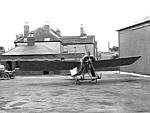
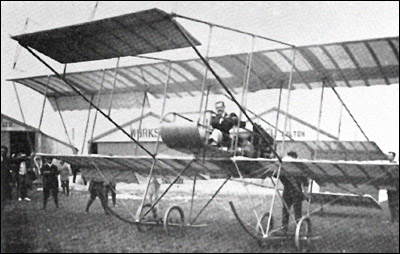
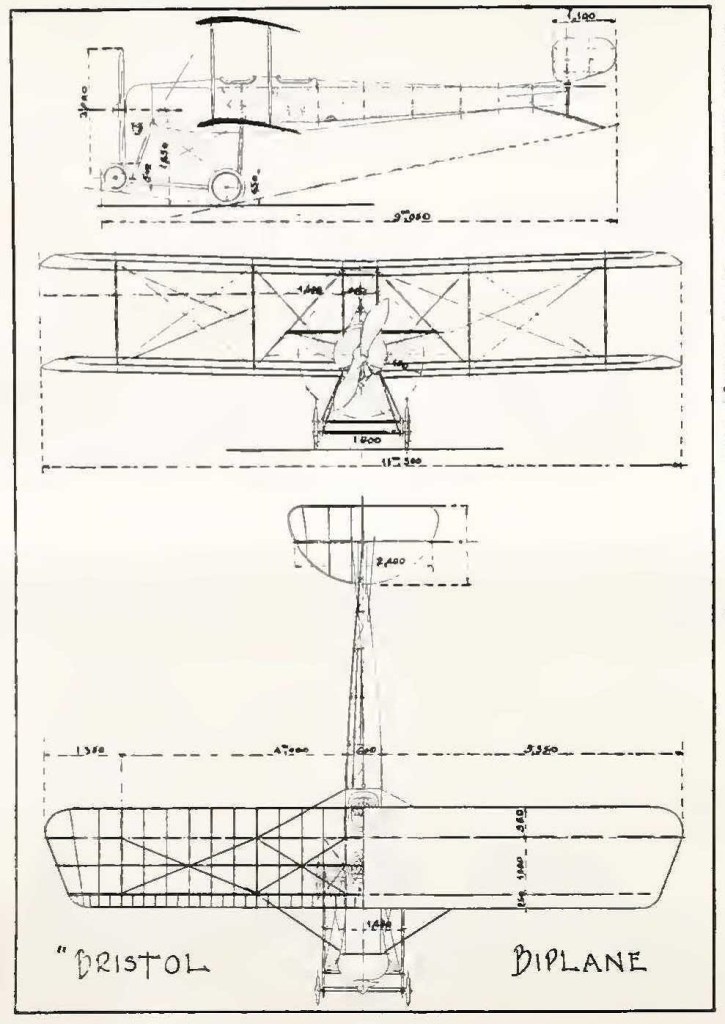
Bristol Biplane Type T Sequence number 45 was used by Marcel Tabuteau in the June 1911 Circuit de L’Europe. Alternatively the machine was sometimes known as the Challenger-Dickson Biplane.
Engine: 1 x 70hp Gnome Take-off weight: 454 kg / 1001 lb Empty weight: 363 kg / 800 lb Wingspan: 10.67 m / 35 ft 0 in Length: 7.47 m / 24 ft 6 in Wing area: 32.52 sq.m / 350.04 sq ft Max. Speed: 93 km/h / 58 mph Crew: 1
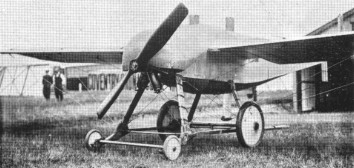
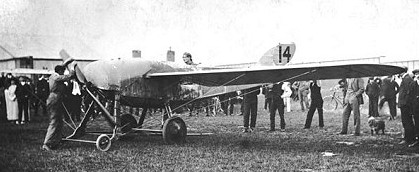
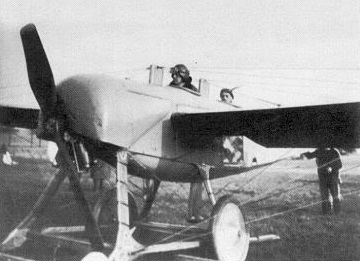
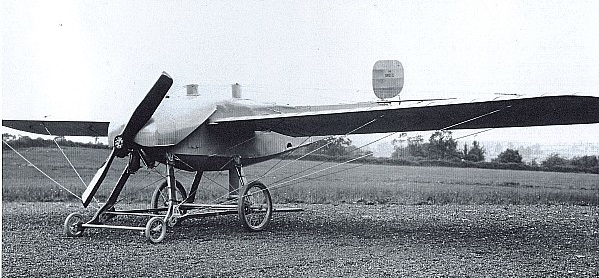
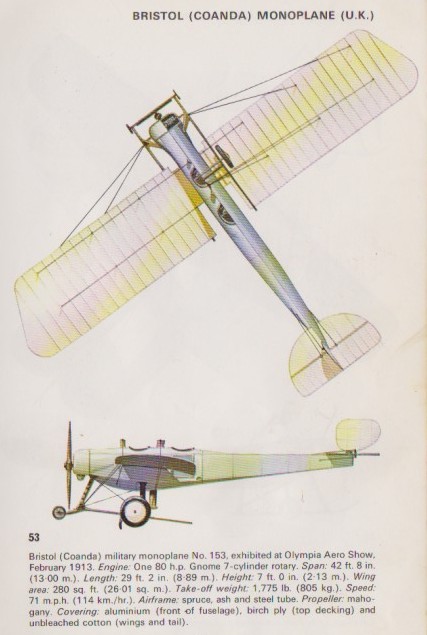
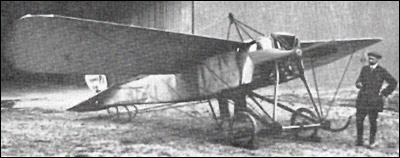
The Romanian aircraft designer Henri Coandă joined Bristol in January 1912 and his first design for Bristol was a two-seat monoplane trainer, a development of the Bristol Prier Monoplane, controlled by wing warping. The first prototype flew in March 1912.
Several versions of the plane were built from 1912 onwards with both tandem and side-by-side cockpits. Several were purchased by the War Office for use as trainers by the Royal Flying Corps. International purchases were by Italy and Romania.
Henri Coandas’ second monoplane, No. 80, was similar but had side-by-side seats with dual controls. It was built in May 1912 and remained in continuous use as a school machine at Brooklands and Larkhill until crashed by Merriam and Gipps on 26 January 1914.
A series of similar aircraft followed with both tandem and side-by-side cockpits, known as the School Monoplane and the Side by Side Monoplane. The first School and Side by Side monoplanes entered service with flying schools operated by Bristol at Larkhill and Brooklands.
The two Competition Monoplanes were bought by the War Office after the Military Aircraft Competition, being used as trainers for the RFC. However, on 10 September 1912, one of the Competition Monoplanes crashed, killing Lieutenants Edward Hotchkiss and Claude Bettington. While this was traced to one of the bracing wires becoming detached, it resulted in a five-month ban of flying of all monoplanes by the military wing of the RFC.
Despite this ban, Military Monoplanes were purchased by Romania and Italy, with a production license being granted to Caproni (although this license was later cancelled, only two being built by Caproni). One tandem and two side-by-side machines were sold to Italy, with four tandem and three side-by-side aircraft being sold to Romania.
A more powerful derivative was built for a competition to provide aircraft for the British War Office. Two aircraft, known as Competition Monoplanes were built and entered into the competition, together with two Bristol Gordon England biplanes. The aircraft were flown by Harry Busteed, Bristol’s test pilot and James Valentine.
These did well in the competition, rated equal fifth and were described at the time as “well-designed and well-constructed” though criticised as “heavy for the wing area” and lacking in power. This resulted in their being purchased by the War Office for use as trainers by the Royal Flying Corps. These two aircraft formed the basis for a revised military trainer, the Military Monoplane, which had increased wingspan.
One example of the 37 built survives in the Gianni Caproni Museum of Aeronautics, Trento, Italy, being the oldest surviving Bristol aircraft still in existence. This aircraft was a pattern aircraft sent to Caproni as a basis for their licensed production, never being flown, but was restored to a complete example for display at the museum. The Military Monoplane later formed the basis for the Bristol TB.8, several being rebuilt into TB8s.
There is a monument in Wolvercote, Oxfordshire to Lieutenants Edward Hotchkiss and Claude Bettington, killed in a Bristol Coanda crash in 1912. The crash of a Coanda Military Monoplane on 10th September, 1912, at Wolvercote, Oxford, in which Lts. C. A. Bettington and E. Hotchkiss were killed, was responsible for the decision of the War Office to ban the use of all monoplanes in the Military Wing of the R.F.C. after several fatal accidents had occurred also with other types of monoplane.
A couple of dozens were built and exported to Bulgaria, Germany, Italy and Roumania. No. 150, one of the three sent to the Deutsche Bristol Werke, at Halberstadt in April 1913.
Variants:
School Monoplane Trainer aircraft with tandem cockpits. Powered by 50 hp (40 kW) Gnome engine. Six built.
Side by Side Monoplane Trainer aircraft with side-by-side cockpit. Powered by 50 hp (40 kW) Gnome engine. Six built.
Competition Monoplane Two aircraft built for War Office Military Aeroplane Competition. Powered by 80 hp (60 kW) Gnome engine.
Daimler Monoplane Single aircraft powered by 70 hp (50 kW) Daimler engine. Overweight and unsuccessful.
Coanda School Engine: 1 x 50hp Gnome Take-off weight: 499 kg / 1100 lb Empty weight: 350 kg / 772 lb Wingspan: 12.19 m / 39 ft 12 in Length: 8.23 m / 27 ft 0 in Height: 2.13 m / 6 ft 12 in Wing area: 25.55 sq.m / 275.02 sq ft Max. speed: 105 km/h / 65 mph
Military Monoplane Improved development of Competition Monoplane with increased wingspan. Powered by 80 hp (60 kW) Gnome engine. 21 built.
Military Monoplane Engine: 1 × Gnome Rotary, 80 hp Wingspan: 37 ft 8 in (11.48 m) Length: 29 ft 3 in (8.92 m) Wing area: 450 ft² (41.8 m²) Empty weight: 970lb (441 kg) Max. takeoff weight: 1,665 lb (757 kg) Maximum speed: 56–61 knots (65–70 mph, 105–113 km/h) Endurance: 5 hours Climb to 3000 ft (915 m): 11 min Armament: Some with a 7.92mm machine gun Bombload: 12 x 10 lb (4.5 kg) light bombs Crew: two
Military Monoplane Engine: Gnôme 80ps, 79 hp Length: 27.067 ft / 8.25 m Height: 9.022 ft / 2.75 m Wingspan: 41.995 ft / 12.8 m Wing area: 279.864 sq.ft / 26.0 sq.m Max take off weight: 1323.0 lb / 600.0 kg Weight empty: 771.8 lb / 350.0 kg Max. weight carried: 551.3 lb / 250.0 kg Max. speed: 62 kts / 114 km/h Cruising speed: 54 kts / 100 km/h Wing load: 4.72 lb/sq.ft / 23.0 kg/sq.m Range: 130 nm / 240 km Crew: 2
The 1911 P1 monoplane, designed by Prier, Dickson and Coanda, was built as single- or two- seaters, and with various dimensions; Span: 30’2″, 32’9″, 34′, 35’6″ Length: 24’6″, 27′.
A reconnaissance version was exhibited at the Salon de l’Aeronautique at Paris in December 1911, where it was the only British product on show. The type was also used for early wireless experiments.
Australian Mr Busteed flying the Bristol Monoplane in 1911
Prier P-1 Engine: 1 x 50hp Gnome Take-off weight: 372 kg / 820 lb Empty weight: 291 kg / 642 lb Wingspan: 9.19 m / 30 ft 2 in Length: 7.47 m / 24 ft 6 in Height: 2.97 m / 9 ft 9 in Wing area: 15.42 sq.m / 165.98 sq ft Max. Speed: 109 km/h / 68 mph Crew: 1
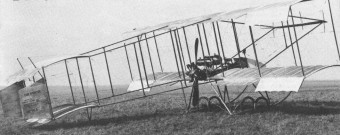
After first buying a Zodiac biplane from France, which Bristol proposed to manufacture, they settled on a copy of the Farman III which was a better design and unlike the Zodiac could be made to fly successfully.
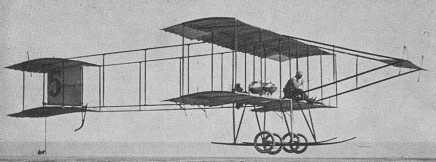
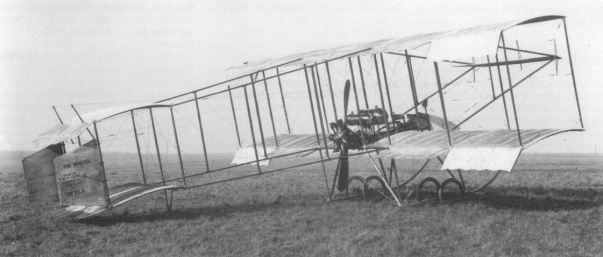
George Challenger, the company’s chief engineer at Filton, sfter seeing detailed drawings of the Farman III in Flight magazine, was pretty sure he could build a copy of the plane. A few weeks later, the first copy was constructed, using materials from the partially built Zodiac aeroplanes. The Farman copy is a tractor biplane having its upper and lower planes equal, directly superposed, and connected by 6 struts. The front struts are rigidly braced by cables; the rear ones free for warping. The fuselage is of quadrangular section. The chassis has four wheels.
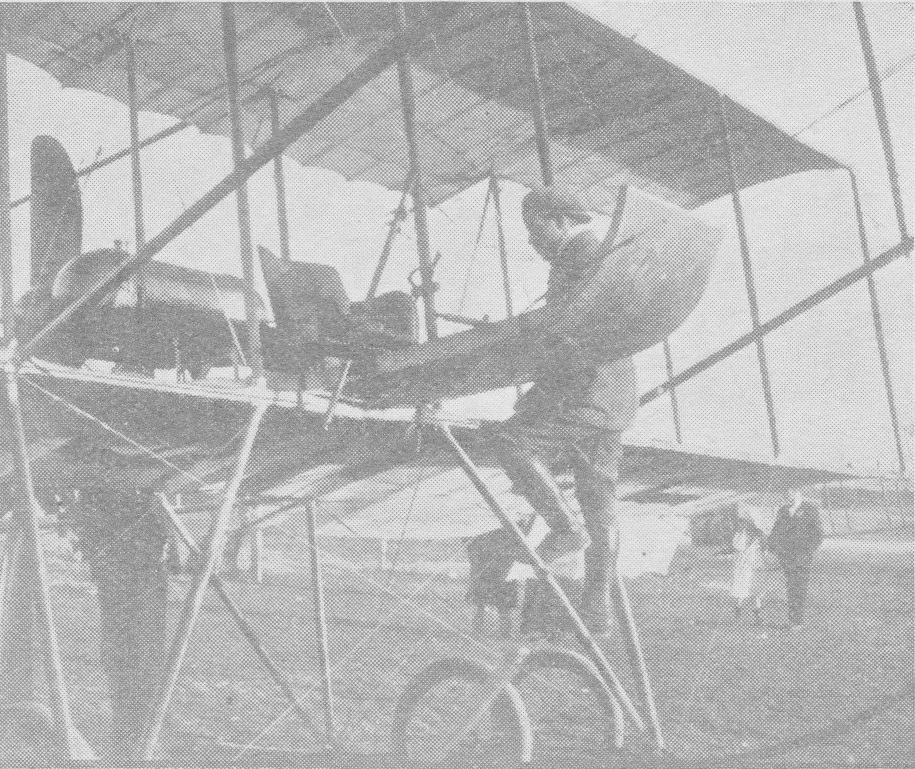
The Boxkite, as it was named, was first flown on 31 June 1910 by Maurice Edmond at the company’s flying school on Salisbury Plain with a 37kW Gregoire engine and in September 1910 made the first military flight when it was used in a reconnaissance role during Army manoeuvres on Salisbury Plain, which led to the delivery of the first military aircraft as an army co-operation machine in May 1911.
Farman, not surprisingly, sued the British and Colonial Aeroplane Company for patent infringement. However, White was able to show Farman that they had made significant alterations to Farman’s design to improve it… so Farman dropped the suit. The Bristol Boxkite was the first plane to be built in mass quantity, with four purchased by the British War Office in 1911, and others sold to Russia and Australia.
This plane was simply called the No. 7. Best guess is that the initial Zodiac was No. 1, with the five partially-constructed Zodiac‘s taking the numbering up to No. 6.
The first Boxkite, No. 7, used fitted with a Grégoire 50 horsepower motor, but even before its first test flight, they swapped it out for a same output Gnome motor.
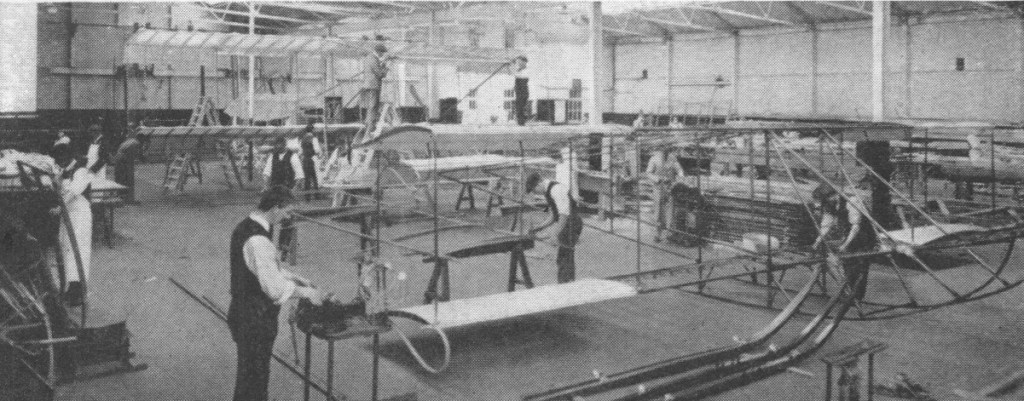
Boxkites under construction
For later trials, they put the Grégoire back in.
Boxkite No. 8 used an E.N.V. 50 horsepower motor.
Still, for almost all other aeroplanes, the company supplied the aeroplanes with the 50 horsepower Gnome rotary engine. Each motor was set just above the lower wing upon sturdy wooden beams, which, also held up the pilot and passenger seats up front.
Although early Boxkite examples built had equal upper and lower wingspans, later ones had a longer upper wing (known as the Military version).
The No. 9, flown by pilot Robert Loraine in late September of 1910, was the first aeroplane to send a radio signal down to the ground, in Great Britain. Loraine, has his diary noted by the Oxford English Dictionary, as the first written example of the word “joystick” to describe aircraft stick controls.
Within a matter of months of the first flight the company was planning for expansion and mounting its first overseas sales drive. Missions were dispatched to Australia, India and other countries with good results. In November 1910 the first export order was placed by Russia for eight Boxkites and subsequently aircraft were also sold to Sweden, Spain, France, Italy, Turkey, Romania and Bulgaria.
The Boxkite has a rich history in the evolution of military aviation in Australia and was the first official military aircraft built in Australia that was used to train Australia’s military aviators.
A Bristol Boxkite was flown in Australia for the first time on 1 March 1914, when Lieutenant Eric Harrison took one into the air at Point Cook. The airfield was then the home of the Australian Flying Corps (AFC).
M. Jullerot in November 1911
On March 14, 1911, the British War Office ordered four Bristol Boxkites for its planned Air Battalion Royal Engineers—becoming the first production contract for military aircraft for Britain’s armed forces. A second order of four was made later that year, with them all pretty much being used as trainers for would-be pilots. When WWI broke out, four more were ordered by the British War Office, the last of which was written off in February of 1915, as obsolete. These aeroplanes were used as trainers at the Bristol flying schools at Brooklands and Larkhill, both of which were responsible for giving nearly 50 percent of British pilots their license before WWI.
By the time production of the Boxkite ceased in 1914, the British and Colonial Aeroplane Company had constructed 78 Bristol Boxkite aeroplanes in total, of which 60 were the so-called Military version, one (no. 44) was a Racer version, and one, No. 69, was a an unsuccessful Voisin variant.
Bristol Boxkite‘s No. 73-78 were built at Brislington by the Tramway Company, with all those before it manufactured at the Filton facility.
Three replica aircraft built for the movie Those Magnificent Men In Their Flying Machines. One is at the Bristol City Museum and Art Gallery, another at the Shuttleworth Collection at Bedfordshire, and the third is at the Museum of Australian Army Flying in Australia.
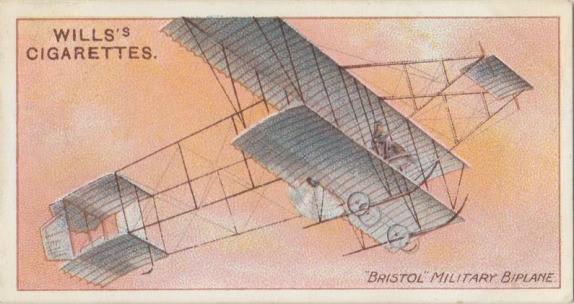
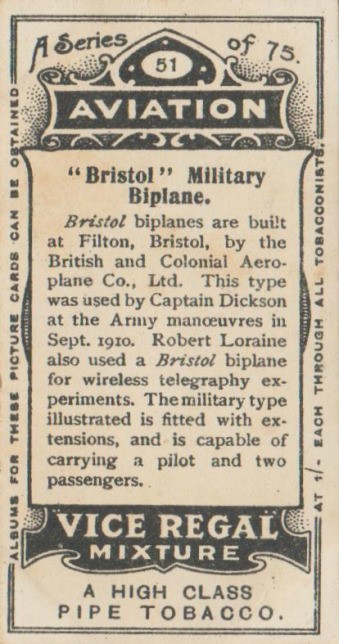
Wills’s Aviation Card #51 – “Bristol” Military Biplane.
Card #51 of 75, W.D.& H.O Wills, Aviation series 1911, Vice Regal Mixture issue
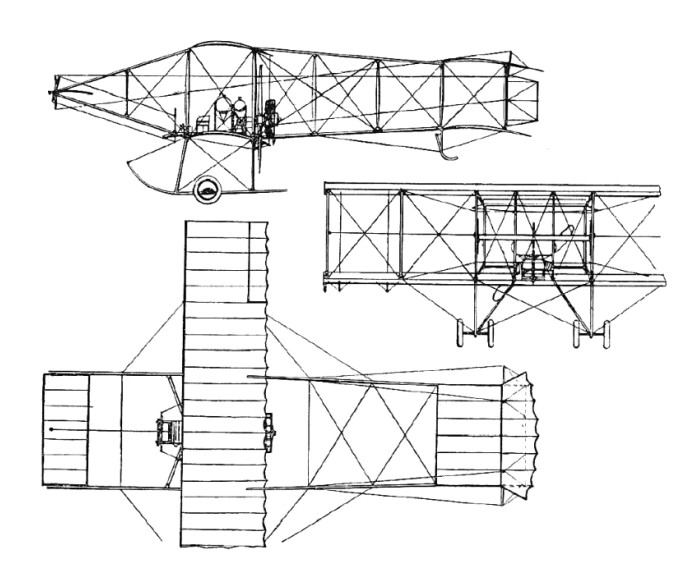
This card shows the Bristol Biplane (official name), though the Wills’s card calls it the Bristol Military Biplane, and the world seems to refer to it as the Bristol Boxkite.
Replica: RAAF Museum Bristol Boxkite Miles Bristol Boxkite
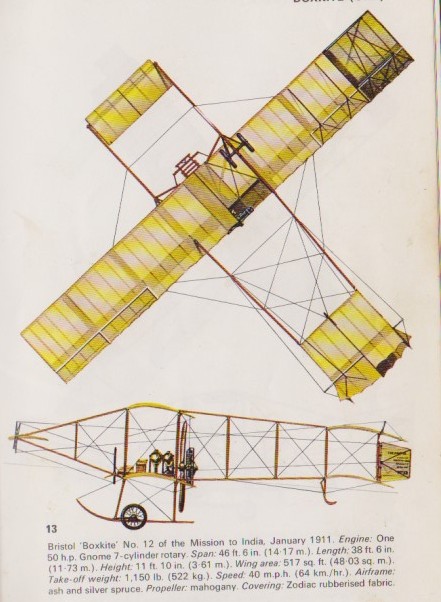
Bristol Boxkite Length: 38.386 ft / 11.7 m Height: 10.827 ft / 3.3 m Wingspan: 46.49 ft / 14.17 m Max take off weight: 1151.0 lb / 522.0 kg Empty weight: 363 kg / 800 lb Max. speed: 35 kts / 65 km/h Engine: Gnôme, 50 hp Crew: 2
Bristol Boxkite Engine: Gnôme, 80 hp Wingspan: 11.3 m Wing area: 40 sq. m Max. speed: 80 km/h
Boxkite Standard Engine: Gnôme, 50 hp Wingspan: 10.52 m / 34 ft 6 in Length: 11.73 m / 38 ft 6 in Height: 11 ft 10 in / 3.61 m Empty weight: 363 kg / 800 lb Wing area: 42.46 sq.m / 457.04 sq ft Max. speed: 64 km/h / 40 mph
Bristol Boxkite Military version Engine: 1 × Gnome Omega, 50 horsepower (37 kW) Wingspan: 14.17 meters (46 feet 6 inches) Wing area: 48.03 square meters (517.0 square feet) Length: 11.73 meters (38 feet 6 inches) Height: 3.61 meters (11 feet 0 inches) Empty weight: 408 kilograms (900 pounds) Maximum takeoff weight: 522 kilograms (1150 pounds) Maximum speed: 64 kilometers per hour (40 miles per hour) Wing loading: 10.9 kilograms per square meters (2.22 pounds per square foot) Power/mass: 70.9 watts per kilogram (0.043 horsepower per pound) Crew: 2
In 1910 Sir George White, the wealthy owner of the Bristol Tramways Company, formed the Bristol and Colonial Aeroplane Company Ltd. With head offices in Bristol and a factory at nearby Filton, the aircraft produced by the company were generally known as ‘Bristols’.
Founded at Bristol, Somerset, in February 1910 as British & Colonial Aeroplane Company Ltd, a factory was set up in two sheds in the village of Filton in south Gloucestershire, just north of Bristol. Sir George White was a wealthy Bristol businessman and his company was registered on 19 February 1910 with a capital of £25,000. First began construction of a number of biplanes under license from Societe Zodiac, but these were not completed because the sample aircraft bought from France could not be induced to take to the air.
First aircraft produced were Bristol biplanes, usually known as the Boxkite, which initially were little more than copies of the Henry Farman biplane. The first of these, the Boxkite, was based on a Henri Farman design. The Boxkite made its debut at the Third International Aero Exhibition in 1911 and went on to become the first commercially produced aircraft in Britain with two per week rolling out of the factory. It was sold to the British and Russian military as well as being exported throughout the British Empire.
Flying schools established at Larkhill, on Salisbury Plain, and at Brooklands, Surrey, 1911. February 1911 Deutsche Bristol-Werke established at Halberstadt, Germany, to operate a flying school and build Bristol airplanes; arrangement canceled June 23,1914.
First military aircraft were monoplanes designed by Henri Coanda; No. 105 shared third place with a Deperdussin in the Military Aeroplane Competition of 1912. Bristol Scout, or “Baby Biplane”, evolved by Frank Barnwell 1914. The two-seat Bristol Fighter entered service in 1917 and became regarded as the best general-purpose combat aircraft of the First World War. During the final year of the war the company produced 2,000 aeroplanes from its own factories. By the Armistice the payroll had risen from 200 in August 1914 to 3,000 and the original tram sheds were now part of a factory with eight acres of floor space. Following the acquisition of the Cosmos Engineering Company in 1920, the Bristol Company was also a major builder of aero engines. Renamed the Bristol Aeroplane Company on 9 February 1920. Problems of readjustment and survival were intensified by the general world wide economic depression that succeeded the brief postwar boom. Diversification was one of the expedients adopted to keep the nucleus of the skilled workfiorce in being at Filton. Aircraft manufacture was augmented by produc¬tion of bus and coach bodies and later of motor car bodies. Between the wars Bristol Bulldog biplanes had equipped nine RAF Squadrons by 1932 and were most widely used fighter until 1936. In 1935, Bristol’s directors, realising that the company’s capital resources were inadequate, resolved on 15 June to re organise the firm as a public limited liability company with a share capital of £1.2million. Bristol Type 138A of 1936 captured world altitude record in September, 1936, then regained it from Italy in June 1937 with an altitude of 16,440m. Bristol Type 142, built as executive aircraft for Lord Rothermere, became the military Blenheim, an important light bomber in the early Second World War period. Beaufighter, first flown July 1939, became RAF’s first nightfighter, subsequently an important antishipping aircraft armed with rockets, torpedoes, and bombs. Designed and built prototype of eight-engined 100- passenger Brabazon I, first flew September 4, 1949; scrapped 1953 for financial/political/technical reasons. Type 170 Freighter first flown December 2, 1945 and 213 built subsequently. Turboprop powered Britannia first flew August 16, 1952, made the first non-stop airliner flight London, Vancouver (8,208km), June 29, 1957, and first North Atlantic passenger service to be flown by a turbine-powered airliner on December 19 of the same year. A helicopter department was set up in 1945 as part of the aircraft division at Filton. Austrian born Raoul Hafner headed a research and development team which produced the Type 171 Sycamore. Subsequently entering service with RAF as its first British-designed helicopter in 1952.
1955
In January 1956 the Bristol Aeroplane Company had reorganised into three wholly owned companies; Bristol Aircraft Ltd, Bristol Aero-Engines Ltd, and Bristol Cars Ltd.
September 1957
Four years later Bristol Aircraft Ltd joined with Vickers Ltd and English Electric to become the British Aircraft Corporation.
In 1960 Westland Aircraft took over the Bristol Helicopter Department.
In 1960 Bristol Aircraft Ltd joined with Vickers Ltd and English Electric to become the British Aircraft Corporation.
Bristol Aero Engines (formerly Bristol Engine Company) merged with Armstrong Siddeley Motors in 1959 to form Bristol Siddeley Engines Limited (BSEL) which in turn was taken over by Rolls-Royce in 1966.
Research and development ot the tandem-rotor helicopters resulted in Type 192 Belvedere which entered service with the RAF, in 1961.
On 28 December 1963 the separate companies merged their identities and Bristol Aircraft Ltd became the Filton Division of BAC. Four years later the Bristol title was lost from the engine side when Bristol Siddeley Engines Ltd became the Bristol Engine Division of Rolls Royce Ltd. The nationalisation of the aircraft industry in 1977 resulted in the formation of British Aerospace (BAe) and the works at Filton became part of the Weybridge Bristol Division of BAe Aircraft Group while the BAC Guided Weapons Division at Fillon became part of the Stevenage Bristol Divi¬sion of the BAe Dynamics Group.
Bristol Aero Engines (formerly Bristol Engine Company) merged with Armstrong Siddeley Motors in 1959 to form Bristol Siddeley Engines Limited (BSEL) which in turn was taken over by Rolls-Royce in 1966.
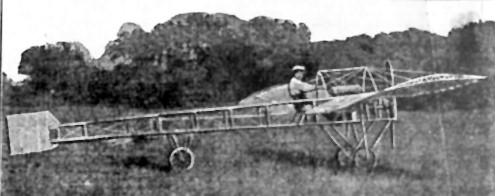
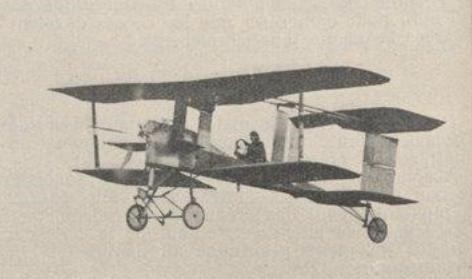
This machine was built by two brothers, Hino and Kurt Brendel, of German nationality but living in Topeka, Kansas. It made three successful, if short, flights but crashed on its fourth because of high wind. It was repaired and put on display but it’s uncertain if it flew again. In any event, the builders did not consider it very successful and built a second machine, basing it more closely on the Blériot type. One of the brothers used it in exhibition work, not only in Kansas but also in Canada.
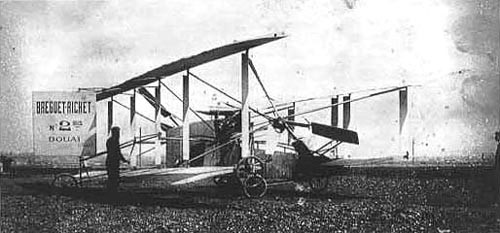
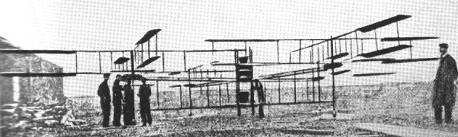
In 1908 the Breguet-Richet collaboration produced a No.2 Gyroplane, powered by a 55hp Renault engine and having two forward-tilting 2-blade rotors with a diameter of 7.85m and, in addition, fixed wings giving an extra 50sq.m of lifting surface.
On July 22, 1908, it rose vertically to the height of 4.5m and flew for a short period of time, apparently under control, but the machine was completely wrecked upon landing, but was rebuilt and flew again next spring.
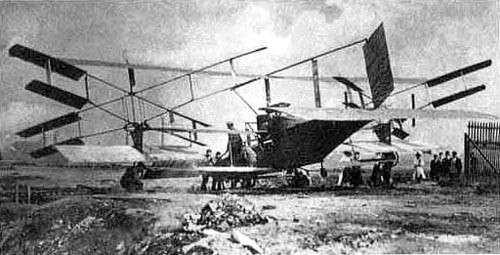
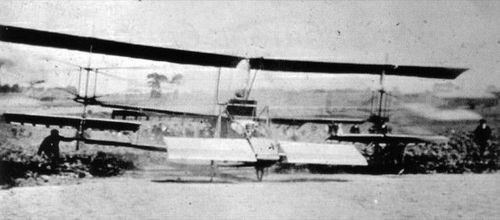
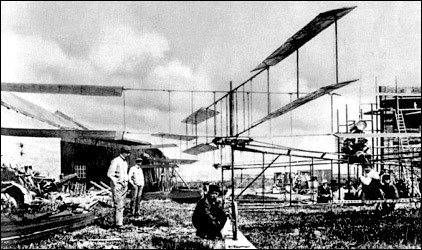
The first manned helicopter to make a successful ascent, though only with ground assistance, took to the air at Douai in France on 29 September 1907. It was built by brothers Louis and Jacques Breguet in association with Professor Charles Richet. They called it Gyroplane. Authorities differ over the date of the Breguet machine’s first flight at Douai, 24 August and 19 September 1907 being quoted with equal assurance; on this occasion the aircraft rose to about 0.60m. Take-off to some 1.50m was achieved during a test on 29 September, and similar heights were reached in several subsequent tests, but the Breguet-Richet aircraft was neither controllable nor steerable in a horizontal plane.
The machine consisted of a rectangular central chassis of steel tubing supporting the powerplant and the pilot; from each corner of this chassis there radiated an arm, also of steel tube construction, at the extremity of which was mounted a fabric-covered 4-blade biplane rotor, making a total of 32 small lifting surfaces driven by a 40 hp Antoinette engine. One pair of diagonally opposed rotors rotated in a clockwise direction, the other pair moving anti-clockwise.
Despite its weight, with pilot, of 577 kg (1273 lb), the Gyroplane rose 60 cm (2 ft) in the air, sup¬ported by four poles held by ground handlers, who dared not let go because the helicopter had no form of control save for an engine throttle. The pilot, M.Volumard, was reputedly chosen at least partly because of his small stature – he weighed only 68kg. The Gyroplane was eventually damaged after crashing into a beetroot field, and Louis Breguet turned to fixed wing craft, returning to helicopters only some 30 years later.
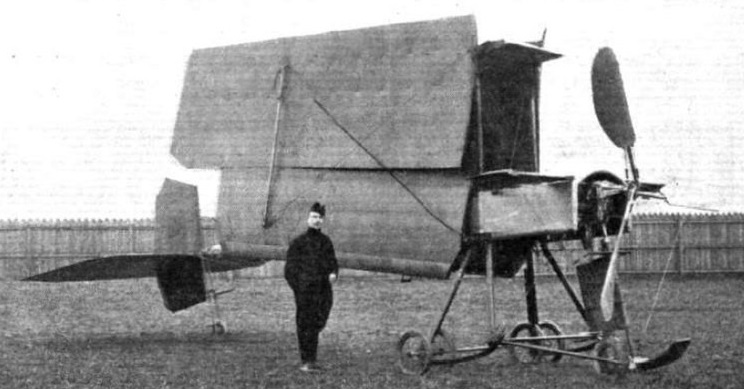
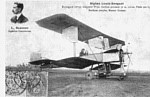
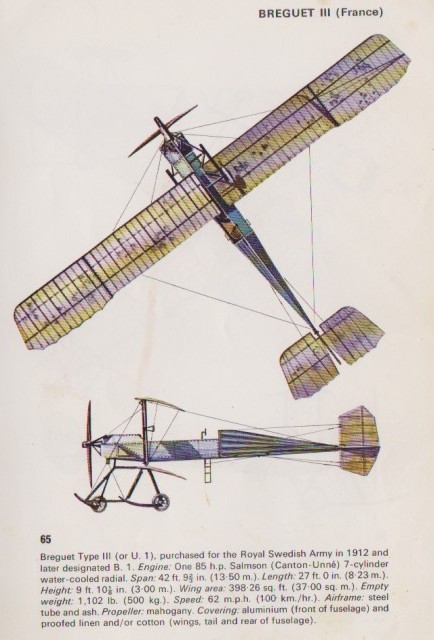
The Bréguet Type III, which first flew in April 1910, was a development of the Type II which Bréguet had built and flown earlier that year. Eliminating the upper booms that had helped to carry the tail surfaces of the earlier aircraft, it had what is now seen as the conventional biplane configuration, with a fuselage containing a front-mounted engine driving a tractor propeller and control and stabilising surfaces mounted at the rear. At the time this was an unusual layout: the Goupy II which had first flown the previous year was the first aircraft of this configuration to be successful. Like Bréguet’s earlier aircraft, extensive use of metal was made in its construction: the structure of the rectangular-section fuselage, wing spars and interplane struts were steel, and the ribs were aluminium pressings.
The lower wings were mounted on a short spar mounted below the lower longerons and the upper wing was supported by only four struts, two inboard supporting the centre section of the wing, and one on either side connecting the mainspars of the wings near the wingtips. The mainspars of the wing panels were connected to the centre-section spar by knuckle joints, so that the wings could easily be folded back for road or rail transport.
Four small vertical stabilisers were mounted below the upper wing, and a pair of supplementary control surfaces were mounted below the fuselage. These were intended for lateral control, and were operated in conjunction with wing-warping The rear-mounted empennage initially consisted of a fixed fin and rudder and a rectangular elevator, with no fixed horizontal surface, but this was soon replaced by a cruciform assembly combining rudder and elevator, connected to the fuselage by a universal joint. This unusual arrangement became a characteristic of the aircraft manufactured by Bréguet before World War I.
The prototype was powered by a 50 hp (37 kW) Gnome Omega driving a three-bladed aluminium propeller through a 2:1 reduction gear. Later aircraft were produced with other powerplants.
A Type III gained fame in August 1910 by being the first aircraft to lift six people.
Specifications (as shown at 1910 Paris Aero Salon) Powerplant: 1 × R.E.P. 1910 60hp 5-cyl. 2-row semi-radial, 45 kW (60 hp) Upper wingspan: 13.2 m (43 ft 4 in) Lower wingspan: 9.9 m (32 ft 6 in) Wing area: 38 m2 (410 sq ft) Length: 9.2 m (30 ft 2 in) Empty weight: 475 kg (1,047 lb)
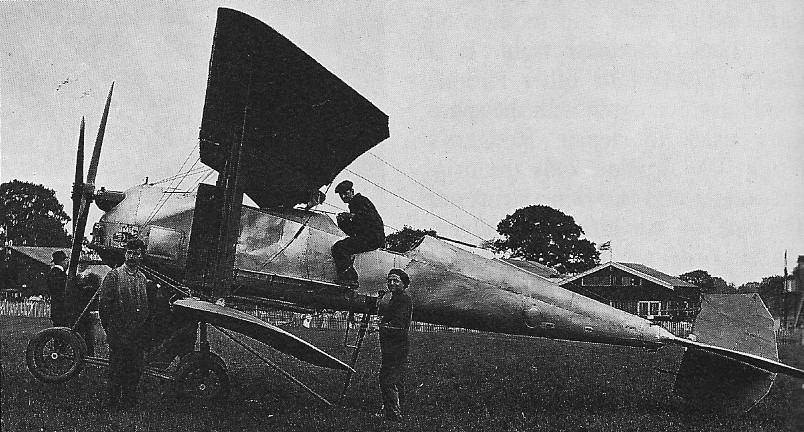
Like Bréguet’s previous design, the Bréguet Type I, the structure was principally of metal, although less highly stressed parts such as the tail surfaces used wood. It had a triangular section fuselage of wire-braced steel tube with the 41 kW (55 hp) air-cooled Renault engine at the front: this drove a three-bladed propeller which was connected to the engine’s camshaft and so revolved at half the speed of the engine. The wings had pressed aluminium ribs threaded onto a main spar of 65 mm (2.56 in) diameter steel tube. These were connected by a single interplane strut on either side. Tail surfaces consisted of a pair of horizontal surfaces, the lower carried on the rear of the fuselage and the upper by a pair of booms running back from the centre section of the upper wing. The upper surface was movable to achieve pitch control. A rectangular balanced rudder was mounted between the two horizontal surfaces. In addition, a pair of small horizontal stabilising surfaces were mounted at the front of the aircraft either side of the engine. The pilot’s seat was positioned halfway between the wings and the tail surfaces: a passenger seat was fitted behind the engine. The main undercarriage employed oleo-pneumatic suspension, and there was a single steerable tailwheel.
It was intended that lateral stability would be achieved by automatic differential movement of the two halves of the upper wing, this feature being the subject of a patent filed by Bréguet. In a turn, the greater speed of the outer wing would cause the angle of attack to be reduced, so eliminating the increase in lift that the greater speed would otherwise have produced. Lateral control was effected by a pair of mid-gap ailerons mounted on the interplane struts: these were evidently not effective and Bréguet intended to use another method for lateral control in his next design.
Its first recorded flight was made on 5 January 1910, when Louis Breguest made three circuits of the flying field at La Brayelle near Douai. and on 16 January 1910 it made a flight of 1.5 km (0.93 mi) However, by April 1910 Bréguet was flying his next design, the Type III.
Powerplant: 1 × Renault 50/60 hp V-8, 41 kW (55 hp) Propeller: 3-bladed, 2.50 m (8 ft 2 in) diameter Upper wingspan: 12.0 m (39 ft 4 in) Wing area: 40 m2 (430 sq ft) Empty weight: 580 kg (1,279 lb) Gross weight: 800 kg (1,764 lb) Maximum speed: 70 km/h (43 mph, 38 kn) Seats: 2







 All Aero