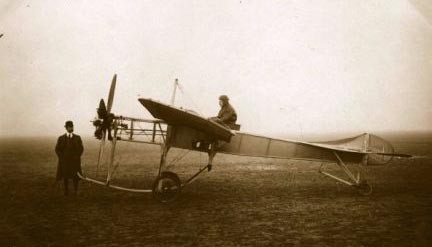
The 1910 Carid monoplane was designed and built by Carid in France.
The 1910 Carid monoplane was designed and built by Carid in France.
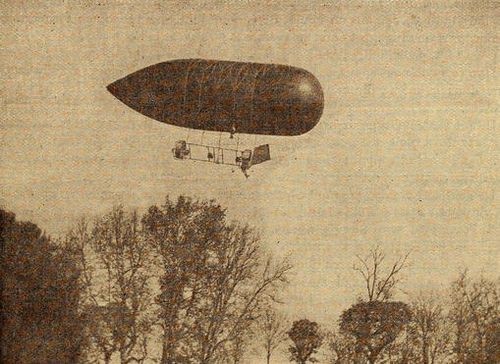
Arguably the first navigable airship system invented in Italy. Designed by Comte Jules Carelli and realized by Evaristo Vialardi. Tethered ascension using spring-wound motors were made in November 1899; possibly followed by later trials.
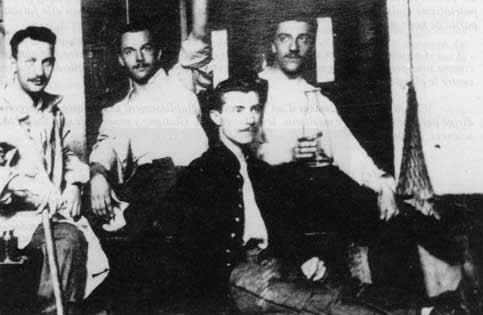
Albert Irénée Caquot, born on 1st July 1881 in Vouziers (Ardennes) and died on November 28, 1976 in Paris at 95, was considered “the greatest of living French engineers” for half a century.
Albert Caquot Article
Large landowners, his parents, Paul Auguste Ondrine Caquot and Marie Irma Cousinard 2 , wife Caquot, “run a large family farm, adjoining a mill on the banks of the Aisne”, in Vouziers in the Ardennes. His father opened this farm to modernism, installing electricity and telephones in his home in 1890.
Just one year after leaving the high school Reims, eighteen years, Albert Caquot received 29 e the entrance exam to the Ecole Polytechnique (class of 1899) which he graduated ranked 15th, and enters the body of bridges and roads.
From 1905 to 1912, he was a bridge and road engineer in Aube, in Troyes, and stood out for the important sanitation measures he developed. These saved many human lives and protected the city from the great flooding of the Seine in 1910.
In 1912, he joined the reinforced concrete design office of Armand Consideration as a partner, where he gave free rein to his talent as a designer of civil engineering structures. In 1914, after the death of Armand Considere, the office became “Pelnard-Considerere & Caquot”. It was in this same context that he worked from 1919 to 1928, from 1934 to 1938, then from 1940.
During his life, Albert Caquot taught for a long time the resistance of materials at the Ecole Nationale Superieure des Mines in Paris, the Ecole Nationale des Bridges et Chaussées and the Ecole Nationale Supérieure de l’Aéronautique.
During his career he produced more than three hundred civil engineering works of all kinds, several of which were then world records.
Two achievements contribute to its international reputation:
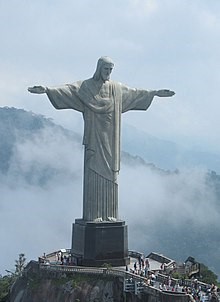
The internal reinforced concrete structure of the large statue of Christ the Redeemer on Mount Corcovado (1931, height 30 m and weight 1,145 t), in Rio de Janeiro, the work of French sculptor Paul Landowski and, for the head of Christ, by Romanian sculptor Gheorghe Leonida.
The George V Bridge in Glasgow (Scotland) on the Clyde for which Scottish engineers are asking for help.
He devoted his life to aeronautics and civil engineering in alternating periods at the pace imposed by the First and Second World Wars. Albert Caquot’s contributions to aeronautics are invaluable, from the development of the propeller engine and the opening up of the Air Ministry to technical innovations, to the founding of the first institutes of fluid mechanics. Marcel Dassault, who was commissioned by Albert Caquot to build a prototype of the postal three-engine program, wrote of him: “He is one of the best technicians that aviation has ever known. He was a visionary who, in all areas, looked to the future. He was ahead of everyone.”
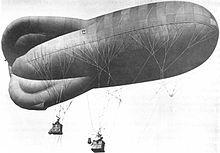
From 1901 he carried out his military service in a battalion of balloonists. At the start of the Great War, he found a battalion of balloonists from Toul as captain. For a wind speed greater than 22 km/h, it highlights the great instability of the spherical balloon with which the units are equipped. In 1915, he produced a tapered tethered balloon model equipped with rear stabilizers on the Drachen principle developed by the German August von Parseval, allowing observation by winds of 90 km/h. The Chalais-Meudon aerostatic workshop then began to manufacture “Caquot balloons” for all the Allied armies. The winch with constant braking torque that it creates allows it to adapt its balloons to the Allied fleets (fire control and detection of submarines) and to make them withstand winds of up to 125 km/h. Also called a “sausage”, this captive balloon gives France and its Allies a major strategic advantage. In January 1918, Clemenceau appointed him technical director of military aviation.
In 1919, Albert Caquot was behind the creation of the French Air Museum, today the Air and Space Museum at Le Bourget. It is the oldest aeronautical museum in the world.
In 1935, he built a double canopy hangar 120 m long, 60 m wide by 9 m free height and its annexes for around 10,000 m2 at Fréjus on the naval air base.
In 1928, he became the technical director general of the newly created Air Ministry. It practices a policy of research, prototypes and mass production which gives France back the industry it deserves.
In 1934 he preferred to retire and devote himself again to civil engineering. In 1938, under the threat of war, Albert Caquot was recalled to assume the joint presidency of all the national aeronautical companies. In July 1939, he also took over the role of technical director general of the Air Ministry but, although he had spectacularly turned around the production of aircraft, the obstacles he encountered on the part of the staff and the management of the control led him to submit his resignation in 1940.
Numerous honorary distinctions from all countries that have been awarded to him, including the dignity of Grand Cross of the Legion of Honour in 1951.
He chaired many French scientific organizations for more than twenty years, such as the National Council of French Engineers and the Société d’Enouragement pour l’Industrie Nationale. He was also a director of Electricité de France for more than ten years.
He served 41 years in the Academy of Sciences and was its president in 1952.
In 1961, at the age of eighty, Albert Caquot voluntarily resigned from all the presidencies that he had always provided on a voluntary basis.
His name was given to an amphitheatre of the School of Bridges and Roads located in no 28 of the rue des Saints-Peres in Paris May 25, 1977. The new occupant of the premises, the Institut d’études politiques de Paris, renamed it in honour of Simone Veil on March 8, 2018.
The July 2, 2001, a stamp of CHF 4.50 and 0.69 € is issued for the 120th anniversary of the birth and the 25th anniversary of the death of Albert Caquot. Designed and engraved by Claude Andréotto, the stamp is printed in intaglio on sheets of forty and is distributed in 4.37 million copies.
Since 1989, the Albert-Caquot Prize has been awarded each year by the French Association of Civil Engineering (AFGC) to an engineer.
The 7th promotion of the National School of Engineers Military Infrastructure (ENSIM) was christened Albert Caquot to honour his contribution to the military works.
Distinctions:
Distinguished Service Order
Officer of the Order of the Crown of Italy
Commander of the Order of Leopold
Grand Officer of the Order of the Crown of Romania
Order of the White Eagle
Order of the Rising Sun
Order of Saint Michael and Saint -Georges
Croix de guerre 1914-1918
Distinguished Service Medal
Honorary fellow American Institute of Aeronautics and Astronautics (1937)
Grand Cross of the Legion of Honour (1951)
Wilhelm Exner Medal (1962)
The 1911 Caproni Ca-5 biplane was designed and built by Gianni Caproni in Italy.
Span: 41′
Length: 32’4″
Weight empty: 1100 lbs
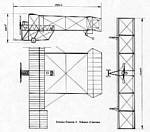
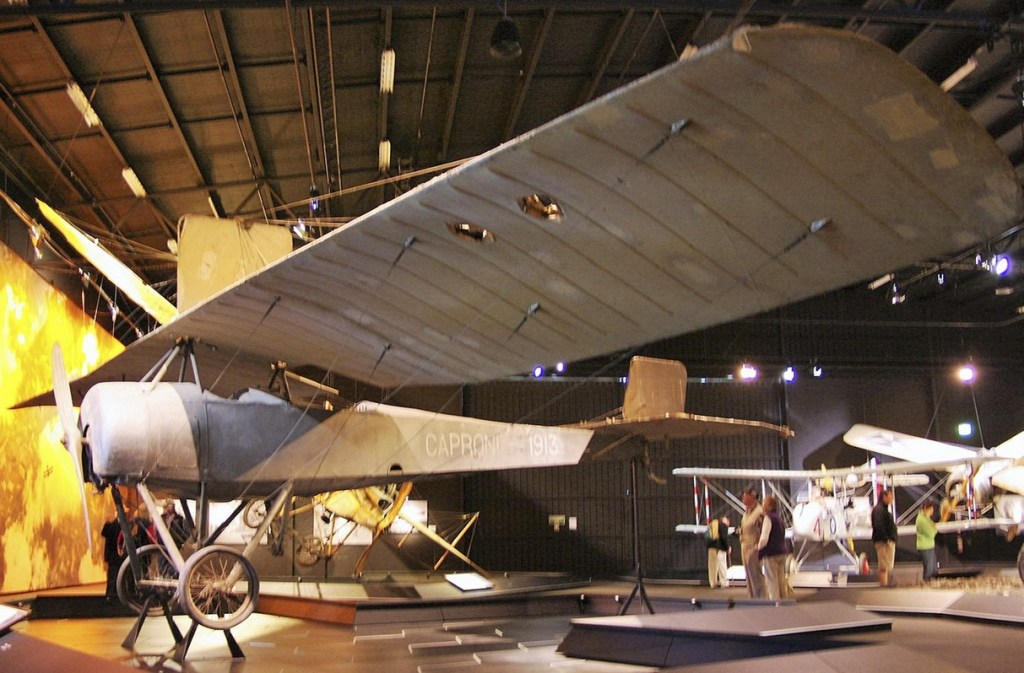
Development of the Caproni Ca.20 led to the Ca.22, a two-seat reconnaissance fighter of parasol wing configuration similar in appearance to the earlier type with a larger propeller spinner and a Le Rhone rotary engine, being either the 60 kw (80 hp) or 75 kw (100 hp) variants, but this was later replaced by a 104 kw (140 hp) Hispano Suiza.
The fin and rudder were of triangular type and were first introduced on the type L. One innovative feature of the design was the ability to tilt the wing to increase or decrease the angle of attack, varying the angle at which the wing surface met the oncoming air and thus varying the amount of lift produced. The machine was otherwise conventional for the time.
The CA.22 served as a two-seat observation aircraft with the Italian Army’s No 15 Squadron, which had used Bleriot monoplanes before the introduction of the Ca.22 in April 1915. It is known seven examples were issued to that unit, and it would appear that this was the complete production of the type. This unit operated near Piacenza with No III Group, being commanded by Captain Umberto Rossi and was involved in the reconnaissance role. On 30 June that year the Squadron’s aircraft were dis-assembled and conveyed to Pordenone near the Austrian border from where further reconnaissance flights were made, as well as commencing bombing operations over enemy territory.
The CA.22 became known as the BH when fitted with the Hispano engine. This engine had a water jacket surrounding the crank case. The Caproni BH was replaced in service by the Model P which was supplied to both the Royal Air Force and French Air Force.
Although not built in large numbers, one example has survived and has been imported to New Zealand, joining the collection of World War I aircraft on display at the Aviation Heritage Centre at Omaka. This example was held in storage by the Caproni Museum in Italy, which was set up by Gianni and Timina Caproni, from about 1929 until imported to New Zealand and is believed to be the only survivor. This machine has been described as a virtual ‘time capsule’ as it has changed very little in the 85 years it was held in storage.
Engine: 60 kw (80 hp) Gnome Rhone
Wingspan: 14.14 m (46 ft 4 in)
Length: 8 m (26 ft 3 in)
Height: 3.5 m (11 ft 6 in)
Wing area: 13.57 m² (144 sq ft)
Max speed: 125 km/h (76 mph)
Empty weight: 480 kg (|1,056 lb)
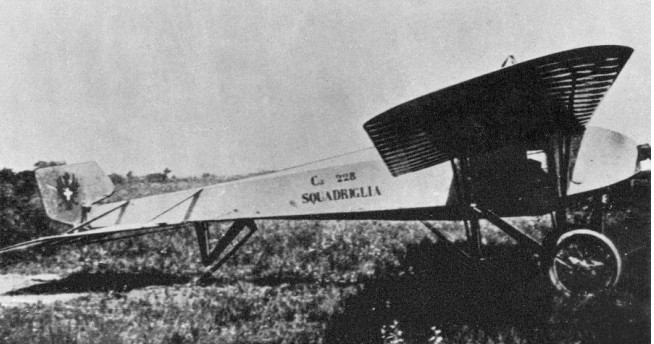
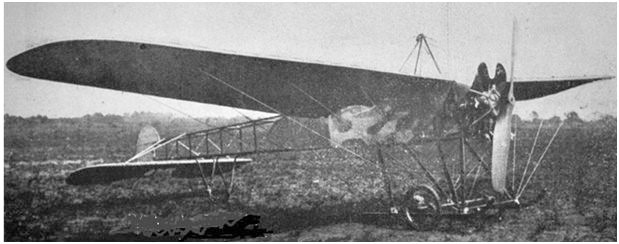
The thirteenth airplane model designed and built by aviation pioneer Gianni Caproni in Vizzola Ticino. It was a two-seat, rather conventional tractor wing-warper monoplane, generally of Blériot lines, which flew for the first time in June 1912. Two examples were built, powered by 70 hp Anzani radials, which proved problematic. The “Milano I” was the second, donated by Caproni to the Società Italiana Aviazione in July 1912.
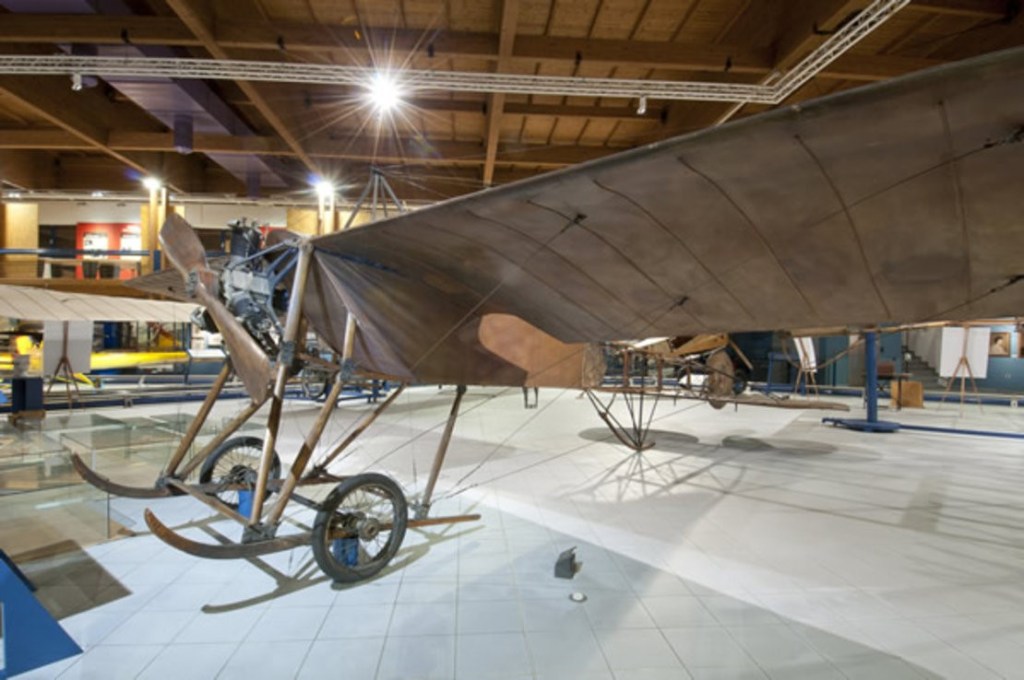
The Caproni Ca. 9, from 1911, has a structure entirely in wood, with a latticework fuselage braced with steel cables, wooden wings and tailpieces with canvas covering. The engine is a 35 hp three-cylinder Anzani Y. The landing gear features the typical anti-tip skids, characteristic of many aircraft of the pioneering period.
To commemorate the hundredth anniversary of the birth of the Trentino pioneer in 1986, the prestigious National Air and Space Museum in Washington exhibited Ca. 9 of the Caproni Museum in the “Early Flight” pavilion, models, drawings, relics, medals won by Caproni devices and a series of illustrative panels.
Having returned to Italy in 1988 and temporarily hosted by the AerSud, in 1989 the Ca.9 was exhibited in the Palazzo della Regione on the occasion of the official announcement of the project to build the new Caproni Museum in Trento. It then became a symbol of the initiative, and was again exhibited on the occasion of the laying of the first stone. Subjected to conservative interventions in America and Italy, with the inauguration of the Museum, it found its permanent home in the pioneering aircraft sector of the Gianni Caproni Museum of Aeronautics.
Engine: 35hp Anzani
Wingspan 8.88 m
Length 7.80 m
Height 3.00 m
Empty weight 220 kg
Maximum speed 90 km / h
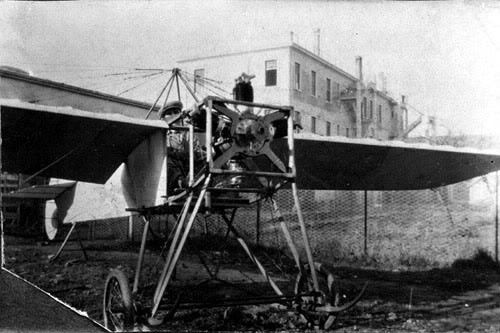
The success reported by Louis Blériot with his monoplane at the end of July 1909 in crossing the English Channel impressed a vigorous change in the tendencies of the builders of the time towards the monoplane, justified by the greater structural simplicity and better aerodynamics compared to contemporary biplanes.
Gianni Caproni joined this new trend starting from 1911 and up to the end of 1913, dealing exclusively with the construction of monoplane for school and training, in both single and two-seater versions, making more than seventy.
The first of these, the Ca. 8 single-seater, also known as the “Caproni monoplano 25hp”, flew to Vizzola on June 13, 1911 powered by a 25 hp three-cylinder fan-shaped Anzani engine.
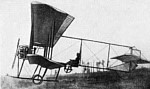
The Ca.6 was a single-engine propeller-driven biplane with a traditional configuration with wings in the bow and tail fletching, but it had no fuselage: it was replaced by a light structure formed by two beams of unshelled wood and some vertical reinforcing uprights that supported the planes of tail. They were composed only of a stabilizer – horizontal balancer; the lack of a vertical drift was compensated by four large interwoven surfaces that, placed between the wings, contributed to the stability of the aircraft around the vertical axis. The wings resumed the double curvature profile that had also characterized Caproni aircraft immediately preceding, but with not very lucky results: the aerodynamic characteristics of this type of profile, which had been suggested to Caproni by his friend and colleague Henri Coandă, proved to be once again unsatisfactory.
The one built first flew in 1911, The Ca.6, the sixth Caproni biplane, sported the characteristic double curvature airfoil and lightened tailboom, constructed from hollowed-out wooden tubes. Still powered by the 50 hp Rebus, it was modified following some flights in spring 1911.
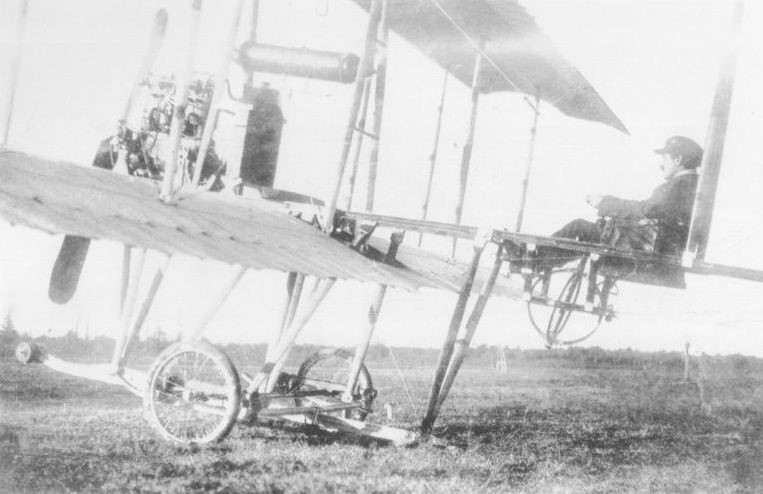
The Caproni Ca.6 was preserved inside the Caproni workshops until 1934, when it was brought to Milan to be shown to the public on the occasion of the Italian Air Force Exhibition; in the meantime, in 1927, the spouses Gianni and Timina Caproni founded the Caproni Museum, in whose headquarters in Taliedo the Ca.6 found a place starting from the forties. After the vicissitudes linked to the Second World War and the reopening of the museum in Vizzola Ticino, the Ca.6 was again displayed to the public. The definitive position in the Museo dell’Aeronautica Gianni Caproni, reopened in Trento, in the nineties.
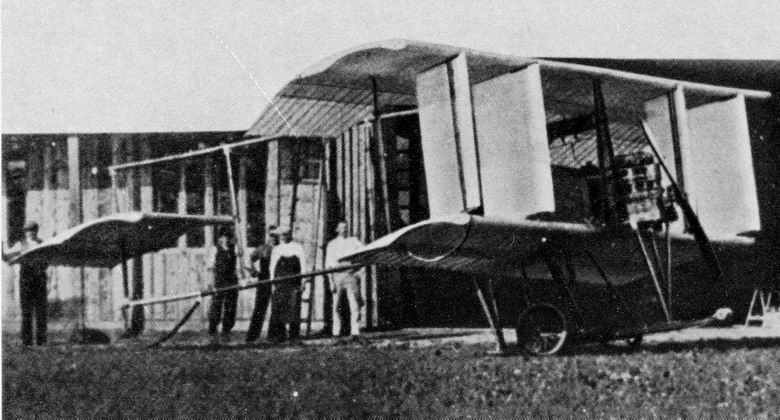
The aircraft underwent a first renovation-conservation operation before being displayed in Milan, in the early thirties: it was probably on this occasion that the leading edge of the wings was reinforced with a metal strip and the fuselage and the wings themselves they were shortened. At the time of its transfer to Trento, the Ca.6 has undergone a new intervention; however, due to the lack of availability of reliable technical drawings and other necessary historical documentation, a real restoration did not take place, but only a conservation procedure.
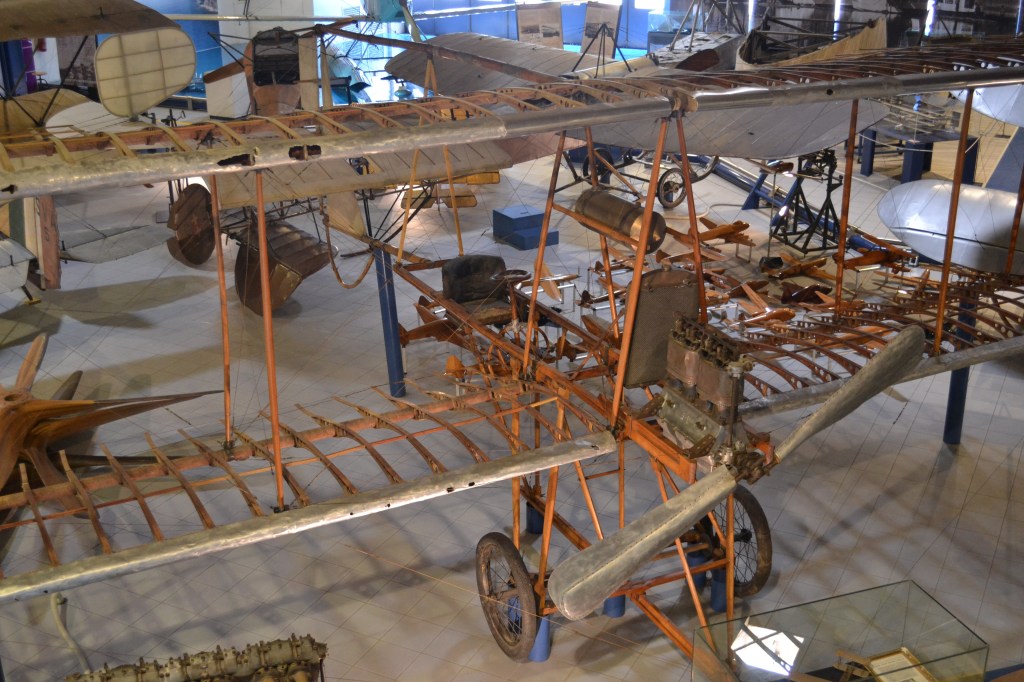
Powerplant: 1 × Rebus 50hp 4-cyl, 37 kW (50 hp)
Propeller: 2-bladed fixed pitch propeller
Wingspan: 12 m (39 ft 4 in)
Wing area: 45 m2 (480 sq ft)
Length: 9.8 m (32 ft 2 in)
Height: 3.27 m (10 ft 9 in)
Gross weight: 318 kg (700 lb)
 All Aero