Frank Champion, born 1884 in Sherman, Texas, learned to fly in 1910 and was one the pilots of Moisant International Aviators. In 1913 he spent 4,000 dollars to build the “Long Beach Flyer” monoplane, with local merchants putting up much of the money.
Pioneers
Cessna 1914 monoplane
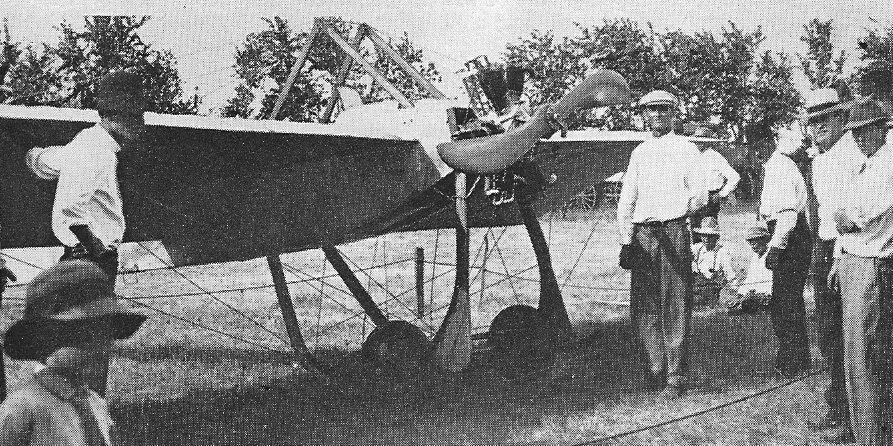
Clyde Cessna built 15 aircraft between 1911 and 1925. The 1914 model was powered by a 60 hp Anzani engine.
Cessna CG-1 Silverwing
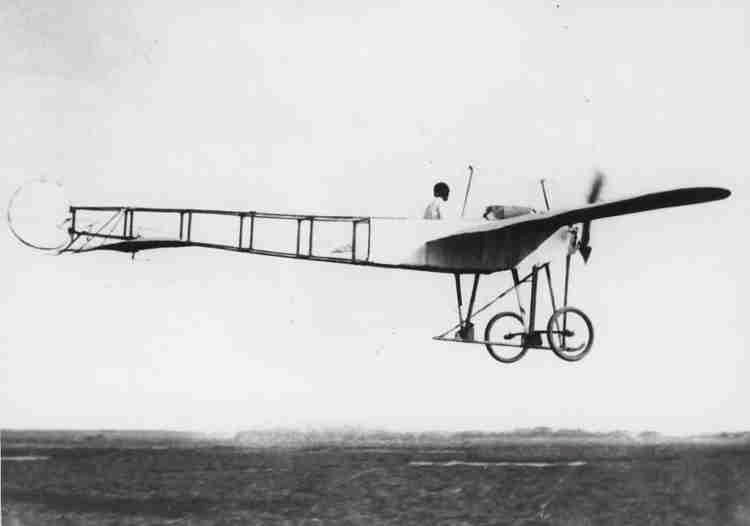
In 1911, finding inspiration from the American version of the Bleriot XI, Clyde created his first monoplane using linen and spruce. This initial creation was known as the “Silverwing,” and was powered by an Elbridge 4 cylinder motorboat motor with 40 hp.
Cessna CG-1 Silverwing Article
For the first test flights, Clyde headed to the Great Salt Plains in Oklahoma, located next to the Salt Plains National Wildlife Refuge. Unfortunately, his first flight attempt ended in a ground loop and a $100 repair bill. Clyde was not discouraged, however, and climbed back into that cockpit time after time, attempting to fly another thirteen times. And though each time was a failure, he managed to walk away relatively unscathed.
Finally, he became airborne on the thirteenth attempt in the Silverwing, though he managed to stay airborne for only a short time before he crashed into a stand of trees while attempting to turn the aircraft.
“I am going to make this thing fly. Do you hear me? I am going to make this thing fly and then I am going to set it afire and I’ll never have another thing to do with airplanes. Automobiles and farm machinery – that’s what I’m going to stick to” Clyde said after crashing the Silverwing.
Thankfully, he didn’t carry through on this threat, and he went back to work. His meticulous planning and continual improvement of his design finally paid off.
In December 1911, Clyde Cessna completed a 5-mile flight, including a successful landing back at his point of departure. Thanks to this success, the many people who had been scoffing at his attempts to fly did an about-face, celebrating his success and even calling him “The Birdman of Enid.” Riding the success of the Silverwing, Clyde decided to leave his career in the automotive industry and devote his full attention to aviation.
César Balloon-assisted Tandem
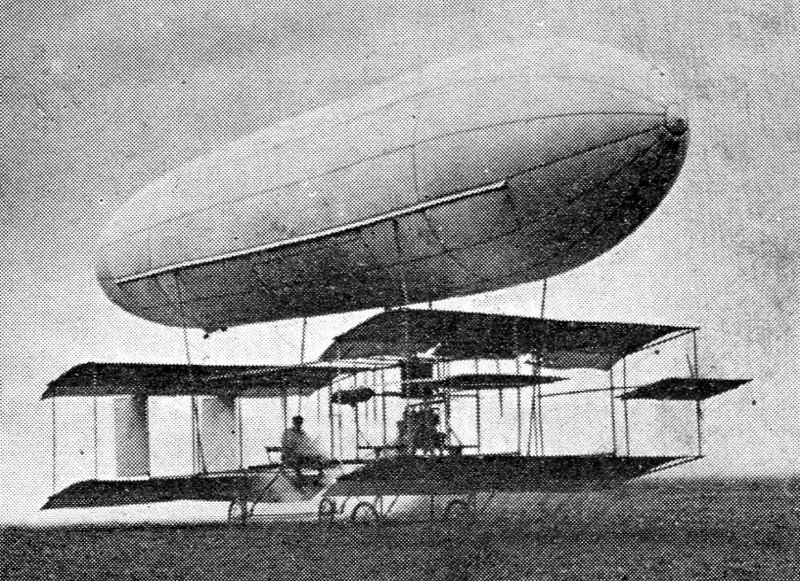
This tandem biplane design of central pusher configuration is attributed to Léopold César, but was a modification of a 1909 design of Eugène Boutaric. The Boutaric design had the same construction, but used a 25 hp Anzani which drove two propellers via chains. The propellers were placed just behind the front biplane wing in tractor configuration. There are no reports that the César tandem-wing machine left the ground, not even when fitted with a balloon on struts above it. Wing span was only six metres. It had a 50 hp Prini-Berthaud engine, mounted quite some way behind the front biplane wings on the connecting structure between the wing cells.
Cerny 1910 monoplane
The 1910 Cerny monoplane was designed and built by Cerny in Czechia.
Ceita
In 1911 a monoplane was designed and built by Ceita in France.
Cazalot et Prevot 1909 biplane
The 1909 Cazalot et Prevot biplane was designed and built by Cazalot and Prevot in France.
Cayre, Edmond and Ernest
In 1911 Edmond and Ernest Cayre designed and built a monoplane in France. The span was 32’10” and length 35’1″.
Cayley Glider
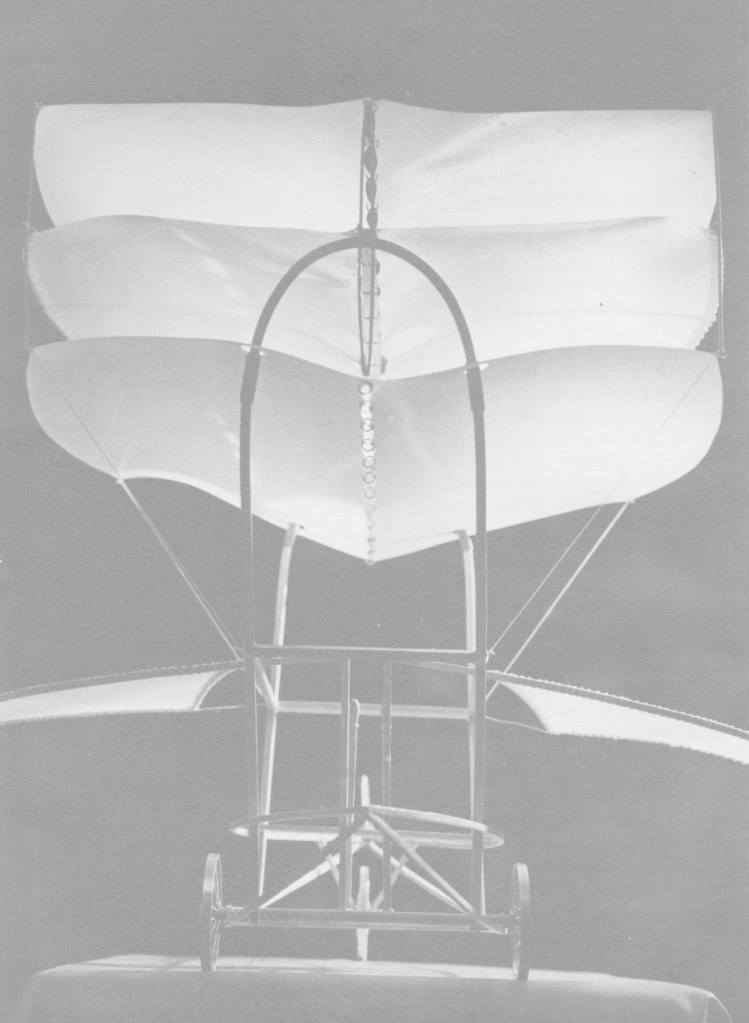
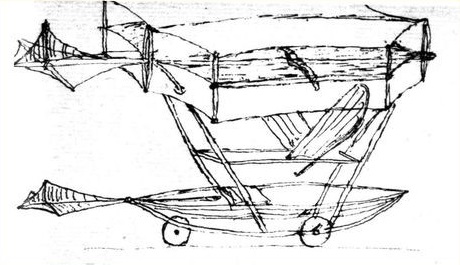
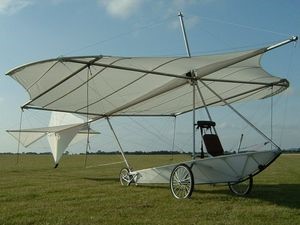
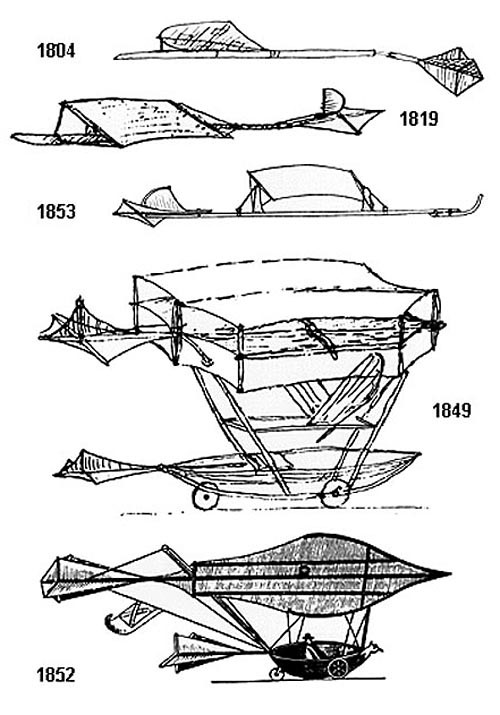
The first Cayley glider was a triplane hang glider designed with an open section in the centre for self-propelled starts. A young boy is reported to have been gently lifted and carried a few yards.
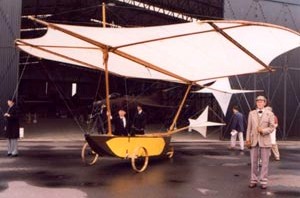
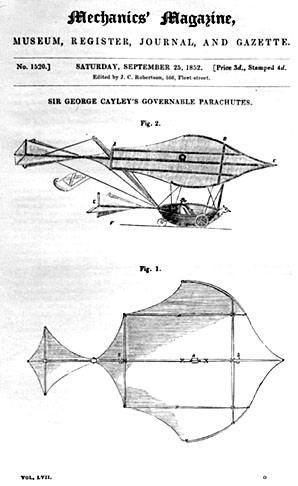
Sir George Cayley (1773-1857) was first to design an aerofoil and one of his flying machines made the world’s first manned heavier-than-air flight at Brompton Dale, near Scarborough, in 1849. This was more than 54 years before the Wright brothers made the first powered flight from Kitty Hawk Sands in the USA on 17 December 1903. Another machine, which Cayley called a ‘governable parachute’, was flown in 1853 at Brompton Dale, carrying Sir George’s coachman, who on coming back to earth said, “I wish to give notice, I was hired to drive not to fly”.
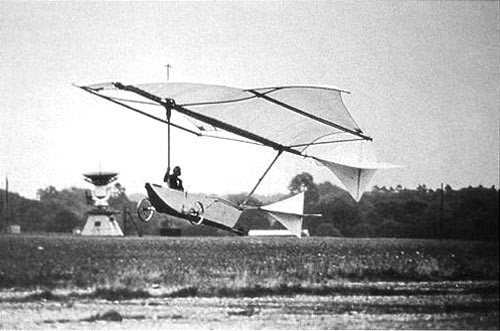
A young girl who was there wrote later: “the wings acted rather on the principle of the parachute, merely flating the experimentor, who started from a moderate elevation, by a gradual descent towards the earth”.
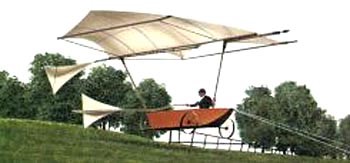
It was the world’s first aeroplane with inherent stability.
Wing area: 338 sq.ft
Empty weight: 132 lb
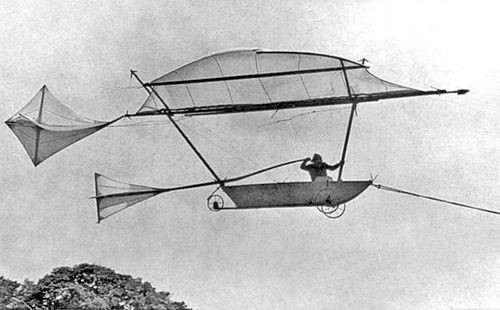
Cayley, Sir George
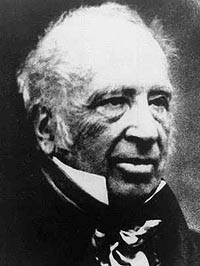
Sir George Cayley, 6th Baronet (27 December 1773 – 15 December 1857) was a prolific English engineer and one of the most important people in the history of aeronautics. Many consider him the first true scientific aerial investigator and the first person to understand the underlying principles and forces of flight. Sometimes called the “Father of Aviation”, in 1799 he set forth the concept of the modern aeroplane as a fixed-wing flying machine with separate systems for lift, propulsion, and control. Often known as “the father of Aerodynamics”, he was a pioneer of aeronautical engineering. Designer of the first successful glider to carry a human being aloft, he discovered and identified the four aerodynamic forces of flight—weight, lift, drag, and thrust—which are in effect on any flight vehicle. Modern aeroplane design is based on those discoveries including cambered wings. He is credited with the first major breakthrough in heavier-than-air flight and he worked over half a century before the development of powered flight, being acknowledged by the Wright brothers. He designed the first actual model of an aeroplane and also diagrammed the elements of vertical flight.
Cayley served for the Whig party as Member of Parliament for Scarborough from 1832 to 1835, and helped found the Royal Polytechnic Institution (now University of Westminster), serving as its chairman for many years. He was a founding member of the British Association for the Advancement of Science and was a distant cousin of the mathematician Arthur Cayley.
 All Aero