The 1909 Chedeville Monoplane was designed and built by George Chedeville in France.
Span: 39’4″
Length: 39’4″
The 1909 Chedeville Monoplane was designed and built by George Chedeville in France.
Span: 39’4″
Length: 39’4″

The 1911 ChUR-1t was built by Russian aviator Nikolaj Vasilievich Rebikov and inventor Grigory Gerasimovich Chechet with financial support of M.K.Ushkov of Moscow.
It was demonstrated on the Second Moscow Aviation Exposition (Mar 25 – April 8, 1912), later – flown on Comendant Airfield near St.Petersburg.
It was a ‘inverted’ biplane (upper wing was much smaller than the lower one) with biplane tail planes. Ailerons were only on the upper wing, during tests – added to the lower one too. Wings were equipped with anti-slide surfaces.
The first aircraft in Russia to have steel wielded frame in front fuselage. Additional control surface was added to the tail in order to compensate load on the control stick.
On July 5 1912 the aircraft (flown by N.V.Rebikov) was crashed and not restored.
Engine: 100hp Argus
Wingspan: 12.0m / 39’4″
Wing area: 36.0m2
Length: 11.0m / 36’1″
Empty weight: 600kg
Loaded weight: 700kg / 1540 lb
Wing Load: 19.5 kg/m2
Power load: 8.8 kg/hp
Crew: 1
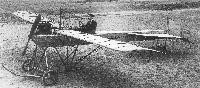
The 1911 Chazal monoplane was designed and built by Henry Chazal in France.
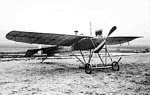
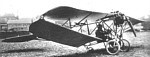
The 1909 No. 2 biplane was designed by De Penteado (Spaniard), and built by Chauviere (France).
Span: 21’4″
Length: 26’3″
Empty weight: 705 lb
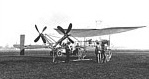
The 1909 Chauviere No. 1 monoplane was designed by Saulniers and built by Chauviere in France.
Span: 21’4″
Length: 26’3″
Empty weight: 947 lb
A biplane designed and built by Chauseee in France.
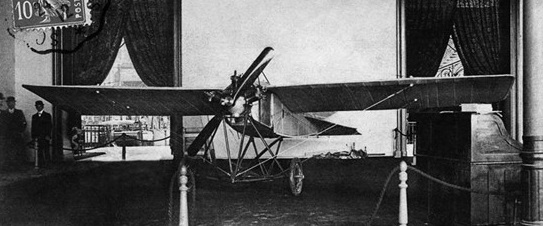
Chassany built his Monoplane in France in 1910.

This Nieuport-like monoplane was displayed at 1910 Paris “Exposition de la Locomotion Aérienne”. It’s recognisable by the three-cylinder Viale engine and the arrangement of landing gear struts.
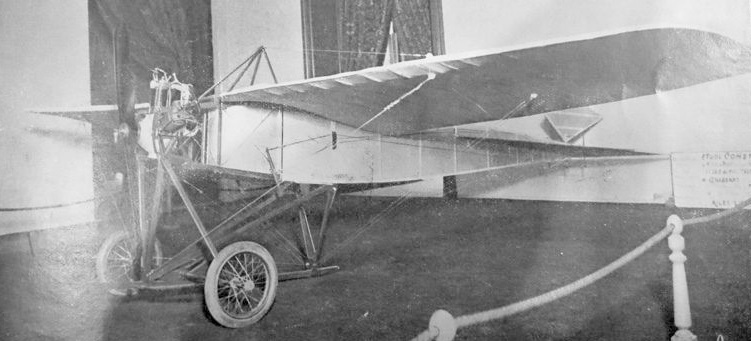
It was claimed to be the lightest plane at the show, having reached 90 km/h with only a 32 hp engine. It was also the cheapest, costing only 7,000 francs without engine.
The 1910 Chassagny monoplane was designed by Chassagny and built by Labaudie et Puthet in France.
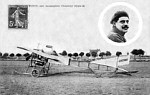
Span: 26’3″
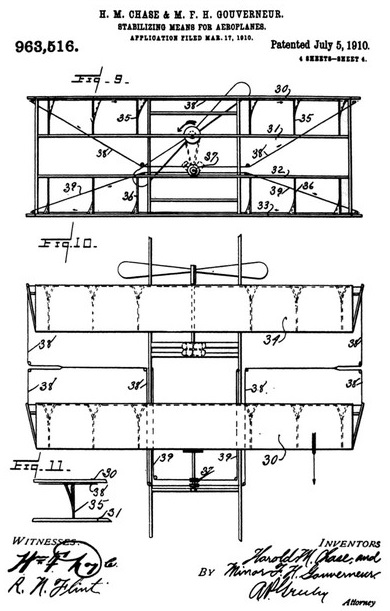
In July 1910 Harold M. Chase and Minor F.H. Gouverneur received a patent for a mechanism to stabilise and control aeroplanes. Their invention was a manually operated lever described as capable of being swung in any direction to transmit motion to other elements of the plane, apparently including on the wings. Three weeks later they won a second patent for rear wing panels (ailerons) that were controllable in flight by a cable or flexible cord, a device different enough from the 1906 Wright wing-warping patent.
On November 14, 1910, M. F. H. Gouverneur, vice-president of the Tide Water Power Company, and H. M. Chase, manager of the American Chemical and Textile Coloring Company, made the only public test flight of the airplane they built on Shell Island, sometimes called Moore’s Beach. More than 5,000 visitors crowded Wrightsville Beach four months earlier, when, on July 4, the pair had planned to attempt the first flight of their self-designed aircraft. Newspaper reports described the November flight, piloted by Mr. Chase, as having attained an altitude of about five feet, sustained for some distance, just long enough to demonstrate the plane’s ability to fly. The event carries the distinction of being the first airplane constructed in North Carolina and owned and flown by North Carolinians.
Designed and built by H. M. Chase and M. F. H. Gouverneur, Wilmington NC, USA, the 1911 Chase-Gouverneur “Wrightsville Beach” multiplane was similar to a Wright aircraft but built from aluminum.
It flew short hops at about five feet altitude on 10 November 1911, at Wrightsville Beach, Chase flew in a series of unannounced hops along the Shell Island beach at low tide.
In 1911 Gouverneur won a lawsuit for $380, with interest, against Boston’s Harriman Motor Works, apparently because its motor was unreliable.
In 1912 Gouverneur informed London’s Jane’s All the World’s Aircraft that he was now using the Gouverneur IV, a 25ft long monoplane with a 31 ft span, with pilot, it weighed 840 lb. According to Chase, his former patner hired an experienced pilot to fly one of his planes, apparently the Gouverneur IV, but the aviator crashed and “Gouverneur went no further”.
Engine: Harriman, 40hp
Wingspan: 16’0″
Length: 30’0″
Weight gross: 1200 lb
Seats: 1
Gouverneur IV
Wingspan: 31 ft
Length: 25ft long
Loaded weight: 840 lb
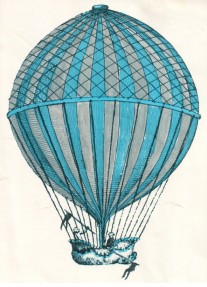
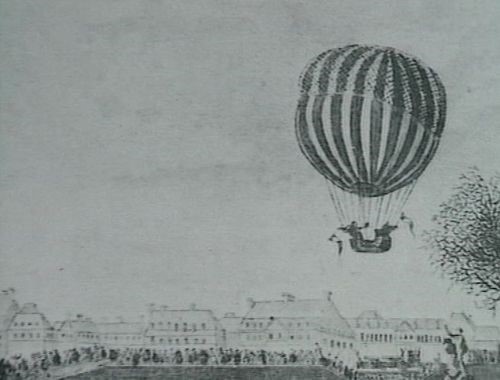
The early successes of the Montgolfiers had prompted the geologist Faujas de Saint-Fond to raise a public subscription for construction of a small silk hydrogen-filled balloon by J.-A.-C. Charles, the physicist, and two mechanics, the brothers Robert. This balloon flew 15 miles, unpiloted, on 27th August 1783; and on 1st December Charles and the elder Robert flew for more than two hours in a 26-foot-diameter hydrogen balloon, from the Tuileries Gardens in Paris, some 27 miles to Nesle. After touching down, Charles went up again by himself, but was so alarmed when the balloon shot up to over 9,000 feet that he never flew again.
More important than the flights themselves was the fact that Charles’s balloon was such a masterpiece of design and manufacture that many of its features — the valve, the net, the suspension of the basket, the provision of ballast, use of a barometer and the gas — have been retained to this day in free balloons.
 All Aero