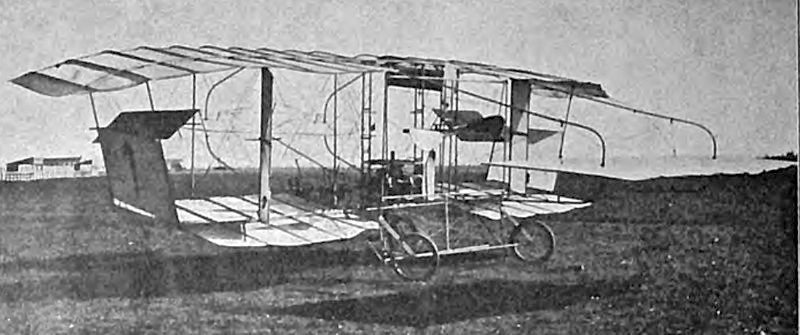
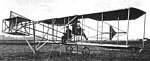
Mario Cobianchi was a Bolognese designer and draftsman, who had Sicilian-born engineer Franz Miller build his 1909 Brescia biplane, powered by a 100 hp Miller engine. It was originally intended to have both a helicopter-like propeller on the top wing and a pusher propeller in the rear.
Even after being modified several times, it never did get off the ground except for a few brief hops. After being strengthened and modified from its original state, it was entered in the Circuito Aereo Internazionale di Brescia, Brescia, Italy, September 8th – 20th 1909, but it still didn’t fly.
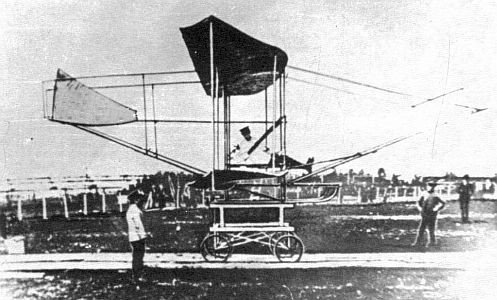
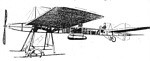
A biplane glider with identical unstaggered wings and relatively short tailbooms. The machine had a skid landing gear where the start was done on a four-wheel trolley. Coandă designed the machine, Joachim built it in his workshops and Caproni was named as a “mate” of Coandă [he himself stated that he did not contribute to the machine).
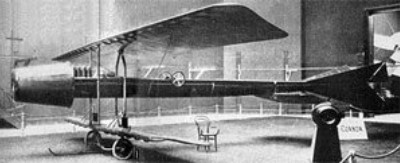
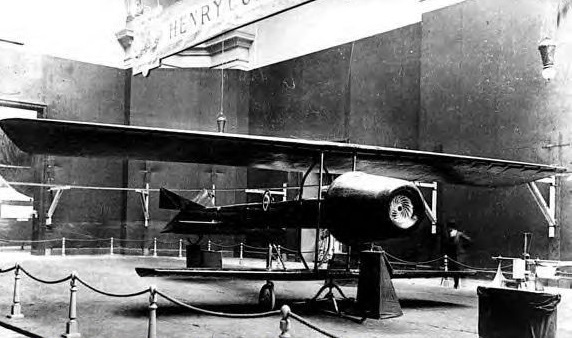
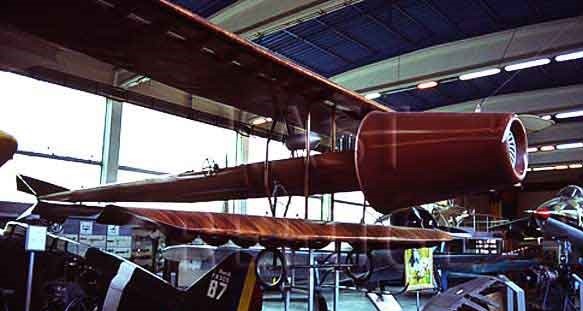
With the support of the engineer Gustave Eiffel and the scholar Paul Painlevé, who helped him to obtain the necessary authorizations, Henri Marie Coandă made preliminary aerodynamic experiments and built, in the body shop of Joachim Caproni, the first jet-powered aircraft, actually a jet plane. This invention by Romanian inventor Henri Coanda amazingly appeared in 1910 as the world’s first jet-propelled aircraft. The “Coanda 1910”, as it came to be known, was showcased at the Paris Second International Aeronautical Exhibition and was a technological marvel for its time. Before its time, the Coanda design fell into relative obscurity.
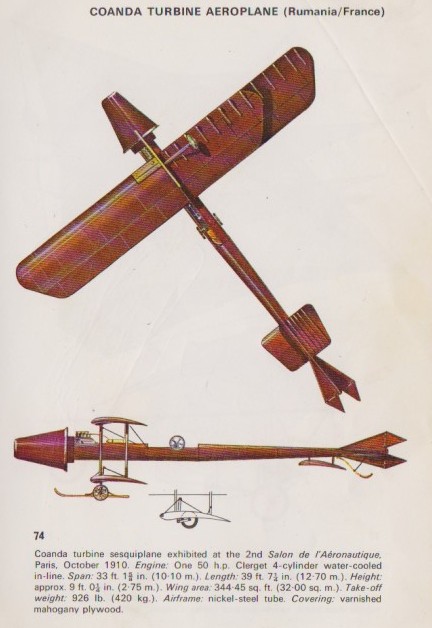
The Coanda 1910 was of a traditional aircraft design of a sesquiplane layout, with front-mounted engine. The “jet” engine was mounted at the extreme front of the thin fuselage, made up mostly of wood covered over with fabric (along with struts and wiring) and possibly some metal added to the wings. The pilot was to sit behind the engine in an open-air cockpit with very little protection. The undercarriage was fixed just under the lower wing and featured two wheels and complimented with a landing skid. The tail section ended in a cruciform-type arrangement.
In terms of its “jet” powerplant, the Coanda 1910 featured a combination of piston engine and jet engine power – relying on internal combustion. The traditional combustion engine provided power to a compressor to generate compressed air. The compressed air was then mixed with fuel, ignited and forcibly extracted from special chambers mounted on either side of the fuselage. The resulting force of the expelled reaction was to provide forward momentum for the aircraft.
The Coanda 1910 achieved a single short flight in an accidental way. While ground testing the engine with Henri Coanda at the controls, the powerplant forced the plane airborne for a short time. As Henri himself was not a pilot by trade, he quickly lost control of the aircraft and crashed to the ground throwing him clear of the burning wreckage (though not without slight injuries). Despite the loss of the machine, Henri noted an effect occurring with the expelled gases and how they seemed to conform to the sides of his aircraft. This observation alone would lead Henri to research that would span decades more in what would eventually culminate in the “Coanda Effect”.
It is said that Gustave Eiffel told him: “Young man, you were born 30 years too early!” In the end, Henri Coanda’s 1910 invention was never furthered into practical use.
replica
Engine: 1 x 4 cylinder in-line water-cooled, 50hp, driving a compressor for 450 lb of thrust. Length: 41.01ft (12.5m) Width: 33.79ft (10.30m) Accommodation: 1 Maximum Take-Off Weight: 926lbs (420kg)
Henri Coandă, born June 7, 1886 in Bucharest, son of Gen. Coanda the Rumanian War Minister, had trained as an engineer in France and was an artist of merit as well. He had studied under Eiffel, whose wind-tunnel at Auteuil was the first to be built in Europe.
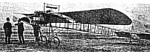
At the Paris Salon of 1910, Coanda exhibited a novel biplane whose engine drove, not an airscrew, but a small-diameter ducted fan. It is uncertain whether this biplane ever flew, as has been claimed, but Coanda deserves due credit for originating this form of propulsion unit. Another of Coanda’s projects was a tandem-wing monoplane with a submerged engine driving an airscrew mounted half-way along a streamlined circular-section fuselage.
Coandă joined Bristol in January 1912 and his first design for Bristol was a two-seat monoplane trainer, a development of the Bristol Prier Monoplane, controlled by wing warping.
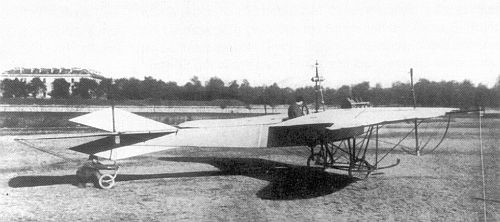
The Clerget-Etrich Taube Aman was a slightly modified version of the Etrich IV Taube license-built by Clerget in France for whose name appeared on the tail, Gustave Aman. Powered by an inline Clerget engine, it was completed in August but first flown in October 1910.
 All Aero