California aviator Weldon B. Cooke teamed up with E. W. Roberts of the Roberts Motor Company, Frank Frey, James Flynn, Sr., and James Flynn, Jr. to found the Cooke Aeroplane Company.
Weldon B. Cooke, an early pioneer who taught himself to fly in a Curtiss pusher, started construction of a flying boat project in California.
After he left Sandusky to assist Benoist with the St.Petersburg-Tampa Air Boat Line, Cooke was killed during an exhibition flight in 1914.
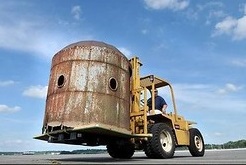
This “Flying Machine”, apparently also called the “Queen of the Air” was built in Mansfield, Ohio, by Daniel McFarland Cook an inventor who was granted some patents but died in poverty, known locally as “Crazy Cook”. Built in 1859, it was to “navigate the air at will with an inconceivable velocity”, “elevated, propelled and directed solely by the force of the electric engine, without hydrogen gas, steam fans or rudders”. It never did, it ended it’s days as a corn crib, a chicken coop and a smokehouse, and was found again in the 1960s. It has now finally landed at the North Central Ohio Industrial Museum.
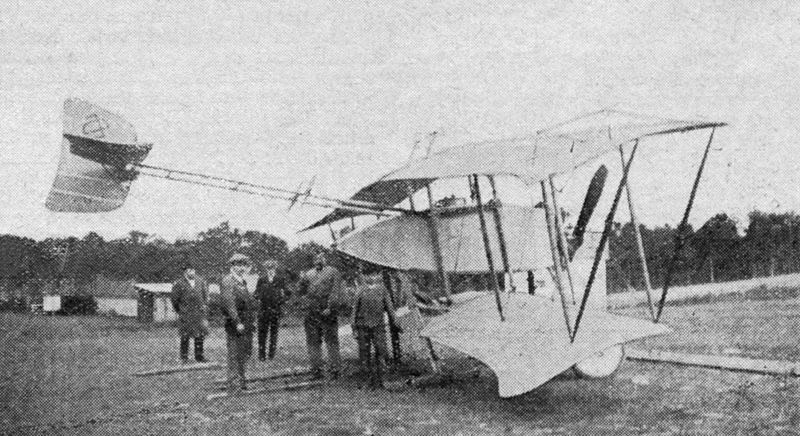
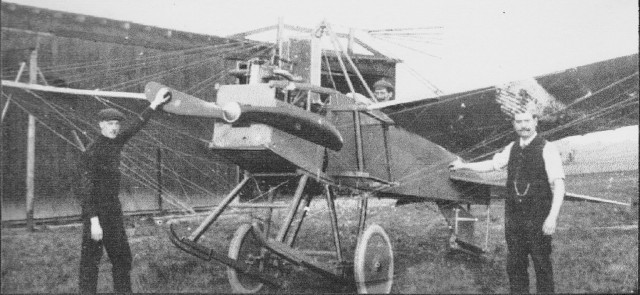
This second design of the duo Louis Constantin (designer) and M. d’Astanières (sponsor) never participated in the Concours de la sécurité (1914) for which it was intended, because it was not ready and still had problems that needed to be fixed. The machine was claimed to have three special features: A special design of the leading edges of the wings to improve their efficiency, automatic lateral stability by negative dihedral wings, and improved longitudinal stability by minimal its longitudinal moment of inertia. The last two of these appear rather counterintuitive, but perhaps… It was first tested only days before the outbreak of WW1, which stopped any further experimenting.
An aircraft designed following the ideas a patent of Francois d’Astanières about an automatically-stable monoplane. Built by Louis Clement, it was tested initially in 1913. The aircraft was later modified with some safety features patented by Louis Costantin (concave leading-edge flaps and modified elevators), the then called Constantin-d’Astanieres monoplane took part in the 1914 Concours de Sécurité.
Powered by a fuselage-mounted car engine that drove, via chains, a pusher propeller. The Constantin-d’Astanieres has a fairly orthodox rear fuselage and tail feathers, sles conventional was its additional front elevator on outriggers. The icing in the cake was its “slighty flexible” wings intended to absorb wind gusts.
The d’Astanières autostable in its second configuration, was under test at Bois d’Arcey in May 1913.
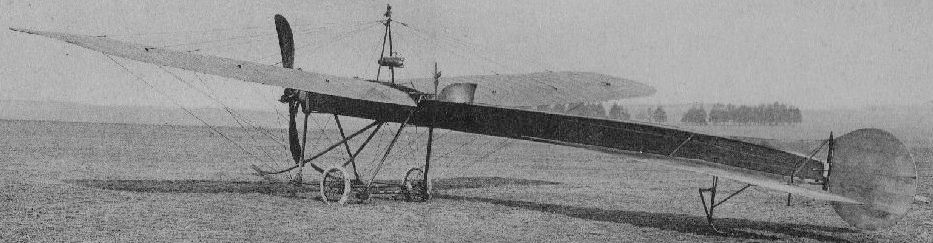
During 1909 and 1910 Camille Contal of Mourmelon, France, the inventor of a three-wheeled car called the Mototri, built several monoplanes. The 1910 machine had a narrow triangular fuselage was covered with sheets of mahogany with a 50 hp Gnome overhung at the nose. The rectangular wings could be warped, with the front spars fixed through steel fittings to the top two ash longerons, and the rear spars hinged. The pilot sat with his legs extended so that he could set his back easily against the seat without having to be strapped in.
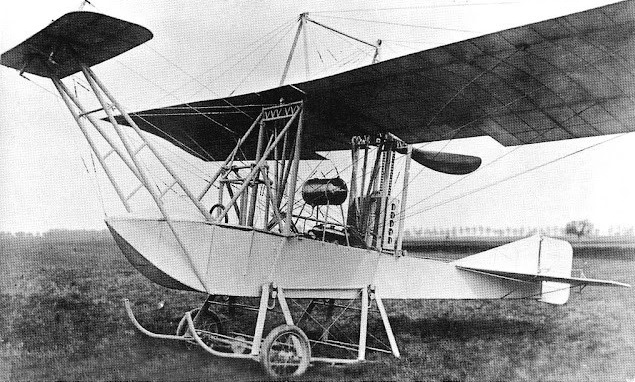
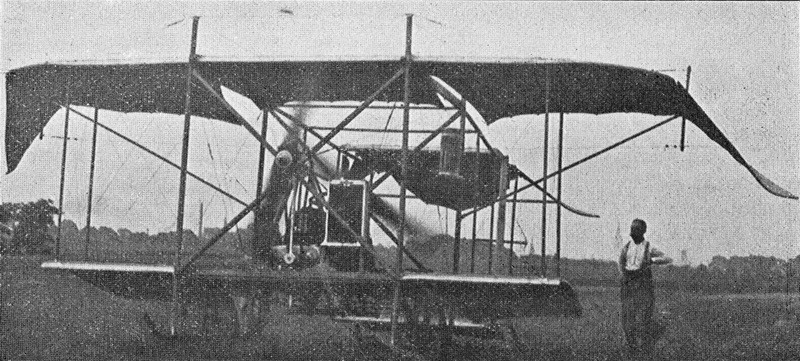
This 1912 design is claimed as the third design of Kommissar Hans von Klösterlein from Cologne (Cöln).
The design was built by the Condor Flugzeugwerft and according to Flugsport a 60 PS Basse & Salve engine was fitted. This is a single engine machine, where the engine drive two propeller – set on a rod fore and aft – via a chain.
The machine hopped or flew a little on the military exercise field on the Merheimer Heide in Köln-Merheim.
This was the last aeroplane designed by the Polizeikommissar von Klosterlein at the Condor-Flugzeugwerft in Köln-Niehl. The Pteranodon, named after a flying dinosaur, was built in 1912 or 1913 and was powered by a 55 hp Basse & Selve engine.
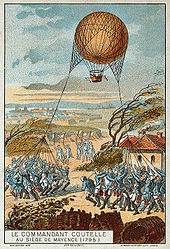
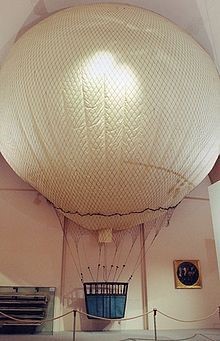
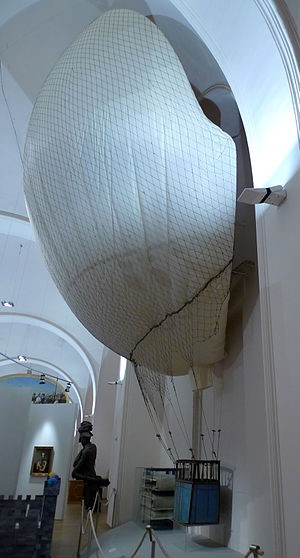
L’Intrépide or Hércule flown at the siege of Mainz (1795)
L’Intrépide was the larger of two observation balloons, the other being Hercule (“Hercules”), issued to the Aerostatic Corps in June 1795, twelve years after the pioneering hydrogen balloon flights of Professor Jacques Charles and the Robert brothers in Paris. These balloons were used by the Corps’s first company attached to General Jourdan’s Army of Sambre-et-Meuse in 1796. When that army was defeated by Austrian forces at the Battle of Würzburg on 3 September 1796, the balloon was captured and taken to Vienna, where it is now on display at the Heeresgeschichtliches Museum.
The actual preserved envelope is the sole survivor of the world’s first military air fleet – and possibly the world’s oldest surviving aircraft.
The balloon’s silk envelope is roughly spherical and has a diameter of 9.8 metres (32 ft). Its wooden gondola is very small, measuring 1.14 metres (45 in) by 0.75 metres (30 in) and its railing has a height of 1.05 metres (41 in). The hull displayed in the museum is a replica, with the original displayed in a glass box nearby.

 All Aero