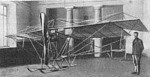
The 1909 Cremp monoplane, the world’s first aircraft equipped with ski gear to operate from snow-covered fields, was designed and built by Yu Cremp in Russia.
Span: 26’3″
Length: 16’5″
Speed: 37 mph
The 1909 Cremp monoplane, the world’s first aircraft equipped with ski gear to operate from snow-covered fields, was designed and built by Yu Cremp in Russia.
Span: 26’3″
Length: 16’5″
Speed: 37 mph
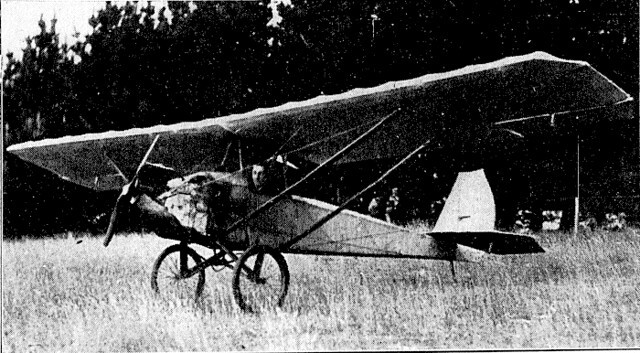
Mr. David Cross, aged 23, in the aeroplane designed and built by himself in which he crashed from a height of 300 ft. near Gore, New Zealand, on Monday. Mr Cross was injured and the machine was wrecked.
The Ladybird first flew on 21 May 33 with ex-Pither 40hp JAP engine. Span 29ft.
He made several flights (Approx 6 ) including one of 14km and he was the first man to be prosecuted in New Zealand for flying without a licence.
On 24 May 1933 the ODT reported, “Some months ago it was hoped to take the machine into the air, but the engine with which it was then equipped – a four-cylinder motor cycle engine – was not sufficiently powerful to lift the plane and the young aviator finally obtained an old engine imported from England by Mr Pither of Invercargill some 22 years ago for aviation purposes.
“This was overhauled and found to be in good order and after some alterations it was installed in the machine.
“Much study and energy had been devoted to the construction of a small monoplane at Chatton, Eastern Southland, when a very proud young man named David Cecil Cross, made his first successful trial flights in the machine.
“In the presence of about 20 onlookers the monoplane was taken out on Sunday morning and the young man took his place at the controls.
“The machine took off beautifully, crossed the Washpool Creek and a row of tall poplar trees, reached an altitude of 200 feet and made a good landing. The return journey was commenced a few minutes later and would have been equally successful had not one of the wheels struck a log of wood which was almost hidden in the ground.
“A wheel was torn off and a certain amount of damage was done to the undercarriage, but the pilot was uninjured. Naturally the young man was very proud of his achievement, although the slight mishap at the end of the trial was a disappointment to him. The monoplane has a wing span of 29 feet and on account of its graceful lines has been called the Ladybird. Despite its age, the engine now installed is in excellent order.”
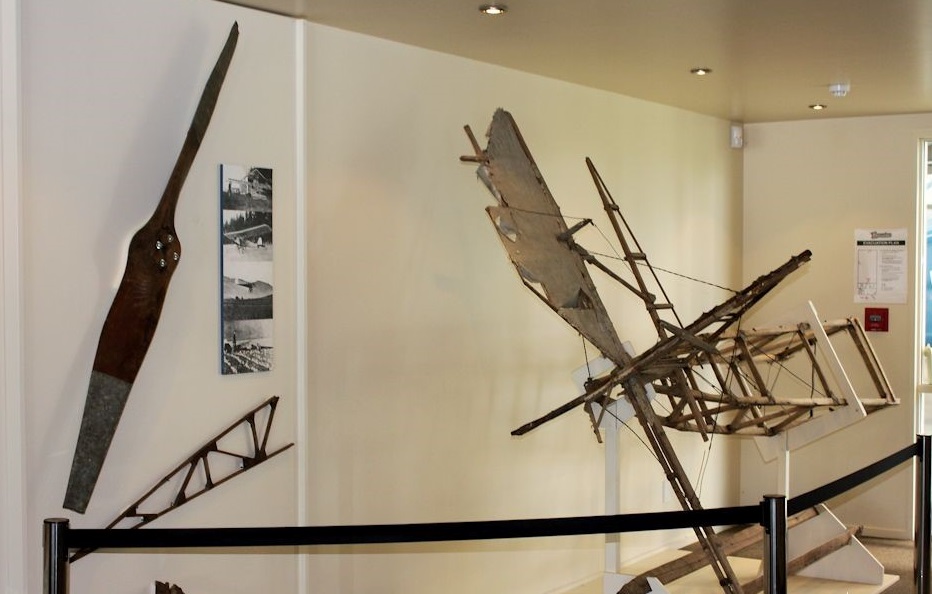
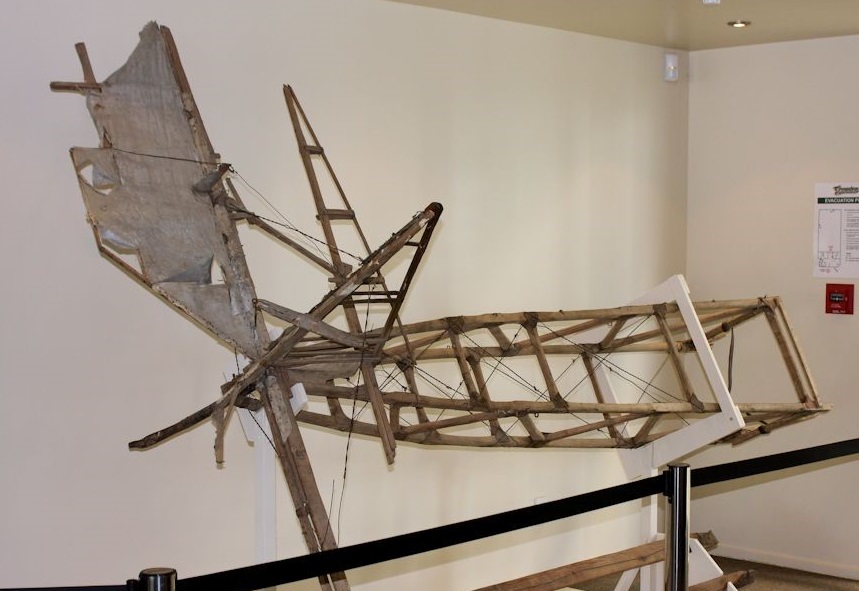
The Ladybird crashed in a turnip paddock at Otamita, Southland on 10 July 1933, and the remains went to the Croydon Aviation Heritage Centre at Mandeville, New Zealand, in 2012.
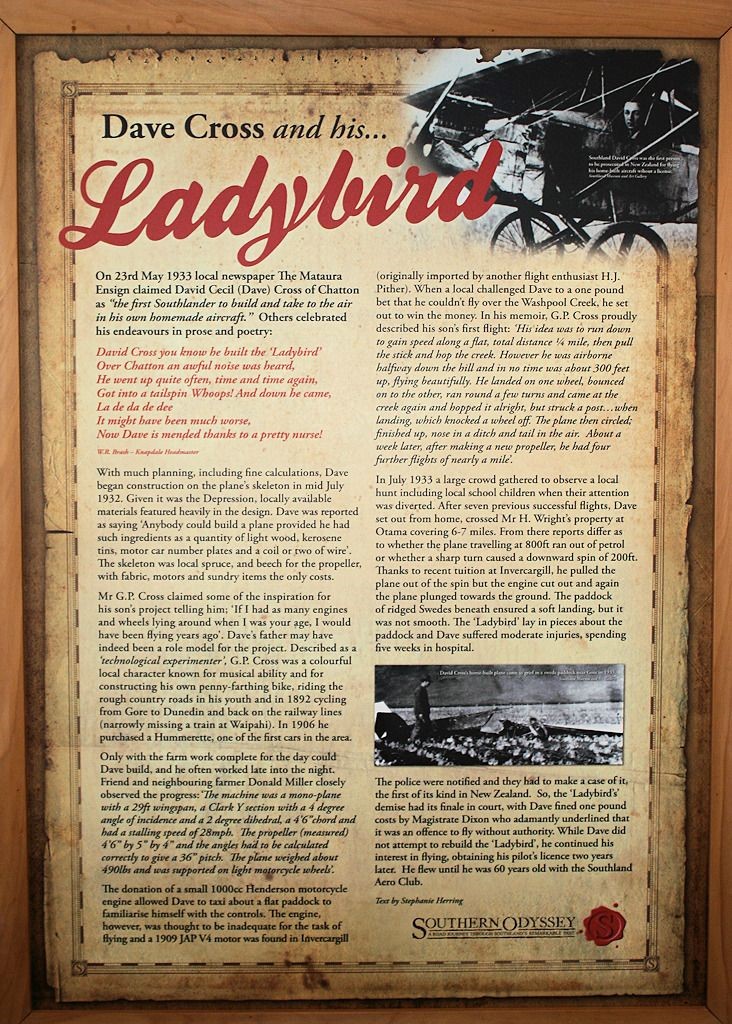
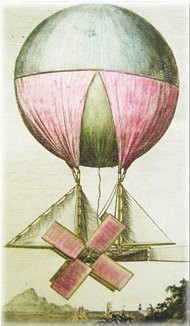
As detailed in the September 1784 issue of Hibernian Magazine, the gondola portion of the craft – with its windmills, masts, and sails – had been built and were on display by August of that year. The article explains how his craft was supposed to work, which in its own way was quite ingenious and clever, even if it was doomed to fail. As events transpired, it wasn’t until January of 1785 that Richard Crosbie was first able to take to the skies. When he did so, it was in a conventional hydrogen balloon, the fixtures and fittings of his “Aeronautic Chariot” having been left behind on the ground. Crosbie went on to make a series of attempts to cross the Irish Sea, none of which were successful.
Crosbie spent much of his childhood devising peculiar contraptions at his family home in Baltinglass, Co Wicklow. By 1783, he was a student at Trinity College, Dublin, listening to the tale of two Frenchmen who spent 25 minutes elevated in the sky within the basket of a hot air balloon.
Crosbie vowed he would one day cross the Irish Sea. His vehicle of choice would be a rubberised silk-covered balloon, filled with hydrogen.
To raise funds for his adventure, Crosbie held an exhibition in Ranelagh Gardens in Dublin. For a small fee, the public was invited to examine both his balloon and the “aeronautic chariot” which would carry himself, his equipment, his scientific instruments and the ballast.
On the final day of his exhibition, he launched the balloon skywards with a cat on board. It travelled north-west, rolled up the Scottish coast and was recovered near the Isle of Man the following day. Crosbie let his fans know that next time, he would be on board.
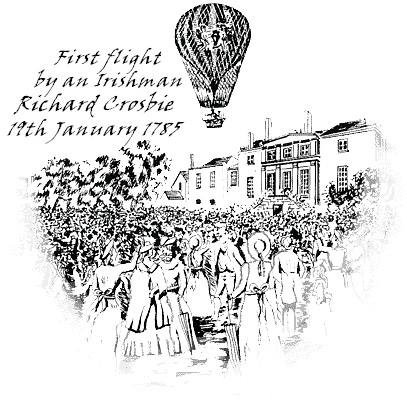
Ticket sales for the big event went through the roof, with forged tickets adding to the mayhem. At 2.30pm on January 19th, 1785, Richard Crosbie stepped into his aeronautical chariot. Ever the showman, the tall aeronaut wore a long, fur-lined robe of oiled silk, a waistcoat and breeches of white quilted satin, Moroccan boots and a leopard skin cap. His balloon was embellished with paintings of Minerva, the Roman goddess of wisdom, and Mercury, the messenger of the gods, carrying the coat of arms of Ireland.
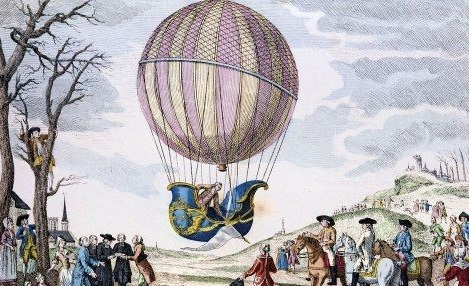
He saluted the 20,000 strong crowd, ordered the ropes cut and ascended into the heavens over Dublin. He was visible for three and half minutes, then disappeared into a cloud. Richard Crosbie became the first Irishman to fly.
His audience roared with delight. As it happened, he only got as far as Clontarf before loosening the valve and returning to earth.
Crosbie might not have crossed the Irish Sea but the flight was hailed as a pioneering scientific achievement across Europe and considered a great victory for Ireland.
The event is recalled by a small plaque in Ranelagh Gardens.
Richard Crosbie spent much of his childhood devising peculiar contraptions at his family home in Baltinglass, Co Wicklow. By 1783, he was a student at Trinity College, Dublin, listening to the tale of two Frenchmen who spent 25 minutes elevated in the sky within the basket of a hot air balloon.
Crosbie vowed he would one day cross the Irish Sea. His vehicle of choice would be a rubberised silk-covered balloon, filled with hydrogen.
To raise funds for his adventure, Crosbie held an exhibition in Ranelagh Gardens in Dublin. For a small fee, the public was invited to examine both his balloon and the “aeronautic chariot” which would carry himself, his equipment, his scientific instruments and the ballast.
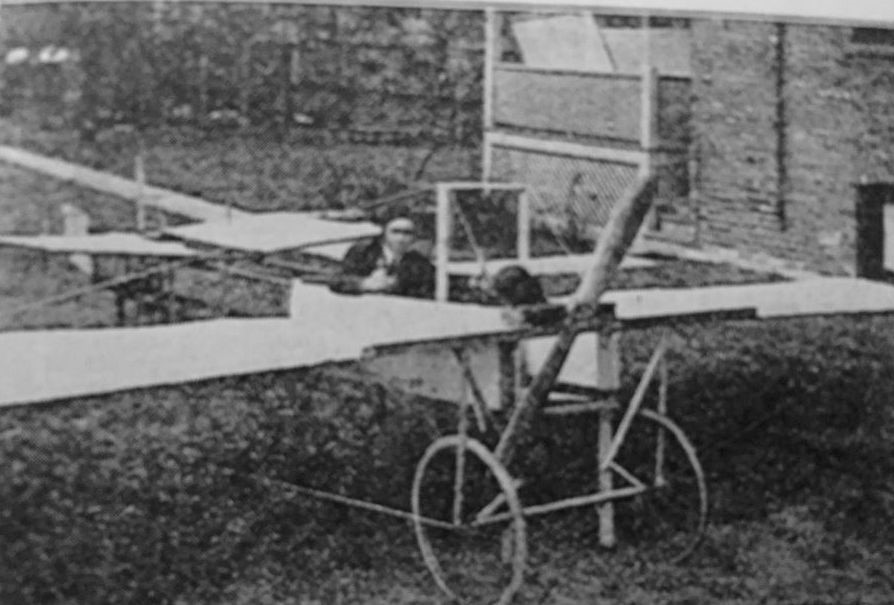
A monoplane built by Harold Turner and Fred Croll, two high school students of Chicago, USA. Weighing 125 lbs it had fully operable controls via an electrical device. It was towed into the air where it reached a height of 15 feet and a flight of 43 seconds.
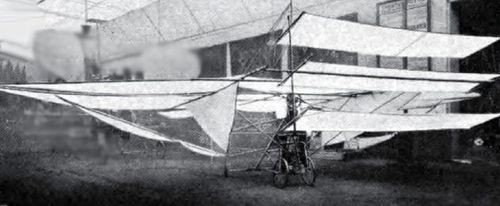
The aeroplane of Baron Jean de Crawhez de Witte on display at the Eighth Annual Belgian Motor Show, held in Brussels from the 16th through to the 26th of January 1909. He was a member of the very rich Belgian family of that name. He filled his life with hunting in Africa, motor car races (also in Africa and through the Sahara) and everything else rich people were supposed to be doing. As a sportsman he initiated the triplane machine, which of course was actually realized by someone else. As nothing much was heard after the exposition in Brussels it is to be expected that it was not very successful.
Baron Jean de Crawhez de Witte was a member of the very rich Belgian family of that name. He filled his life with hunting in Africa, motor car races (also in Africa and through the Sahara) and everything else rich people were supposed to be doing.
As a sportsman he initiated the triplane machine displayed at the Eighth Annual Belgian Motor Show, held in Brussels from the 16th through to the 26th of January 1909.
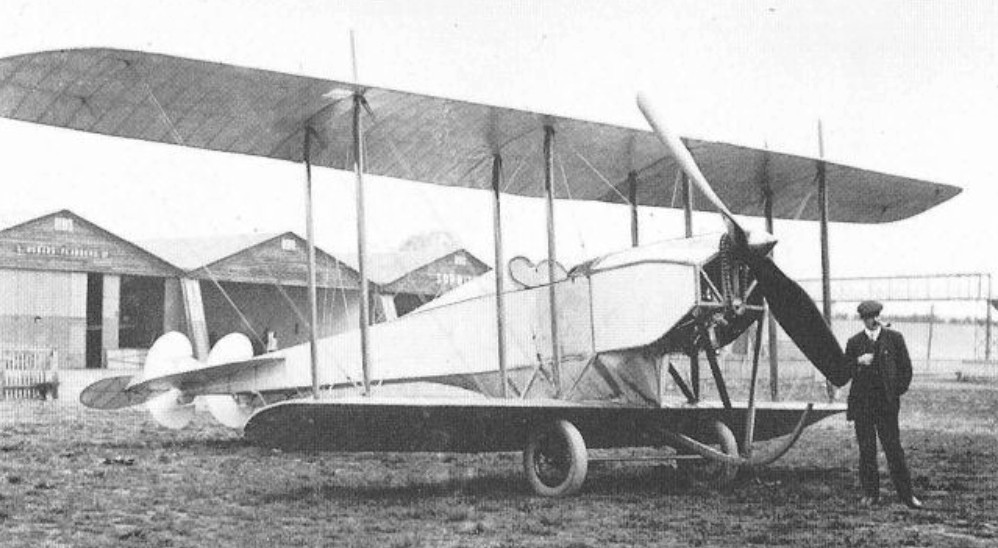
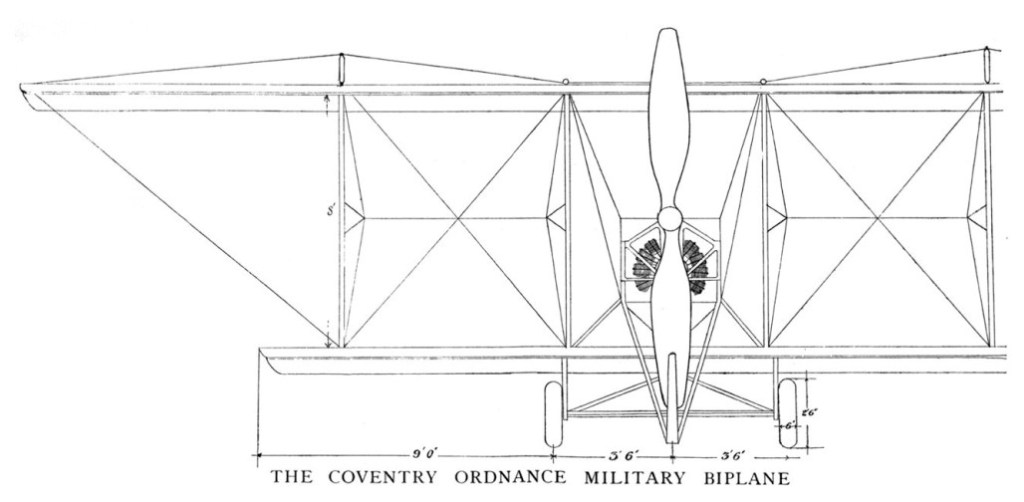
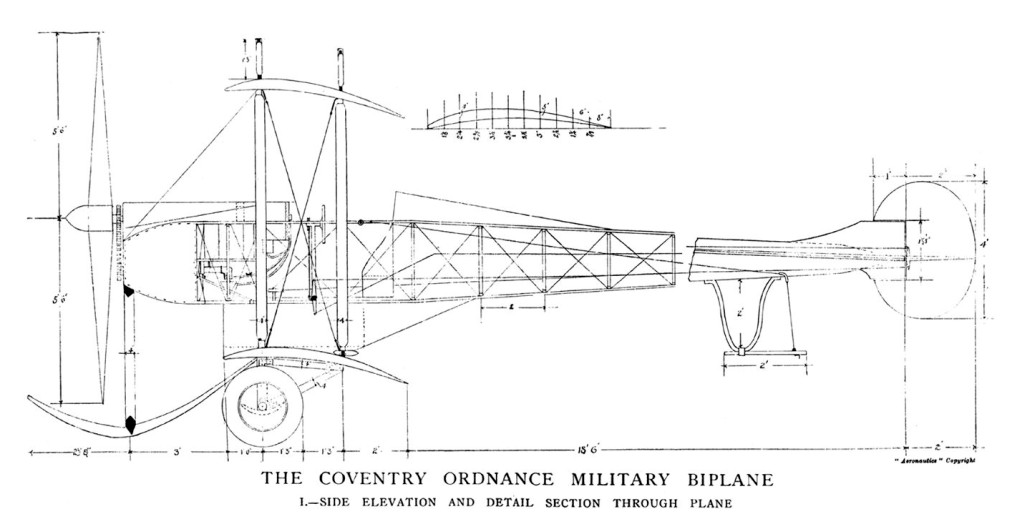
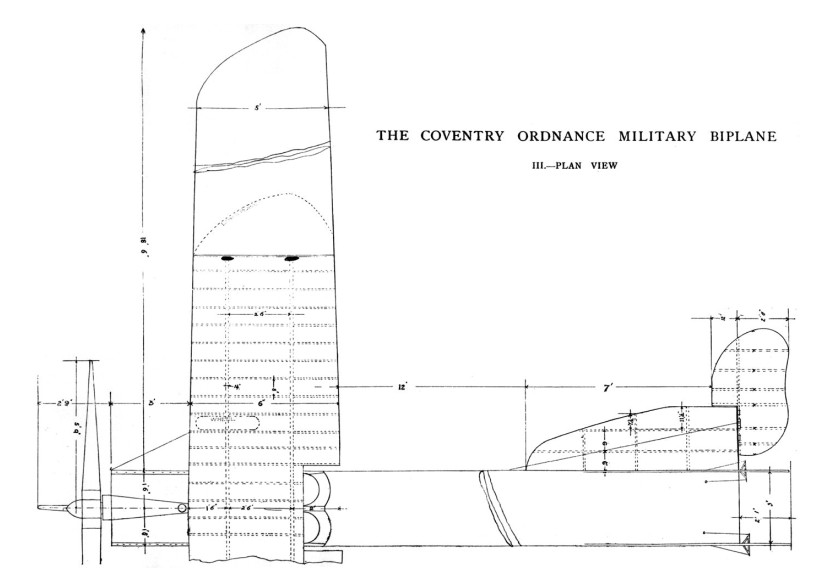
The COW Biplane was a British tractor biplane built to compete in the 1912 British Military Aeroplane Competition.
The 1910 Courrejou tractor monoplane was designed and built by Courrejou in France.
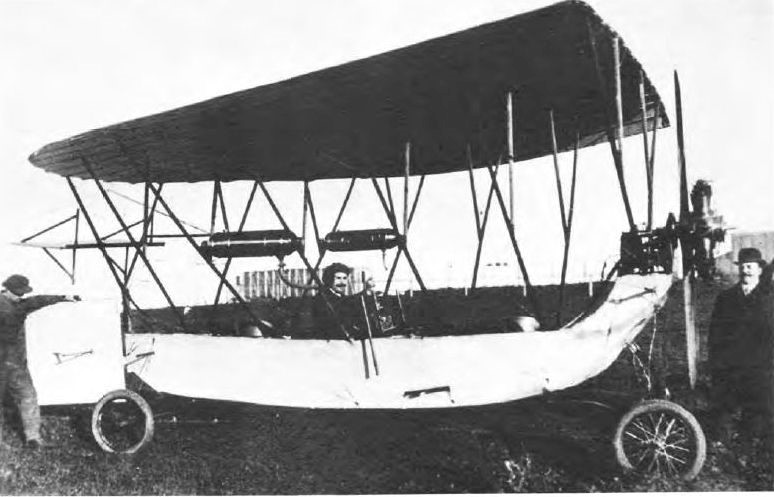
Argentine engineer Federico Correa built this half parasol, half flying-wing machine which was described in 1911. It was powered by a Gnôme engine.
 All Aero