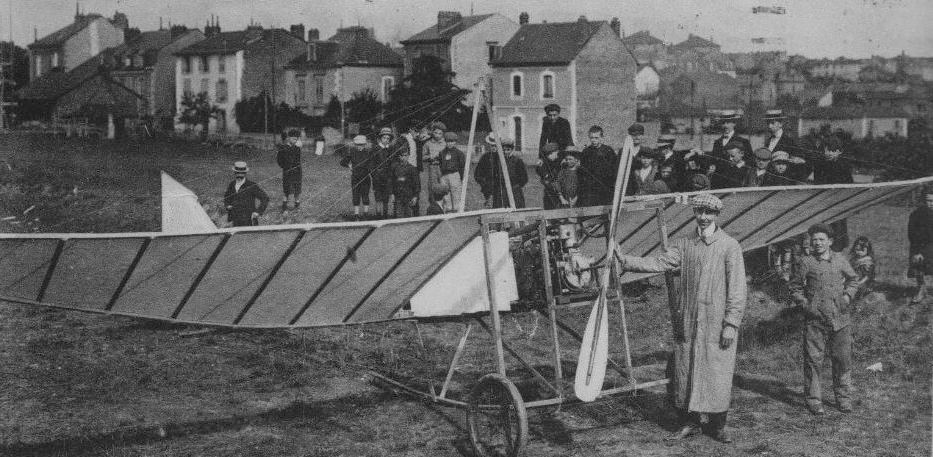
The Debort No.3 was a very simple tractor monoplane built in Limoges, France, in 1909/10 by Serge and Jack Debort.
The Debort No.3 was a very simple tractor monoplane built in Limoges, France, in 1909/10 by Serge and Jack Debort.
Around 1742 the Marquis de Bacqueville is reported to have thrown himself from the roof of his house and managed to fly “with artificial wings” across the Seine, at which point he fell heavily into a boat and broke his thigh. He was more than 60 years old, “slightly crazy but with a lot of spirit.” There seems no record of how the wings worked.
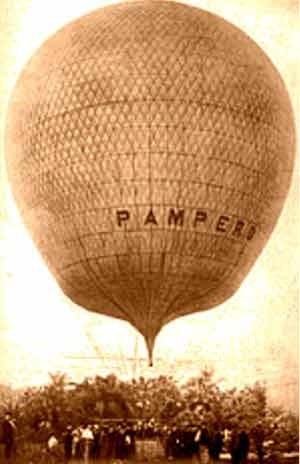
In 1907, Argentine aeronaut Aarón Félix Martín de Anchorena (1877-1965) brought from France a balloon which he named “Pampero”, after the cool Pampero wind which blows on the flat plains of Patagonia and the Pampas. Its first ascension was made on Christmas Day 1907, when Anchorena and well-known sportsman Jorge Newbery inflated the “Pampero” using the Belgrano gasworks at the Sociedad Sportiva Argentina in Buenas Aires (located in Palermo what is now the Campo de Polo), rose to 2000 feet altitude and drifted for two hours across the Río de la Plata to land at a ranch about 30 miles away in Conchillas, Uruguay. The journey had been the first aerial crossing of the Río de la Plata, and numerous flights followed successfully. On October 17, 1908, Eduardo Newbery, brother of Jorge, invited his friend Thomas Owen, a prominent yachtsman, to accompany him on a night flight. When Owen became absent, Newbery decided to make the flight anyway, onto which he invited Sergento Eduardo Romero. After leaving as usual from the Sociedad Sportiva Argentina to the southeast, the balloon disappeared without a trace.
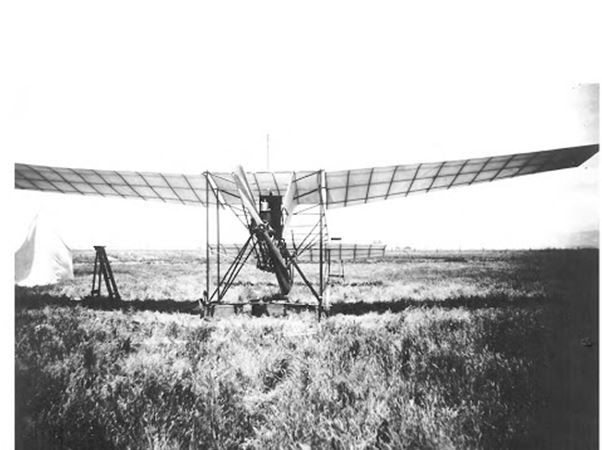
Glenn L Martin and Charles H Day built their first aircraft in 1909, in Long Beach, California. When they took the machine out for testing, the engine stopped while it was being taxied. The individual taxiing it decided to try to re-start the engine himself and was successful, but with no one in the cockpit the machine went off by itself and ran around the field until it hit something and was totally wrecked.
The 1909 25hp 5-cyl air-cooled engine built by Charles H Day was used on his plane by Day at the Dominguez Hills air meet.
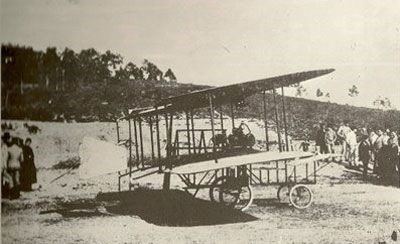
On his return to Portugal in 1910, Gomes da Silva presented an improved design of his invention to the newly-founded Aero Club de Portugal, and received funding not only from this organisation, but also from the young republican government. The military placed its base in Tancos at his disposal in order to build the Gomes da Silva II. However, the modifications that had been made weren’t enough to get the craft off the ground – be it due to possible shortcomings of the machine, or to the harsh runway conditions. Faced with these results, the sponsors quickly lost interest and the Gomes da Silva II was dismantled and boxed to Mozambique, its whereabouts currently unknown.
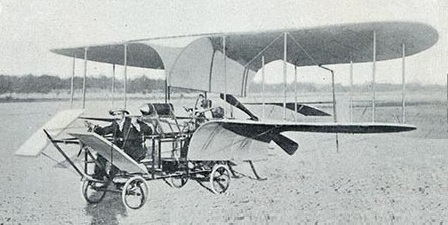
In 1909, Abeillard Gomes da Silva, was in Beira in the then Portuguese colony of Mozambique. Working there, at customs, was Abeillard Gomes da Silva, who that year had the opportunity to visit Europe during a holiday. At his own expense, he set off for France with an interest in heavier-than-air flight.
Upon arriving in France, he promptly spent 23,000 francs to build an airplane of his own invention: the Gomes da Silva I. A biplane configuration with its engine – a 25 to 28 hp Anzani – placed behind the pilot, it had a three-lever control system: a central lever for the rear directional rudders, and the other two for the altitude rudders, placed on either side of the pilot and which could either function together or separately. Enrolled in the Juvisy Aviation Fortnight (Grande Quinzaine d’Aviation), organised by the Société d’Encouragement à l’Aviation, it seems that Gomes da Silva was eventually disqualified due to a “21-day delay in the delivery of the engine”. The craft had been tested at the Issy-les-Moulineaux airfield and was not able to take off.
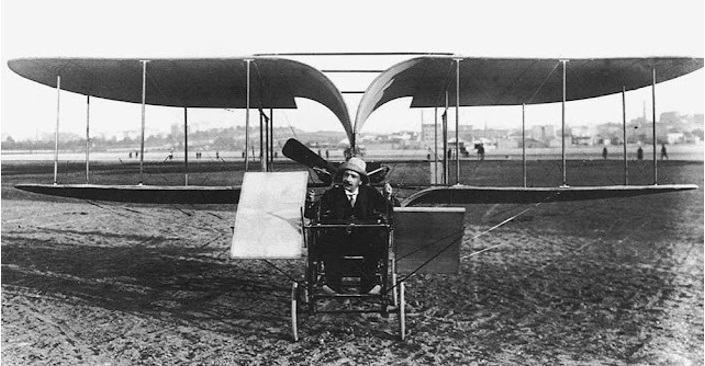
Gomes da Silva I
Wingspan: 7 m
Length: 6.5 m
Weight: 250 kg
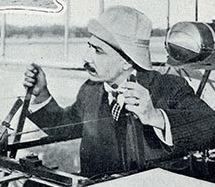
In 1909, Abeillard Gomes da Silva, was in Beira in the then Portuguese colony of Mozambique. Working there, at customs, was Abeillard Gomes da Silva, who that year had the opportunity to visit Europe during a holiday. At his own expense, he set off for France with an interest in heavier-than-air flight.
Upon arriving in France, he promptly spent 23,000 francs to build an airplane of his own invention: the Gomes da Silva I.
Gomes da Silva died in Mozambique in 1930, and holds the distinction of being a Portuguese air pioneer, as evidenced not only by his invention, but also by the title of honorary member of the Aéro-Club de France and by his pilot’s licence, obtained in Germany during his European tour.
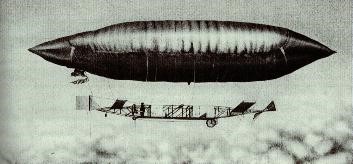
Designed and built by Count Almerico da Schio, the 1905 airship “Italia” was the first Italian dirigible.
The “Italia” had an envelope without a rigid internal structure, a little less than 38 meters long, and containing 1208 cubic meters of hydrogen. It featured many technological innovations patented by A. da Schio, such as an elastic rubber band to allow for additional volume of the envelope rendering it deformable at different altitudes and temperatures. The “aeropiani” (also called rudders) situated at the bow and stern of the gondola, consisting of curved profile surfaces variable in inclination to the line of flight, allowing more stability and governance to the airship.
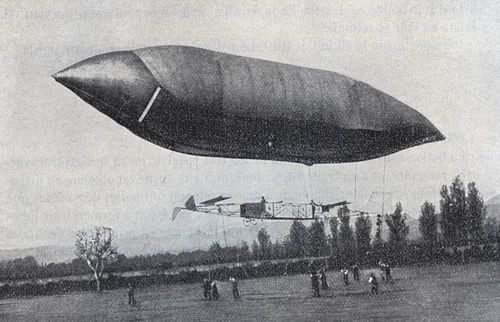
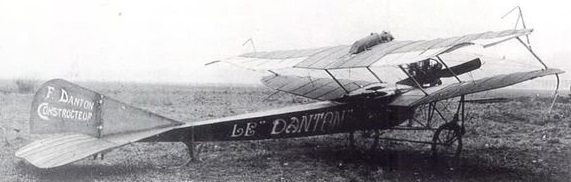
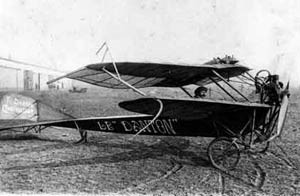
Denhaut designed it in 1910, Espinosa built it, Eugène Marie Pierre Frédéric Danton (1874-1929) paid for it, Victor Fumat bought it. Engine was a 6 cylinder 50 hp fan Lemasson.
 All Aero