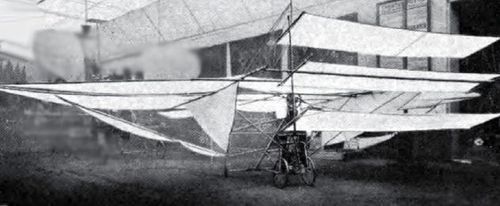
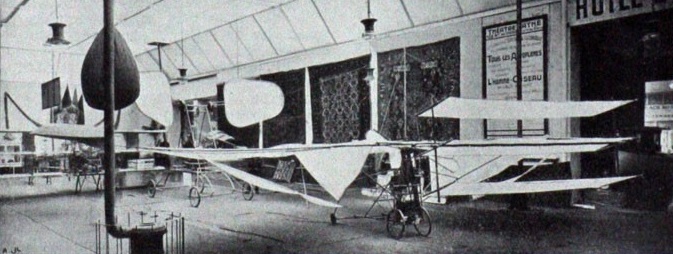
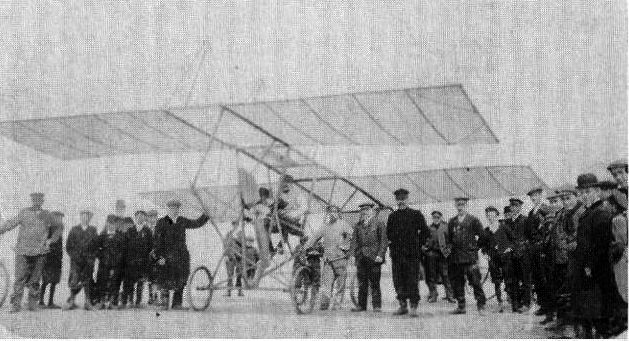
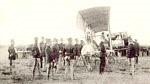
The aeroplane of Baron Jean de Crawhez on display at the Eighth Annual Belgian Motor Show, held in Brussels from the 16th through to the 26th of January 1909. In the background of M. Crawhez’s aeroplane is the ornithopter of M. de la Hault, both Belgian machines.
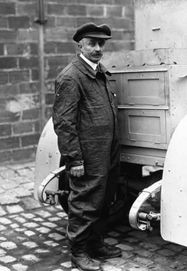
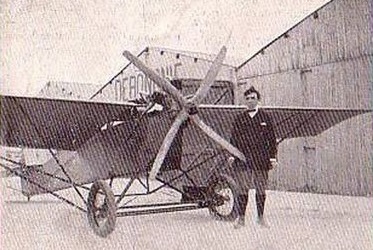
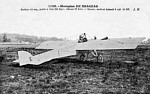
Emmanuel Honoré Decommines, known as Georges Decommines, was born in Ostend, Belgium, on 14 February 1879. His brother Louis Decommines helped him with the construction of this airplane. The tractor propeller was driven by a 25 hp Anzani, which was financed by his aunt. On the first flight attempt, on the morning of May 15, 1910 on the beach of Ostend, Belgium, refused to start and on the second threw a propeller blade through the fuel tank, causing a fire which burned both the plane and the pilot/builder, but both were able to recover and try again. After repair, the machine crashed while attempting to take off. The builder, with minimal damage this time, took the hint and scrapped it, but he would come back with another design the year after.
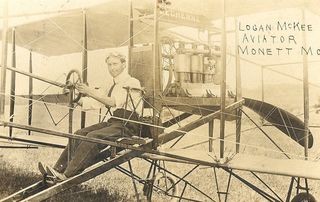
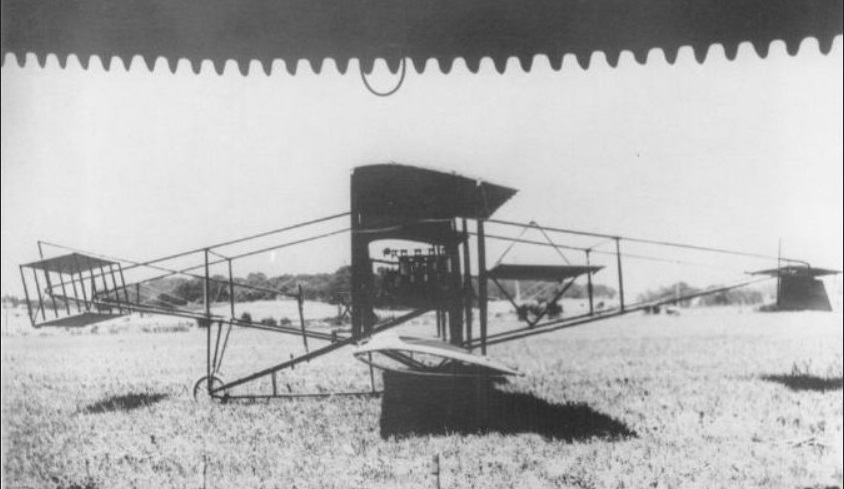
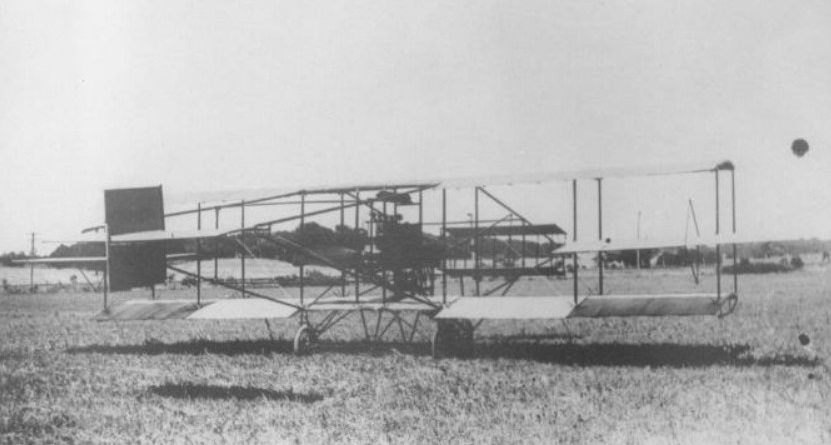
was a success and gave its first public demonstration flight at Monett on July 4, 1911, flown by Monett druggist Logan McKee. It then made an exhibition tour in Oklahoma and Texas.
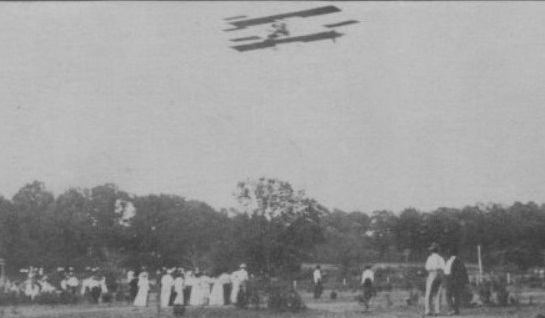
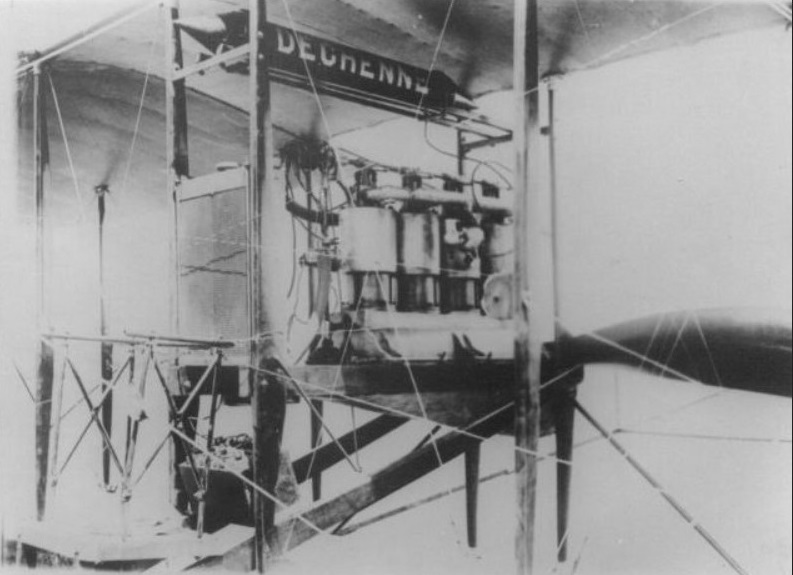
The aeroplane made several straight away flights, going some distance, but hardly exceeding fifty feet in height, alighting in some pasture and returning to the grounds.” If I am reading this correctly, when McKee wanted to turn around, he landed and turned the plane around on the ground, then flew back to the fair grounds. Turning was by far the most dangerous maneuver in early flight, and making a plane that could turn safely was a major design challenge for early airplane builders. Either McKee was a very cautious pilot, or the DeChenne was a very limited aircraft. In any case, the DeChenne company received $1,000 for a two day exhibition at Caddo.
On October 6, 1911, Aero magazine carried a classified ad seeking a new pilot for the Dechenne, and on November 25, 1911, it carried an ad offering to sell the plane’s engine. “Cheap if taken soon. Reason, have closed for season and can make more by spring.” If the plane ever flew again after McKee, I have found no record of it. In February, 1913, Aero & Hydo magazine carried a “quitting business” ad offering to sell various assets of the DeChenne company.
Édouard Eugène Joseph Ghislain opened a workshop in Nieuport-Groenendyck, with his first monoplane coming out 1910. A second with characteristic curved wings appeared in 1911 and another in 1912. Although building three different monoplanes his firm was principally in propeller production. The works folded in 1914 with the beginning of the war.
Born in 1883 of French nationality but naturalized to Belgian in 1905. Debongnie opened a workshop in Nieuport-Groenendyck, with his first monoplane coming out 1910.
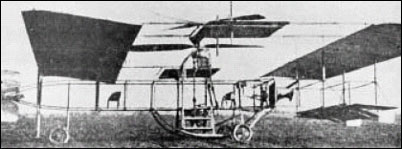
Around 1902, Viscount Decazes and G. Besancon had conducted tests of a 6m diameter vertically mounted propeller in Paris for a planned concept that would have used two of these vertical thrusting propellers, in addition to fixed wings and a propeller for forward thrust. The “rotor” tested produced 67kg of lift at 60 rpm, requiring 10hp. Without a flight weight engine, however, Decazes would have to weight ten more years to build his idea. In 1912, Decazes built his prototype “Helicoplane” at the Loire et Olivier Aircraft plant, and it was tested the following year by Commandant Dorand at Villacoublay. It used two 50hp Gnome rotary engines, one for the co-axial four-bladed rotors and one for the propeller. Two wings in tandem had approximately 25sq.m surface area each. Although it was not intended to hover without a head wind, it was planned to have minimum speed of 18km/h. A transmission failure, however, ended the tests prematurely, prior to flight.

 All Aero