J L Endicott Airplane Co
Medford
Long Island NY.
USA
In 1910 produced aero engines for use in their produced airplanes.
J L Endicott Airplane Co
Medford
Long Island NY.
USA
In 1910 produced aero engines for use in their produced airplanes.
The Emerson Engine Co 6 of 1911 was a 6-cylinder, inline water cooled aero engine producing 100 hp with a dry weight of 300 lb.
The Emerson Engine Co 4 of 1911 was a 4-cylinder, inline water cooled aero engine producing 60 hp.
The Emerson Engine Co Aerial of 1910 was a 6-cylinder, inline water cooled aero engine producing 120-150 hp.
Alexandria VA.
USA
Emerson Engine Co was producing four and six-cylinder aero engines in 1910-11.
In 1911 Olaf Emblem designed a biplane with two pusher props and a unique V-tail.
The aircraft was built by Arizone Airmobile in the USA.
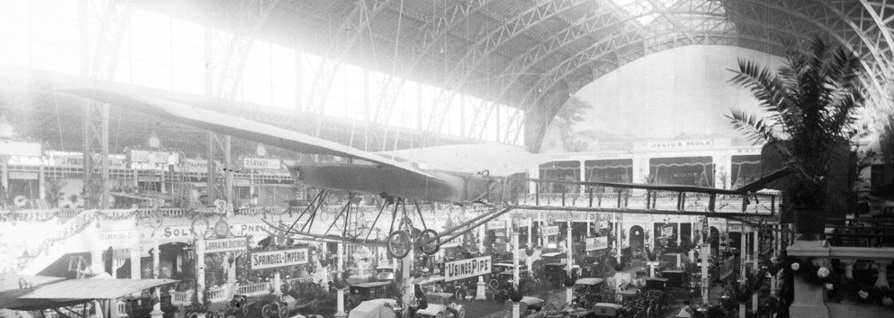
Displayed at the XI Salon de l’automobile et de cycle, Brussels in 1912
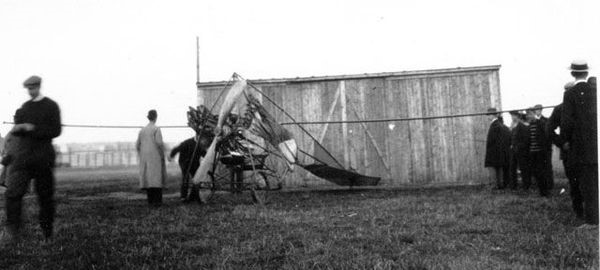
This machine has sometimes been called “Ellehammer”, and while the aircraft was capable of flight, its performance was rather modest, and as a consequence was nicknamed “graesslaamaskinen” (the grass cutting machine, or “Lawn-mower”) in the newspaper Ekstrabladet. With a six-cylinder Ellehammer radial engine and triangular fuselage shape in typical Ellehammer style, the ribs including the cloth could be pushed inboard along the main spar, which then could be folded along the fuselage. The main spars are still in transverse position in this photograph; believed to have been taken at “Kløvermarken” in 1910. Frederik Moltke was to compete with this machine for the first crossing-flight over the Øresund to Sweden. Unfortunately the airplane was not ready when Robert Svendsen had then already overflew the waters.
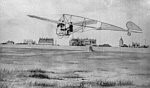
Span: 27’9″
Length: 24’7″
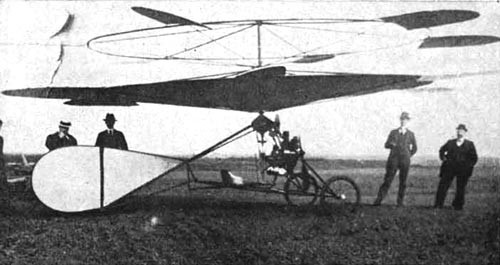
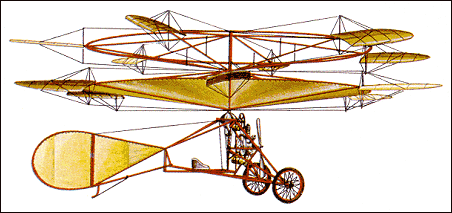
Ellehammer’s first studies of rotary-winged flight began in 1910, and various experiments were carried out in 1911 with a scale model helicopter. The full-sized machine that he built in the following year was a compound helicopter, as its 6-cylinder star-shaped 36hp engine (also designed by Ellehammer) drove both the rotor system by means of a hydraulic clutch, and a conventional propeller. The lifting rotors were two contra-rotating rings, each of 5.97m diameter, the lower one being covered with fabric to increase the lift. At regular intervals round the perimeter of the wings were six vanes, each about 1.50m long and 0.66m wide and pivoting about its horizontal axis. The rotor system was driven via a hydraulic clutch and gearbox, all designed by Ellehammer, and the rotor vanes’ angle could be altered in flight by the pilot as an early example of cyclic pitch control. After several successful indoor take-off tests, during which the machine was probably tethered, Ellehammer’s machine made a free vertical take-off later in 1912, in front of witnesses who included H.R.H. Prince Axel. Tests with the 1912 helicopter continued until late in September 1916, when it overturned after a take-off and the machine was wrecked when the rotors spun into the ground.
Engine; 1 x Ellehammer air-cooled radial, 25kW / 36 hp
Rotor diameter: 7.47m
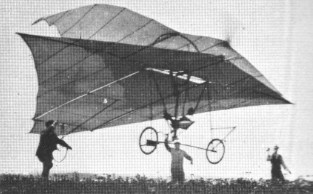
Danish inventor Jacob Christian Hansen Ellehammer’s 1905 first full-scale attempt did not fly. Ellehammer then experimented with an upper “sail”, added it to the machine, and succeeded in making brief tethered ascensions from a circular track on September 12, 1906. Since the island of Lindholon, on which tests were carried out, was too small for a straight flight to have been attempted.
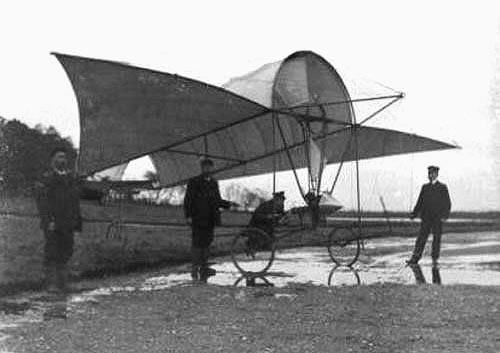
Many people acknowledge J.C.H.Ellehammer of Denmark as the first to fly in Europe because of a reported 42 m hop about 20 inches above the ground made on 12 September 1906.
Ellehammer’s work does not seem to have relied on the designs of his predecessors. He did fail to develop a workable control system. Lack of funds finally forced Ellehammer to abandon his experiments.
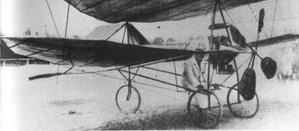
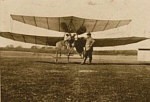
Engine: Ellehammer air cooled radial, 20 hp.
Prop: 4-blade.
Wing span: 30 ft 11.75in (9,35 m).
Length: 20 ft 4 in (6,20 m).
Height: 10 ft 8.25in (3.26 m).
Wing area: 398.3 sq. ft (37.00sq.m).
Gross weight: approx 397 lb (180 kg).
Speed: 35 mph (57 kph).
Seats: 1.
1908 Ellehammer IV
Span: 39’4″
Weight: empty 290 lb
Speed: 42 mph
 All Aero