Etrich Rampenstartgleiter

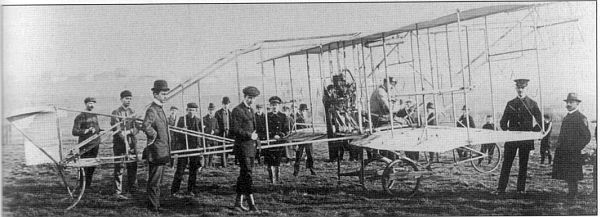
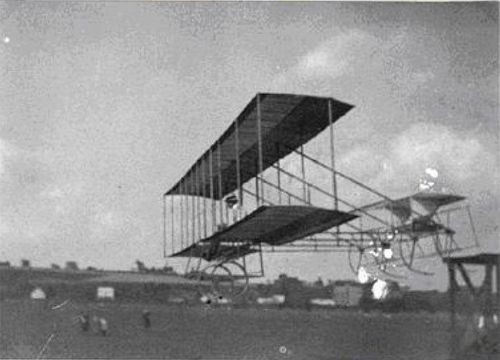
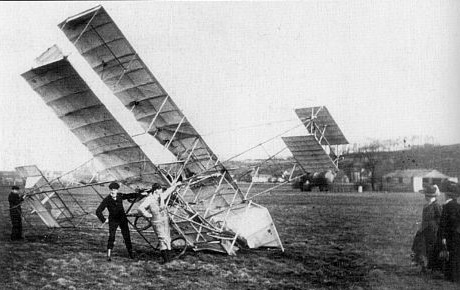
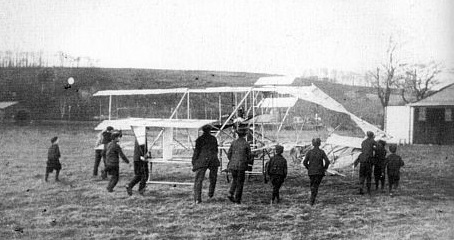
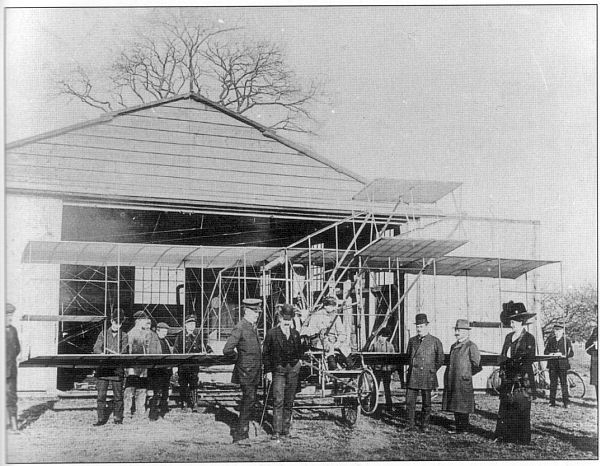
The first glider of Ignaz (father) and Igo Etrich (son) Etrich. They performed several short flights to learn and study the principles of the aircraft. The glider sat on the tricycle undercarriage and started from a sloping ramp.

It was built at Oberaltstadt (Horní Staré Mesto), near Trautenau (Trutnov) in the kingdom of Bohemia, then part of the Austro-Hungarian Empire, and now in the Czech Republic. The glider was not successful and Igo Etrich soon started working on another of his designs, this one based around the Zanonia seed-leaf, which eventually matured into the Taube monoplane design.

Etrich

Austrian Igo Etrich (1879-1967) experimented in aeronautics from 1899. After working with engineer Franz Wels he made a tailless glider with backswept wings in 1907. This was intended to be powered, and led to the Etrich Taube monoplane (bird-like, with backswept warping outer wings and fan-like tail) in 1909-1910. Object was inherent stability; first flight at Wiener-Neustadt in November 1909.

Etrich Article

Small-scale production (Etrich Flieger Werke) and competitive success followed, in U.K. and other countries and the type was imitated frequently. Early Etrich pilots included Hellmuth Hirth. Jointly with his businessman father, Etrich had a private experimental establishment at Josefstadt. Etrich A-1 and A-2 monoplanes served with Austro-Hungarian Army before First World War. Etrich Fliegerwerke GmbH established at Liebau, Silesia, in 1912, independent of Motorluftfahrzeug Gesellschaft of Vienna and Rumpler of Berlin, each of which held a license for the Taube. Rumpler built the type from 1911-1914, and other German makers built similar machines, as used by the German Army before and during the war. First product from Liebau was a remarkable three-seat cabin monoplane with wings of variable incidence and camber, and nosewheel landing gear. In 1914 the company was absorbed by Brandenburgische Flugzeugwerke.
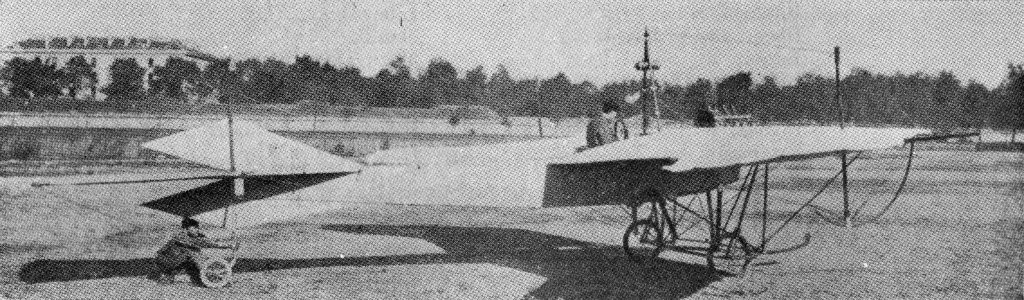
Essener Flugmaschine

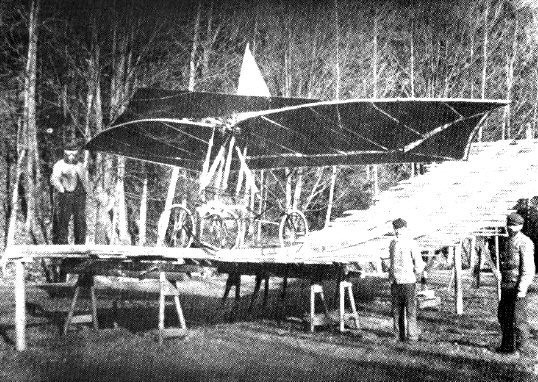
The Essen NVfL “Essener Flugmaschine” Gleiter of 1909 was owned by the Flugtechnische Kommission of Sektion Essen of the flying club NVfL (Niederrheinischer Verein für Luftfahrt). It was designed by a member of the club, Ing. Düll, and built under the direction of Otto Hilsmann at the carpenter’s workshop “Schmetz & Diepenbrock” during 1908/1909. Tests were made by Heinrich Schmetz, flown from a ramp [Flugplatz Holten] that could be turned into the wind.

During one of the flight tests in the first half of 1910, the NVfL’s machine crashed when the left wing got ground contact.

The self-built flying machine was pushed back into the workshop and rebuilt. Flights were then made to Holten Airport (Oberhausen), which had already been built in 1909, as the terrain in the Ruhr meadows was no longer suitable for flight operations.

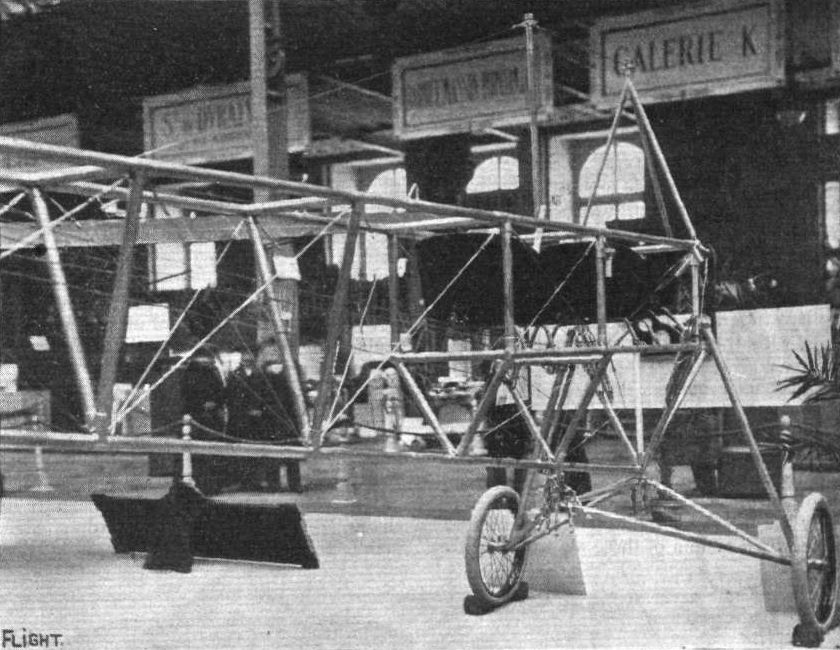
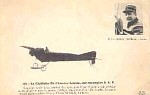
Esnault-Pelterie Type D

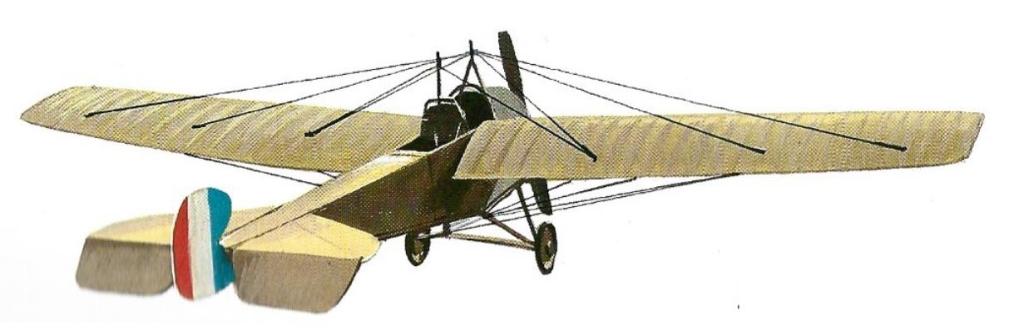
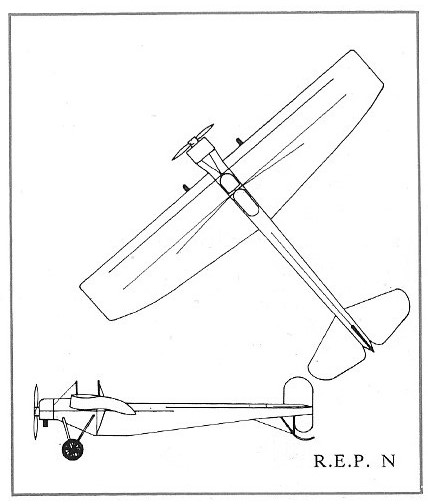
Equipped with a 60 hp engine, the REP type D broke several records at the end of 1910 before being ordered by the military aeronautics and produced in series.

The REP Type D was capable of 70 mph or more.

The prototype traveled 530 km in 6 h 29 min, in Buc (Yvelines), on December 31, 1910 piloted by Pierre-Marie Bournique.

Span: 42’8″
Length: 36’1″
Weight: 1543 lb gross
Speed: 56 mph