The 1910 Farman HF 2/2 Parasol tractor monoplane was designed and built by Henri Farman.
Span: 25’3″
Length: 23’4″
Weight: 660 lb gross
Speed: 65 mph
The 1910 Farman HF 2/2 Parasol tractor monoplane was designed and built by Henri Farman.
Span: 25’3″
Length: 23’4″
Weight: 660 lb gross
Speed: 65 mph
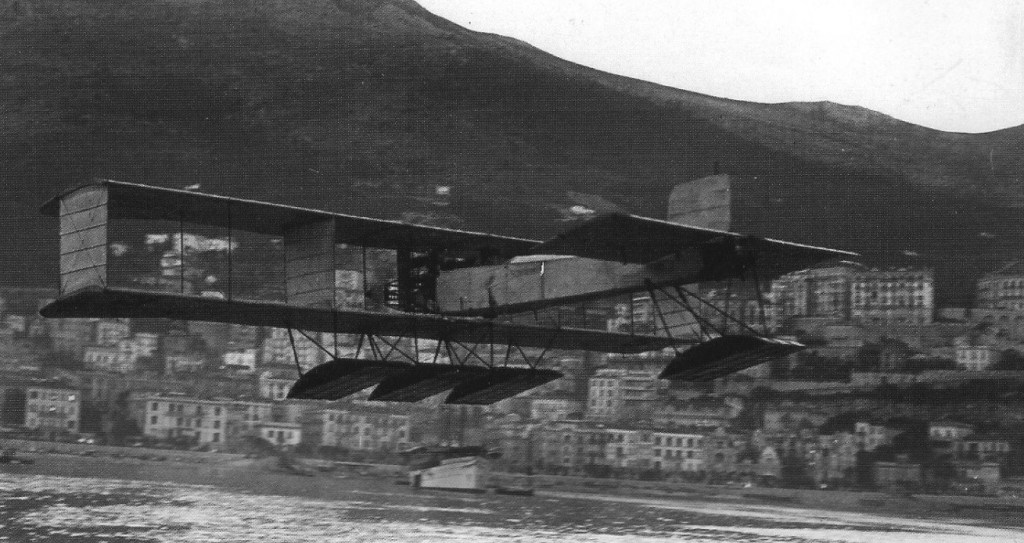
A Farman seaplane fitted with a 70 hp Gnome engine flies low over the port at the very first Monaco meeting in 1912.
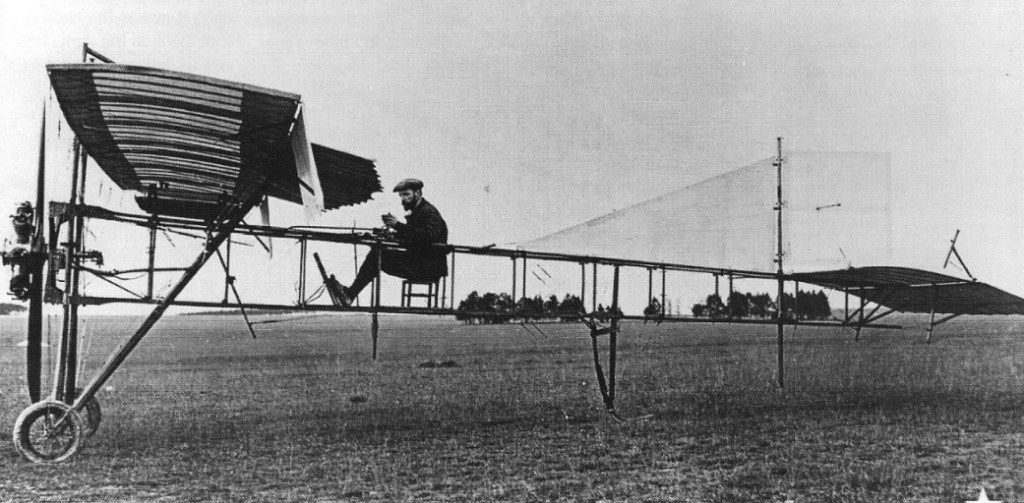
Henry Farman was a supporter of pusher biplanes, but he realized that his business needed to gain expertise in the field of tractor monoplanes.
His first tractor monoplane was produced in the beginning of 1911. It was an ultra light high wing monopplane where the pilot sat in a fully open fuselage on a very basre chair. In the end this paid back in a monoplane with a total weight of 300 kg. The 50 hp developed Gnôme rotary engine gave this monoplane a top speed pf 115 km/hr,
The monoplane was tested at Bouy (Camp du Chalons)
It consisted of a rectangular wing of 23 ft span with a chord, including ailerons, of 6 ft 6 in. about 13 ft behind is a tail, composed of a small horizontal surface, and vertical and horizontal rudders. The Gnome motor, with propeller, is in front, while to pilot’s seat is located on a level with the main plane and just behind it.
It is mounted on a steel chassis with two wheels.
The monoplane carries 48.5 lb/sq.m at more than 25 mph.
This design got the factory identification HF.2/2. This development monoplane model was followed in due course by at least two other tractor monoplanes.
The 1911 Farman HF10 3-Seater Pusher Biplane was designed and built by Henri Farman.
The 1911 Farman HF10bis 3-Seater pusher biplane was also designed and built by Henri Farman.
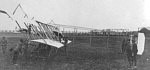
HF10bis
Span: 65’7″
Length: 35’11”
Gross Weight: 2200 lb
Seats: 3

The Longhorn was used extensively for training purposes, and from 1912 the Maurice Farman-designed M.F.7 served with the French military as well as with many civil and military flying schools in France, Britain and elsewhere in Europe. French squadrons used Longhorns for reconnaissance duties until 1915.
It was an unequal-span, three-bay biplane, of two-spar wooden construction, with strut-braced extensions to the upper wing. Fabric covered the wings, cockpit nacelle and tail surfaces. The biplane tail unit had elevator on upper tailplane and twin rudders (no fixed fins) carried on open wire-braced wooden booms. Additional front elevator carried on wooden twin-skid assembly. Two pairs of wheels were fitted.
Usually fitted with a 70-80 hp engines driving a pusher propeller. It was the prominent frontal elevator which led to the nickname “Longhorn”.
Next to the French – who used it initially for reconnaissance duties with seven escadrilles and later for training – the best customers were the RFC and RNAS who received a large number from France and others were licence-built in the UK for training duties.
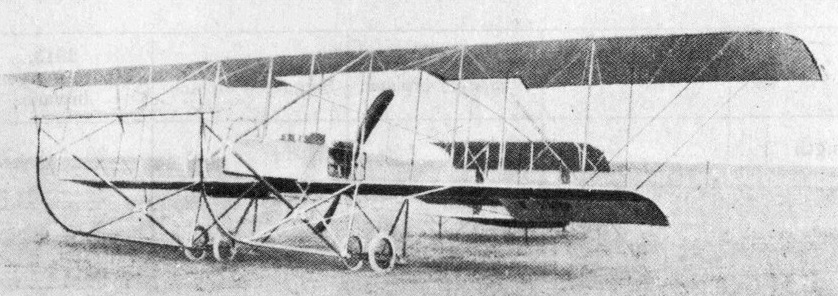
The Longhorn held many records including a distance record of 350 miles in a closed circuit in 1910 and duration records in 1911, 1912 and 1913. The 1913 record was 13 hr 22 min.
The type was built under licence in Britain at Bradford with 100 hp Sunbeam engines. French Longhorns had 70 and 80 hp Renault and others 75 hp Rolls-Royce Hawk engines.
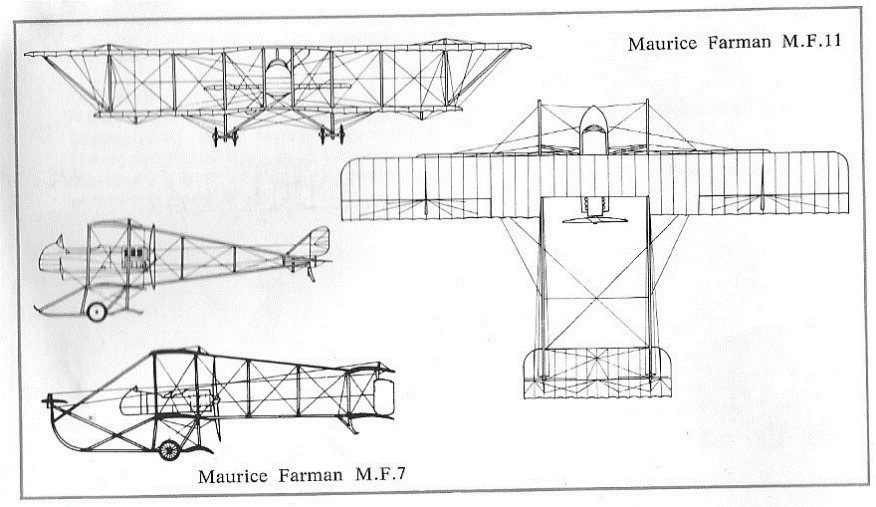
A development of the Longhorn, with the elevator located behind the rudders, was appropriately known as the MF.11 “Shorthorn”.

The 1913 MF.7ter, shown here on at Hendon airfield, was fitted with an 80 hp 8-cylinder De Dion-Bouton engine. This unique machine was an intermediate between the MF.7 and the MF.11, as the front elevator is omitted. The Americans used the term ‘headless’ to describe this type of machine. This machine was the private aeroplane of the Frenchman Marquis Larienty-Tholozan.
Farman MF 7 Longhorn
Engine: 1 x Renault, 51kW / 69 hp or one 100 hp Sunbeam
Max take-off weight: 855 kg / 1885 lb
Empty weight: 580 kg / 1279 lb
Wingspan: 15.5 m / 50 ft 10 in
Length: 11.5 m / 37 ft 9 in
Height: 3.4 m / 11 ft 2 in
Wing area: 60.0 sq.m / 645.83 sq ft
Max. speed: 90 km/h / 56 mph
Crew: 2
Engine: 70 hp Renault
Prop: 2 blade Wood pusher
Wingspan: 51 ft /15.4 m
Length: 37 ft 9 in / 11.35 m
Height: 11 ft 4 in / 3.45 m
Empty weight: 1280 lb
MTOW: 1835 lb / 855 kg
Max speed: 56 mph / 95 kph at SL
Ceiling: 13,123 ft / 4000 m
Endurance: 3 hr 30 min
Crew: 2
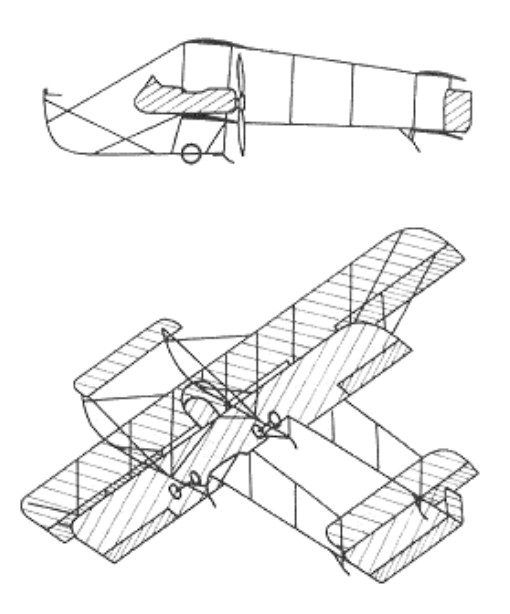

The 1911 Farman HF 6 Type Militaire 2-seat pusher biplane was designed and built by Henri Farman.
Span: 36′
Length: 29’6″
Gross Weight: 1100 lb

The 1911 Farman 2-seater tractor monoplane was designed and built by Henri Farman.
Span: 32’10”
Length: 24’7″
Gross Weight: 628 lb
Speed: 62-68 mph
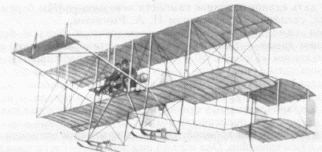
The most widely used and popular ‘Farman’ in Russia during 1909-1916. Hundreds of Russian aviators made their first flight on Farman-IV.
Only few Farman-IV’s were purchased in France. But many hundreds were built at various workshops and factories, ranging from homebuilts to large batches from ‘Dux’ and other serious manufacturers. As a result total number of built aircraft and its modifications are unaccountable. Most of them were powered by 50hp Gnome engine.
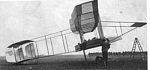

The 1910 Farman “Coupe Michelin” biplane was designed and built by Maurice Farman.
A two-place Farman biplane won the Michelin Grand Prize for landing atop Puy de Dome.
A 3-strut biplane with tail frame. Engine is mounted on the lower wing, driving pusher propeller. Ailerons had only lower control cables and were hanging down while aircraft is in rest. Aircraft is built of wooden elements, connected by very basic joints and enforced by bracing wires.
Wing was covered with fabric only from below. But it was fine, thanks to very small wing load.
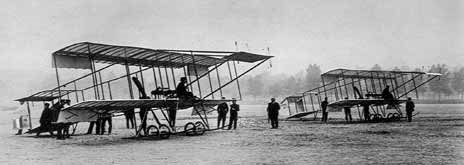
The most common modification of F-4 included two-side fabric cover on the wing and ribs with more advanced airfoil. Those basic improvements, first performed by Russian aviators, allowed pilot M.A.Gaber-Vlynskij to set several ceiling records (April 13, 1913) : pilot with 5 passengers – 1120m
# pilot with 4 passengers – 1350m
# pilot alone – 3000m
Some Russian Farman-IV’s were built of bamboo instead of pine. During winter season wheels were replaced by skis.# Modifications: Farman-IV by ‘Dux’ factory had substantially increased wingspan, single rudder, landing skis were much longer (like on Farman-III). Wing airfoil was not revised, but cover was on both sides. This aircraft was built in series under supervision of engineer V.V.Bartoshevich.
# ‘Farman’ by French aviator Christians (?) was presented on the First Petersburg Aviation Week in 1910. It differed by additional small wheels on forward-extended skis. Aircraft was purchased by the Military Department as a trainer for Gatchina Aviation School. Speed was 57km/h.
# ‘Farman-IV’ with 60hp liquid-cooled ENV engine was flown in the School of Turkestan Aviation Society by Shavrov, officer of the Central Headquarters. It was the first aircraft built by ‘Dux’ factory.
# Few were built in 1910 with 55hp l.c. Renault engine.
# ‘Novgorod The Great’ – built at Novgorod section of the Russian Aeroclub. Had 2-side wing and tailplane/elevator cover, lower wing had smaller than usual size.
# ‘Farman-IV’ by A.K.Tikhomirov was built in Moscow, 1912. Trainer with switchable second set of controls.
# ‘Farman-IV’ of Odessa Naval Battalion was built in April 1911. Upper wing was larger than lower one and supported by upper kingpost. One of Odessa Farmans was flown by aviator S.Utochkin (1876-1916).
# ‘Farman-IV’ by B.S.Maslennikov was built in 1911 for flight Petersburg-Moscow. Differed by pinpointed nose shell, covering controls and pilot’s legs.
# ‘Farman-Aviata’ was built in Warsaw by Aviata Enterprise. 60hp Argus engine provided speed up to 80km/h. Struts were replaced by upper kingposts, landing skis extended forward, lower wing is smaller than usual. Few were accepted by Military Department. Note that at the time Poland was part of Russia.
# ‘Farman-IV’ by A.V.Shiukov had pilot’s seat moved 1.5 forward. Front elevator was removed. Performance was not harmed.
# German built ‘Farman-Albatros’ with minor changes in upper wing design served in Gatchina Aviator School near St.Petersburg.
# ‘Farman-Bristol’ aka ‘Farman-V’
# ‘Farman Militer’ was almost identical to Farman-IV. Few obtained by Russia in 1911. First (actually flying) aircraft built on Polish soil (at the time under Russian rule) was French-designed Farman IV made by Warszawskie Towarzystwo Lotnicze “Awiata” (Warsaw Aeronautical Society “Awiata”) starting from April 1910. 10 of such aircraft were made there and used for pilot training until 1912 when tsarist authorities dissolved the institution.
Replica:
Zolotow, Pawel
Farman F.4
Engine: 1 x 50hp Gnome
Wingspan: 10.5 m
Wing area: 41.0 sq.m
Length: 12.5 m
Empty weight: 400 kg
Loaded weight: 580 kg
Speed: 60km/h
Crew: 2
1910 Coupe Michelin 2-seat
Span: 54’2″
Length: 38’3″
1910 Farman “Coupe Michelin”
Span: 36’1″
Length: 41’10”
Weight: 660 lb gross
Speed: 50 mph


Originally, George White of Bristol Aeroplanes wanted to build licensed copies of the Zodiac biplane designed by Gabriel Voisin, after one was bought by White to show at the 1910 London Aero Meet. On May 28, 1910, pilot Maurice Edmond was able to achieve a short flight, but on June 10, 1910, an accident that damaged its undercarriage had the frustrated crew give up on the Zodiac… even with five other such copies being built by the British and Colonial Aeroplane Company at its headquarters at Filton.
White was advised to take a look at the Farman III plane, designed by Henri Farman. White was unable to grab the rights to build the Farman III biplane because George Holt Thomas—founder of the Aircraft Manufacturing Company Limited (Airco) had a head start in doing the same thing with Farman.

Unable to grab the rights to the Farman Brother’s Farman III, White and the British and Colonial Aeroplane Company based the Bristol Boxkite on the Farman III biplane, but Challenger and his staff made significant achievements to have their plane be its own design. Farman, not surprisingly, sued the British and Colonial Aeroplane Company for patent infringement. However, White was able to show Farman that they had made significant alterations to Farman’s design to improve it… so Farman dropped the suit.
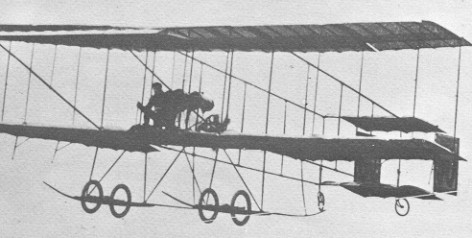
The Farman III set a record of 112 miles in 3 hrs 15 mins.
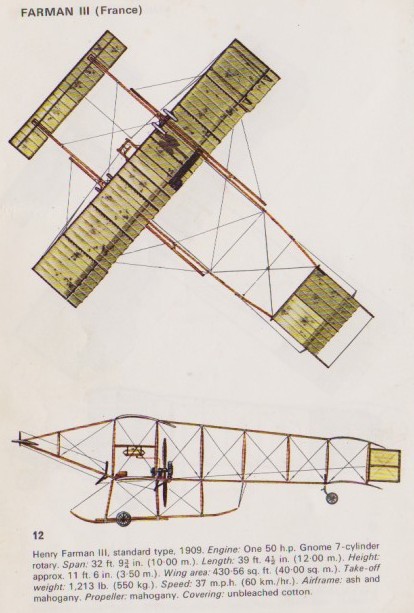
Engine: One 50 hp Gnome.
Length 39 ft 4 in (12 m)
Wing span 34 ft 5 in ft (10 m)
Weight empty 990 lb (450 kg)
Gross weight: 1280 lb
Speed: 37 mph (60 kph).
Ceiling: 360 ft (110 m) fully loaded.
Range: 112 + miles (180 + km).
Seats: 1.
In 1909 Farman designed and built his own machine, which he entered at the great Rheims meet. On July 18, 1909, he flew for one hr. 23 mins, at Chalons, and on August 27 he made a 180-km flight in 3:04:56.4 at Rheims, official world record for distance and duration, winning first prize. On the twenty-eighth, he flew 10 km in 10:39 with two added passengers, the first time three were carried in airplane.
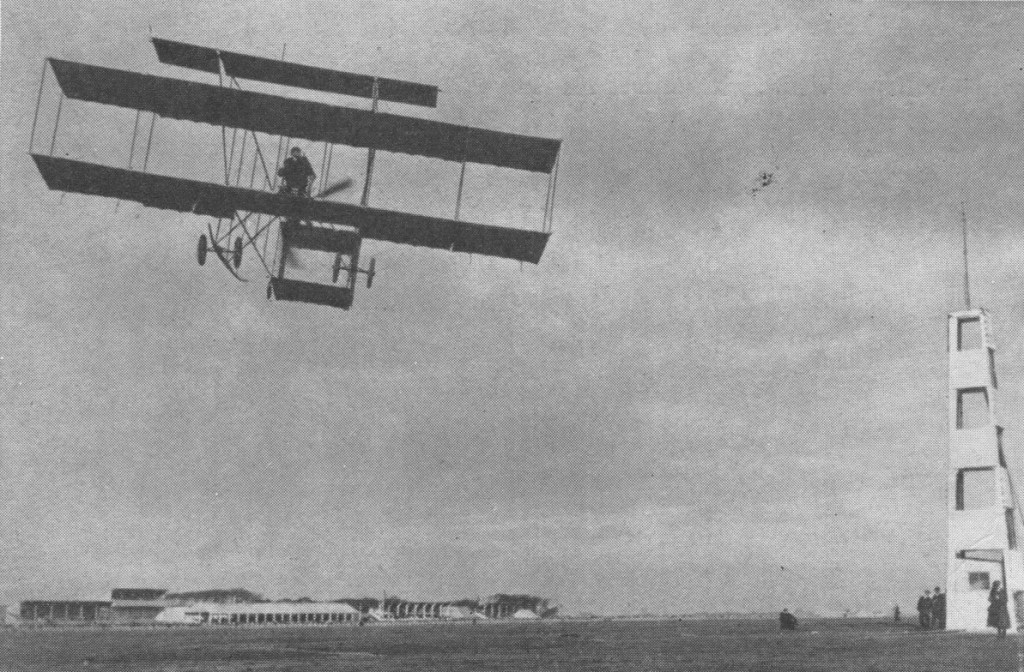
He next flew prominently at Blackpool meet, England, and won first duration and distance prize of $10,000, on October 20, 1909. On November 3 he flew 232 km in 4:17:53 at Mourmelon, another new world duration and distance record.
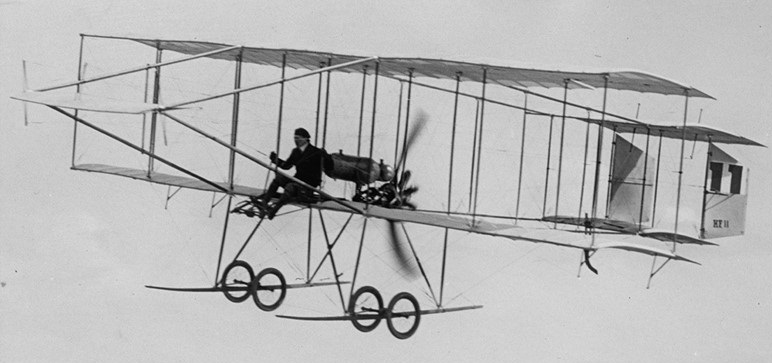
Span: upper 65’7″ lower 50’10”
Length: 42’8″
Weight: 2200 lb gross
 All Aero