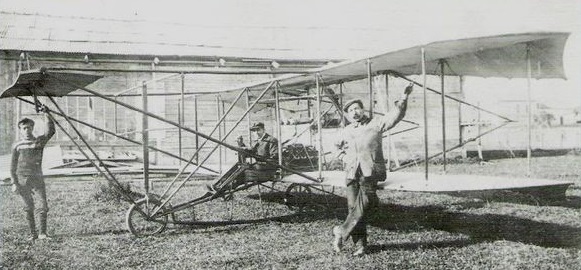
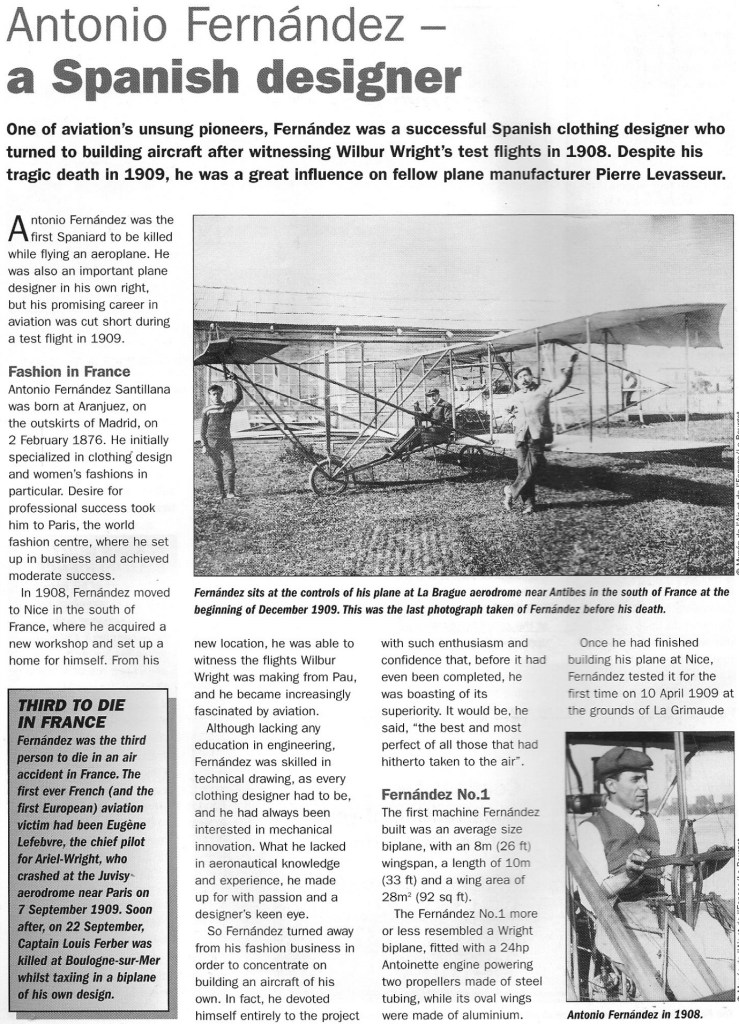
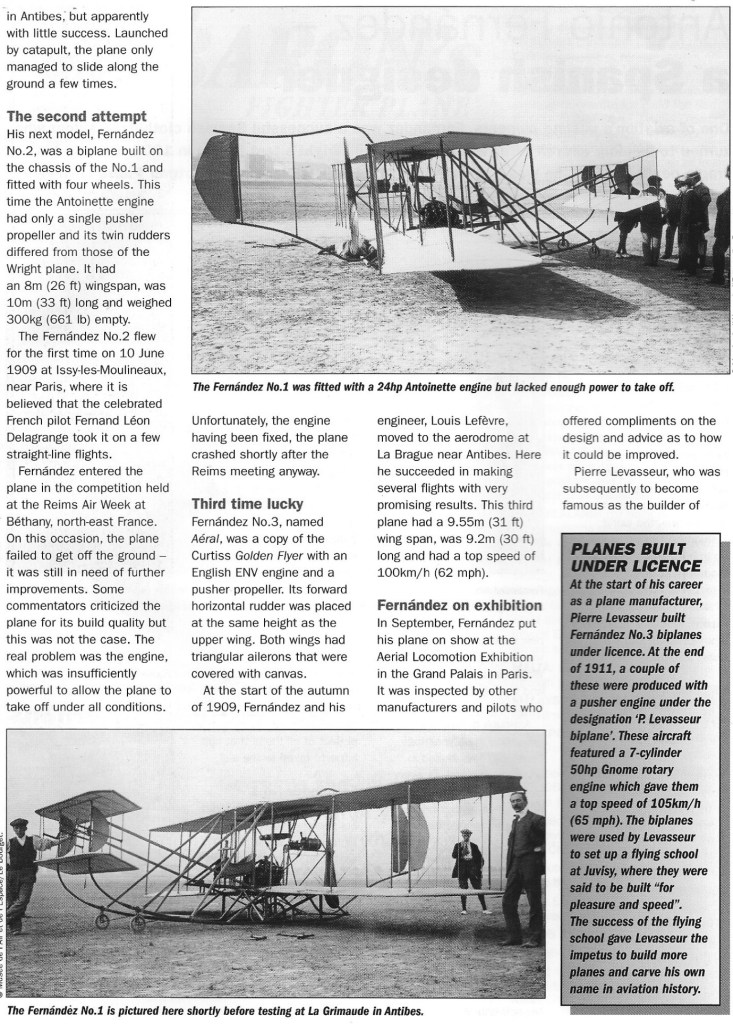
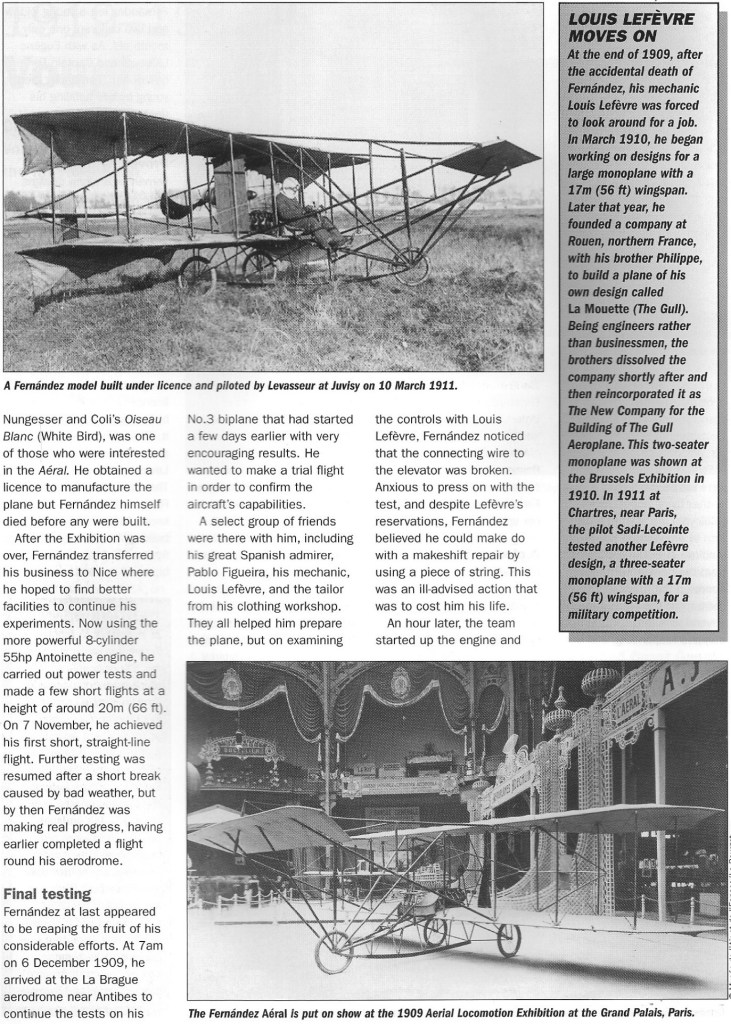
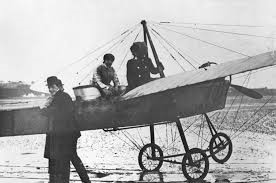
The Fernandez Aeral of 1909 of Spanish pioneer Antonio Fernandez.
The fourth heavier-than-air aviator to become the victim of an aerial accident; dying at the age of 33 on December 6, 1909 on his Fernandez N°3 Aeral.
Span: 31’4″
Length: 30’2″
The Fernandez Aeral of 1909 of Spanish pioneer Antonio Fernandez.
The fourth heavier-than-air aviator to become the victim of an aerial accident; dying at the age of 33 on December 6, 1909 on his Fernandez N°3 Aeral.
Span: 31’4″
Length: 30’2″
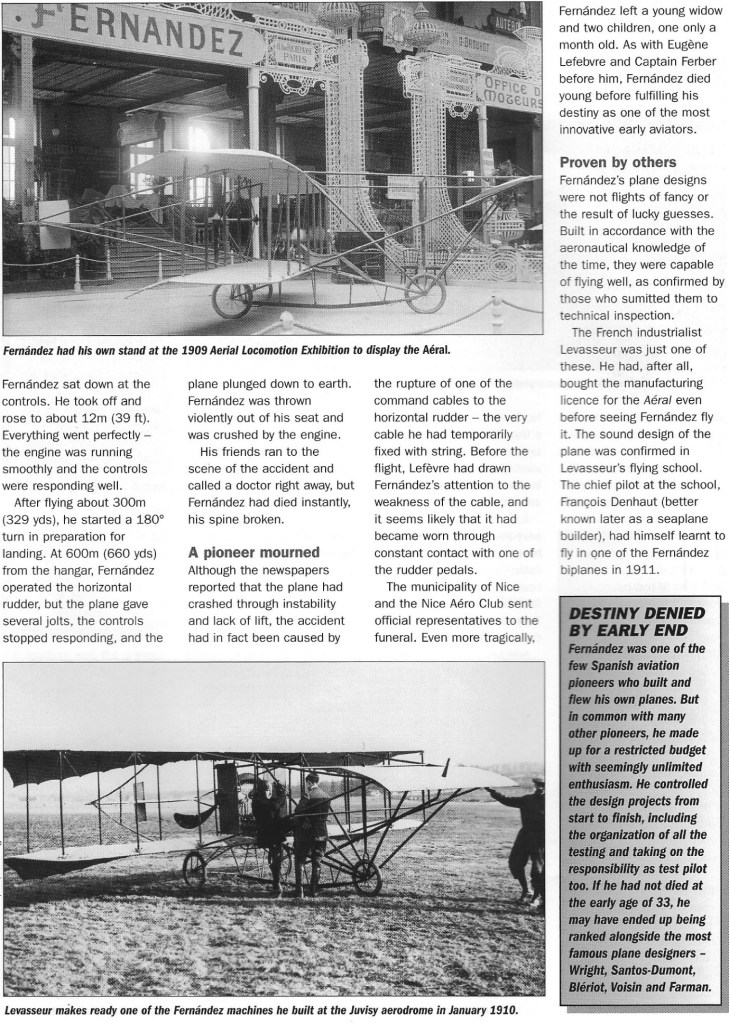
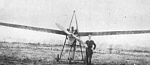
The 1910 Ferguson No. 2 monoplane was designed and built by Harry G. Ferguson in Ireland.
Span: 32′
Length: 27′
Speed: 55 mph
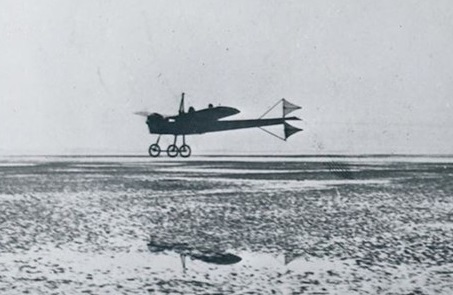
The exploits of the Wright Brothers fascinated Harry Ferguson and during subsequent years he visited many air shows and exhibitions. Two he attended were Rheims and Blackpool where he took measurements from the aircraft there. On his return to Belfast he persuaded his brother Joe that it would be good for their garage business to build and fly planes.
Throughout 1909 construction took place, with various changes and improvements being made as work progressed, one being the replacement of the original Green engine by an eight cylinder, air cooled 35hp JAP engine.
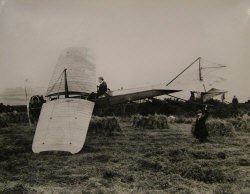
The day of the first flight attempt arrived and with wings detached and the tail resting in the back of a car the aircraft was towed through the Belfast streets up to Hillsborough Park. First efforts to get off the ground failed due to propeller trouble. It was replaced but again this and bad weather prevented attempts for nearly a week.
Finally, on the 31 December 1909 Ferguson was ready to go. A reporter from the Belfast Telegraph described the scene:
The roar of the eight cylinders was like the sound of a Gatling gun in action. The machine was set against the wind, and all force being developed the splendid pull of the new propeller swept the big aeroplane along as Mr Ferguson advanced the lever. Presently, at the movement of the pedal, the aeroplane rose into the air at a height from nine to twelve feet, amidst the heavy cheers of the onlookers. The poise of the machine was perfect and Mr Ferguson made a splendid flight of 130 yards. Although fierce gusts of wind made the machine wobble a little twice the navigator steadied her by bringing her head to wind, successful initial flight that has ever been attempted upon an aeroplane.
A few unsuccessful attempts, one of which was at Magilligan Sands, the Ferguson monoplane took to the air from Hillsborough. However, while his attempts at Hillsborough and Magilligan are well documented, it is believed that Ferguson tested his plane at the site of what is now Ards Airfield.
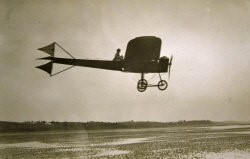
Harry Ferguson had thus made the first flight in Ireland and was the first Briton to build and fly his own aeroplane.
The machine was rebuilt and flown in 1911 and 1912.
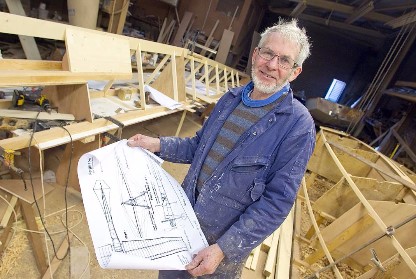
Allastair Duffin, a Newtownards boatbuilder and woodworker, was building a replica of the Harry Ferguson monoplane commissioned by the BBC. The BBC approached Alastair about with their idea of filming a documentary about Ferguson, which would include flying a replica of the original plane.
There are no original plans and it appears Harry Ferguson marked it out on the floor and said to the men, right, there you are, build it. Plans were drawn up using a model at a museum as its basis. Once completed it is hoped the plane will fly.
Engine: JAP 8-cyl, 35 hp
Wing span: 32 feet
Length: 26 feet
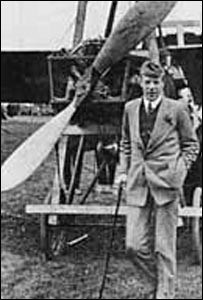
Harry Ferguson of Belfast, Ireland, after the 1911 airplane experiment, went on to be more famous for the Ferguson and Massey-Fergson tractors.
From 1904-1906, Ferber collaborated with Colonel Charles Renard at Chalais-Meudon. In 1905, he built a larger glider to which he married a 12 hp motor, and on 25 May at Chalais -Meudon he launched it from an overhead cable and made a short powered glide. Although not really a successful airplane, it seems to rank as the first rationally conceived and constructed airplane to fly in Europe.
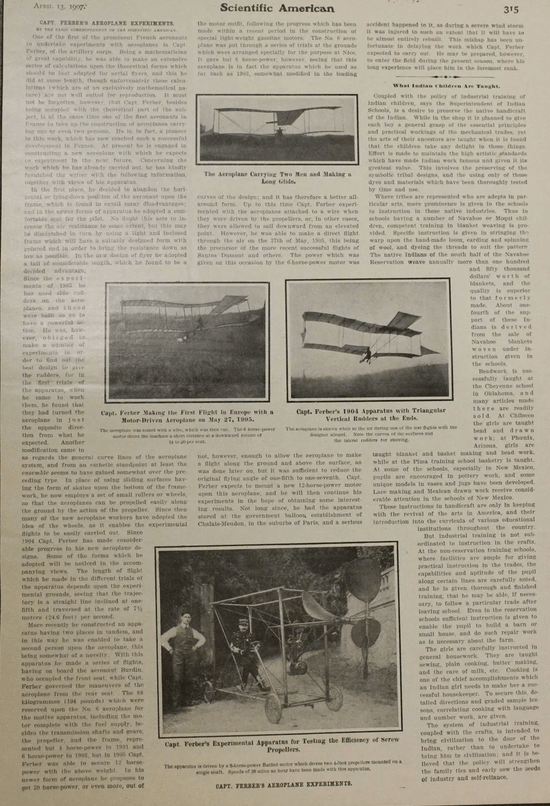
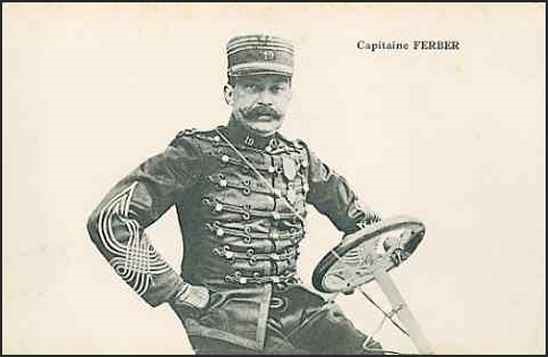
Ferdinand Ferber (8 Feb 1862 Lyon- 22 September 1909 Boulogne-sur-mere). was one of, if not the, most scientifically minded of the early French Aviators. In many ways, it was he who brought about the great blossoming of French Aviation after 1908. A French Artilleryman, he was one of the first Frenchmen to really begin to understand what the Wrights had produced, following their 1908 demonstrations in France. But that was not the beginning of his aviation.
Born in Lyon in 1862, he joined the Army and became an Artillery Officer
He had studied intensively the works of Lillienthal, and espoused a slow progressive scientific development of the airplane. He began working with gliders in 1899, and progressed them until 1901, without noticeable success. At that time he entered into correspondence with Chanute, and received copies of Wright’s first Chicago lecture. He immediately abandoned the Lillienthal model and went to the Wright controllable model. He began building and testing Wright-type gliders in 1902. However, he did not include wing-warping, so the first Wright-type planes seen in Europe did not offer any control, and prejudiced European attitudes toward Wright fliers for years.
In 1904, Archdeacon supported the construction of a powered Wright type flier, which was flown without much success at Berck-sur-Mer by Ferber (along with Gabriel Voisin, interestingly). In late 1904, Ferber again tried to build a glider, but this time added more control devices, and tested his system in a tethered mode using a slide down a cable. His new glider more or less set the configuration for future European development of biplanes.
In 1904 he made the first flight of a heavier than air machine in Europe when he took his mechanic for a short hop at Chalais Meudon.
From 1904-1906, he collaborated with Colonel Charles Renard at Chalais-Meudon. In 1905, he built a larger glider to which he married a 12 hp motor, and on 25 May at Chalais -Meudon he launched it from an overhead cable and made a short powered glide. Although not really a successful airplane, it seems to rank as the first rationally conceived and constructed airplane to fly in Europe. He subsequently built two other machines, and made flights on them in 1908.
In 1907 he left the Army and joined the Antoinette Company, where he was allowed to continue his experimentation and aircraft design. His greatest impact on the French aviation scene was not so much due to any particular aircraft, but to his continued emphasis on experimentation, followed by revision, followed by more experimentation. He continued to experiment when most of the others had given up. He introduced Chanute to the French aviation community, and influenced Archdeacon and Voisin.
He earned his pilot’s license (#5b) from the AeroClub of France on 7 January 1909, flying a Voisin. In early 1909, he undertook the task of organising an airfield at Juvisy/Porte-Aviation, and opened the second civilian school for pilot training. During the Rheims exhibition in 1909, he competed under the name of “De Rue”. Following that, he won several minor competitions, also under the name of “De Rue”.
22 September 1909 Captain Ferber was killed at Boulougne during a taxiing accident.
“Bolougne, Sept. 22. – Capt. Ferber, an officer of the French army, was killed near here this morning while testing an aeroplane. While in the air the machine turned completely over and then dashed to the ground. Capt. Ferber was crushed to death by the motor.
After a short flight the captain attempted to alight. A wing of the machine touched the ground and the aeroplane turned a somersault and crashed to the earth.”
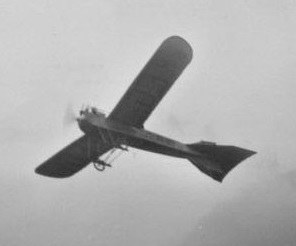
The 1912 F.E.G. Eindecker appeared on the flying field Johannisthal, Germany, in 1912 and made a great impression on the public.
They built this monoplane according to a design of Leutnant Coler, hence the additional System Coler on the side of the fuselage.
This was their first and only machine. The original version sported an anti-nose-over wheel.
The machine was very popular so card producers made at least 5 different cards showing the F.E.G. I System Coler in flight.
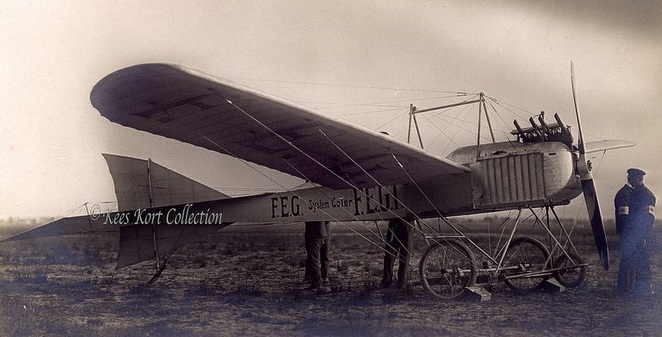
After their adventury with this monoplane the F.E.G. firm and Coler left the aviation field.
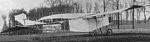
The Faure Monoplane was designed and built by Faure in France, around 1909.
Span: 47’7″
Length: 29’6″
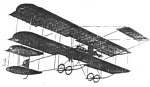
The 1910 Farman Freres biplane was designed and built by Henri and Maurice Farman in France.
 All Aero