In 1911 Edward Fisk designed and built a monoplane of some kind in the USA.
Pioneers
Fisher Monoplane
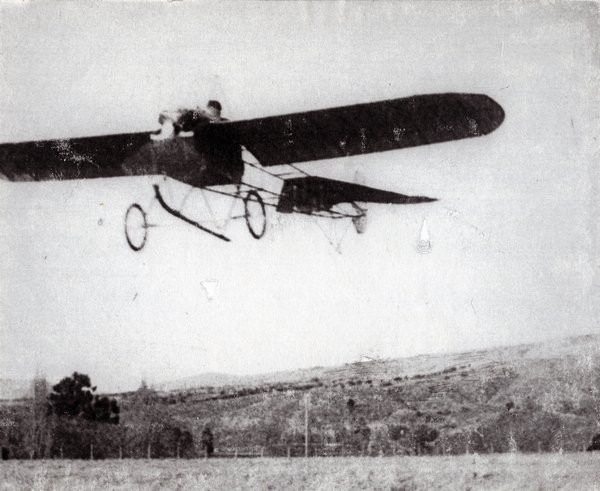
Percy Fisher began the design of his aircraft in June 1911, and the machine was finally finished in November 1912. On Christmas day 1912, Fisher attempted his first flight at Pigeon Bush in the Wairarapa. It was a short hop into the air, followed by a heavy crash. While the engine was powerful enough to lift the aircraft into the air, the basic configuration presented some severe control problems. On 28 April 1913 with Reginald White at the controls, the Fisher monoplane made its first successful short flights at Pigeon Bush. After the Gladstone flights in June 1913, several different pilots occasionally flew the aircraft, before it was retired in early 1916. The only remains of the aircraft in 2003 were the two cylinders at Southward’s Museum. Percy Fisher went on to have a very successful engineering business in Wellington, New Zealand. He died in 1941.
Fisher, Percy
“The planes were attached to what was really an endless belt, revolving around two drums, one placed higher than the other, to allow the planes to meet on an independent stratum of air. The planes were set at an angle on the belt, and when in motion gave a strong lifting impetus to the machine. The propelling apparatus also consisted of planes fixed to an endless band, so designed that the planes pushed the air when traveling in one direction, and feathered when returning in the opposite direction.”
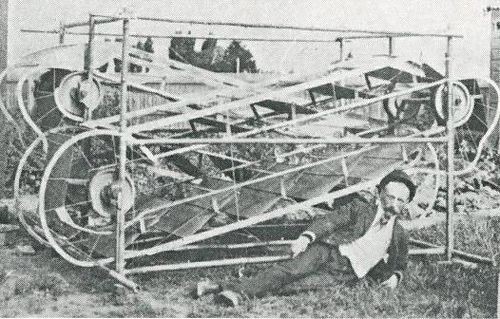
Direct-lift flying machine invented in 1909 by Harry Fisher, an early experimenter from Tauherenikau, New Zealand.
He went on to build a monoplane in 1911.
Percy Fisher died in 1941.
Filiasi 1910 biplane
The 1910 Filiasi biplane was designed and built by Francesco Filiasi in Italy.
Fiedler 1910 monoplane
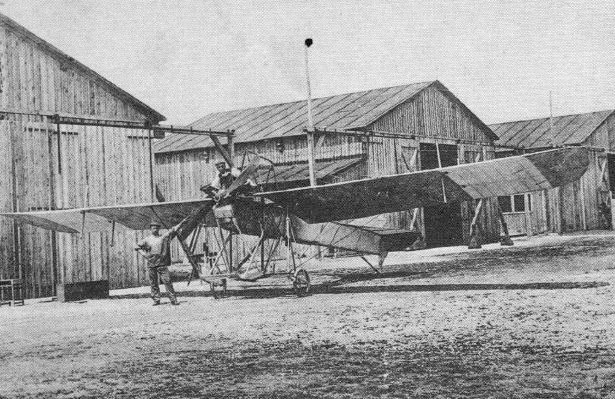
Paul Fiedler of Wiener Neustadt made several flights in this neat machine during the summer of 1910. It was originally driven by an Anzani engine, but later with a 40 hp Mercedes. It crashed in December because of engine problems.
Paul Fiedler built his aircraft in Wiener Neustadt, Austria. His second monoplane was built in Autumn 1910 with one of the few 60 hp Mercedes D4F engines that was sponsored by the Princess of Fürstenberg, Fiedlers employer as a teacher. In December 1910 he received his Austrian pilots certificate #19 with this machine at the Steinfeld in Wiener Neustadt.
In December 1910 he received his Austrian pilot’s certificate #19 with this machine at the Steinfeld in Wiener Neustadt.
In early 1911 Fiedler went to Germany to show his new craft and skills to his benefactors – where he had a first big mishap while crossing the upper Lake Constance. His monoplane was badly damaged but rebuilt afterwards.
Fiedler was flying again at the Canstatt meet 6.-8. May 1911.
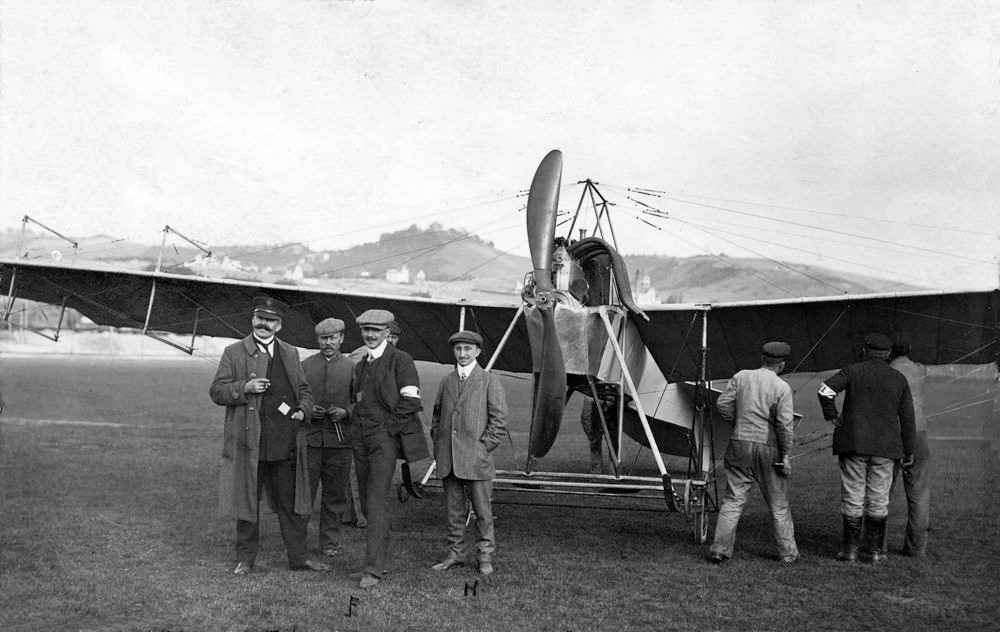
He finally visited Donaueschingen, the home of the Prince of Fürstenberg on 23 July 1911.
He then successfully crossed the Bodensee on 15 August, but crashed in the water on 27 August 1911 during a display flight.
Fiedler, Paul
Fiedler built his aircraft in Wiener Neustadt, Austria. His 60 hp Mercedes D4F engines sponsored by the Princess of Fürstenberg, Fiedler’s employer as a teacher. In December 1910 he received his Austrian pilot’s certificate #19 with his second machine at the Steinfeld in Wiener Neustadt.
In early 1911 Fiedler went to Germany to show his new craft and skills to his benefactors – where he had a first big mishap while crossing the upper Lake Constance/Bodensee.
Fiat SA 8/75
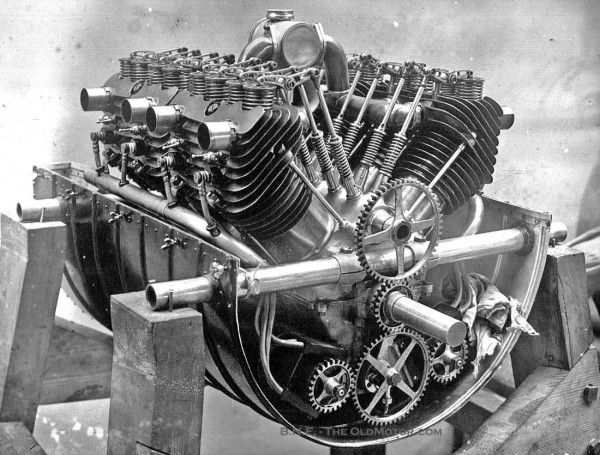
The 1908 V8 3.2 liter Fiat SA 8/75 was the first aero engine produced by Fiat Avio. The 50 hp OHV V-8 air-cooled aircraft engine was based on a race car engine, and first built in 1908; it was used experimentally, and noted for its excellent power to weight ratio. This engine was built for aircraft use only.
One carburettor feeds all eight cylinders. The ignition for each row of four cylinders is provided by a separate magneto.
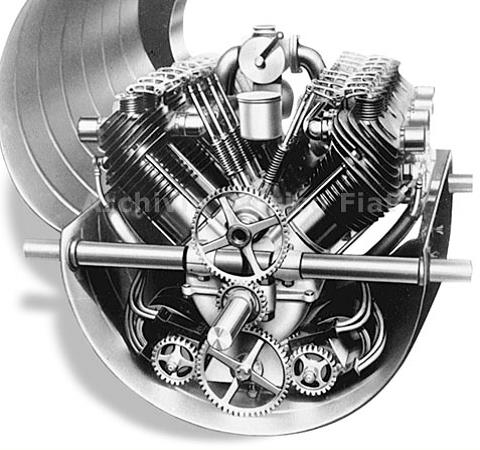
The engine was soon followed by the widely used Fiat A.10.
An air-cooled 90 degree V
Power: 50 hp at 2000 rpm.
Bore: 2.95 in
Stroke: 3.5 in / 90 mm
Fiat S.76
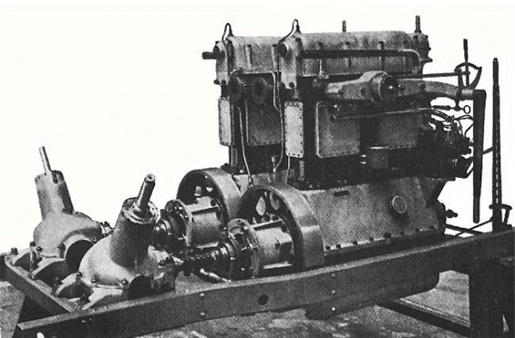
Two of the Fiat S.76 engines mounted side-by-side and set up to drive right-angle gearboxes. They powered a Forlanini F.5 dirigible, used in the war between Italy and Turkey during 1911-1912.
Ferro & Conte Balbi di Robecco Issione
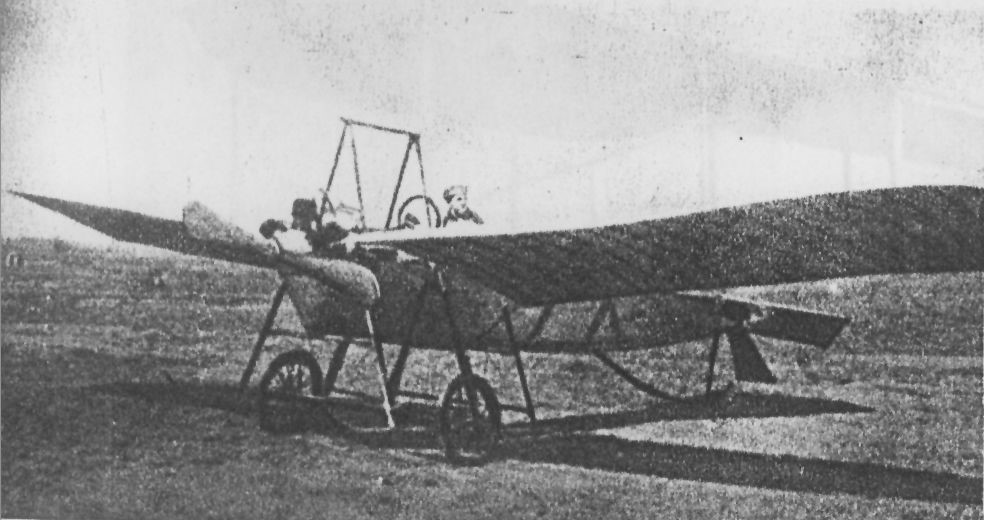
Marquis Gerolamo Balbi from Genova exhibited a monoplane of his design, named “Issione” (“Ixion” in English). It was built in the workshops of the Castagneto di Voltri company. The elevator was controlled by a steering wheel, and the rudder by two pedals. The engine was a 25 hp Anzani. It was tested in 1910 at Campo di Cameri.
Fernandez 1909 No.2 biplane
The 1909 Fernandez No.2 biplane was designed and built by Antonio Fernandez.
Span: 26’3″
Length: 32’10″
Weight empty: 660 lb
 All Aero