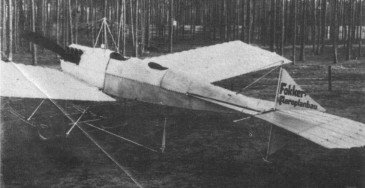
A picture postcard of 1913 depicted a Spin with enclosed cockpit. A variation of the Spin about which little is known. The fuselage is enclosed, like that of the M.II, but in a totally different manner.
A picture postcard of 1913 depicted a Spin with enclosed cockpit. A variation of the Spin about which little is known. The fuselage is enclosed, like that of the M.II, but in a totally different manner.
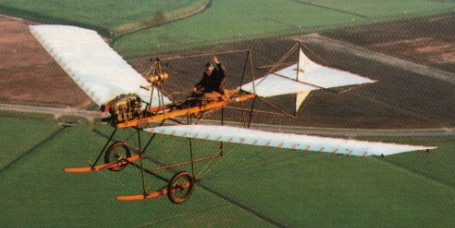
Fokker set to work on a new aircraft, at Nieder Walluf on the Rhine, with the help of boat builder Jacob Goedecker, who also wanted to fly. It was on this second Spin that Fokker taught himself to fly on the Grosser Sand at Gonsenheim. At the beginning of May 1911 he flew a few curves, following them with a complete cir¬cle a few days later. On May 12th von Daurn finally got his money’s worth when Fokker took him along as a passenger.
Fokker Spinne (Spin / Spin II / Spin variation) Article
Another goal was reached on May 16th, when Anthony Fokker obtained his pilot’s licence. He had agreed with von Daum that the latter would become the owner of the aircraft as soon as Fokker had gained his licence. Von Daum wanted to start training right away, but Fokker tried to talk him out of it because he had received an invitation from his former home, Haarlem, to give a flying demonstration on the Queen’s Birthday. There was money to be made, and he was afraid that von Daum would crash “his” aircraft again.
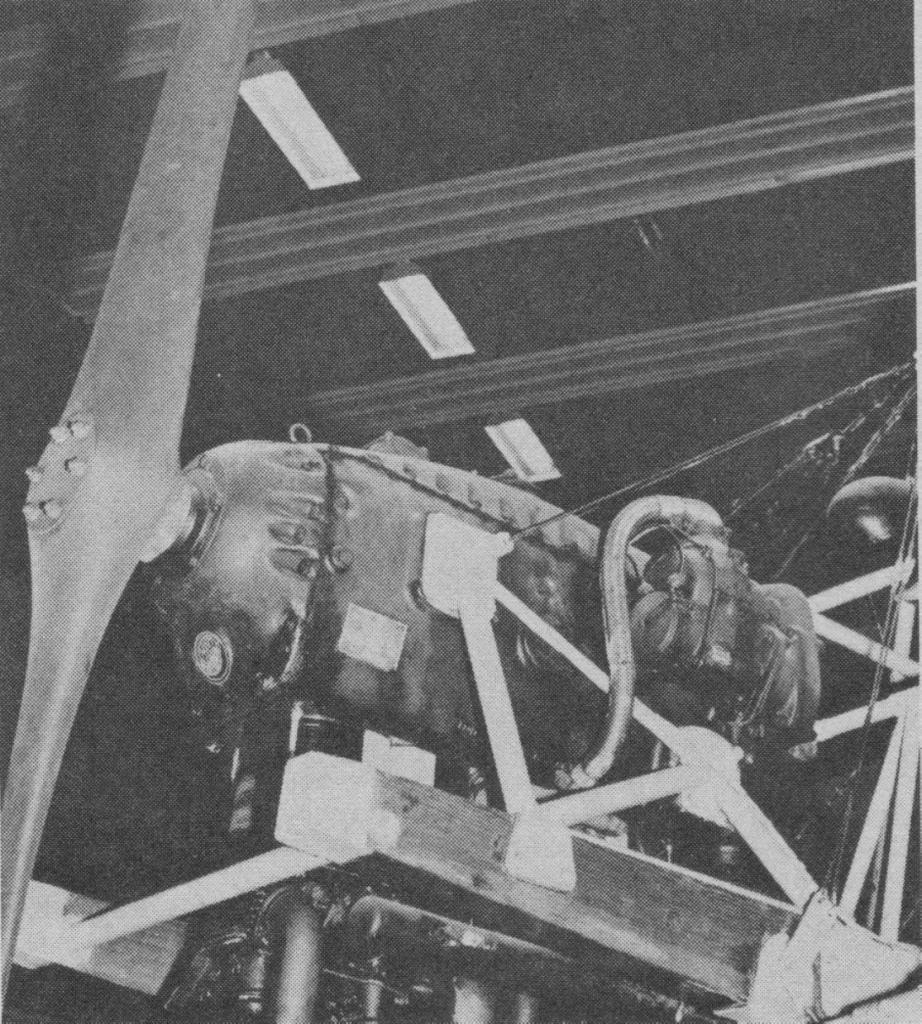
However, von Daurn could not be dis¬suaded. After a reasonable start to his fly¬ing attempts he suddenly seemed to forget everything he had previously learned, and dived into the ground from a height of 10 metres. He shook the bits and pieces from him, and advised Fokker to “take his damned aircraft away, and fly to hell with it”. Fokker purchased von Daum’s share in the venture for 1200 Marks, and so became the owner of the wreckage and, more importantly, the 50 h.p. Argus engine.
Meanwhile, a third Spin was being made by Goedecker, and on August 31, 1911 Fok¬ker gave his first flying demonstration over Haarlem.
The military version of the Spin was called the M.I.
The initial version was the A 1912; the later B 1912 had a 100 hp engine, and a few others were fitted with 70 hp Renaults.
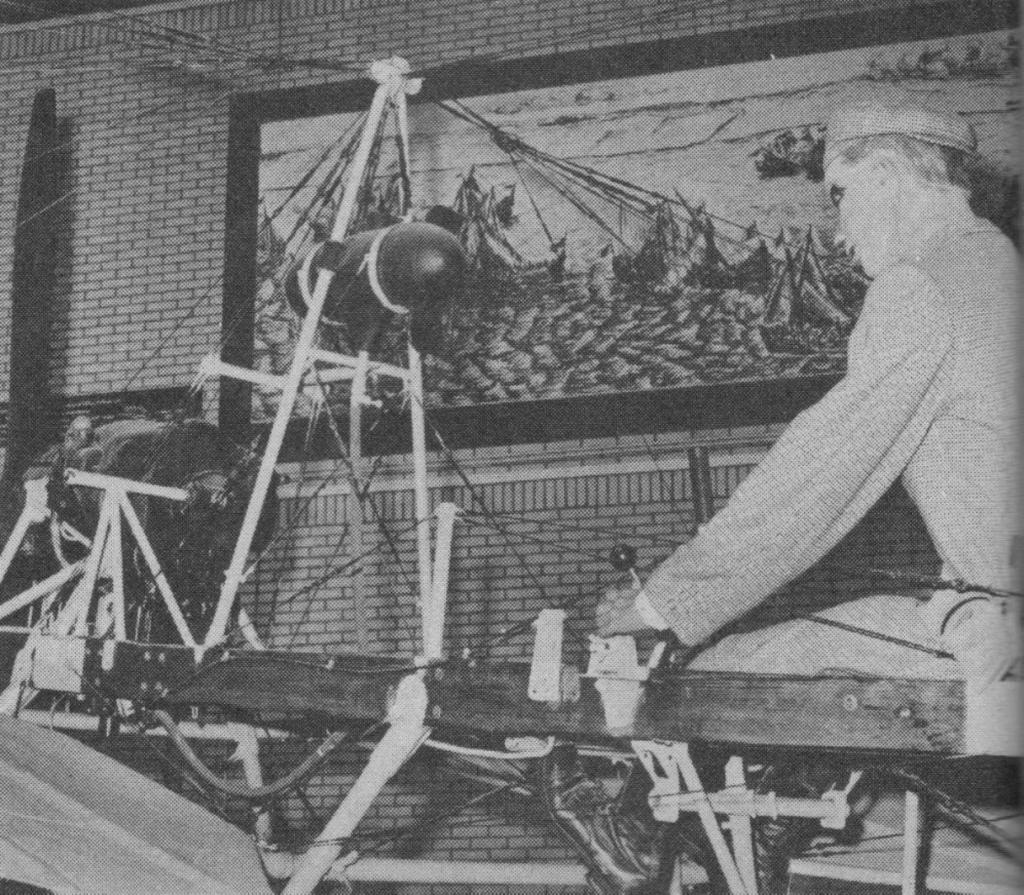
A replica of the 1911 Haarlem aircraft was made by the Fokker works in 1936. It was similar tubular steel and wood construction with same quality fabric cover, but the engine a more powerful Hirth 504 A-1 of 105 hp. Stored through WW 2 it was reassembled and reconditioned in 1953, then reconditioned again in 1959 for exhibition at the Aeroplanorama.
Gallery
1911 M1 2-seater monoplane
Span: 36’1″
Length: 26’3″
Weight empty: 849 lbs
Speed: 49 mph
Seats: 2
1911 Spinne (Spider)
Span: 36′
Length: 25’5″
Weight: 900 lb gross
Speed: 70 mph
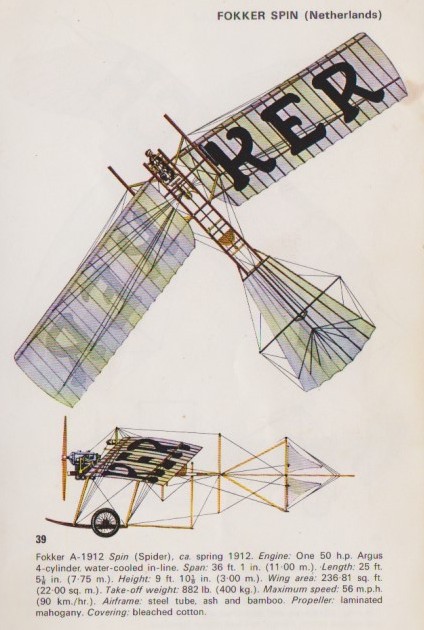
A-1912
Engine: One 50 hp Argus four¬ cylinder in line.
Prop: 2-¬blade.
Wing span: 36 ft 1 in (11.00 m).
Length: 25 ft 5 in (7,75 m).
Wing area: 236.81 sq.ft (22.00 sq.m).
Gross weight: 882 lb (400 kg).
Max speed: 56 mph (90 km/h).
Crew: 1.
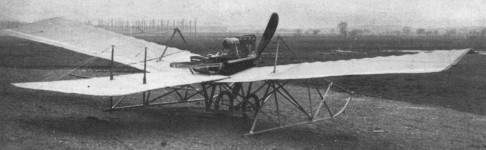
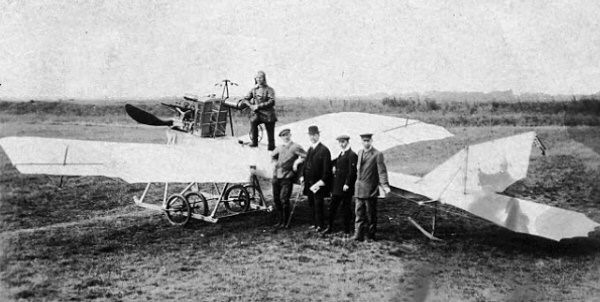
The first aircraft built by Anthony Fokker, the Spin of 1910. Anthony Fokker decided to build his own aeroplane. A fellow pupil from the school at Zahlbach, the 50 year old Lieutenant von Daum, became his partner, donating the cash for the engine, and Fokker contributed his knowledge, his labour and 1500 Marks. The machine, named the ‘Spin’ (Spider), was constructed in an empty Zeppelin shed at Baden Baden. By the end of 1910 it had been completed, and Fokker was able to make the first hops in it. To start with, the ‘Spin’ had no rudder, but this did not mat¬ter to Fokker, who went almost out of his mind with joy.
At Christmas 1910 he went home, only to be greeted with the sad tidings that von Daum had tried to fly the ‘Spin’ in Fokker’s absence and smashed into the only tree on the airfield during take off.
This monoplane with Taube-like wings tips and a big rudder (sometimes identified as the A.V) was built in 1912 in Bremen (Germany). The engine was a 50 hp Argus, and it flew for the first time on July 28th, 1912.
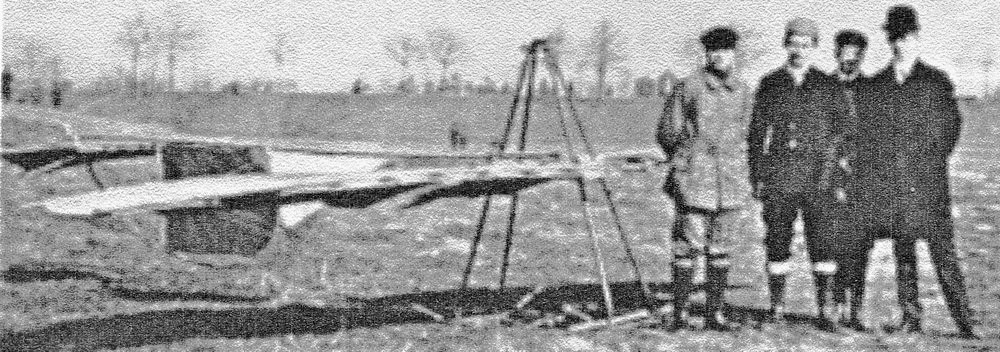
This glider, which was later designated Focke A II, was actually built by three high school students: Henrich Focke, Frido Kirchhoff and Carl Tiemann. It was flown in late 1909 at the Osterdeich in Bremen.
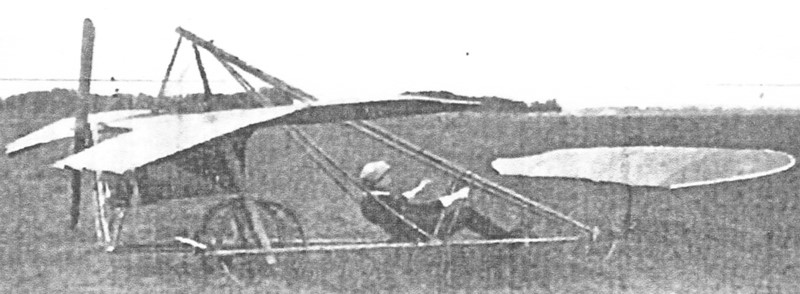
Wilhelm and Henrich Focke were interested in canard types and acquired a German patent in 1908. After two glider models – the “Falk” I and II – Henrich Focke designed and built a powered model identified at the time as the “Falk III” in 1910. Probably later the identifications were changed to Focke A 1, A 2 and A 3 etc. The “Falk III” was powered by a V-2 Neckarsulm engine developing cirka 10 hp driving a pusher propeller. This engine gave all sorts of problems and probably was too weak anyway. The “Falk III” never did leave the ground.
Dr. Alberti was a lawyer who financed some aeroplane designers, for example in 1909 the Focke-Alberti Ente.
A single seat canard.

The 1910 Flying Machine Mfg. Co. Biplane had a 30 hp motor.
Brothers Tadeusz and Władysław Florjańscy (“Florjański” being a singular form of the name) built in Lwów (then Lemberg in Austria-Hungary, now Lvov in Ukraine) a biplane aircraft in 1914. When the war broke out the plane was nearing completion and was confiscated by military authorities and earmarked for evacuation. However, rapid advance of Russian army led to its capture and being finished by new owners which apparently made some operational reconnaissance flights before it crashed.
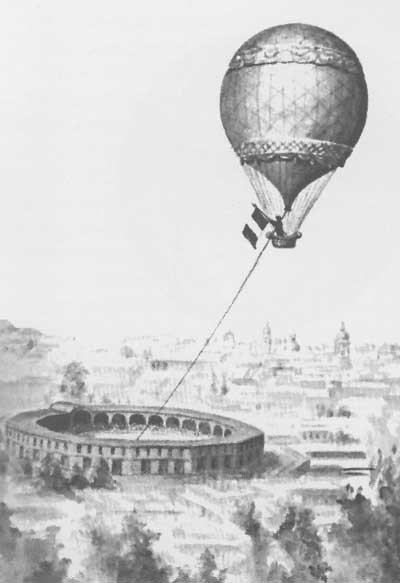
Jose Maria Flores, (also Florez, 1820?–1848), was an obscure 19th century balloonist who made first ascensions in many South American countries, including Chile, Peru, Ecuador and Colombia, as well as being a pioneer aeronaut in Guatemala and Mexico – although ironically, he never flew in his native Argentina.
The first balloon ascension made in Peru, which took place in Lima on September 24, 1840 at the Plaza de toros de Acho, the oldest bullfighting arena in the Americas. Still standing today, its construction dates back to 1766. Flores died accidentally during an ascension on January 30, 1848.
 All Aero