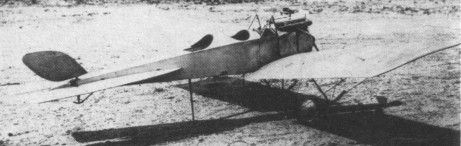
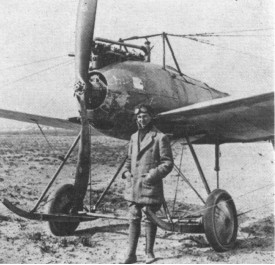
Forlanini / Società Leonardo da Vinci Forlanini

Enrico Forlanini was born to Francesco Forlanini, a physician and director of the Ospedale Fatebenefratelli in Milan. After elementary school he attended one of the three Milan Regie Scuole Tecniche, in 1863 he entered the Military College of Turin.

In 1866 he enrolled at the Military Academy of Turin, and become a Lieutenant of Engineers. Enrico enrolled in the Scuola di Applicazione Artiglieria e Genio (Application School of Artillery and Engineers) in Turin in 1868.

Upon graduation in 1870, he was assigned to Casale Monferrato, where he was able to work in the police station’s workshop. He began working on a systematic testing of propellers. He subsequently studied at Politecnico di Milano and graduated in Industrial Engineering.

In 1877, he developed an early helicopter powered by a steam engine. It was the first of its type that rose to a height of 13 meters, where it remained for some 20 seconds, after a vertical take-off from a park in Milan.
Later he designed and built a series of dirigibles, notably, designed in 1901 and launched in 1909, the Leonardo da Vinci that he dedicated to the Renaissance inventor and, in 1912, the Città di Milano, dedicated to his beloved home town. The latter showed exceptionally good characteristics of stability and controllability that won Forlanini international renown. A further four airships were constructed: F3, F4, F5 and F6. A seventh, named Omnia Dir was only completed after his death in 1930.
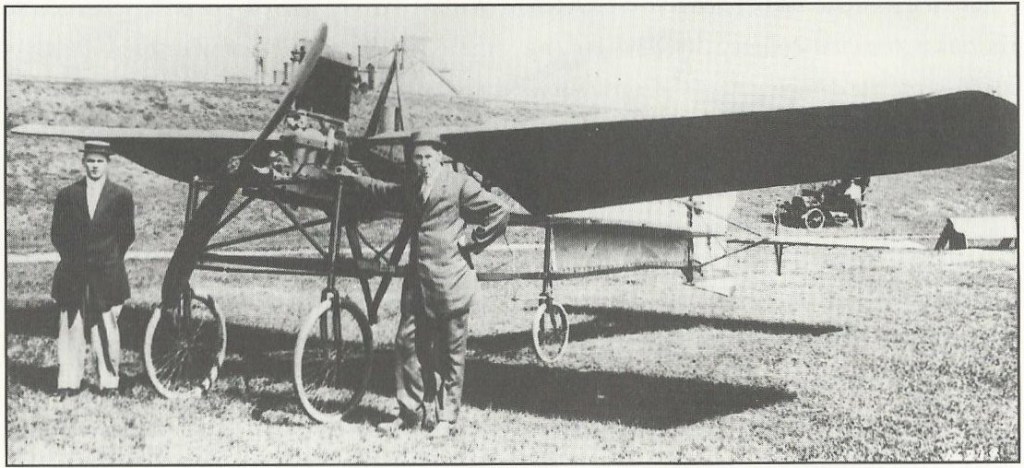
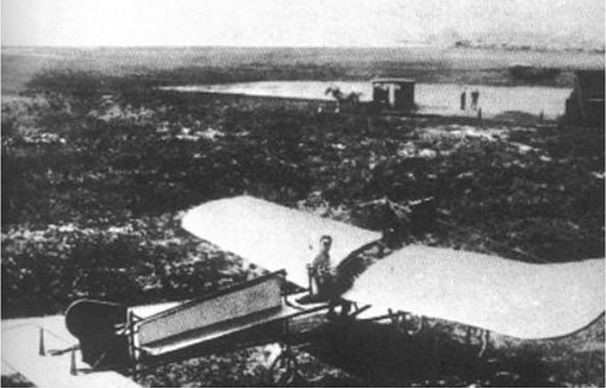
Ford-Van Auken 1909 monoplane

Edsel Ford, the son of automobile pioneer Henry Ford, worked part time in the Ford factory where, in 1909, he met a Ford employee, Charles Van Auken, who had bought construction drawings for a Bleriot XI monoplane.

Knowing that Edsel was deeply interested in aviation, his father asked several Ford employees to help Van Auken build the airplane. Ford also donated a 28-horsepower Model T engine.

The airplane was test flown by Van Auken on the Ford farm in Dearborn, Michigan. It rose a few feet above the ground, then settled back in a cloud of dust. Henry suggested the airplane needed more power and gave Van Auken a “hopped-up” engine.

A second flight attempt was made from the Fort Wayne parade grounds in Detroit in 1910. The airplane staggered into the air, but Van Auken lost control and crashed into a tree.

Ford-Van Auken

Edsel Ford was born in 1893, the son of automobile pioneer Henry Ford. Edsel worked part time in the Ford factory where, in 1909, he met a Ford employee, Charles Van Auken, who had bought construction drawings for a Bleriot XI monoplane. Knowing that Edsel was deeply interested in aviation, his father asked several Ford employees to help Van Auken build the airplane.

Fokker and von Daum 1910 Eindecker

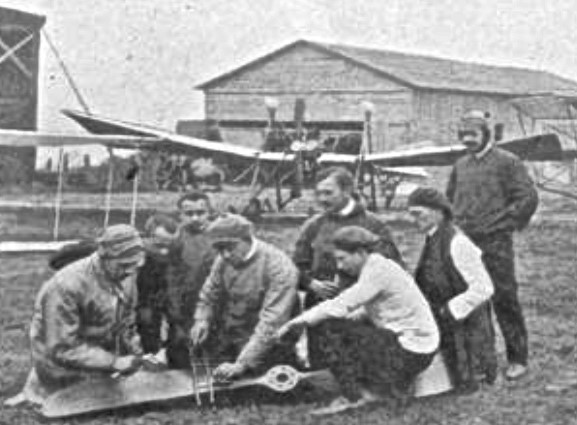
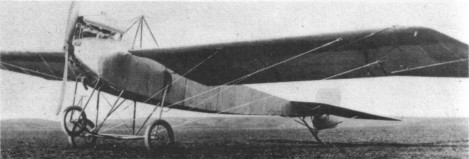
This monoplane was built at the “Erste Deutsche Automobil-Fachschule, Abteilung Flugtechnik” at Zalbach near Mainz, Germany, where Anthony Fokker was student. Depending on whose research you trust, this monoplane was either designed and built by Fokker and another student, Franz von Daum, with help from the engineers of the school, or taken over as an unfinished project by Fokker and von Daum. The monoplane which was finished in October 1910, with von Daum bringing most of the money and a 50 hp Argus engine. It was tested by Fokker, and first hop made in December 1910. Later, von Daum damaged it beyond repair. Again, depending on who you trust, Fokker and von Daum decided to build a new monoplane, this time designed with much help from Goedecker and built at the Goedecker plant, this machine being the first Fokker Spinne, or the machine was finished at the Goedecker plant and actually became the first “Spinne”.

Fokker W.I

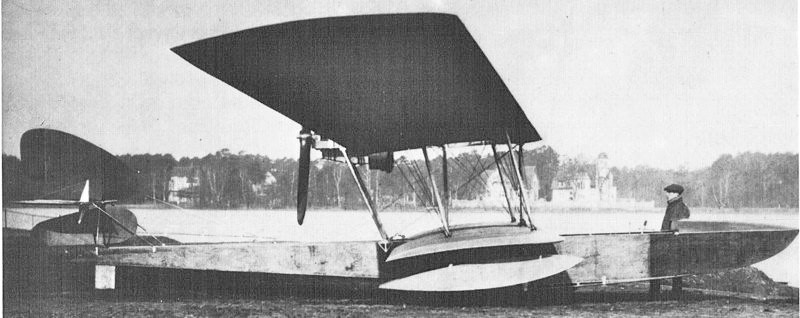
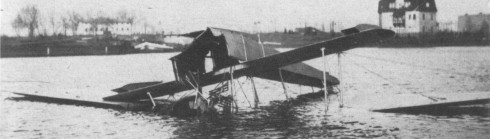
The first Fokker flying boat – identified as the W.1 – dating from February 1913. A characteristic two-seat sesquiplane biplane with a Renault engine of 70 hp fitted in pusher configuration on the top wing. The machine was intended by Fokker to participate in the Monaco seaplane contest of 1913. During an early test flight the W.1 crashed in the water being completely destroyed, with Fokker and his mechanic narrowly escaping. Fokker never turned to flying boats during WW1 again.