Buffalo NY.
USA
Built the Frontier A-1 and A-2 aero engines in 1912.
Buffalo NY.
USA
Built the Frontier A-1 and A-2 aero engines in 1912.
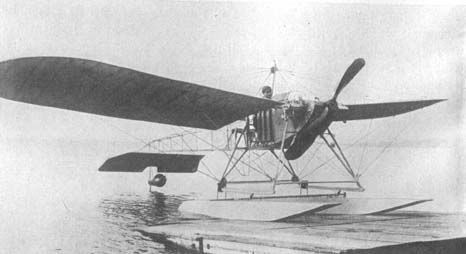
A 1913 development of the floatplane of the Swiss engineer Grandjean, who had patented floats with coils (in German: “Schwimmerabfedering”). Characteristic of this wing warping monoplane is its Orlikon engine of 50 hp, radiators at the fuselage sides and completely open fuselage behind the pilot seat.
Flugzeugbau Friedrichschafen established with factory at Mansell, later at Warnemunde, producing many seaplane designs for German Navy.
FF 29 twin-float reconnaissance seaplane introduced November 1914 for coastal patrol and fighter versions. Replaced by FF 49, with more powerful Benz Bz IV engine, introduced in May 1917. Also built land-based aircraft, including G III long-range bomber with two Mercedes DIV engines, used on Western Front in 1917
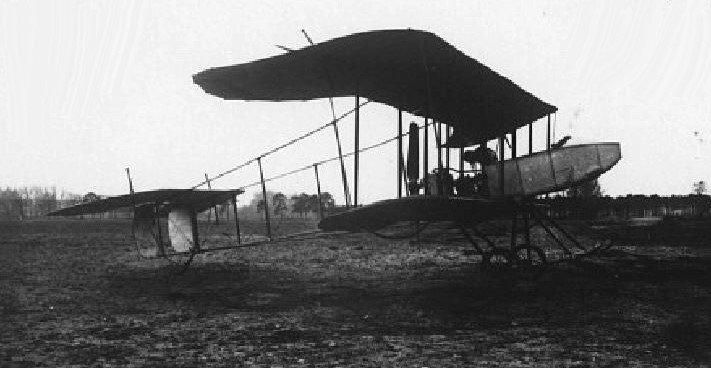
A Farman copy but with Zanonia-shaped upper wing, designed by the young (15) Ernst Friedemeyer. It was built by Flugzeug-Baugesellschaft Osnabrück, Germany, in 1911. It was not very successful, and was destroyed in 1912.
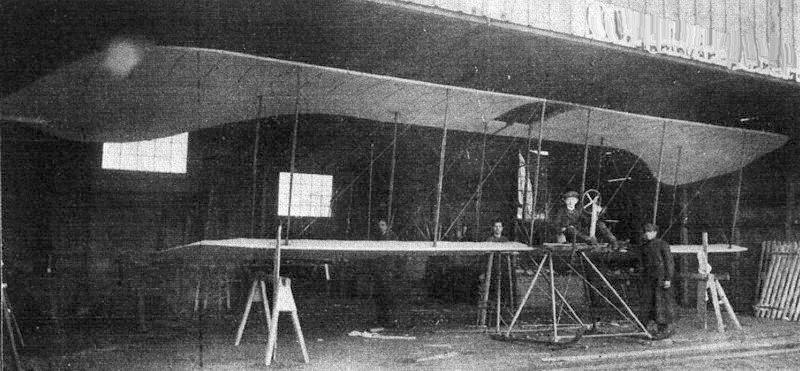
A biplane with Zanonia-inspired upper wings and short lower wings. One of two similar machines built at the Niederreinische Flugzeuganstalt, Hilsmann & Co in Holten, Germany. Made short flights.
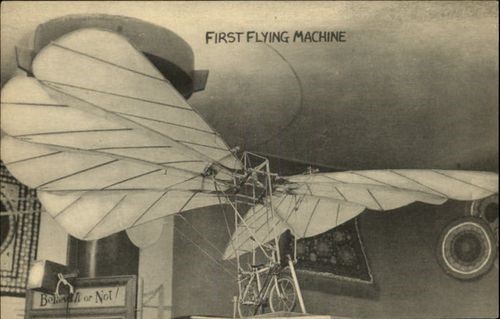
As a youth living in Russia, Oskar Freymann had observed eagles in flight and determined to build a flying machine based on the actions he saw. After emigrating to America in 1895 he worked in a bicycle shop in Brooklyn. Freymann soon built his flying machine, with four wings operated by the pedaling action of a bicycle, and handle bars that moved a rudder at the rear. In November 1896, Freymann and three other men trucked the machine to an open field in Flatbush. He claimed to have pedaled furiously and flown the ornithopter to an altitude of 14 feet – but this is quite doubtful. In any event the machine was damaged during the trial and never rebuilt. Freymann ultimately planned on building a larger, gasoline-powered ornithopter on a tricycle, but ran out of money and abandoned the project. The model – seen here in 1939 on display at the Ripley’s “Believe It or Not!” Odditorium in New York – was built by Freymann in 1895, to help him work out the wing-flapping system. It currently resides at the Cradle of Aviation Museum in East Garden City, New York.
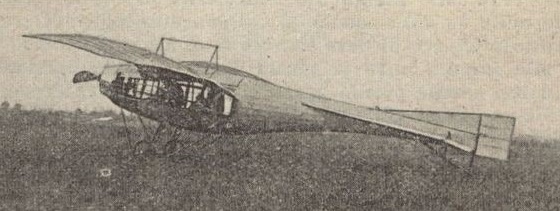
Designed by Colonello Romeo Frassinetti, who founded the now little-known FIAM – Fabbrica Italiana Aeroplani Milano, which probably built this monoplane.
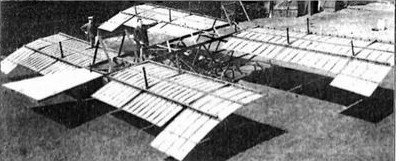
A big tandem monoplane glider, weighing 250 kg and with a wing area of 40 sq.m. It was tested at the Pfaffendorfer Weise outside Halle in 1911, towed by a 20 hp automobile. It would take off at a speed of 25 km/h. During a following flight the towing rope broke and the plane crashed to the ground when it lost speed, breaking all upper rigging wires. After the crash it was abandoned because the two young men could not raise enough money to repair it.
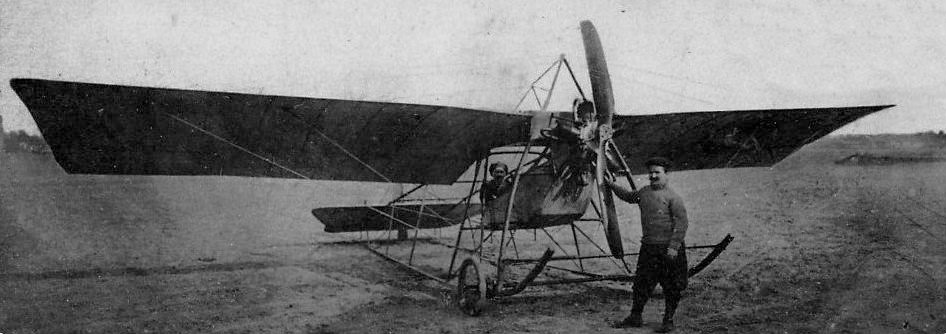
A tractor monoplane with a slight resemblance to the Caudron biplanes, powered by a five-cylinder Anzani. Two high inverted Vs at the front formed the undercarriage and the wing pylons, and the two pilots sat in a short nacelle inbetween. It was flown in France by Loctin in May 1913, and was sometimes referred to as the Franchault-Loctin – Loctin may have been Franchault’s financial partner.
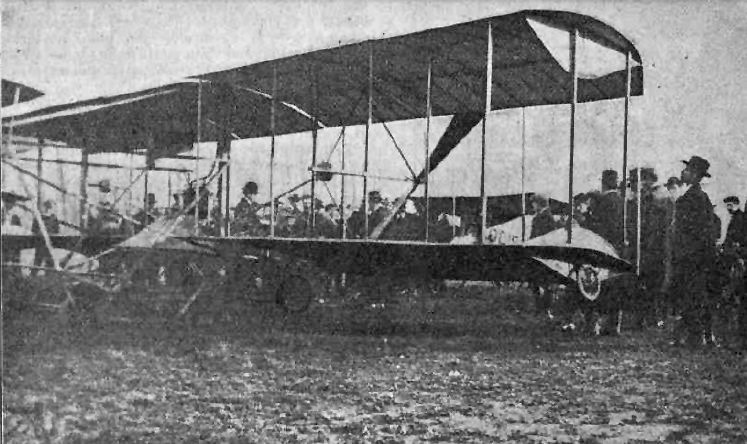
This twin-propeller pusher was built by Guido Moncher and his mechanic Nino Franchini in Italy. The latter made some short flights in it at Milan in January 1910.
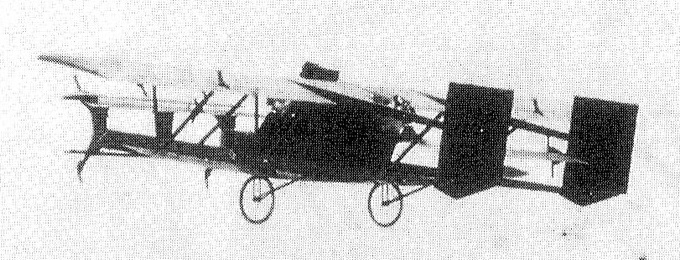
The one and only model of the Frabjous Corporation’s BiSkiLi.
 All Aero