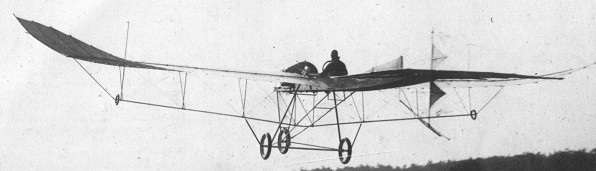
The ‘Sturmvogel’ was built by Jacob Goedecker, who had helped Fokker to build the second Spin.
The ‘Sturmvogel’ was built by Jacob Goedecker, who had helped Fokker to build the second Spin.
Société des Moteurs Gnôme was founded in 1905 by Louis Seguin. In 1915, this firm merged with the Société des Moteurs Le Rhône, founded three years earlier by Louis Verdet, to form Gnôme & Rhône. While Gnôme had continued to produce rotary engines in the 50 to 100 horsepower range, Rhône had refined its fixed-cylinder engines to produce 200 horsepower. However, both these lines of engines were being outclassed in terms of reliability, economy, or power by several contemporary engine manufacturers.
Seguin brothers of Gnome-Rhone Article
Nevertheless, the two merged companies were quite successful commercially, thanks to licensed production in Great Britain, Russia, the United States, Sweden, Germany, and Japan, as well as joint ventures in Italy and elsewhere.
A number of factors hit Gnôme & Rhône (G&R) hard after the war. A huge tax burden was levied based on the firm’s previous international success. At the same time, a mass of war surplus engines glutted the market.
Unlike its other domestic rivals, Gnôme & Rhône lacked experience in areas apart from aero engines, a market now glutted by thousands of surplus motors. A variety of schemes, from making sewing machines to engines for farm tractors or cars, all failed. In constant francs, the company’s sales in 1921 were almost half those of 1913, though the factories were five times larger, notes one scholar in the journal Entreprise et Histoire. In that year, the already legendary company reduced its employment from 6500 workers to 1200.
Production of motorcycles under the Gnôme & Rhône was one area that produced quite satisfactory results in the marketplace; in fact these machines gained a devoted following. In 1922 the English firm Bristol licensed to G&R the right to produce its powerful air-cooled radial engines producing up to 450 horsepower, as well as the freedom to sell them anywhere in the world except for the United States and the territories of the British Empire. With the support of its banks, G&R was able to retool its workshops to build engines, including the new Jupiter introduced in 1923. At the time, G&R had also taken a significant holding in a French-Romanian airline, which helped establish its engines in Eastern Europe.
Between 1924 and 1928, sales increased more than sixfold. At the same time, the air, sea, and land branches of the French military were deciding their outdated equipment was in need of replacement, hence, another blossoming market at home. Expanding commercial fleets produced still more demand. The radial Jupiter engines earned a reputation for being simple to run and easy to fix, even if in-line and V-8 engines made by Hispano-Suiza and Lorraine-Dietrich were more powerful. A novel program, instituted in 1924, allowed for the lease of the engines for a given number of flight-hours, which relieved designers and manufacturers some of the financial strain associated with bringing out new models of aircraft. The popular Jupiter engine was subsequently licensed for production in several European countries as well as the Soviet Union and Japan.
G&R introduced its K family of engines in 1928. In terms of power, this series culminated in the 750 horsepower 14K licensed to a Soviet factory for eventual use in Antonov transports. G&R’s designers evolved L, M, and N families of engines by 1939; one of the latter achieved 1150 horsepower.
Air power played a determining role World War II, and G&R engines had a significant part to play. The Soviet Union’s Molotov factory was producing 300 licensed G&R engines a month in 1940 for use in biplanes and Sukhoi fighters. In Japan, Mitsui illegally copied the 850 h.p. 14K engine, producing the “Suizei” powerplant found in the Mitsubishi Zeroes that attacked Pearl Harbor. During the Nazi occupation of France, G&R became a subsidiary of BMW. Emmanuel Chadeau writes in Entreprises et Histoire that G&R thereby influenced 16 manufacturers in 14 countries during the war; this off-shore production nearly equalled G&R’s own output of 8,000 motors a year, together accounting for a quarter of the worldwide market.
The high share price that G&R commanded prevented it from being nationalized before the war. However, this did come to pass after the Liberation. SNECMA, la Société nationale d’étude et de construction de moteurs d’aviation, was thus created on May 29, 1945. The company was an amalgamation of diverse design bureaus and workshops; it inherited a work force of 10,000 mostly part-time employees. Along with G&R, Snecma was given some of the factories of the Société des moteurs et automobiles Lorraine, formerly Lorraine-Dietrich, which had been nationalized as la Société nationale des moteurs and had been relegated to making parts for tanks. Some of Snecma’s other facilities had been devoted to the production of German Junkers engines by the thousands during the Nazi occupation. G&R also owned a factory of the Aéroplanes Voisin firm, which had gone bankrupt in 1938.
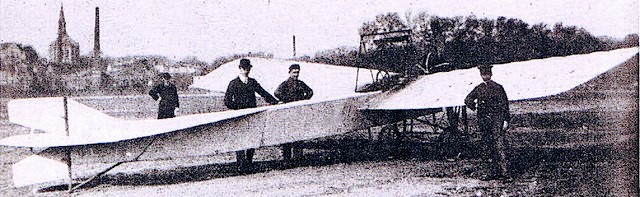
As seen on the Cannstatter Wasen, Stuttgart, Würtemberg, in 1911.
Adam Glück (1886-1966) who with Vollmöller, Heinkel, and Hirth, was one of the pioneers who flew at Canstatter Wasen before the War, and was a “Kriegsflieger” during the War.
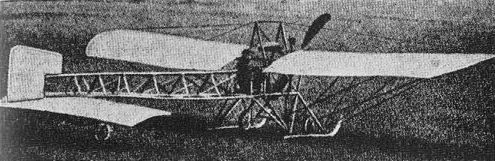
In May 1911, the Lwow press informed its readers about a successful flying demonstration of Glowinski’s monoplane. The machine, designed by Bronislaw Glowinski in 1910 and constructed and flown by him in Tarnopol, should therefore be regarded as the first Polish aeroplane to achieve a controlled and sustained flight in Poland.
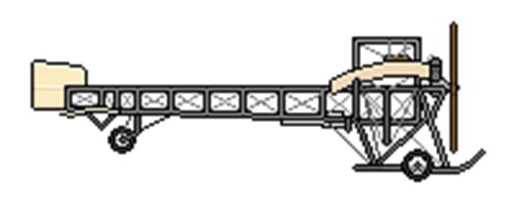
Construction: Giowiriski’s aircraft was a single-seat braced monoplane of composite construction. The wing, a two-spar wooden structure of double-surfaced type covered with fabric, was built in two sections. Each wing panel, carried immediately above the main fuselage frame on an inverted twin-V cabane, was attached to the base of the cabane and braced to its top by wires, and to a low cabane under the second fuselage frame and the landing-gear framework. To maintain lateral stability wing warping was employed. The fuselage, an open brass-welded metal-tube structure trussed by wires, was of rectangular section forward and triangular section aft, terminating in a vertical knife-edge at the tail. The landing-gear frame and all supporting cabanes were built of metal tubes integral with the fuselage. The pilot’s seat was situated at the rear of the rectangular fuselage section. The control system consisted of a conventional control stick and rudder bar, the controls being by cable, except for the elevator system which was by push-rod to the back of the rectangular fuselage section and thence by cable. The tail unit, a wooden structure covered with fabric, consisted of a rudder, a tailplane and Bleriot-type full-chord elevators, the tailplane being wire-braced to the fuselage top longerons and supported by a cabane under the rear end of the fuselage. The landing gear, of neat design, comprised two outwardly-splayed side Ns, supported by a pair of struts and coupled by two transverse tubes. A pair of long wooden skids was attached to this framework. A cross-axle, carrying two wheels, was attached by rubber shock-absorber cords to the skids. The tailwheel fork was provided with a spring shock-absorber. Power was supplied by the 25 hp Anzani three-cylinder air-cooled semi-radial engine directly driving a two-blade tractor airscrew. The fuel tank was attached to the wing-carrying cabane. The monoplane had a span of 10.2 m (33 ft 6 in).
The plane was built in 1910-11 in Tarnopol. Kostruktor Bronisław Głowiński modelled himself during the construction on the construction of the Bleriot XI “La Manche” aircraft.
The assembly of the aircraft was carried out in the constructor’s brother’s workshop, in a shed serving as a carpentry workshop and as a room for the final assembly of the aircraft.
Modelled to a certain extent on the lines of Bleriot Type No. XI, but embodying several original and imaginative features, the machine made a number of short flights over an improvised airfield near Tarnopol in the late spring and summer of 1911. Unfortunately, the designer was unable to obtain the required materials and was forced to use heavier substitutes. This increased the weight of the airframe beyond the anticipated figure, and a weary Anzani engine, overhauled and modified by Glowinski, did not provide the desired power and reliability. As a result the monoplane was rather underpowered and this, combined with frequent breakdowns on the part of the capricious powerplant, severely limited its capabilities and performance and prevented Glowinski from attempting any flights beyond the area of the improvised landing field. His ambition to undertake prize flights in Lwow was never realized.
The condition of the engine deteriorated quickly and some of the parts soon became worn beyond repair. The designer could not afford another engine, and, as the expected help from ZASPL never materialized, he dismantled his machine towards the end of 1911 and had to abandon flying altogether. Later, for a time, he attended the Lwow Technical University, and the forward section of his aircraft was displayed at the Second Aviation Exhibition in Lwow, which opened on 16 February, 1913. Unable to overcome financial difficulties and disenchanted with the unfulfilled promises of support from aviation organizations, he eventually left Poland before the 1914-18 War to work on the construction of railway lines in Asia, but came back after the end of hostilities. Parts of his monoplane, stored in various places, survived until the 1939-45 War.
Powerplant: 1 × Anzani 3-cylinder fan, 19 kW (25 hp)
Wingspan: 10.20 m (33 ft 6 in)
Wing area: 18.5 m2 (200 sq ft)
Length: 8.00 m (26 ft 3 in)
Height: 2.5 m (8 ft 2 in)
Empty weight: 320 kg (700 lb)
Gross weight: 400 kg (880 lb)
Maximum speed: 60 km/h (40 mph, 35 kn)
Range: 25 km (15 mi, 13 nmi)
Crew: One pilot
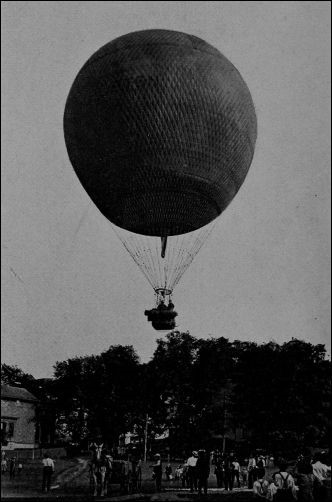
On 19 June 1908 the balloon Boston made its initial flight, landing shortly after 7pm on a mountain between Putney, VT., and Dammerston, VT., near the Vermont-New Hampshire boundary line.
The start of the trip was made a little after 4pm. In order to avoid electric light wires, it was necessary to unload about 60 lb of ballast just after starting.
The thermometer registered 103 degrees in the sun, and the wind blew in puffs, at a varying rate of from 25 to 40 mph. The puffs of wind and changing directions of the various air currents encountered frequently caused the balloon to revolve. The highest elevation reached was 6100 ft.
While passing over the northeast Brattleboro, VT., the gas bag was struck by two rifle bullets. The bullets glanced off without penetrating the silk covering but the course of the bullets was indicated plainly by two dark coloured streaks across the silken covering.
The landing was made in a pasture on top of a mountain 2000 ft high, and the descent was from an elevation of more than 2000 ft.
Charles J. Glidden of Boston, owner of the balloon, and Leo Stevens had an exciting trip. In addition to being the target for rifle bullets during the flight, Glidden and Stevens landed in a pasture where a young bull was confined. The animal charged the aeronauts after they had stepped from the basket and they were forced to run and scramble over a barbed wire fence. Both aeronauts stated that all things considered, it was the most thrilling balloon trip either of them had undertaken.
The pair made the farmhouse of W.W.Burnett just before midnight. The next day preparing to ship the balloon to Steven’s factory for repairs.
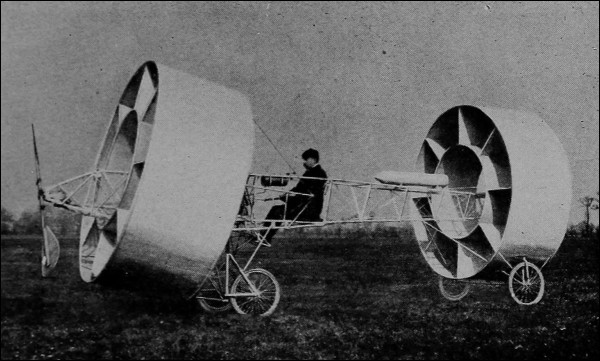
Giraudon’s Wheel Aeroplane
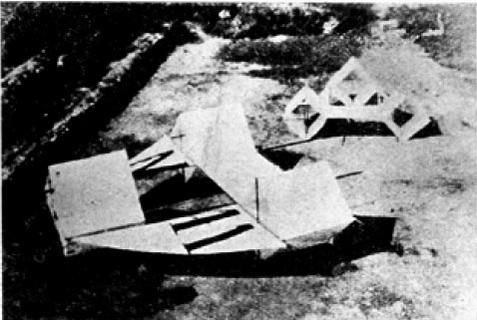
Man-carrying train box-kite in triangular cell arrangement built by Francesco Giordani and Teodoro La Cava and reported to have been intended for people who could not afford an aeroplane but wanted the experience of flight.
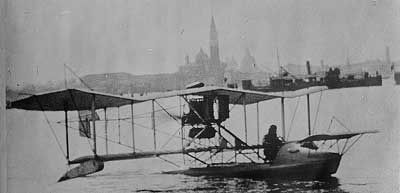
Manlio Ginocchio was an Italian aviation pioneer, and an officer in the Italian Navy. After earlier experiences with flying and designing of machines, he designed and built his “Idro-canotto” and powered it with a 90 hp Salmson engine. The machine was not very successful and remained in one example, although it was acquired by the Italian Navy and became part of the early Italian naval establishment in Venice.
Manlio Ginocchio was an Italian aviation pioneer, and an officer in the Italian Navy. After earlier experiences with flying and designing of machines, he designed and built his “Idro-canotto”
 All Aero