Donald H. Gordon grew up in the El Cajon Valley, California, and built and flew a glider and three powered planes on the family’s 160-acre ranch at Bostonia. His made one of the first power flights west of the Mississippi, within six years of the Wright Brothers’ first flight. Earlier, while the Wrights were making their first public flights in 1903, Gordon built a glider which took off from the top of the family barn. The contraption collapsed, and plane-building was suspended for several years.]
Pioneers
Goodyear Akron
After visiting Europe to see the latest airships flying at the time, P. W. Litchfield returned to America to start the construction of the company’s first envelope, which was completed in July 1911. With a total capacity of 375,000 cu ft, it was made for Melvin Vaniman’s ill fated airship “Akron” which attempted to fly across the Atlantic in July 1912. Vaniman was one time engineer to Walter Wellman, whose airship “America” had attempted a similar crossing in 1910. “Akron” was assembled in Wellman’s old airship shed at Atlantic City and test flown towards the end of the year. On July 2, 1912, the airship took off with Vaniman and four crew on board to cross the Atlantic. Only fifteen minutes later the ship was seen to burst into flames and fall into the sea, killing all on board.
Goodyear Tyre & Rubber Co.
Airship work started at the Akron, Ohio, plant of the company in 1910, when engineer P. W. Litchfield began developing the specialised techniques required for the manufacture of rubberised fabric. After visiting Europe to see the latest airships flying at the time, he returned to America to start the construction of the company’s first envelope, which was completed in July 1911. With a total capacity of 375,000 cu ft, it was made for Melvin Vaniman’s ill fated airship “Akron” which attempted to fly across the Atlantic in July 1912.
As a result of negotiations, which began in 1922 between Goodyear and Luftschiffbau Zeppelin, the Goodyear-Zeppelin Corporation was formed on December 14, 1923. From then on, Goodyear’s major effort was directed towards the design of rigid airships for naval and commercial use, but it was to be several years before an airship of this type was laid down by the, new company.
“GZ” stands for Goodyear-Zeppelin, stemming from the partnership Goodyear had with the German company when both were building airships together. However these models came many years after this partnership had dissolved during the start of World War II. The GZ-1 was the USS Akron (ZRS-4), the U.S. Navy’s fourth rigid airship used for several tests including as a flying “aircraft carrier”.
Total airship production by the company up to 1923 was 37, of which 26 were for the U.S. Navy, 7 for the U.S. Army, and 4 commercial.
On December 5, 1939, to reflect the company’s growing interest in other fields of aeronautical work, the corporate name was changed again, this time to the Goodyear Air¬craft Corporation. With America’s entry into WW II, a great expansion began of the U.S. Navy’s airship service, with 200 airships being authorised in June, 1942. Between September, 1941 and April, 1944, Goodyear delivered 130 K Class, 10 L Class, 7 G Class, and 4 M Class airships to the Navy. These joined 4 K, 3 L, 1 G, and two ex Army ships already in service, plus five Goodyear fleet ships, to make the largest airship fleet ever assembled by any nation. They were used extensively along the eastern and western seaboards of the United States, in Central and South American waters, and from 1944 in the Mediterranean area. The ZP squadrons, the first being commissioned at Lakehurst on January 2, 1942, (ZP 12), were organised into Fleet Airship Wings, of which there were five.
As recently as 1967, Goodyear carried out an evaluation programme for the U.S. Naval Air Development Center in which a series of rigid and non rigid designs were examined for operational cost and performance potential. Amongst the designs considered were 45 million cubic feet rigids operating at speeds up to 210 m.p.h., which were found to be totally practical from a technical point of view.
As a further reflection of Goodyear’s expanding interest in aeronautics and space research, the company name was changed once more on July 1, 1963, to become the Goodyear Aerospace Corporation. With this change, airship operations were transferred to Goodyear Tire & Rubber public relations, with Aerospace being responsible for engineering, maintenance and development of the fleet. During this period the company were operating two airships, namely, the Type GZ 19As “Mayflower”, based at Miami, Florida, and “Columbia” at Los Angeles, California, during the winter months, both airships going on nationwide tour each summer. These ships were of 147,000 cu.ft. capacity and powered by two 175 h.p. Continental engines.
Gonzales No.1 Tractor Biplane
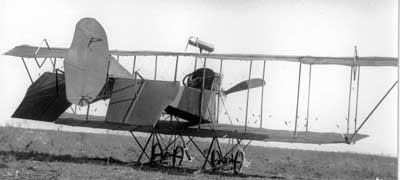
Built by brothers Willy and Arthur Gonzales during the period 1910 through 1912, this biplane was built in the backyard of their home and flew successfully in the San Francisco Bay area. The machine was donated by the Gonzales family to the Jimmy Doolittle Air and Space Museum Education Foundation.
Gonnel Uniplan

The second patented Uniplan of the Gonnel brothers – Raoul-Georges and Arthur-Édouard – built at Juvisy, France during March 1911.
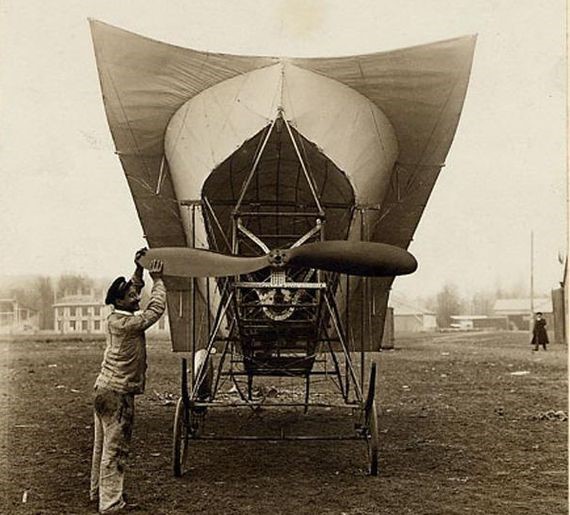
This rebuilt, 2nd version of the machine, which is actually a complete rebuilt of the fuselage and undercarriage, was also fitted with a more powerful engine, a 45-50 hp 4-cylinder Velox-Suère.

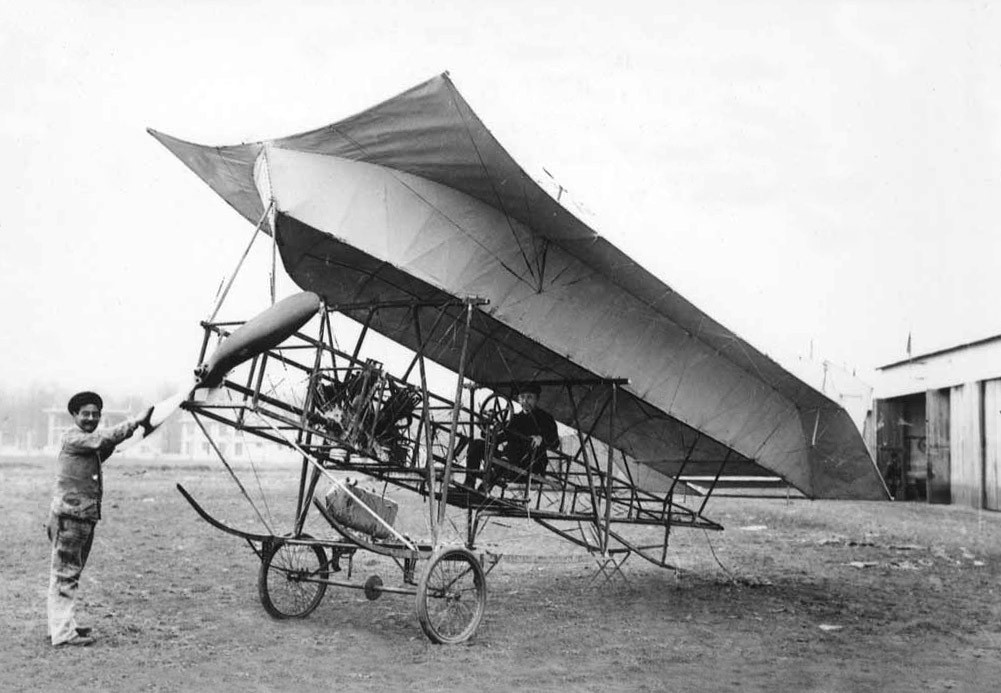
Goliescu Avioplan
The 1909 Avioplan was designed and built by Rodrig Goliescu in Romania.
Goldschmidt 1911 Monoplane
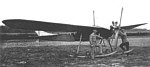
The 1911 Goldschmidt monoplane was designed and built by M. Goldschmidt in France,
Gold 1910 airplane
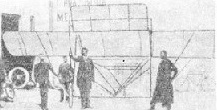
An airplane designed by Willibald Gold in Lviv. It was built by the Lviv Mechanical Laboratory of Witold Tranda.
The unfinished construction was exhibited at the First Lviv Exposition in Lviv. In the end, the construction of the aircraft was not finished and as a result no attempts were made to take off.
The Gold plane was in the high-wing brace system. Truss hull with wire strainers. Single surface wing covered with canvas.
Wingspan: 6.75 m
Length: 8.0 m
Wing area: 10.5 sq m
Empty weight: 110 kg
Gross weight: 190 kg
Goetze 1911 monoplane
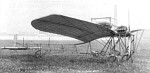
The 1911 Goetze monoplane was designed by Fritz Goetze and built by Oylers Ltd in the UK.
Span: 32′
Length: 29′
Goedecker Amphibium
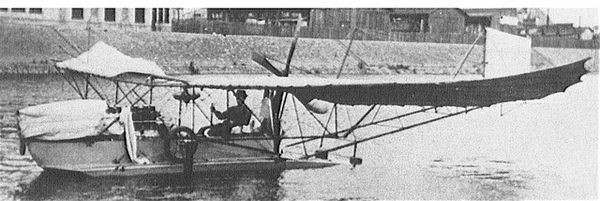
The second Amphibium, or “Amphibium II”, constructed by the Jacob Goedecker Flugmaschinen-Werke in 1912. At the end of August 1912 Goedecker flyer Bernard de Waal took the newly developed “Amphibium” to the First German Seaplane Competition in Heiligendamm district. Due to technical problems the Goedecker flying boat achieved only 4th place in a field of 6 participants. A second flying boat with a more powerful engine was built and tested at the Mainzer Floßhafen, and stationed in a boathouse. In a strong storm on April 6, 1913, the “Amphibium II” was severely damaged and scrapped.
 All Aero