Green C.4

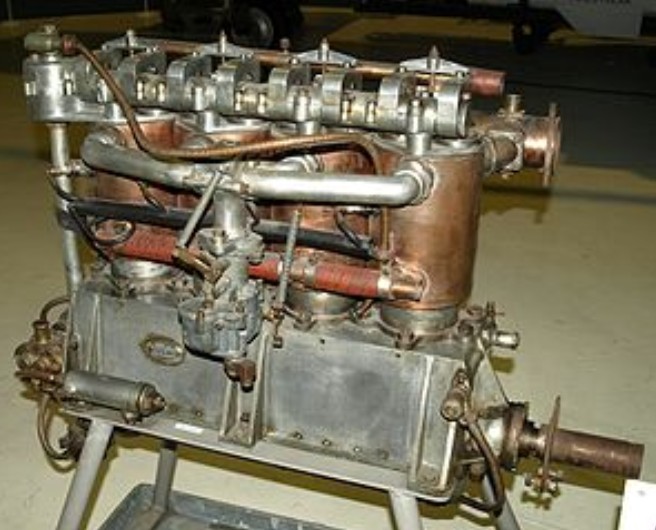
The Green C.4 was a British four-cylinder, water-cooled aero engine that first ran in 1908, it was designed by Gustavus Green and built by the Green Engine Co and Aster Engineering. The engine was one of two Green designs to win a government prize.

Applications:
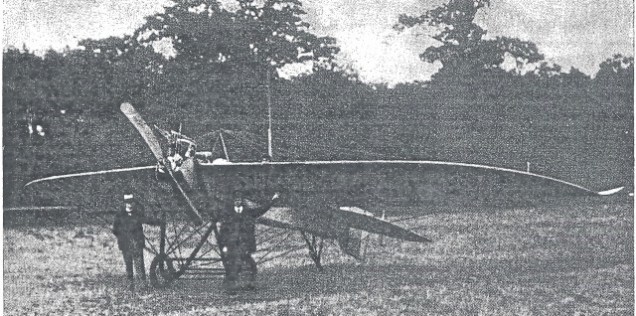
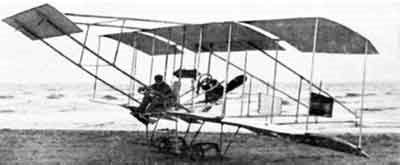
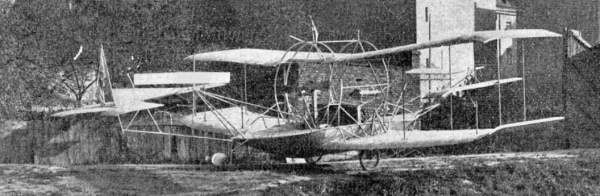
Aeronautical Syndicate Valkyrie Type A
Avro Type II
Avro Type III
Avro Type IV
Avro Type D
Avro Baby
Blackburn Monoplane 1
Handley Page Type B
Handley Page Type D
Hornstein biplane
Macfie Empress
Martin-Handasyde No.3
Neale VII biplane
Short S.27 (Manufacturer No.s S.26 and S.28)
Sopwith Burgess-Wright
Wells Reo

C.4
Type: 4-cylinder, inline, upright piston engine
Bore: 4.13 in (105 mm)
Stroke: 4.73 in (120 mm)
Displacement: 253.44 cu in (4.158 L)
Length: 39 in (991 mm)
Width: 16 in (406 mm)
Height: 28 in (711 mm)
Dry weight: 184 lb (83 kg)
Valvetrain: Gear driven overhead camshaft, two valves per cylinder
Fuel type: Petrol
Cooling system: Water-cooled
Reduction gear: Direct drive, right-hand tractor
Power output: 52.5 hp (39 kW) at 1,460 rpm (maximum power)
Specific power: 0.2 hp/cu in (9.37 kw/L)
Power-to-weight ratio: 0.28 hp/lb (0.46 kW/kg)
Green Royal Vauxhall / Nassau

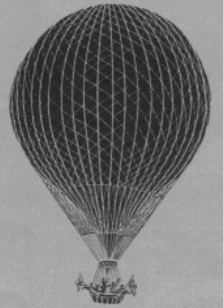
The envelope of the Royal Vauxhall balloon was formed of 2,000 yards of crimson and white silk, imported in the raw state from Italy expressly for this purpose.
First flight: August 1836
Best journey: London Weilburg (Germany) on 7 8 November 1836, approx 600 miles (966 km), with six passengers in 17 hours.

Nassau Balloon

Lifting agent: 70,000 cu.ft (1,982.2 cu.m) of coal gas.
Circumference: 157 ft (47.85 m).
Overall height (incl car): 80 ft (24.38 m).
Accommodation / Payload: 2 persons (28 if filled with pure hydrogen).

Grant-Morse Virginia I

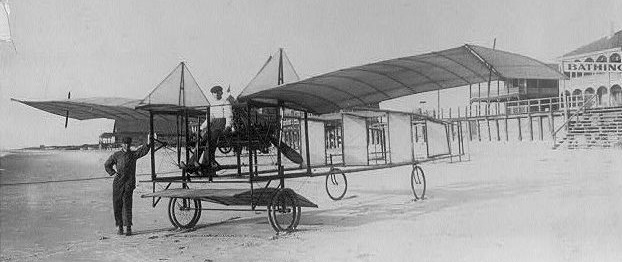
Rudolph R. Grant, who later became Chairman of the Technical Board of the Aeronautic Society of America and Charles Oliver Morse of Norfolk, VA, were busy to develop a mechanism for automatic directional and lateral stability in aeroplanes, an interesting device with air pressure spring-loaded wings and counter-wise adjusted incidence of the small lower wing. The Virginia I monoplane was their first, built in the summer of 1910. It proved to be a stable flyer, that in spring 1911 was tested as a hydroplane in the Willoughby Bay, just North of Norfolk. It might have been the first motor aeroplane built in Virginia.